House of Poker - Texas Holdem
- 2.06K
- 4.2
- Installs
- 1.00M
- Price
- Free

Screenshots






Analysis by Reviewed
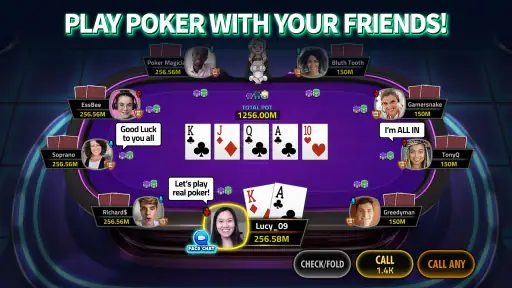
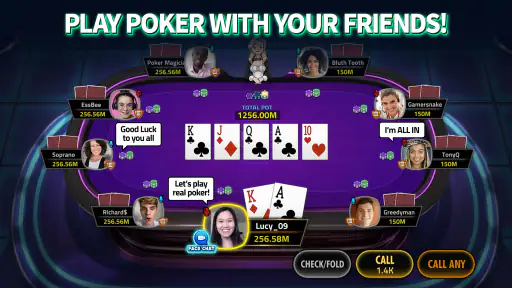
I approached House of Poker as a casual Texas Hold’em game rather than as a replacement for a serious poker room. That distinction matters. Its appeal is the quick access to tournament-style play, the familiar card-table format, and the sense that each session has a clear purpose beyond simply dealing another hand. I found it easiest to enjoy when I treated it as a short, focused break: sit down, make decisions, follow the event, and stop before the pressure to continue becomes the main reason for playing.
The game is free to download and belongs to the card category, with MASSIVE GAMING PTY LTD listed as its developer. It is rated Teen, runs on Android from version 7.1 onward, and has reached over a million installs. Those details place it in a fairly accessible part of the mobile poker market, but the experience is still aimed at players comfortable with competitive card play and with the possibility of optional spending. The in-app purchase range goes from $0.99 to $239.99 per item, so I would not approach it as a completely pressure-free game.
How the first sessions establish a reason to keep playing
The early appeal comes from the simplicity of the central loop. You play Texas Hold’em, watch the table develop, and try to make better decisions than the other players. That is immediately understandable even if you are not an expert. I did not need to learn an unusual ruleset before finding a reason to continue; the familiar structure lets the game put its attention on tournament play and event participation.
For a new player, the first useful goal is not necessarily winning every hand. It is learning how the game presents opportunities and setbacks. A strong starting hand can still become awkward after the community cards appear, while a modest hand may remain playable if the table action is restrained. The best early habit is to observe the rhythm of betting instead of treating every deal as a challenge that must be answered aggressively.
That makes the game more approachable than a poker app built around a large collection of modes. I can open it with a simple intention: play a few hands, test my judgment, or enter a tournament-style session when I have more time. The focus is narrow enough that the first objective remains clear, which is valuable on a phone where complicated menus can make a game feel like work before the actual play begins.
At the same time, new players should understand what kind of entertainment they are choosing. This is not a puzzle game where every outcome can be solved through a fixed sequence. Luck affects individual hands, and good decisions may still produce a short-term loss. I found that the game becomes more enjoyable once I judge my play by the quality of my choices rather than by one result. Anyone who dislikes uncertain outcomes may find the basic poker format frustrating, even when the presentation is easy to follow.
Small decisions matter more than constant action
One of the more useful ways to play is to assign yourself a simple rule before a session. For example, I might focus on avoiding unnecessary calls with weak holdings, or I might pay attention to how the table changes after the flop. This creates a personal early goal without pretending that every hand has a hidden objective. It also prevents the common mobile habit of tapping through decisions simply because the next action is available.
That approach is especially helpful during a short everyday session. Imagine waiting for an appointment with only enough time for a few hands. I would not enter that moment expecting a complete tournament story. Instead, I would use it to practice patience and leave when the available time runs out. If I had a longer uninterrupted period, tournament play and live event tickets would give the session a more defined destination.
The distinction between those two situations is important. Quick play works when you want a compact card game, while event-focused play asks for more attention and a greater willingness to accept changing results. The game can serve both purposes, but the player has to choose the right mindset. Treating every brief session as a major competitive test is likely to make the experience feel more stressful than entertaining.
What counts as progress while playing
House of Poker does not need to rely only on obvious rewards to make progress feel meaningful. In my experience, the clearest progress signal is improved judgment: folding sooner when the situation is poor, recognizing when a strong-looking hand has become vulnerable, and understanding how tournament pressure changes the value of patience. Those are quiet improvements, but they last longer than the excitement of one fortunate deal.
Tournament play adds another layer because the goal is broader than winning a single hand. You have to think about survival, timing, and how much risk is sensible at a particular point. I found that this changes the emotional pace of a session. A conservative decision can feel productive even when it does not create an immediate reward, because staying in contention can be more important than collecting every available pot.
Live event tickets also give the game a social and occasion-based flavor. They make certain sessions feel like events rather than anonymous repetitions. I would use them when I had enough time to stay engaged, not when I was distracted or likely to leave after a couple of hands. The practical lesson is to match the ticket or event opportunity with your attention span; entering something demanding while multitasking can turn a promising run into a rushed one.
Another progress signal is learning which losses were avoidable and which were simply part of poker. That distinction keeps the game from teaching the wrong lesson. If I lose after making a sensible decision, I do not automatically change my strategy. If I lose because I chased a weak possibility or responded emotionally to a previous hand, that is information I can use immediately. This is where the app has more depth than a purely luck-driven card diversion.
The difficulty curve is shaped by judgment and pressure
The difficulty does not come only from stronger opponents or a larger target. It also comes from the temptation to change behavior after a setback. A player who becomes impatient after losing can make the next decision worse, while someone who becomes too cautious may miss good opportunities. The game therefore tests emotional control as much as card knowledge, particularly when tournament progress makes each decision feel more important.
I would describe the curve as gradual for someone who already understands Hold’em, but less forgiving for a complete beginner who expects every session to deliver a clear win. The rules are familiar, yet the strategic consequences are not always obvious. A player may know what a pair or a straight is and still struggle with when to commit, when to protect a lead, or when to walk away from a hand that looked promising earlier.
A practical way to handle that curve is to keep the first sessions analytical. Instead of trying to recover immediately after a bad result, pause and ask whether the problem was the cards, the timing, or the decision. I found this makes difficult stretches feel less random. It also helps separate genuine learning from the dangerous belief that one more hand must repair the previous one.
The pace can be satisfying because every hand has a beginning, a reveal, and a decision point. However, tournament pacing naturally creates longer emotional arcs. A player who prefers instant rounds and frequent resets may prefer a simpler solitaire game or a faster arcade card title. House of Poker is a better fit for someone who enjoys watching a situation develop and accepting that the correct move may be cautious rather than dramatic.
Where retention becomes motivation and where it becomes pressure
The combination of tournament play and live event tickets gives players reasons to return. There is a difference between opening the game because you enjoy making poker decisions and opening it because you feel compelled to protect a position or use an opportunity before it loses its appeal. I think the healthier experience comes from keeping the first reason in control.
The free entry point makes trying the game easy, but the purchase structure deserves attention. Optional items range from $0.99 to $239.99 each, which is a very wide span. I would recommend deciding on a personal spending limit before buying anything, especially if a losing streak makes you want to continue. A purchase can support a preferred style of play, but it should never be treated as a way to guarantee better decisions or reverse an unlucky run.
This is also why the Teen content rating matters in practical terms. Younger players and anyone sharing a device should understand that the game includes competitive play and optional purchases. I would keep purchase controls in mind and avoid handing the phone to someone who might tap through payment prompts without understanding the consequences. The rating is not a reason to reject the game automatically, but it is a reminder to use it with appropriate awareness.
Retention works best when the player sets boundaries. I like the idea of stopping after a planned number of hands or after a defined amount of time, rather than using a win as the only acceptable ending. This protects the fun part of the experience. It also makes the game easier to fit into daily life: a short session can remain short, while a tournament session can be reserved for an evening when concentration is available.
Players should also be prepared for the emotional difference between a normal hand and an event-driven session. Tournament framing can make a small mistake feel more significant, which is useful if you enjoy tension but tiring if you only want a relaxed card game. When I wanted calm practice, I focused on individual decisions. When I wanted a stronger sense of occasion, I considered the event structure. Switching deliberately between those moods helped me avoid blaming the app for a pressure I had chosen by entering a more demanding session.
How it compares with ordinary poker alternatives
Compared with casual solitaire, House of Poker offers more uncertainty and more social competition in spirit, even when the main appeal is still the card table on the screen. Solitaire is usually better for quiet, predictable problem-solving. This game is better when I want to read a changing situation and accept that a good plan can meet an unfavorable outcome.
Compared with a serious poker platform, it feels more suitable for general mobile entertainment. A dedicated poker player may want a highly specialized environment built around deep bankroll management, formal competition, or a more focused community. I would choose this game instead when I want tournament flavor without committing to poker as a full-time hobby. Its strength is accessibility and a clear central identity, not serving every possible need of an expert player.
It also differs from a purely offline card game because the event-oriented design gives sessions a stronger sense of continuation. That can make returning more appealing, but it can also make it harder to put the phone down after an unsatisfying result. The trade-off is straightforward: more structure can create more motivation, while less structure can feel more relaxed. Neither approach is universally better.
The game is therefore a good recommendation for someone who already likes Texas Hold’em, wants tournament play on a mobile device, and can keep optional spending under control. I would point a complete beginner toward it only if they are willing to learn through uncertain results. I would skip it for a person seeking a fully predictable card puzzle, a no-pressure pastime, or a game where progress never depends on luck and emotional discipline.
Technical fit and what to expect from the current release
The current version is 1.13.1, and the Android requirement begins at version 7.1. That makes the game reachable for people using older supported Android devices, although the real comfort of play will still depend on the phone’s screen, performance, and battery condition. Poker decisions require attention, so a device that makes taps feel cramped or delayed can affect enjoyment more than it would in a simple turn-based puzzle.
The app’s audience is substantial: it holds a 4.2 average from roughly seventeen thousand ratings, alongside about two thousand reviews. I read that as a sign of broad appeal rather than a guarantee that every player will enjoy the same pacing. A large audience can confirm that the basic concept works for many people, but personal tolerance for tournament pressure and optional purchases remains the deciding factor.
Before installing, I would ask myself three practical questions. Do I enjoy Hold’em enough to repeat its decision cycle? Can I accept losing a hand without immediately trying to recover? Am I comfortable with a free game that offers purchases? If the answer to all three is yes, the app has a fair chance of becoming a useful short-session game. If any answer is no, the familiar poker theme may not compensate for the friction.
My progression verdict
House of Poker sustains play through a sensible combination of early goals, tournament context, and the personal satisfaction of making better decisions. Its progression is most convincing when I treat it as a test of judgment rather than a machine that must constantly hand me rewards. The strongest moments come from surviving a difficult stretch, folding at the right time, and recognizing that patience has moved the session forward.
Its limitations are equally clear. Poker’s uncertainty can make progress feel uneven, tournament pressure can encourage longer sessions than planned, and the broad purchase range means free access does not remove the need for spending awareness. Players looking for a completely relaxed or deterministic card game should choose something else. So should anyone who expects every loss to be corrected by continuing.
For me, the best use is a controlled mobile poker break: enter with a modest goal, pay attention to decisions, and leave while the session still feels chosen rather than compulsory. The free price makes experimentation easy, the familiar Texas Hold’em foundation keeps the learning curve understandable, and the tournament and live-event focus gives repeat play a reason to exist. If you enjoy competitive card decisions but want a mobile game that stays centered on Hold’em, this is worth trying—provided you set your own limits before the table starts.
Pros
- Easy-to-learn Texas Hold’em rules for beginners
- Quick matchmaking keeps games moving without long waits
- Chips-only gameplay avoids direct real-money gambling
- Chat features add a social element to poker tables
- Runs smoothly on most modern Android and iOS devices
Cons
- Progress can feel slow without frequent play or bonuses
- Random opponents may vary greatly in skill level
- In-game ads or promotions can interrupt the experience
- Limited table variety may reduce long-term replay value
- Requires an internet connection for most gameplay features

- Category
- Card
- Version
- 1.13.1