Horde War: Summon of Avengers
- 24.00
- 4.4
- Installs
- 50.00K
- Price
- Free

Screenshots


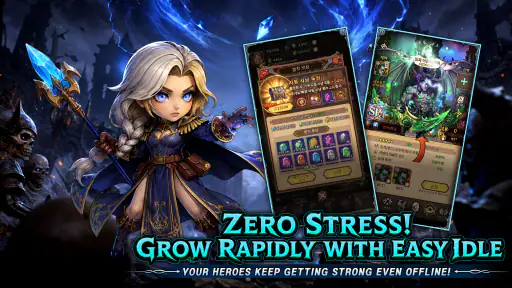
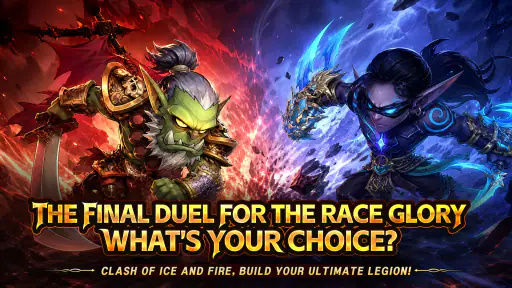

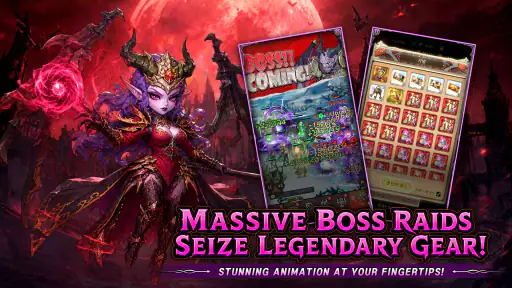
Analysis by Reviewed
I approached Horde War: Summon of Avengers expecting a compact card game built around assembling a fighting force, and that is exactly the kind of experience it presents. Developed by JoyTogether Games, it puts the focus on gathering tribal heroes and using them to push through battles. The idea is easy to understand, but the real question is whether the loop gives me enough meaningful decisions to keep returning after the first few sessions.
My overall impression is positive, with an important qualification: this is best suited to players who enjoy gradual collection and repeated tactical encounters rather than people looking for a deep, traditional card-game ruleset. It is free to start, rated for Everyone 10+, and available for devices running Android 7.0 or later. That makes it approachable, although the presence of optional purchases means I would still advise younger players to use the appropriate purchase controls on their device.
How the first sessions establish a reason to keep playing
The opening appeal comes from having a clear immediate objective. I am not dropped into an abstract card table with no context; I am working toward a stronger tribe and a more capable group of heroes. That gives the early battles a practical purpose. Every encounter feels connected to the larger task of turning a scattered group into something that can stand up to tougher opposition.
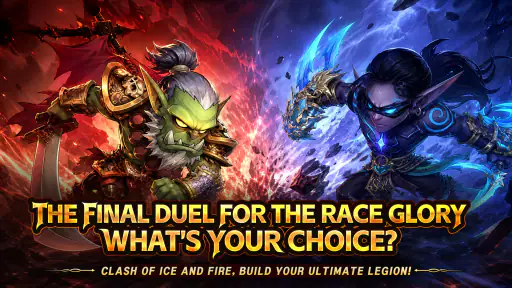
This kind of beginning works because it gives me an answer to the most important early question: what should I do next? In Horde War, the answer is generally tied to improving the group I am building and testing it in combat. The store summary describes the central fantasy as summoning tribal heroes and leading the tribe into battle, and the game’s identity stays close to that premise rather than distracting me with an unrelated theme.
I particularly like this setup for short play sessions. A card game with a collection goal can be easy to pick up when I have a few spare minutes, because I can focus on one immediate battle or one small improvement instead of needing a long uninterrupted sitting. That makes it a natural fit for a commute, a waiting room, or the end of the day when I want something more interactive than scrolling but less demanding than a large strategy game.
There is also a useful psychological distinction between simply winning a match and strengthening a tribe. The second goal gives ordinary encounters more context. Even when a battle is not especially dramatic, it can still feel worthwhile if it helps me understand which heroes belong together or highlights where my current group is weak.
What to watch during the opening phase
My advice to a new player is not to treat the first available improvement as automatically correct. The attractive choice is often the one that raises immediate power, but a more useful question is whether that change helps solve the problem that caused the previous loss. If the tribe is struggling because it cannot handle a particular kind of opponent, a general upgrade may be less valuable than a change that improves the group’s ability to answer that pressure.
This is one of the first places where the game can reward attention instead of simple tapping. I would keep a mental note of why a battle went badly: was the group too fragile, too slow to establish control, or simply lacking enough strength? Even without turning the experience into a spreadsheet, remembering that pattern makes each new summon or adjustment more meaningful.
The early goal is therefore not only to collect. It is to learn what collection is supposed to accomplish. Players who enjoy seeing a growing roster become a tool for solving problems will probably connect with that structure. Players who want every card to have a highly distinctive role from the beginning may find the first stretch more straightforward than they hoped.
Progress feels clearest when I connect new heroes to real problems
The most satisfying progress in a game like this comes from visible improvement in decision-making, not just from having a larger group. A new hero matters when I can explain why that hero changes my options. If I can revisit a difficult encounter and approach it with a better plan, the collection loop feels earned rather than decorative.
That is also where the game’s tribal framing helps. I am not merely filling a catalogue; I am trying to make a functioning force. I found it more rewarding to think in terms of a team’s overall usefulness than to chase novelty for its own sake. A hero that fits the needs of the current group can be more valuable than one that looks exciting but leaves the same weakness untouched.
One practical routine I recommend is to separate experimentation from commitment. When a new hero becomes available, I would first test what changes in a familiar battle before deciding that the new arrangement is an improvement. Returning to a known challenge is a simple way to compare results because I already understand the basic pressure of that encounter. It also prevents the common mistake of confusing a new animation or a higher-looking number with a genuinely stronger setup.
Another useful habit is to avoid changing too many things at once. If I replace several members of the group and alter the overall approach simultaneously, I may win but learn very little about why. Making one meaningful adjustment at a time produces clearer feedback. That is especially valuable in a collection-focused card game, where the temptation is to keep rearranging the roster whenever something new appears.
The game’s current version is 1.0.10, and that is worth noting for anyone who likes to keep track of app versions before installing. I would not use the version number alone as a reason to expect a particular amount of content, but it does make checking the current store page sensible if a future update changes the balance or the way progression is presented.
Why progression can lose its shine
The weak point of this structure is familiar: if new heroes mainly feel like larger quantities of the same solution, the excitement of summoning can fade. Collection works best when it changes how I think about a battle. It becomes less compelling when the obvious answer is always to pursue the strongest available option and repeat the same improvement cycle.
That concern is especially relevant for players who prefer classic card games built around bluffing, hand management, or direct competition between human opponents. Horde War’s appeal is more closely tied to building a tribe and advancing through its battles. Someone who wants a tightly defined duel with a small ruleset may prefer a traditional card battler instead, because that format usually puts more emphasis on reading an opponent and managing a limited hand.
On the other hand, that same focus makes Horde War easier to approach than a dense competitive card game. I do not need to learn a complicated tournament meta before I can understand the basic purpose of my decisions. The trade-off is clear: accessibility and collection-driven motivation in exchange for potentially less depth for expert card-game players.
Challenge and pacing: enough friction, but not always the same kind of excitement
A good progression curve should make early victories feel attainable while gradually forcing better choices. Horde War has a natural foundation for that curve because a growing tribe can be tested against increasingly demanding battles. The important question for me is whether difficulty encourages adaptation or merely asks for more accumulation.
When a tougher encounter exposes a weakness in my group, the challenge feels productive. It tells me that my current approach has reached its limit and gives me a reason to reconsider the roster. That is the kind of friction that sustains play: I am not simply waiting for the game to let me pass; I am looking for a smarter or better-supported way forward.
There is a fine line, however, between a battle that asks for a new plan and one that feels like a progress gate. If the solution to a setback is mainly to repeat earlier content until the tribe becomes stronger, the pacing can become routine. Repetition is not automatically bad in a card game, especially when I enjoy refining a collection, but it needs to provide useful feedback rather than feel like empty delay.
I would approach the difficulty with a testing mindset. Before spending resources or making a purchase, I would replay a problematic encounter with a small change and see whether the result improves. This gives me a better sense of whether I am facing a strategic issue or simply a strength gap. It is a particularly important distinction in a free-to-start game, because it helps me avoid assuming that payment is the only answer to a frustrating wall.
The pacing also depends on how much patience I bring. Players who enjoy incremental goals can find the gradual strengthening of a tribe relaxing. Players who need frequent surprises, fast unlocks, or constant mechanical variety may find the middle portion slower. I would place the game closer to a steady collection journey than to a frantic arcade card experience.
A realistic everyday use case
Imagine that I have ten minutes before leaving for work. I can open the game, check the current state of my tribe, attempt a battle that previously gave me trouble, and make one controlled adjustment. That is a good session even if I do not unlock anything dramatic, because I have tested an idea and learned whether it works.
Later, with more time, I can revisit the same problem and compare a different arrangement. This two-speed structure suits the game well: short sessions can handle maintenance and experimentation, while longer sessions are better for thinking through a stubborn challenge. I would not choose it for a single uninterrupted evening of deep strategic play, but I can see it fitting comfortably into a daily rotation of mobile games.
The key is to set a personal stopping point. Once I have repeated the same encounter several times without learning anything new, I would step away rather than turn frustration into automatic grinding. Returning later with a fresh perspective is usually more useful than continuing to make random changes.
Where retention pressure appears and how I would handle it
The game is free, which lowers the barrier to trying it, but it includes in-app purchases ranging from $0.99 to $99.99 per item. That range matters because collection-based progression can make optional spending feel tempting when I am eager to improve the tribe or move past a difficult section.
I do not see purchases as automatically harmful, but I would treat them as a boundary-setting issue. Before spending, I would decide whether I am paying because I genuinely enjoy the game and want to support it, or because a frustrating encounter has narrowed my patience. Those are very different motivations. The first is a deliberate entertainment choice; the second can lead to spending simply to remove pressure.
A useful rule is to play long enough to understand the normal rhythm before buying anything. That gives me a clearer idea of whether the core loop itself is enjoyable. If the battles, summoning, and tribe-building are not satisfying without spending, a purchase is unlikely to fix the underlying problem. If I already enjoy the routine, then an optional purchase becomes easier to evaluate calmly.
Parents should also pay attention to the age rating and device purchase settings. The game is marked Everyone 10+, and the presence of purchases means that a shared phone or tablet deserves a quick check before younger family members play. That is ordinary good practice, but it is particularly relevant here because the collection goal can make new heroes feel immediately desirable.
Retention pressure can also come from the game’s own goals, not only from money. A player may keep returning because the next battle appears close, a stronger tribe feels within reach, or a new summon might solve a current weakness. I like that motivation when it leads to experimentation. I like it less when it turns every session into an obligation to repeat the same action.
Who should play and who should skip it
I would recommend Horde War to players who enjoy mobile card games with a clear fantasy of collecting heroes, strengthening a group, and testing that group against battles. It is a sensible choice for someone who wants a free entry point, short sessions, and progress that can be understood without learning an intimidating competitive rulebook.
I would be more cautious about recommending it to players who dislike repeated encounters, have little patience for gradual progression, or want a purely skill-based card game where collection strength matters as little as possible. It is also not my first choice for someone seeking a social, head-to-head experience built around reading another person’s strategy.
Compared with a traditional deck-building game, the appeal here is the direct connection between heroes and the tribal force I am trying to develop. Compared with a fast competitive card battler, the pace is more personal and progression-oriented. Compared with a simple casual card game, there is more reason to think about how a group develops over time. Those comparisons explain both its strength and its limitation: the game sits between casual accessibility and collection-driven strategy, without necessarily replacing the specialized appeal of either extreme.
The average rating is 4.4 from around fourteen thousand ratings, while the store shows over fifty thousand installs. I read those figures as signs that the concept has found a receptive audience, not as a guarantee that every player will enjoy the pacing. The number of ratings is encouraging for a relatively focused card game, but personal preference still matters more here than popularity because the central loop is deliberately repetitive.
My progression verdict after weighing the full loop
Horde War succeeds when I treat it as a measured tribe-building game rather than as a conventional card duel. Its strongest idea is the connection between summoning heroes and solving battle problems. That connection can make small improvements feel meaningful, especially when I resist the urge to change everything at once and instead use familiar encounters to test each decision.
Its main risk is that collection and repetition may begin to feel like progress for its own sake. The game is a better fit for patient players who enjoy incremental strengthening than for anyone demanding constant novelty. Optional purchases add another layer of caution, so I would play the free portion long enough to decide whether the basic rhythm is genuinely enjoyable before considering any spending.
For me, the most convincing reason to try it is its approachable middle ground. It offers the recognizable satisfaction of a card collection while giving that collection a tribal battle purpose. I can imagine returning for a short session, trying to solve one stubborn encounter, and stopping once I have learned something useful. That is a healthy loop when the game respects my attention and when I keep my spending decisions separate from my frustration.
My final recommendation is to try it if you want a free, collection-focused card game with a steady sense of tribal growth, but skip it if you need deep player-versus-player tactics or dislike repeating battles. JoyTogether Games has built a premise that is easy to grasp, and the experience is most enjoyable when I turn that simple premise into a deliberate process: identify the weakness, adjust the tribe, test the change, and only then decide whether the next step is worth pursuing.
Pros
- Fast-paced battles are easy to learn
- even for new strategy players.
- A wide roster lets you experiment with different team combinations.
- Short sessions work well for quick play on mobile devices.
- Regular events can provide extra objectives beyond the main campaign.
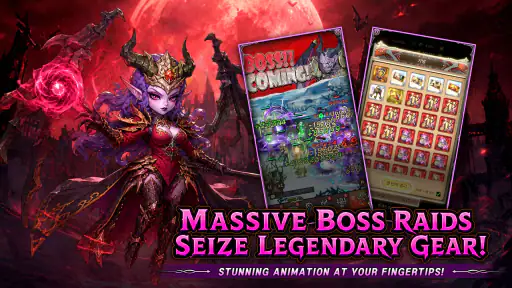
- Distinct hero abilities make positioning and timing important in combat.
Cons
- Progress may slow noticeably without frequent upgrades or resource spending.
- Random summons can make obtaining specific heroes frustrating.
- Repeated battles may feel repetitive after the initial stages.
- Some menus and systems take time to understand for casual players.
- Online features may be affected by connection issues or server downtime.

- Category
- Card
- Version
- 1.0.10