Home of Cards: Cozy Solitaire
- 118.00
- 4.7
- Installs
- 100.00K
- Price
- Free

Screenshots



Analysis by Reviewed
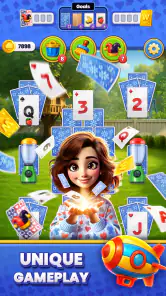
I went into Home of Cards: Cozy Solitaire expecting a familiar Tripeaks card game with a decorative layer attached, and that is essentially what it is—but the combination works better than I expected. The cards provide a calm, repeatable puzzle, while the home-building theme gives each session a small sense of purpose beyond clearing a layout. It is not a dramatic strategy game, and it does not try to replace a deep card battler. Instead, it is a gentle mobile game for short breaks, quiet evenings, or anyone who likes seeing gradual visual progress alongside simple solitaire rounds.
The game comes from Steamroller Games and is free to start. It is listed for Everyone, runs on Android devices using version 6.0 or later, and has reached over 100 thousand installs. Its average rating is 4.7 from around 3.3 thousand ratings, which matches my overall impression: the core loop is easy to understand, pleasant to repeat, and more polished than a bare-bones solitaire clone. The important qualification is that the free entry point sits alongside optional purchases ranging from $0.99 to $99.99 per item, so players who want a completely purchase-free experience should approach it with a little awareness.
How a normal session actually feels
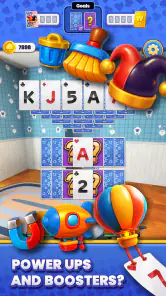
The baseline workflow is straightforward. I open a Tripeaks layout, look for a card that can be played from the available sequence, and try to remove cards in a continuous run. When no useful move is available, I draw from the stock and reassess the board. The objective is familiar enough that I did not need a tutorial-heavy introduction, but the home element gives the result screen more personality than a traditional solitaire app that simply records a win or loss.
That simplicity is the main strength. I can play while waiting for an appointment without needing to remember a complicated campaign, and I can stop after a single round without feeling as if I have abandoned a long match. The game also suits a slower evening routine: complete a few layouts, use the progress to improve the home, then put the phone away. The decoration is not just visual noise in that context; it creates a soft reason to return without changing the basic card rules into something unrecognizable.
My favorite everyday use case is a short break when I want something more engaging than scrolling but less demanding than a competitive game. A Tripeaks round gives me enough to think about—especially when several possible cards are exposed—yet it does not require sound, a stable connection for a live opponent, or a long uninterrupted block of time. That makes it a better fit for casual solo play than multiplayer card games, which often punish interruptions or expect a commitment to the whole match.
There is also a useful distinction between the game’s two kinds of progress. Clearing cards is an immediate puzzle goal, while improving the home is a longer-term visual goal. When I am not in the mood to chase a perfect run, I can still enjoy the sense of moving the broader setting forward. This separation helps prevent every individual hand from feeling like a test. A poor round is disappointing, but it does not erase the relaxing quality of the overall loop.
Who will enjoy the basic loop
I would recommend it first to people who already like solitaire but want a little more atmosphere. If you enjoy sorting cards purely for the satisfaction of clearing a board, the home-decorating layer may be enough to make familiar rules feel fresher. It is also approachable for someone who has never spent much time with Tripeaks, because the card relationships are easier to learn than the rules of many collectible or trick-taking games.
It is less suitable for players looking for a serious competitive ladder, elaborate deck construction, or a story-driven adventure with complex choices. The appeal is repetition with light progression, not dramatic variety. Likewise, anyone who dislikes free-to-play design should pay attention to how optional purchases fit their own habits before investing time. The game is free, but that does not mean every possible convenience or progression route is necessarily free.
Settings and habits worth checking early
Before settling into a long routine, I recommend looking through the available settings rather than accepting the default presentation automatically. In a card game, small comfort choices matter: sound can be welcome during a focused session but distracting in a waiting room, while music may suit an evening play session better than a quick daytime round. I also prefer checking notification behavior early, because a relaxing game should not become a source of unnecessary interruptions.
Screen comfort is another practical consideration. Tripeaks depends on quickly recognizing ranks and suits, so I play with the display at a brightness level that keeps the cards readable without making the whole home scene harsh. If the device offers system-level text or display adjustments, I use those rather than forcing myself to play with tiny visual details. This is especially helpful on a smaller phone, where the decorative surroundings can compete with the card layout for attention.
One useful habit is to separate “comfort settings” from “decision settings.” Comfort settings include audio, notifications, and display preferences. Decision settings are the choices I make during a hand: whether to spend an available move now, expose another card, or preserve a flexible option for later. Keeping those categories separate helps me avoid blaming the interface for a mistake that was really a poor sequence decision.
I would also check how the game presents purchases before making progress a daily routine. The listed purchase range begins at $0.99 and reaches $99.99 per item, so the sensible approach is to treat spending as optional rather than as part of the basic rules. On a shared device, I would make sure purchase protections are enabled at the operating-system level. That is not a gameplay trick, but it is a practical step for families, particularly because the age rating is Everyone and younger players may find the decorating rewards especially appealing.
Small choices that make Tripeaks runs better
The fastest improvement does not come from tapping more quickly. It comes from reading the exposed cards before making the first move. I try to identify every immediately playable card, then ask which choice reveals the most useful information. A move that clears one card may be weaker than a move that opens a hidden card and creates access to a longer sequence. This is the first non-obvious lesson: the visible reward is not always the valuable move.
I also avoid treating the stock as a simple emergency button. Drawing another card changes the available sequence, but it can also remove the chance to use a currently exposed card. My repeatable habit is to scan the board once, choose the move that preserves the most options, and only then draw if no productive move remains. That pause is brief, yet it reduces the number of hands lost to automatic tapping.
A second useful pattern is to prioritize cards that sit beneath or between several covered areas. Clearing an isolated card feels satisfying, but it may not improve the board. A card that unlocks multiple positions has greater practical value because it increases the number of future decisions. When two moves appear equally safe, I usually choose the one that exposes more of the layout rather than the one that merely extends the current run by one card.
The third habit is to accept that a short run can be better than a risky long run. Chasing an impressive chain is tempting, especially when the home progression makes every successful round feel rewarding. However, preserving a playable card for the next turn can be more important than squeezing out one extra removal immediately. I find the game more relaxing when I focus on maintaining options instead of forcing a perfect-looking sequence.
These habits are particularly useful for experienced solitaire players who already know the basic rules. Beginners can simply play naturally at first, but after a few rounds I would start asking three questions: what card opens the most of the board, which card should I keep available, and whether the next draw genuinely improves my position. Those questions turn a casual tap-through into a repeatable method without making the game feel like work.
Where the cozy design helps—and where it does not
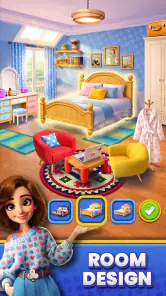
The home theme gives the game a welcome emotional buffer. A standard solitaire app can feel like a sequence of disconnected hands, while this one makes the result feel connected to a broader setting. I enjoy that sense of continuity, particularly when I am playing several short sessions across a day. The visual reward is gentle rather than overwhelming, which suits the game’s calm identity.
At the same time, the decoration layer will not satisfy everyone. Players who want card mechanics to evolve substantially may eventually find that the home is more motivating than the puzzle itself. The setting adds context, but it does not turn Tripeaks into a radically different genre. If your ideal card game involves building a custom deck, countering another player, or discovering many distinct systems, a conventional solitaire title may feel too limited here.
The free-to-play structure is the other point to consider. Optional purchases can be harmless for a player who is happy to progress slowly, but they may feel more prominent to someone who wants every decorative improvement immediately. My advice is to decide in advance whether the game is entertainment for spare moments or a hobby deserving a budget. That simple boundary makes it easier to enjoy the free rounds without feeling pressured to accelerate progress.
Advanced play and the limits of control
Even with careful choices, Tripeaks is not a puzzle where skill removes every element of uncertainty. The cards available from the stock can limit the options I have, and some layouts will simply be more forgiving than others. This matters because a player can make sound decisions and still fail to clear everything. I consider that an important limit: a loss is not automatically evidence that the previous move was wrong.
Experienced users can manage uncertainty by recording patterns mentally rather than relying on speed. I look at the remaining exposed routes, notice which ranks are likely to connect with the current card, and avoid spending a flexible move merely because it is available. When the board becomes tight, I slow down. The game rewards attention more consistently than frantic tapping, and the calmer pace also makes the decorative atmosphere feel more natural.
There is a trade-off between chasing completion and protecting the enjoyment of the session. If I replay a layout with the sole aim of correcting a mistake, the game can start to feel repetitive. If I treat each attempt as a fresh exercise in managing options, the repetition becomes more tolerable. That is where the app works best for me: as a light mental reset with a visible sense of continuity, not as a demanding test that must be solved perfectly.
Players wondering whether they need a powerful phone should be reassured by the broad Android compatibility beginning with version 6.0. I would still keep expectations realistic on older hardware: the cards are the priority, and the decorative presentation is secondary. If the phone feels crowded or the board is difficult to read, reducing distractions through device settings is more useful than trying to play faster.
The game was released on April 8, 2022, and the current version is 1.48.2. For a prospective player, the practical meaning is that this is an established title rather than a brand-new experiment. I would still judge it by the present experience—how comfortable the cards feel, how much I enjoy the home progression, and whether the purchase design suits me—rather than assuming longevity alone guarantees a perfect fit.
How it compares with familiar alternatives
Compared with a plain Tripeaks solitaire app, this game offers a stronger reason to return after a hand ends. The home gives casual players a visible destination, and that can make routine sessions feel less disposable. A minimalist solitaire alternative may be better if you want instant loading, no decorative layer, and nothing competing with the card layout. For focused card practice, simplicity can be an advantage.
Compared with competitive card games, this is much easier to enter and leave. There is no need to study an opponent’s habits or protect a ranking during a short break. The trade-off is that the emotional highs are gentler. A live match can provide tension and surprising interaction; this game provides control, repetition, and a quieter atmosphere. I choose it when I want to unwind, not when I want to prove anything.
Compared with collectible card games, it asks less of my time and attention. I do not need to learn a large card pool or plan around a constructed deck. That makes it friendlier to occasional players, but it also means there is less room for long-term strategic experimentation. The best alternative depends on what I want from cards: Home of Cards is for familiar rules wrapped in a cozy progression loop, while deeper card games are better for variety and mastery through systems.
My verdict after settling into the routine
The strongest reason to try Home of Cards: Cozy Solitaire is the balance between a familiar puzzle and a small, visible sense of progress. I can play one round in a spare moment, or use several rounds as a relaxed evening activity. The Tripeaks format is approachable, the home theme gives wins more meaning, and the game is specific enough to feel warmer than a generic card table.
I would skip it if I wanted competitive play, deep deck strategy, or a completely purchase-free progression experience with no temptation to accelerate. I would also choose a simpler solitaire app if decoration feels like clutter rather than motivation. Those are not minor distinctions; they determine whether the game feels pleasantly layered or unnecessarily busy.
For everyone else, my recommendation is to start slowly, inspect the settings, and build the three habits that helped me most: scan before tapping, favor moves that open several areas, and preserve flexible cards instead of chasing every immediate removal. With that approach, the game becomes more than automatic card matching. It turns into a calm little routine where thoughtful choices matter, even though chance still has the final word.
Steamroller Games has made a free card game that understands its audience well. It is not trying to be the deepest solitaire experience on Android, and it does not need to be. Its value lies in making familiar Tripeaks rounds feel connected to a comfortable visual goal. After around 100 thousand installs and a 4.7 average, it has clearly found players who enjoy that formula. I can see why: when I want a low-pressure break with just enough decision-making to keep my mind occupied, this is an easy game to return to.
Pros
- Relaxing solitaire gameplay suited to short
- casual sessions.
- Cozy visual style creates a pleasant
- low-pressure atmosphere.
- Simple controls make it accessible for beginners.
- Card layouts provide a satisfying mix of routine and challenge.
- Works well as a calming break from more demanding games.
Cons
- Progress may feel repetitive after extended play.
- Limited strategic depth compared with competitive solitaire apps.
- Some decorative content may require extra time or purchases.
- Small card details could be harder to read on compact screens.
- Players seeking fast-paced action may find it too slow.

- Category
- Card
- Version
- 1.48.2