Hidden Object Games: Seek It
- 4.08K
- 4.9
- Installs
- 10.00M
- Price
- Free

Screenshots




Analysis by Reviewed
I like hidden-object games most when they fit into a small pause rather than asking me to settle in for a long session. Hidden Object Games: Seek It is built around that sort of quick visit: I look for objects in a scene, finish a short puzzle session, and can put my phone away without losing a whole evening. It is a puzzle game from NimbleMind Network Inc., and its focus is straightforward enough to suit a coffee break, a quiet commute, or a few minutes between chores.
That simplicity is both the appeal and the main thing to consider before installing it. This is not the kind of game I would choose for a layered story, a competitive challenge, or a deep progression system. I would choose it when I want a low-pressure visual task with a clear goal. The store information describes sessions of about three minutes, so the game is aimed at brief bursts rather than lengthy play.
What the free entry point means
A no-cost way to try the core idea
The game is free to download, which makes it easy to see whether its style of searching suits you before spending anything. There are in-app purchases, with individual items priced from $0.99 to $99.99. That wide range matters: free access and optional paid items are not the same thing, and the lowest listed purchase price should not be mistaken for a complete price for every possible purchase.
For a casual player, the sensible approach is to begin without buying anything and judge the experience on its own terms. If a short object-finding session is all you want, the free entry point may be enough to decide whether the game belongs in your routine. If you are considering a purchase, check its exact price and what it offers in the app before confirming. I would not treat an in-app purchase as necessary simply because it is available.
The distinction is useful when comparing it with paid puzzle games. A one-time purchase can be easier to budget for when you want a clearly defined cost, while a free download with optional items lets you try the game first but leaves the total spend dependent on what you choose. Here, I can confidently describe the game as free to start, but I would make any spending decision based on the specific item shown at checkout.
What the value rests on
The main value is convenience, not a large feature list. A quick search puzzle gives me something to focus on without demanding a long commitment, and that can be more useful than a deeper game when I only have a few minutes. The short-session format also makes it easy to stop after one round instead of feeling that I need to complete a long level before putting the phone down.
That trade-off will not suit everyone. Players who want a substantial campaign, extensive customization, or a demanding progression path may find the basic appeal too narrow. I would also avoid judging value by the number of times I open the game alone; the better question is whether the brief search sessions are enjoyable enough to earn a place in the moments when I would otherwise scroll aimlessly.
How the short search sessions work in everyday life
Good for small pockets of attention
A realistic use case is waiting for an appointment. I can open the game, focus on locating objects, and stop when I am called, rather than starting a puzzle that needs a long uninterrupted stretch. The same logic works during a short break at home. Because the activity is visual and self-contained, it can feel more engaging than passively browsing, while still being easy to leave behind.
There is a practical attention trade-off, though. Hidden-object puzzles ask me to scan a scene carefully, so I would not open it while walking, crossing a street, or doing anything that needs my eyes elsewhere. Even a short game is still a screen-based activity. It is best used when I can sit or stand safely and give the picture enough attention to search rather than tapping at random.
One useful habit is to scan a scene in a repeatable pattern instead of jumping around. I might move from one corner across the top, then work down in bands. That reduces the chance of repeatedly checking the same busy area and helps me notice objects that blend into the background. It is a simple technique rather than a special game feature, but it makes this kind of puzzle feel less frustrating.
Who is likely to enjoy it
I would recommend trying it if you like visual puzzles, want a compact distraction, or enjoy the satisfaction of spotting details other people might overlook. The low-pressure premise can also work for someone who finds timed action games stressful, provided they are happy with searching as the main activity. The game has an Everyone content rating, so its listed age classification is broad; parents should still decide whether any particular app is appropriate for their child and check the purchase options together.
The audience numbers suggest it has reached a large group of players: it has over 10 million installs, a 4.9 average rating, and around 296,000 ratings. Those figures can help establish that it is widely tried, but they cannot predict whether you will enjoy its particular scenes or pace. I treat ratings as a reason to investigate, not a substitute for seeing whether this simple search loop holds my attention.
It is a weaker match for people who want a puzzle that keeps introducing new rules, rewards strategic planning, or provides a strong sense of narrative. It may also be a poor choice if you dislike visually scanning crowded scenes or if you tend to make accidental purchases in free-to-play apps. In those cases, a clearly priced puzzle game or a logic title with explicit levels and mechanics may feel like a better fit.
Where it sits among hidden-object alternatives
Quick finds versus deeper puzzle play
Compared with traditional hidden-object games that encourage a longer, more deliberate search, the appeal here is the short-session framing. I see it as a snack-sized option: useful when I want to focus briefly, less compelling when I am in the mood to settle into a lengthy investigation. By contrast, match-style puzzle games often keep attention through combinations and chains of moves, while word games lean on vocabulary. This one asks for visual observation, so the choice depends on what kind of mental task sounds enjoyable at that moment.
That distinction also affects how I would use it alongside other games. I would pick this for a quick reset between tasks, then switch to a deeper puzzle when I have a free evening. If you already own a hidden-object game with a long campaign and prefer a sense of ongoing discovery, this may feel more like a convenient alternative than a replacement. If you rarely have time for longer levels, its brief format may be precisely the point.
A second practical tip is to avoid playing when tired eyes make small details hard to distinguish. A search game depends on visual attention; frustration can come from the moment rather than the puzzle itself. Adjusting screen brightness to a comfortable level and taking a break when the scene starts to blur is more helpful than rushing. I also find it sensible to pause rather than keep tapping when I am no longer genuinely looking.
Trade-offs to weigh before you keep it
Simple focus can become repetition
A tightly focused game is easy to understand, but that same focus can become repetitive if you expect every session to offer a different kind of challenge. The confirmed premise is finding objects in short games, so I would install it for that activity, not on the assumption that it will provide a broad mix of puzzle genres. If the search itself is satisfying, the narrow scope is a strength; if you need changing mechanics to stay interested, it may wear thin.
Another trade-off is the purchase range. Free access lowers the barrier to trying it, while optional purchases mean players should stay attentive to what they choose to buy. I would not spend just to make a short break feel more productive. First, see whether the basic play experience is enjoyable; then consider an item only if its stated contents make sense to you at its displayed price.
The game is rated for Everyone and is free to start, but those points do not mean every household will use it in the same way. For younger players, I would keep an eye on purchase prompts and set expectations about spending. For adults who prefer not to encounter optional purchases at all, a paid-up-front alternative may provide a more comfortable arrangement, even if it requires paying before trying the game.
Technical and product details
The game was released on July 15, 2025, and its current version is 1.35.0. Its minimum operating-system requirement is version 7.0. If you are deciding whether it can run on a particular device, check your device’s system version before downloading rather than assuming that every older phone will be compatible.
It has around 4,100 written reviews in addition to its large rating count. I would not read that as proof that every player has the same experience; written opinions can help reveal what people value or dislike, but they reflect individual expectations. The developer is NimbleMind Network Inc., and the game’s puzzle focus is clear enough that I would use the first session to answer the most personal question: do I actually enjoy scanning for objects when I have only a few minutes?
My verdict on whether it is worth keeping
I would try Hidden Object Games: Seek It if I wanted a free-to-start puzzle that could fit into short breaks and I already enjoyed visual search games. Its strongest value is the modest commitment: I can approach it as a brief activity rather than another game that expects a long session. The high average rating and broad reach are encouraging context, but the deciding factor should still be whether the search loop feels relaxing or tedious to you.
I would skip it if I wanted a rich campaign, a varied set of puzzle mechanics, or a purchase model with one fixed cost from the beginning. I would also choose something else when I need a game that can be played without paying close attention to the screen. This is not a universal puzzle pick; it is a specific one for people who find a few minutes of looking, noticing, and finding satisfying.
For me, the best way to judge its value is to try a handful of short sessions without spending, preferably during the kind of break when I would genuinely play it. If those moments leave me refreshed and I look forward to the next search, free access has already delivered something useful. If I quickly want more depth or variety, I would move on rather than buy my way into an experience whose central activity does not suit me.
Hidden Object Games: Seek It Frequently Asked Questions
What is Hidden Object Games: Seek It?
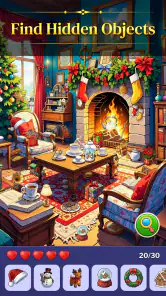
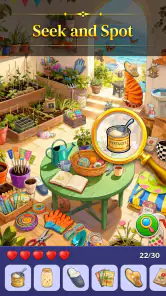
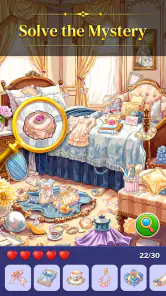
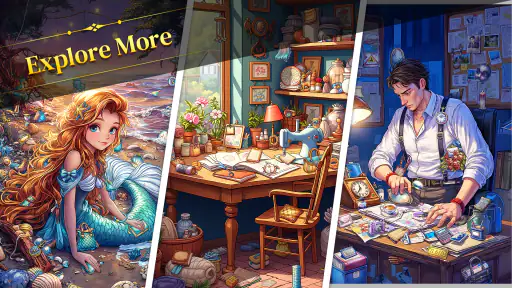
Hidden Object Games: Seek It is a casual puzzle game built around searching illustrated scenes for objects shown on a list or otherwise indicated by the game. Each level asks you to study the picture carefully and spot items that may blend into the background. The exact presentation and available modes can vary by version, so check the store listing and screenshots to confirm what is included in the release for your device.
How do you play Hidden Object Games: Seek It?
You typically begin by opening a scene and finding the requested objects among its details, tapping an item when you believe you have located it. Careful observation matters because objects can be partially concealed or visually similar to nearby decorations. Some hidden-object games also offer hints or other assistance, but their availability and rules may differ between versions. Read any in-game instructions before using a hint or starting a timed challenge.
Is Hidden Object Games: Seek It suitable for children?
The hidden-object format is generally easy to understand and can encourage attention to detail, making it approachable for a wide range of players. However, suitability depends on the specific artwork, advertisements, in-app purchases, and any online features in the version you install. Parents should review the app-store age rating and privacy information, then check the game’s settings and store disclosures before letting a child play, especially on a shared device.
Does Hidden Object Games: Seek It require an internet connection?
Whether you can play offline depends on how the current version handles level downloads, advertisements, rewards, and other online services. Some games let players revisit downloaded puzzles without a connection, while other features may require internet access. Check the app-store description for offline-play details, and, if needed, try launching a level after disconnecting from Wi-Fi or mobile data. An internet connection may still be required for updates or optional online content.
Is Hidden Object Games: Seek It free to download, and are there ads or purchases?
The price and monetization model can differ by platform, region, and release, so consult the Google Play Store or Apple App Store listing before downloading. A game described as free may include advertisements, optional purchases, or paid features, and these details can change with updates. Review the listing’s in-app purchase information and your device’s purchase controls, particularly if children may use the device or you want to avoid unexpected charges.
Articles Related to Hidden Object Games: Seek It
Clash of Clans Is Won Between the Battles
Its raids are quick; its community is a long-term project of coordination, teaching, rivalry, and shared responsibility—with all the friction that entails.
Android Auto Makes the Case for Quieter Car Software
The car interface is no longer judged by how much it can do, but by how quietly it helps. Android Auto shows what drivers now expect—and what still gets in the way.
MobiOffice: Transforming Mobile Productivity with Seamless Integration
MobiOffice: Word, Sheets, PDF is redefining mobile productivity with a surprising blend of functionality and innovation.
EA SPORTS FC™ Mobile Soccer: Redefining Mobile Sports Gaming
Dive into EA SPORTS FC™ Mobile Soccer, where immersive gameplay and strategic depth transform mobile sports gaming.
Pros
- Simple tap-to-find controls are easy for newcomers to learn.
- Visual scenes offer a relaxing alternative to fast-paced games.
- Finding listed objects gives each level a clear objective.
- Suitable for short play sessions during spare moments.
- Hidden-object puzzles can encourage close observation.
Cons
- Small objects may be difficult to spot on some screens.
- Repeated searches can feel similar after several levels.
- Players who prefer action may find the pace too slow.
- Busy scenes can make the target list hard to scan.
- Puzzle enjoyment depends heavily on personal eyesight and patience.

- Category
- Puzzle
- Version
- 1.35.0