Heroes vs. Hordes: Survivor
- 11.00K
- 4.8
- Installs
- 5.00M
- Price
- Free

Screenshots
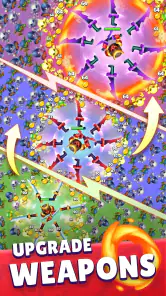
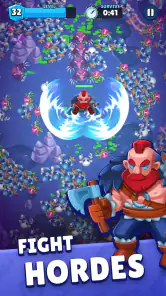
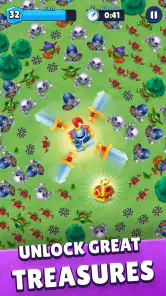

Analysis by Reviewed
When I want an action game that gets moving without asking me to learn a long story first, Heroes vs. Hordes: Survivor is the kind of adventure I reach for. Its appeal is immediate: step into danger, deal with the incoming enemies, and see how long your choices can keep you standing. I find that straightforward setup satisfying, though it works best if you enjoy repeated combat more than a carefully guided narrative.
That focus also makes it easy to decide whether the game suits your mood. I can get into the premise quickly, but I need to be willing to pay attention once the fight grows busy. This is not a gentle sightseeing adventure; it is built around pressure, combat, and the small adjustments that can make a later attempt go better.
The Gameplay Experience
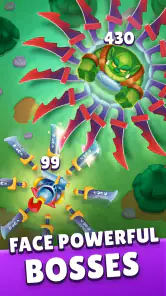
From the moment I launched Heroes vs. Hordes: Survivor, I was immediately drawn into its vibrant world. The premise is simple yet incredibly engaging: you play as a hero who must fend off continuous waves of enemies. The graphics are vivid and colorful, making every battle scene pop like a comic book coming to life. The controls are intuitive, allowing me to focus on the action rather than fumbling with buttons.
Early goals that make each run matter
The first useful goal is not to chase a perfect performance; it is to get comfortable reading a crowded fight. I watch where enemies are closing in, keep enough room to move, and treat each encounter as a chance to learn which choices suit my hero. That small shift makes early play feel less like button-mashing and more like a series of manageable decisions.
This is a good fit for short breaks because the basic premise is easy to understand quickly. If I have only a little time, I can focus on one run rather than needing to remember a complicated sequence of story events. The trade-off is that anyone looking for a quiet, dialogue-led adventure may find the constant pressure tiring. This game puts combat first.
For a first session, I would keep the goal deliberately modest: learn how the battlefield feels before worrying about mastering every choice. Keeping a clear route open is more useful than trying to be everywhere at once. When enemies press in, moving toward the edge of a crowded area can give me room to make the next decision instead of reacting at the last second.
That approach is especially helpful if you are new to survival-style action games. Rather than assuming that a promising power-up is always worth pursuing, I weigh the risk of moving toward it against the space I might lose. The interesting decision is often not simply which reward looks strongest, but whether I can reach it without letting the crowd close around me.
More From Our News Desk

Weather by Xiaomi Review: Clear at a Glance, Less Clear Up Close

X Under Pressure: Can It Recover When Posting Goes Wrong?

Clash of Clans Is Won Between the Battles

Android Auto Makes the Case for Quieter Car Software

MobiOffice: Transforming Mobile Productivity with Seamless Integration

EA SPORTS FC™ Mobile Soccer: Redefining Mobile Sports Gaming
The Thrill of Survival
What really got me hooked was the survival aspect. There’s something exhilarating about facing hordes of enemies with just your wits and weapons. Each wave is more challenging than the last, and it keeps you on your toes. The adrenaline rush from narrowly escaping a swarm of enemies is unmatched and keeps you coming back for more.
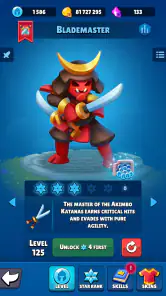
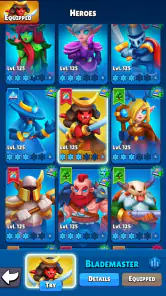
One of the standout features is the variety of heroes you can choose from, each with unique abilities and skills. Whether you prefer a swift archer or a brute warrior, there’s a character that suits your style. As you progress, you can upgrade your heroes, making them more formidable against the increasing difficulty of the hordes.
Hero choice is a useful way to change the feel of a run, but I would avoid deciding that one style is automatically best for everyone. A character that feels comfortable when there is room to move may not suit someone who prefers to meet pressure head-on. I get more out of trying a different approach after I understand what has been giving me trouble, rather than switching heroes at random and learning nothing from the result.
If you are wondering whether the game is approachable without a long tutorial-heavy commitment, its central idea is clear enough to grasp quickly: survive the enemies and make choices that help your hero. The deeper satisfaction comes from noticing how those choices affect a run. That makes it accessible at the start, while still leaving room for judgment and practice instead of asking me to memorize a complicated plot.
Progress you can feel, and a curve to respect
Hero choice gives me a practical way to vary the experience: I can lean toward a style that feels comfortable, then try another when I want a different challenge. A useful habit is to pay attention to what keeps ending a run—getting boxed in, taking risks for an upgrade, or simply moving too late—and adjust one decision next time. That makes improvement feel earned without pretending every attempt will go smoothly.
The pressure also means this is not the right pick when I want a game I can play on autopilot. As enemy groups build, staying aware matters, and a run can turn tense quickly. If I prefer slower exploration or a forgiving pace, a traditional adventure game may be a better match; here, the pleasure comes from reacting under pressure and gradually getting more capable.
When progress feels slow, I find it more useful to identify one specific point of friction than to judge the entire run as a failure. Was I caught with little room to move, or did I take a detour for a resource at the wrong moment? Making one adjustment at a time gives each retry a purpose. It also helps separate a difficult encounter from a genuinely poor fit: if the pressure itself is what I dislike, more practice may not change my opinion.
This is a different kind of progress from a story adventure, where the next chapter can provide a clear sense of forward motion. Here, I look for improvement in the choices I make under pressure and in how well I understand my hero. Players who enjoy that personal feedback loop may find repeated attempts motivating; players who need a steady stream of narrative milestones may feel that the action is asking them to repeat too much.
Power-Ups and Strategies
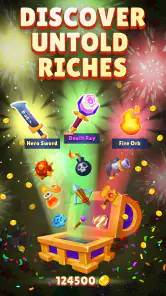
The game does a fantastic job of balancing strategy with action. Throughout the battles, you collect power-ups and resources that can be used to strengthen your hero or deploy devastating attacks on the hordes. Planning when to use these power-ups adds a layer of strategy that keeps the gameplay fresh and exciting.
Moreover, the game offers a variety of environments, each with its own set of challenges and enemy types. This diversity ensures that no two battles feel the same, and you’re always adapting your strategy to survive.
A practical tip is to consider the timing of a power-up as part of the movement problem, not as a separate menu-like decision. If enemies are already closing in, a resource that requires a risky reposition may not be worth chasing right then. I try to notice whether I am using an option because it helps with the immediate danger or simply because it is available. That small distinction can keep a promising run from turning into a scramble.
The changing environments and enemy types give the combat reasons to stay alert, but variety does not mean every session will feel completely new. The basic appeal remains survival against groups of enemies, so the game is strongest when I enjoy refining my response to that core loop. If I want each play session to introduce a fundamentally different activity, a broader adventure with more kinds of objectives may be a better fit.
How to keep the grind in perspective
Its loop can be rewarding, but repeated attempts are part of the deal. I would not treat every setback as a sign that I chose the wrong hero; sometimes it is more useful to change how I move or when I take a risk. That is a more satisfying way to approach progression than expecting upgrades alone to solve every tough encounter.
The game is free to start, and it is rated Everyone 10+. Optional purchases range from $0.99 to $379.99 per item, so I would keep spending separate from the fun of learning the combat. You can enjoy the core appeal without assuming that buying something is the answer to a difficult run. It is a sensible choice for players who like gradual improvement, but less appealing if repeated action feels like a chore.
Because it is free to start, I would treat a first session as a low-pressure test of whether the combat loop suits me, not as a promise to invest in every possible upgrade. The in-app purchase range is broad, so it is sensible to decide on a personal spending limit before browsing any optional items. My recommendation is to let practice and better decisions be the first response to a hard run; spending is not a substitute for enjoying the game’s moment-to-moment play.
For younger players, the Everyone 10+ rating is a useful part of deciding whether it belongs on a shared device. I would also consider the player’s tolerance for repeated action and escalating pressure, since age guidance alone does not tell you whether the style will be enjoyable. Someone who prefers calm exploration or a story to follow may be happier with another kind of adventure, even if the colorful presentation looks inviting.
Who will enjoy this kind of adventure?
For a realistic everyday use, I can imagine playing during a short wait or winding down with a focused session after work: the immediate combat gives me something to do without requiring me to follow a complex plot. Compared with slower adventure games, it favors quick decisions and survival pressure; compared with more hands-off action games, it asks me to pay attention to positioning and the choices I make during a fight. That balance is its strongest reason to try it.
SWIFT GAMES is the developer, and the game has a 4.8 average from around 383,000 ratings, with over 5 million installs. It was released on February 7, 2022, and version 4.1.1 supports Android 7.1 and later. Those details help place it as an established free-to-play option, but they do not change the key question for me: do you enjoy surviving crowded battles enough to repeat them while building skill?
For a typical day, I would pick it up when I have a few minutes of attention to spare, such as while waiting for an appointment, rather than when I am half-watching something else. The game’s appeal depends on noticing the crowd and choosing when to move or use an option, so distractions can make its pressure feel more frustrating than exciting. A brief focused session is a better match than expecting it to work as background entertainment.
In the adventure genre, the contrast is clear: a narrative-led game is a better choice if I want character development and a sense of place to carry me forward, while a relaxed exploration game suits me when I want to set my own pace. This one serves a different mood. It is for players who want immediate combat and like learning through repeated encounters, with hero choice and upgrades giving them reasons to refine their approach.
I would skip it if repeated waves are exactly what I am trying to avoid, or if I want every session to move a plot along. I would also look elsewhere if I prefer very forgiving action with little need to watch positioning. On the other hand, someone who likes seeing a difficult run become more manageable through better judgment may find that the straightforward premise leaves plenty to focus on.
Final Thoughts
In conclusion, Heroes vs. Hordes: Survivor is a must-try for anyone who enjoys action-packed games with a strategic edge. It’s one of those games that’s easy to pick up but hard to put down. Whether you’re a casual gamer or a hardcore strategist, this game offers something for everyone. So, if you’re looking for your next gaming obsession, give this game a try. Trust me, once you start, you won’t want to stop!
My more measured verdict is that its strongest feature is also its main limitation: the game keeps returning to survival combat, so the enjoyment depends on whether that loop stays satisfying for you. I like that a run can make me think about space, timing, and hero choice without demanding a story recap. I would recommend trying it if those small tactical decisions sound fun, while keeping expectations modest if you are seeking a wide-ranging adventure with varied activities.
For progression, I would set goals that are within my control: learn one hero, recognize what tends to trap me, and make one change on the next attempt. That is a more reliable way to judge whether I am enjoying the game than focusing only on how far I get. If the process of improving is rewarding, the repeated challenges have a purpose; if it feels like repetition without satisfaction, there is no need to force it.
Heroes vs. Hordes: Survivor Frequently Asked Questions
Does Heroes vs. Hordes: Survivor require an internet connection?
Before downloading, it is worth considering how you expect to play: Heroes vs. Hordes: Survivor centers on battles against enemy waves, where you use weapons and spells to keep going. Whether you usually play at home or while travelling, check the game’s current requirements on the store page and on your device before installing, especially if reliable access matters to you.
How much storage space does Heroes vs. Hordes: Survivor need?
Available storage can affect whether a game installs smoothly, particularly on a device that is already close to its limit. Check the game’s download size and the free space on your phone before proceeding. Leaving some room for app data and future updates is a sensible precaution, so you are less likely to run into storage problems while playing.
What age group is Heroes vs. Hordes: Survivor suitable for?
Heroes vs. Hordes: Survivor is rated Everyone 10+, making it a game to consider for older children, teens, and adults. Its central activity is fighting waves of enemies with weapons and spells, so parents may want to decide whether that action-focused style suits their child. The age rating is a useful guide, but family preferences can vary.
What is Heroes vs. Hordes: Survivor about?
Heroes vs. Hordes: Survivor is an action-packed mobile game where players assume the role of a hero battling against relentless waves of enemies. The objective is to survive as long as possible while defeating hordes of monsters, upgrading skills, and collecting rewards. The game features a variety of heroes, each with unique abilities, providing diverse gameplay experiences.
Is Heroes vs. Hordes: Survivor free to play?
Yes, Heroes vs. Hordes: Survivor is free to download and play. However, it includes in-app purchases that allow players to buy additional resources, heroes, and upgrades. These purchases are optional, and players can still enjoy the full game experience without spending money, though it may require more time and effort to progress. Optional purchase prices range from $0.99 to $379.99 per item, so it is worth checking purchase settings before playing.
Pros
- Addictive gameplay keeps players engaged.
- Variety of heroes to choose from.
- Challenging levels increase replayability.
- Smooth controls enhance user experience.
- Regular updates with new content.
Cons
- In-app purchases can be costly.
- Requires a stable internet connection.
- Ads can be intrusive at times.
- Learning curve for beginners.
- Limited offline play options.
- Category
- Adventure
- Version
- 4.1.1