Fruit Merge-Juicy Melon Puzzle
- 815.00
- 4.3
- Installs
- 1.00M
- Price
- Free

Screenshots




Analysis by Reviewed
I like puzzle games that make their rules clear in seconds but still leave room for a clever decision. Fruit Merge-Juicy Melon Puzzle gets that balance from a simple action: place fruit, combine matching pieces, and work toward larger ones. The appeal is not just reaching the biggest fruit; it is deciding where each new piece should go before the play area becomes awkward to manage. That small moment of planning is what makes a spare minute turn into another round.
A good fit for short, low-pressure breaks
I can see this working well while waiting for a coffee, taking a short break between tasks, or settling in for a relaxed puzzle session at home. The basic idea is easy to understand, so it does not ask me to learn a complicated rule set before I can enjoy it. It is also a better fit for someone who likes gradual progress and tidy combinations than for a player looking for a story, intense action, or a long campaign with a strong sense of completion.
One useful way to approach a round is to resist placing every fruit wherever there happens to be room. I try to keep likely matching pieces near one another and preserve a little open space for later drops. That is not a guarantee of a big merge, but it can prevent a promising board from becoming cluttered too soon. When I am playing casually, I focus on keeping options open rather than chasing the largest possible combination on every turn.
Where the merge loop works—and where it can frustrate
The reward comes from seeing small pieces combine into something larger, with each successful merge making the next target feel a little closer. That feedback is satisfying because the result is visible immediately. The trade-off is that a merge puzzle depends heavily on the state of the board: a poor placement can leave less room for useful moves, and a round may feel less rewarding when the pieces do not line up as hoped. If you prefer puzzles with a fixed solution and a clear “right answer,” this more open-ended style may feel unpredictable.
Compared with a conventional match-three puzzle, this is less about scanning a grid for a quick swap and more about managing space while building combinations over time. If you enjoy planning around a changing board, that difference is a strength. If you want brisk levels that reliably end after a neat sequence of matches, a standard match-three game may suit you better. I also would not choose this as my main game when I want a deep strategy challenge; its pleasure is in a light, repeatable loop rather than a demanding puzzle campaign.
Who should try it
The game is free to start and is made by MagicLab. Its age rating is Everyone, so the colorful fruit theme and approachable premise can suit a broad audience. It has an average rating of 4.3 from around 39 thousand ratings, and has passed one million installs. Those figures suggest it has found an audience, but the better question is whether you enjoy making small placement decisions and watching them build toward a larger result.
It is currently at version 3.4.1 and requires Android 7.0 or later. In-app purchases range from $0.99 to $29.99 per item, so I would treat optional spending as a consideration rather than part of the basic appeal. If you are trying to keep a casual game strictly free, check purchase prompts carefully and decide on your own limit before playing. The game was released on October 26, 2023, and its puzzle format is straightforward enough to pick up without turning a quick break into a learning session.
More From Our News Desk

Weather by Xiaomi Review: Clear at a Glance, Less Clear Up Close

X Under Pressure: Can It Recover When Posting Goes Wrong?

Clash of Clans Is Won Between the Battles

Android Auto Makes the Case for Quieter Car Software

MobiOffice: Transforming Mobile Productivity with Seamless Integration

EA SPORTS FC™ Mobile Soccer: Redefining Mobile Sports Gaming
First Impressions and Gameplay
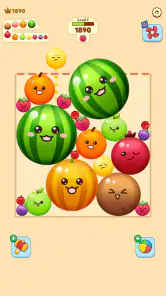
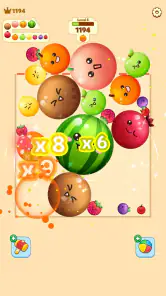
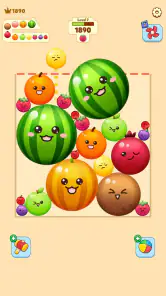
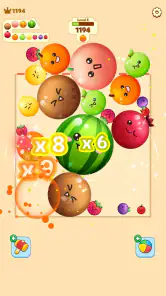
As soon as you launch Fruit Merge-Juicy Melon Puzzle, you’re greeted with an explosion of color. The graphics are incredibly inviting, almost like stepping into a digital fruit orchard. The objective? Simple yet addictive. You merge fruits to create larger ones, aiming to ultimately create the elusive juicy melon. Sounds easy, right? Well, that’s where the challenge begins. The game introduces various obstacles and power-ups that keep you on your toes. I found myself replaying levels just to beat my own score and, let me tell you, it’s quite the dopamine hit when you finally merge that ultimate melon!
Why It Stands Out
What really sets this game apart from the myriad of puzzle games out there is the perfect blend of strategy and fun. Unlike other games that might feel repetitive after a while, Fruit Merge keeps things fresh by introducing new challenges as you progress. You’re not just mindlessly dragging fruits around; you’re planning your moves, considering which merge will yield the best results. It’s like a fruit salad for your brain!
Moreover, the game’s interface is incredibly user-friendly. Even if you’re not the most tech-savvy person, navigating through the game is as smooth as a freshly peeled orange. And, oh, the sound effects! They’re whimsical and add an extra layer of enjoyment to the gameplay. There’s something oddly satisfying about the popping sound when fruits merge.
Perfect for Quick Breaks
If you’re like me and always on the lookout for games that you can play during a quick coffee break or while waiting in line, this one’s a gem. Each level is short enough to complete in a few minutes but engaging enough that you’ll want to play "just one more". And before you know it, you’ve played ten more!
What’s great is that you don’t need to commit a huge chunk of your day to enjoy it. Whether you’re playing for five minutes or fifty, the game adapts to your pace, making it perfect for casual gamers and puzzle enthusiasts alike.
Choosing the right kind of puzzle
It helps to think about what you want from a puzzle before choosing this one. A merge game asks you to make decisions that shape the next few moves, rather than solve a self-contained riddle and move on. That makes it a natural fit for someone who enjoys watching a small plan develop, even when the board does not cooperate perfectly. If you usually prefer word puzzles, logic problems with a single answer, or games built around clearing a set number of stages, this may feel more like a relaxed pastime than a replacement for those favorites.
The comparison with match-three games is useful, but there is another difference worth considering: here, the value of a move can depend on the empty space it preserves. I try not to treat open room as wasted room. A clear area can give me options when later pieces arrive, while filling every gap to chase an immediate merge can make the next decision harder. This is a practical habit, not a secret technique, and it is most useful when a board is starting to feel crowded.
A small routine for better decisions
When I want a calmer round, I scan the board before placing a piece and choose a spot that keeps possible matches within reach. I also avoid making a move solely because it produces the biggest visible result right away. If it blocks a useful area, the short-term reward may cost more than it gives. This is the kind of judgment that makes the loop feel thoughtful without turning it into a demanding strategy exercise.
For a realistic everyday session, I might open the game while waiting for a meeting to start. I can make a few placements, see whether the arrangement still gives me room to work, and put the phone down if the wait ends. If I have more time later, I can return for another try. That flexibility is appealing, though I would not start a round when I need to focus on something else immediately: the visible progress can make it tempting to keep going past the break I intended.
What the game asks of your attention
The controls and premise are approachable, but the board still rewards attention. If I place pieces carelessly while distracted, I am more likely to create a cramped arrangement and then feel that the next few moves are chores. It is not a game I need to study, yet it is more satisfying when I give each placement a moment of thought. That distinction makes it easy to pick up but not entirely mindless.
That balance also shapes who should skip it. I would choose something else if I wanted fast reactions, a substantial story, tightly authored levels, or a clear finish line. I would also pass if uncertainty in a puzzle tends to annoy me; the appeal here is making the best of the board in front of me, not proving one solution is objectively correct. For someone who likes low-pressure choices and visible combinations, those same qualities are likely to be the point.
Spending and playing casually
Because the game is free to start and has optional in-app purchases, I would approach it as a casual download rather than assume every player will want to spend. The listed purchase prices range from $0.99 to $29.99 per item, so anyone keeping a strict budget should be mindful of purchase prompts. If a child is using the device, I would set expectations about purchases before handing it over. The core appeal for me is the act of arranging and merging fruit, not paying to make a round feel worthwhile.
For a quick decision before installing, I would ask whether you want a game that can be left and revisited, whether you enjoy managing a changing play area, and whether optional spending fits your preferences. The fruit theme and Everyone age rating make the premise broadly approachable, while the placement choices give it more to consider than a purely passive time-filler. MagicLab’s puzzle has reached over one million installs and has an average rating of 4.3 from around 39 thousand ratings, but those figures cannot tell you whether its particular rhythm suits you.
Final Thoughts
In conclusion, if you’re hunting for a game that’s both fun and mentally stimulating, I’d highly recommend giving Fruit Merge-Juicy Melon Puzzle a try. It’s a delightful escape into a world of colorful fruits, strategic gameplay, and addictive fun. Just make sure you have some spare time on your hands because once you start, it’s hard to stop!
Making a round feel more deliberate
A small habit that helps me is to pause briefly before each placement and ask what the move will leave behind, not only what it might merge now. A quick combination can be tempting, but using a useful gap may be more valuable if it keeps neighboring fruit accessible. This is the main practical trade-off in a merge puzzle: immediate reward versus preserving room for the next few decisions. I would not treat every round as a score chase; sometimes a calmer, more flexible board is the better outcome.
For an everyday example, I might open it while a kettle boils or during a wait that is too short for a longer game. I can make a few placements, see whether the board is developing well, and stop when the moment is over. If I have more time, the same loop gives me a reason to try again after a cramped or disappointing round. The reset is part of the appeal: a fresh board makes another attempt feel inviting, though it can also encourage “one more try” when I meant to put the phone away.
What to expect from the repeat play
The game’s central reward is easy to understand, but it will not satisfy everyone equally. Players who like visual progress, simple controls, and decisions that matter gradually should find a comfortable rhythm. People who dislike randomness, prefer carefully authored puzzles, or want a clear endpoint may find the open-ended pursuit less compelling. I would also skip it if I wanted a very demanding strategy game; the challenge is about making sensible choices with the board in front of me, not mastering a large set of systems.
One question I would ask before installing is whether it works for a very short session. The fruit-merging idea is easy to return to, so it suits brief play, but the urge to improve a run can make a short break stretch longer than planned. Another practical question is whether it costs money to begin: it is free, while optional in-app purchases are available. I would decide in advance whether I want to spend at all, especially if I am handing the device to a younger player, and keep the purchase options in mind rather than assuming every part of play is paid or, conversely, that spending is necessary.
My verdict on the loop
For me, the strongest part is the clear chain of action, feedback, and renewed attempt: place a fruit, watch a merge change the board, enjoy the progress, then decide whether to keep managing the space or begin fresh. That is a modest idea, but it gives the puzzle a distinct, easy-to-grasp identity. I would recommend it to a friend who wants a colorful merge game for relaxed moments and does not mind a little unpredictability. If they wanted fixed, carefully solved stages or a more substantial strategic challenge, I would point them toward another kind of puzzle instead.
Fruit Merge-Juicy Melon Puzzle Frequently Asked Questions
What kind of gameplay can I expect from Fruit Merge-Juicy Melon Puzzle?
Fruit Merge-Juicy Melon Puzzle is a casual puzzle game built around merging fruits. Its central idea is easy to grasp, making it approachable if you want a straightforward game to pick up and play. The challenge comes from deciding how to combine and place fruits as you work toward larger ones, so there is room for planning as well as relaxed play.
Is Fruit Merge-Juicy Melon Puzzle suitable for short play sessions?
The simple merge concept makes Fruit Merge-Juicy Melon Puzzle an easy game to return to for a quick puzzle session. You can focus on combining fruits and thinking about your next move without needing to follow a complex story. It may also suit players who prefer a casual game they can enjoy at their own pace, rather than an action-focused experience that demands constant attention.
Who developed Fruit Merge-Juicy Melon Puzzle, and is it suitable for all ages?
Fruit Merge-Juicy Melon Puzzle is a puzzle game developed by MagicLab. Its Everyone age rating makes it suitable for a broad audience, so it can be a light option for players looking for a fruit-themed game rather than a story-heavy or action-focused experience. The simple merge concept is easy to understand, while choosing where to place fruits gives players a reason to think ahead.
What is the main objective of Fruit Merge-Juicy Melon Puzzle?
Fruit Merge-Juicy Melon Puzzle is designed to provide players with a fun and engaging experience by merging different fruits to create larger and juicier melons. The main objective is to strategically combine fruits on the board to achieve higher scores and unlock new levels. As players advance, the game becomes more challenging, requiring careful planning and quick thinking to succeed.
Is Fruit Merge-Juicy Melon Puzzle free to play?
Yes, Fruit Merge-Juicy Melon Puzzle is free to download and play. However, it does offer in-app purchases, priced from $0.99 to $29.99 per item, for players who wish to enhance their gaming experience. These purchases can include additional moves, power-ups, or special items that can help players progress faster through the levels. Players can enjoy the game without making any purchases, but these optional extras can provide a more enriched experience.
Pros
- Engaging and colorful graphics
- Simple and intuitive gameplay
- Suitable for all ages
- Regular updates with new levels
- Free to play with optional purchases
Cons
- Contains ads that can be intrusive
- Requires internet for some features
- Limited lives can halt gameplay
- In-app purchases can be pricey
- Not challenging for advanced players
- Category
- Puzzle
- Version
- 3.4.1