FreeCell Solitaire
- 118.00
- 4.8
- Installs
- 100.00K
- Price
- Free

Screenshots
Analysis by Reviewed
I usually turn to solitaire when I want something quiet but still mentally active, and this card game fits that small gap surprisingly well. FreeCell Solitaire is built around the familiar FreeCell format rather than a large collection of unrelated distractions, so its appeal comes from careful choices, readable presentation, and the steady rhythm of solving one deal at a time. I found it easy to start, but not so shallow that every round felt automatic.
That balance is the main reason I would recommend it to someone who wants a relaxing card game for short breaks. It is free to download, suitable for Everyone, and made by Solitaire Card Games Inc. The current release is version 6.9, and it runs on devices using Android 7.1 or later. Its average rating is 4.8 from around 5.4 thousand ratings, while the game has passed 100 thousand installs. Those figures suggest a healthy audience, but my recommendation is based more on how comfortably the game fits into everyday play than on popularity alone.
A calm first impression that gets out of the way
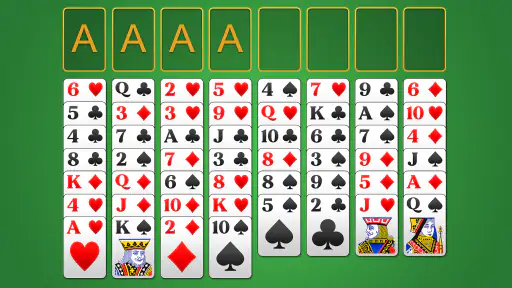
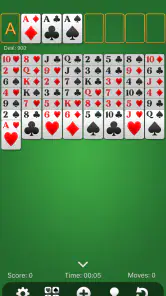
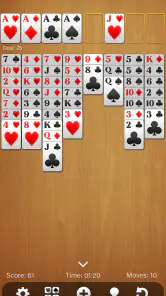
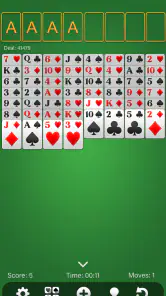
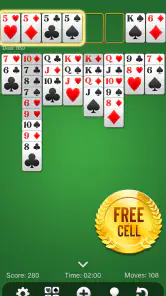
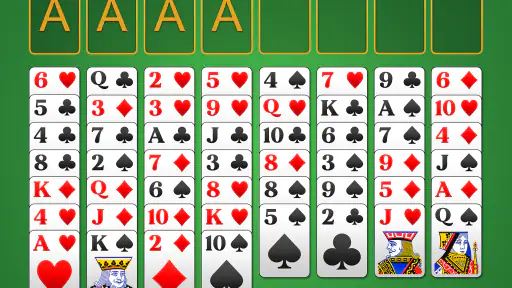
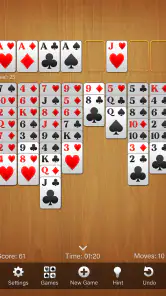
The first thing I noticed is that the presentation serves the cards instead of competing with them. This matters in FreeCell because the board is the entire conversation: columns, exposed cards, open spaces, and foundation piles must remain easy to read while I think ahead. A busy visual style would make an already deliberate puzzle feel tiring, whereas this game aims for a straightforward tabletop mood.
That restraint also makes the game approachable for people who have not played FreeCell recently. I do not need to learn a fictional setting, follow a story, or understand a complicated progression system before making the first move. The setting is essentially a digital card table, and that simplicity is a strength. I can open it during a quiet moment, understand the position quickly, and begin planning without a tutorial-heavy introduction.
At the same time, the lack of a broader theme means the game will not satisfy someone looking for decorative card collections, dramatic animation, or a strong narrative identity. Its world language is functional rather than expressive. The cards communicate the rules, and the table creates a calm frame around them. For me, that is exactly the right direction for a game intended to relax, but players wanting spectacle should look toward a more elaborate card title.
The best way to approach a deal is not to rush the obvious move. FreeCell rewards checking what each move exposes and what it blocks later. I found myself treating the opening layout almost like a small map: first I looked for cards that could be freed, then I considered how many temporary spaces would remain available after moving them. That habit is more useful here than simply clearing cards whenever a legal move appears.
The visual language supports planning
A good FreeCell interface should make the next decision visible without making the answer obvious, and this one works best when I slow down enough to read the whole arrangement. The card table creates a clear separation between active columns and destination areas, which helps me keep track of immediate moves and longer-term goals. The visual design does not turn every action into an event, and that keeps my attention on sequencing.
This is also where the game feels different from a basic Klondike solitaire app. Klondike often depends on luckier reveals and the suspense of turning over hidden cards. FreeCell gives me more information from the start, so the challenge shifts toward organization and foresight. That makes a lost deal feel more like a planning mistake than a bad draw, although it can also make careless play more obvious.
One practical tip is to protect empty spaces instead of filling them immediately. An open cell is not merely unused room; it is temporary flexibility. I try to keep at least one available whenever possible, especially before moving a sequence that might later need to be rearranged. This small discipline changes the game from random card shuffling into a controlled exercise in preserving options.
Another useful approach is to delay sending cards to the foundations when doing so would remove a needed building block. Moving a low card upward can look like progress, but sometimes that card is still useful for alternating-color arrangements in the tableau. I learned to ask whether a foundation move genuinely opens the board or simply makes the score area look tidier. That distinction is easy to miss during a quick session.
Sound and rhythm matter more than spectacle
The mood of a solitaire game is shaped as much by pacing as by its artwork. Here, the format naturally creates a gentle rhythm: inspect the layout, make a move, pause, reassess, and continue. That loop suits a commute, a waiting room, or a few minutes before bed because the game does not demand constant rapid reactions. I can stop thinking at any point and return to the same board without feeling that I have missed a timed event.
I also appreciate that the game’s identity is not built around loud rewards or relentless prompts. A card game like this works when the satisfaction comes from seeing a difficult arrangement open up. The quiet tabletop feeling leaves room for my own environment, whether I am playing with the phone’s sound low or simply letting the visual rhythm carry the session. It feels closer to handling a deck of cards alone than to entering an arcade.
That calm pace can become a limitation for players who need constant novelty. There is no need to expect action-game intensity from this title, and anyone who wants competitive pressure, live opponents, or fast rounds may find the experience too subdued. I would choose it specifically for concentration and decompression, not for social energy or adrenaline.
A realistic everyday use is a short break between tasks. I might have ten minutes before an appointment, open a deal, and use the first few moves to reset my attention. If the layout becomes difficult, I can treat it as a compact logic problem rather than a failure. The game gives that break a shape: enough structure to occupy my mind, but not so much commitment that I feel trapped in a long campaign.
Why the mechanics fit the mood
FreeCell’s central strength is that the visible layout gives planning more weight than luck. The four free cells act as temporary storage, while the tableau columns require me to build sequences in alternating colors. That combination creates a satisfying tension: I usually know what I want to do, but I may not have enough room to do it yet. The challenge comes from deciding which restriction to remove first.
I recommend counting mobility rather than counting only cards cleared. A move that exposes a new card, opens a column, or preserves several future placements can be better than one that immediately sends a card upward. This is a concrete difference from many casual solitaire variants, where progress is mostly measured by visible accumulation. In this format, a messy-looking position can actually be healthier if it leaves more choices available.
When I reach an apparent dead end, I do not always restart immediately. I retrace the last few moves and look for the point where I used a free cell without a clear release plan. Often the problem is not the final blocked column but an earlier decision that consumed the flexibility needed later. This makes the game useful for players who enjoy improving their process, not just winning individual deals.
The trade-off is that FreeCell can feel demanding when I only want completely effortless relaxation. Because the cards are visible, I cannot blame every setback on an unlucky hidden reveal. The game asks me to pay attention, and a distracted session may end with a position that feels self-inflicted. For a softer experience, a more luck-driven solitaire variant may be a better fit; for deliberate puzzle solving, this structure is more rewarding.
I would also avoid treating every deal as something to finish in one sitting. If I am tired, I sometimes make a few exploratory moves, notice the board’s main bottleneck, and leave it there. Returning later with a fresh view can reveal that the position was not impossible, only poorly prioritized. That makes the game work well as a low-pressure mental exercise rather than a test I must complete immediately.
Who will enjoy it, and who should skip it
This is a strong match for anyone who already likes classic solitaire but wants more control over the puzzle. It suits people who enjoy card logic, players who prefer solo games, and anyone looking for a quiet activity that can be played in small pieces. It is also a sensible choice for a family device because the content rating is Everyone, and the rules are familiar enough to explain without introducing a complicated fictional system.
I would especially suggest it to a Klondike player who feels that too many losses come from hidden information. FreeCell exposes more of the problem and rewards planning, so the experience can feel fairer and more analytical. The usual alternative is better for suspense and surprise, while this game is better when I want to study a position and make a reasoned sequence of moves.
On the other hand, I would skip it if my priority is multiplayer interaction, a story campaign, collectible cards, or a highly animated presentation. The game’s charm depends on repetition with variation inside the layouts, not on a stream of new content types. It is also not ideal for someone who dislikes undoing decisions or revisiting a board after a mistake. The quiet design is focused, but that focus leaves little room for players seeking a broader entertainment package.
The free entry point makes trying it easy, although in-app purchases range from $3.99 to $9.99 per item. I would approach those purchases as optional conveniences rather than part of the reason to install the game. The core attraction is the FreeCell format itself, so I would first spend time deciding whether the pace and level of planning suit me before considering any paid extras.
Small habits that make difficult boards clearer
My first habit is to identify the longest useful sequence before moving anything. A long alternating-color stack may look attractive to relocate, but moving it can consume several free cells and leave the lower cards trapped. I prefer to ask which individual card is blocking the most routes. Freeing that card often creates more progress than shifting an impressive-looking stack.
My second habit is to treat empty tableau columns as valuable tools. An empty column can hold a larger sequence than a single free cell, so I avoid filling one just because a legal move is available. If I can create an empty column before a major rearrangement, I gain room to work with and reduce the chance of locking the board into a narrow pattern.
My third habit is to watch the foundation pace. I do not try to advance every suit equally just for visual balance. Instead, I consider whether the next foundation card is still needed in the tableau to uncover or organize another card. This prevents a common mistake: making the foundation look advanced while quietly removing the support needed to solve the remaining columns.
These habits also explain why the game remains interesting after the basic rules become familiar. The challenge is not learning that cards alternate colors; it is learning when a legal move is strategically premature. That extra layer gives the simple table a surprising amount of depth without requiring a large rules manual.
How it compares with other casual card choices
Compared with Klondike, this game is less about hoping that the next reveal rescues the board and more about managing known information. Compared with Spider Solitaire, it is generally easier to read because the structure is lighter and the temporary spaces provide a direct way to organize cards. Spider can offer a heavier, more demanding sequence-building challenge, while FreeCell feels more suitable for a quick, controlled session.
Compared with a physical deck, the digital version is more convenient because the layout stays organized and the game is always ready on a phone. The compromise is tactile: I do not get the feel of dealing cards across a table, and the screen can make the experience feel less personal. For travel or idle moments, convenience wins; for a slow evening away from screens, physical cards still have a distinct appeal.
Compared with modern card games filled with quests, characters, and unlockable systems, this title is refreshingly narrow. That narrowness is not a weakness if I want a focused puzzle, but it does mean the long-term motivation comes from improving my decisions rather than collecting rewards. I would install it for the quality of its central loop, not because I expect a constantly changing content calendar.
Final thoughts on the atmosphere and lasting value
What stays with me is the coherence between the game’s mood and its mechanics. The restrained card-table setting gives me visual clarity, the unhurried rhythm supports concentration, and the FreeCell rules turn that calm surface into a genuine planning challenge. Nothing needs to shout for attention because the interesting part is already present in the arrangement of the cards.
There are clear boundaries. It will not replace a competitive card game, a story-driven mobile game, or a more decorative solitaire collection. Its appeal can also fade if I want constant novelty or if I prefer luck to be a larger part of the outcome. But those are reasons to choose a different kind of game, not failures within this one.
For my own use, I see it as a dependable pocket puzzle: free to begin, easy to understand, and deep enough to reward better habits over time. Solitaire Card Games Inc has kept the focus on a classic format that works especially well when I want a quiet mental reset. If you enjoy thoughtful card play more than flashy presentation, this is a focused and comfortable choice.
Pros
- Works offline
- making it ideal for travel or areas with limited connectivity.
- Simple controls are easy to learn for both beginners and experienced players.
- Most deals can be solved with careful planning rather than luck.
- Short rounds make it convenient for quick breaks or casual play.
- Clear card layouts remain comfortable to use on smaller phone screens.
Cons
- Ads may interrupt play or take up space in the interface.
- Some deals require long sequences of trial and error to solve.
- Limited variation can make the experience feel repetitive over time.
- Undo features may reduce the challenge for players seeking strict rules.
- Battery use can increase during extended sessions with animations enabled.

- Category
- Card
- Version
- 6.9