Farkle Cards
- 1.19K
- 4.9
- Installs
- 100.00K
- Price
- Free

Screenshots





Analysis by Reviewed
I went into Farkle Cards expecting a quick card game with a familiar dice-game spirit, and that is exactly where it works best. FunCraft Games has built a free Android card title around Farkle, giving short sessions a simple structure: make a choice, accept the risk, and decide whether to keep going or protect what you have already earned. It is easy to understand, but the appeal comes from the tension inside those small decisions rather than from a large collection of systems.
My overall view is positive, with one important qualification: this is better as a compact, repeatable pastime than as a deep card-game hobby. If you want something you can open for a few minutes while waiting for an appointment, it has a clear purpose. If you need a long campaign, a broad strategy layer, or a highly social experience, you may outgrow it quickly.
What makes the card-based Farkle format work
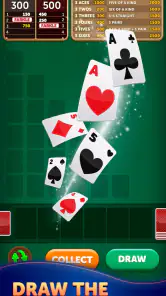
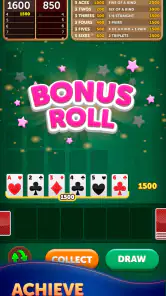
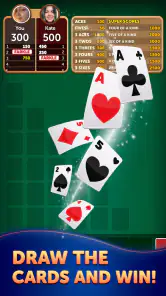
The clever part of the design is how it turns the familiar push-your-luck rhythm of Farkle into a card-focused experience. Instead of feeling like a traditional tabletop session that has simply been copied onto a phone, the card presentation gives each decision a more direct, readable quality. I found myself concentrating less on managing a busy interface and more on the central question: do I bank the progress I have, or take another chance?
That question is what gives the game its personality. Safe play is rarely the most exciting route, but reckless play can erase the value of a good turn. The best moments are not necessarily the biggest scores; they are the turns where I stopped just before greed became a mistake. That makes the game suitable for players who enjoy small bursts of suspense without wanting to learn a complicated rulebook.
The presentation also helps newcomers. A person who has never played Farkle can understand the basic emotional loop quickly because the cards make the available choices feel concrete. I would still recommend paying attention during the first few rounds rather than tapping automatically. The game becomes more enjoyable once you recognize that the important skill is not simply collecting points, but judging when a promising turn has become too dangerous.
In everyday use, I can see myself playing it during a short commute, while waiting for food, or between other tasks. A session does not demand the same commitment as a strategy game with a map, a deck-building system, and several menus to maintain. That convenience is one of its strongest advantages. It respects the way many people actually use mobile games: briefly, repeatedly, and often with only partial attention available.
Small decisions matter more than fast tapping
Although the rules are approachable, the game is not completely mindless. I had to develop a personal stopping point. Early in a run, taking a risk can make sense because there is time to recover. Later, when I had already built a useful total, the same risk felt different. This changing value of a decision gives the simple format enough texture to remain interesting beyond the first few plays.
One useful habit is to treat every turn as two separate questions. First, what can I safely preserve right now? Second, what would I realistically gain by continuing? Keeping those questions apart prevents the common mistake of chasing a theoretical reward while ignoring the progress already secured. It is a small adjustment, but it makes the game feel less random and more like a test of restraint.
I also found that the card format encourages a calmer pace than many action-oriented mobile games. There is no need to react quickly or memorize a complicated sequence of inputs. That makes it a reasonable choice for players who like games of chance with a decision-making layer, especially when they want something less demanding than a full competitive card battler.
At the same time, I would not describe it as a substitute for a serious collectible card game. There is no reason to approach it expecting deck construction, elaborate card synergies, or the long-term planning found in games built around those features. Its satisfaction comes from the individual turn and the risk attached to it, not from assembling a personalized strategy engine.
Useful ways to play without turning it into a chore
My first practical tip is to use short sessions deliberately. The game is at its best when I play a handful of rounds, notice the decisions I made, and then put it down. Trying to force a long session can expose the limited variety of the core loop sooner than necessary. Its compact design is a strength when treated as a snack, not when stretched into a full evening.
A second tip is to pay attention to the difference between a lucky result and a good decision. A cautious choice can still end badly, while an aggressive choice can succeed. Judging yourself only by the outcome makes the game feel more frustrating than it needs to be. I get more value from asking whether the risk was sensible at that moment, given what I had already secured.
A third useful approach is to play it as a low-pressure warm-up before a more demanding game. Because the rules are light and the controls are not mentally exhausting, it works well when I want to switch into a playful mood without committing to a large world or a long match. That use case is easy to overlook, but it explains why the game can remain pleasant even when I am not chasing a personal best.
There is also a trade-off in the simplicity. The clean loop means I can understand what I am doing almost immediately, but it also means experienced players may want more variation than the central format provides. If your enjoyment depends on discovering new mechanics every few sessions, this may not hold your attention as well as a more expansive card title.
Where it fits among mobile card games
Compared with solitaire-style games, Farkle Cards is more about risk management than arranging a board into a finished pattern. Solitaire usually rewards patient planning within a fixed layout, while this game asks me to make a decision under uncertainty and live with the result. I prefer the latter when I want suspense; I would choose solitaire when I want a quieter puzzle with more control.
Compared with collectible card games, the difference is even clearer. Those games often ask players to learn a large card pool, build a deck, follow a metagame, and prepare for opponents with different strategies. This title is much easier to enter because it focuses on the immediate turn. That accessibility is a real advantage for casual players, but it also means there is less room for a long-term identity as a strategist.
It sits closer to a digital tabletop diversion than to a competitive card platform. I appreciate that because it keeps the barrier to entry low. I do not need to study a complicated economy before enjoying a round, and I can return after a break without having forgotten a large set of rules. The downside is that players seeking tournaments, elaborate progression, or a strong community layer should look elsewhere.
The free entry point makes experimenting easy. The game itself costs nothing to start, while optional purchases range from under a dollar to nearly fifty dollars per item. That spread is worth keeping in mind before spending. I would begin by deciding whether the core loop is enjoyable on its own, rather than assuming purchases are necessary to make the experience worthwhile. For a casual game built around repeated short turns, that is the safest way to judge its value.
Performance, access, and the practical details
Farkle Cards is available for Android devices running version 7.0 or later, which makes it accessible to people using older phones as well as newer hardware. I like that its basic concept does not require a powerful gaming device. The category, controls, and card presentation all point toward a game designed for convenience rather than technical spectacle.
It is rated for Everyone, so the tone is suitable for a broad audience. That does not mean every player will enjoy it equally. Younger or inexperienced players may appreciate the straightforward rules, while adults who want a serious strategic challenge may find the limited scope too gentle. The age rating tells me about suitability, not about depth.
The current version is 1.0.26158, and the game has already reached over one hundred thousand installs. Its average rating is 4.9 from roughly seventeen thousand ratings, alongside around one thousand two hundred written reviews. Those figures suggest that the focused concept is connecting with many players, although I would still treat popularity as a starting point rather than proof that it matches every preference.
One practical question is whether it is appropriate for someone who only has a few minutes at a time. In my experience, yes. The game’s strongest use case is a short break, especially when I want a clear beginning and end rather than an open-ended activity. Someone looking for a game to occupy an entire flight or a long evening may need more variety and progression than this format is designed to provide.
Another question is whether it suits people who dislike luck. The answer is probably no, at least not as a main game. Decisions matter, but chance remains central to the experience. Players who enjoy influencing uncertain outcomes can find that balance satisfying; players who want every result to follow from perfect planning may see the randomness as the main drawback.
The limitation I noticed after the initial novelty
The biggest weakness is not a confusing interface or a difficult rule set. It is the possibility of repetition. Once the push-your-luck pattern becomes familiar, the emotional impact of another round depends heavily on how much you enjoy that specific cycle. I remained interested because I like weighing a safe result against a tempting risk, but I can imagine some players feeling that they have seen the full idea fairly quickly.
That limitation affects how I recommend it. I would not install it as my only mobile game. I would keep it alongside a puzzle game, a story-driven title, or a deeper card battler so that I could use it when I wanted a lighter mood. In that role, its narrow focus becomes an advantage rather than a problem.
The in-app purchase range is another reason to stay intentional. Since individual items can cost from $0.99 to $49.99, I would avoid tapping through purchase options casually, particularly if children use the device. The game’s free starting price is inviting, but a sensible player should decide on a spending limit before exploring optional extras. That advice is not a criticism of the core design; it is simply the practical difference between trying a free game and treating it as a hobby.
I also would not choose it when I want a strong multiplayer relationship with friends. A traditional physical card or dice game can create conversation, table presence, and shared reactions that a solo phone session cannot reproduce. Farkle Cards is more convenient, but convenience and social atmosphere are not the same thing. If the main goal is bonding with a group, a local tabletop alternative may be better.
Who should download it
I think this game is a strong fit for casual players who enjoy chance but want at least one meaningful decision in every turn. It is also a good match for people who like traditional game ideas presented in a phone-friendly way, without the learning burden of a large card collection. If you often have spare moments and prefer games that can be understood quickly, it deserves a look.
It may also work well for families because the Everyone rating and approachable format make it less intimidating than many competitive card games. I would still explain the risk-taking idea to a new player rather than handing over the phone and assuming the rules will be obvious. Once that concept clicks, the game can support friendly conversations about when to stop and when to gamble.
I would recommend skipping it if you want deep deck customization, a rich narrative, real-time action, or a long progression system. It is also a poor choice for anyone who finds random outcomes irritating even when the decisions are sensible. In those cases, a deterministic puzzle game or a more strategic card title will probably provide a better sense of control.
For me, the best way to use it is as a reliable short-session game. I can open it without preparing, play through a few tense turns, and leave before the simplicity starts to feel repetitive. That is a narrower recommendation than calling it an essential game, but it is also more honest. Its greatest strength is disciplined simplicity: it gives one familiar idea enough room to create tension without burying it under features.
My final verdict on Farkle Cards
FunCraft Games has made a focused card game that understands its own appeal. The free price, Everyone rating, broad Android compatibility, and approachable rules make it easy to try, while the push-your-luck decisions give it more substance than a purely passive time-killer. I especially like it for short breaks, casual family play, and anyone who enjoys the moment where a safe score competes with the temptation to continue.
Its narrow design is also its clear boundary. The game does not replace a full collectible card game, a social tabletop night, or a deep strategy experience. Repetition can appear if I play for too long, and the optional purchase range means I would keep spending under control. Those are meaningful considerations, not minor footnotes.
Even with those limits, I would recommend giving it a try if you want a simple card-based Farkle experience that gets to the decision quickly. I would describe it to a friend as a good pocket-sized gamble: easy to learn, surprisingly tense in the right moment, and best enjoyed in measured sessions. For that specific audience, Farkle Cards earns its place as a pleasant, focused mobile game rather than pretending to be something larger than it is.
Pros
- Quick rounds make it easy to play during short breaks.
- Simple dice-based rules are easy for new players to understand.
- Multiple scoring options add variety to each game.
- Works well for casual multiplayer sessions with friends.
- Lightweight design should run smoothly on many devices.
Cons
- Luck can strongly influence results
- reducing the impact of strategy.
- Some features may require watching advertisements or making purchases.
- Gameplay can feel repetitive after extended sessions.
- Online play may depend on a stable internet connection.
- Small screens can make score details harder to read on some phones.
- Category
- Card
- Version
- 1.0.26158