Evil Minds: Dirty Charades!
- 787.00
- 4.8
- Installs
- 500.00K
- Price
- Free
Screenshots
Analysis by Reviewed
I went into Evil Minds: Dirty Charades! expecting a quick party word game, and that is exactly where it makes the most sense. It takes the familiar idea of acting out words and pushes it into mature, deliberately naughty territory. The result is not a quiet solo pastime or a family-friendly guessing game; it is a social icebreaker built around embarrassment, fast reactions, and the kind of laughter that comes from watching a friend commit fully to a ridiculous performance.
After spending time with it, I think its appeal comes less from complicated game design and more from how quickly it gets people doing something. You read a prompt, act it out, watch the group react, and move on before the energy disappears. That simple cycle is the whole point. When the right group is present, another round starts almost automatically. When the group is uncomfortable with adult humor, however, the same design becomes a serious limitation rather than a minor inconvenience.
How the dirty charades loop works in a real group
The first action is deliberately simple
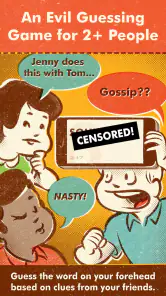
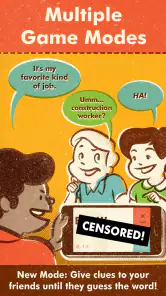
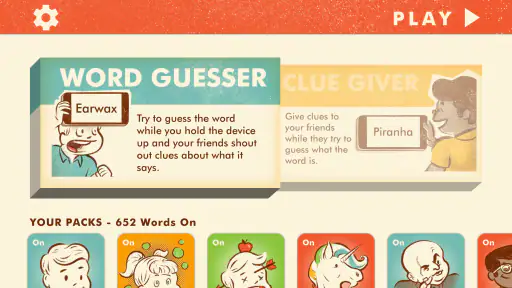
The first useful thing about this game is that it does not ask players to learn a large rulebook before having fun. Someone takes the performer’s role, looks at the word or phrase, and tries to communicate it without simply saying it aloud. Everyone else watches, guesses, and reacts. That immediate handoff is important because party games often lose momentum during setup, especially when people are already talking over one another.
The mature theme changes the feeling of that first action. A normal charades prompt can be silly, obscure, or theatrical. Here, the wording is intended to make players feel exposed. Even before anyone guesses correctly, the performer has to decide how far to go with a gesture or facial expression. That small decision creates the first source of comedy: the player is not only solving a word puzzle but also choosing how much dignity to sacrifice.
I found it works best when the group agrees on its boundaries before starting. The age rating is Mature 17+, and that should be treated as a practical warning rather than a decorative label. This is suitable for adults who already understand the tone, not for children, mixed-age gatherings, or a workplace event where nobody wants an unexpectedly explicit prompt. A thirty-second conversation about what people are comfortable acting out can prevent the game from becoming awkward for the wrong reasons.
The game is also easier to introduce when one person volunteers to go first. That person demonstrates the expected level of enthusiasm and gives everyone else a reference point. If the opening performer treats the prompt like a puzzle and commits to the physical comedy, the rest of the table usually follows. If the first turn is met with hesitation, the room can become self-conscious quickly.
Feedback arrives through people, not complicated systems
The feedback rhythm is almost entirely social. A performer makes a gesture, someone throws out a guess, the group laughs or stays silent, and the performer adjusts. That back-and-forth gives the game its pace. A wrong guess is not necessarily failure; it can be the funniest part of the turn because it reveals how differently the clue was interpreted.
That makes the experience feel different from a conventional word game played against a fixed answer screen. In a crossword or a standard guessing app, feedback is usually binary: correct or incorrect. Here, the reaction of the room is part of the feedback. A dramatic gesture may earn a laugh even when it communicates nothing. A clever clue may be technically successful but less entertaining than a spectacularly bad attempt.
For the best results, I would keep guesses moving rather than allowing one person to dominate. A useful house rule is to let everyone call out answers freely for a short moment, then ask the performer to point toward the person who was closest or most inventive. That keeps quieter players involved without turning every turn into a formal contest. It also prevents the loudest guest from becoming the only person who participates.
There is a trade-off here. Because the fun depends on live reactions, the game is much weaker with a group that prefers to sit back and watch. It is also not ideal when people are distracted by another activity. The prompts may be the spark, but the players provide the fuel. Without voices, gestures, and willingness to look foolish, the underlying loop has very little power.
The reward is shared embarrassment and a reason to celebrate
The reward in this kind of game is not a deep sense of progression. It is the immediate payoff of a successful guess, a memorable performance, or a moment that becomes an inside joke for the rest of the evening. That distinction matters if you are comparing it with a word puzzle app designed for personal improvement. You are not opening this to build a vocabulary habit or to chase a carefully balanced solo challenge.
I like that the reward is flexible. A correct answer gives the performer a clear win, but a failed attempt can still reward the group if the acting is absurd enough. This protects the game from becoming too serious. Players do not need to be naturally quick, theatrical, or good at word association to contribute. Someone who cannot communicate the prompt may accidentally create the most entertaining turn of the night.
One practical way to improve the reward is to separate “best guess” from “best performance.” The person who identifies the answer can receive the normal recognition, while the group can also choose the most creative or funniest acting attempt. This gives hesitant players another way to succeed and stops the game from favoring only the people who shout answers fastest.
The mature content also means that the reward depends on trust. A suggestive prompt can be funny among close friends who understand one another, but it may feel intrusive among new acquaintances. I would not use the game as a tool for forcing strangers to become comfortable. It is better after the group has already established a relaxed atmosphere, because then the embarrassment feels shared rather than targeted.
Resetting the session keeps the energy from wearing out
Every turn eventually ends, whether the answer is guessed or the performer gives up. That reset is one of the strongest parts of the design. There is no need to preserve a complicated board state or remember a long chain of clues. The next person can take over, and the room gets a fresh chance to be funny. This makes it easy to fit the game into the gaps of an evening rather than building the entire event around it.
The reset also gives players a natural escape route. If someone does not want to perform a particular prompt, the group can move on without derailing the night. I recommend treating a pass as normal rather than making it a spectacle. That small adjustment keeps the mature theme playful and prevents the app from turning social pressure into the main mechanic.
In an everyday scenario, I can see this working well after dinner when conversation has started to slow down. One person opens the game, the group agrees on the boundaries, and the first few turns provide a low-effort activity while everyone settles in. After a handful of performances, people often begin referencing earlier mistakes and exaggerating their acting. When the energy dips, the group can stop without feeling that it abandoned a campaign or wasted progress.
It is less convincing as a game for a long, structured tournament. The loop is intentionally light, and repeated mature prompts can lose their surprise if the same group plays for too long in one sitting. I would use it in bursts: start with a few turns, pause for conversation, and return to it when the room needs another jolt. That pattern respects the game’s strongest quality, which is immediacy.
Where it fits among word and party alternatives
Compared with a traditional charades set, the main advantage is convenience and tone. You do not need to prepare slips of paper or invent prompts yourself. The app gives the group a ready-made source of adult-themed material, which is useful when everyone wants to start immediately. The limitation is equally clear: a physical set can be customized for the exact audience, while this game’s identity is tied to its mature subject matter.
Compared with a solo word puzzle, this is far less useful when you are alone. There is no reason to open it for a quiet commute or a personal brain-training session. Its success depends on a performer, an audience, and enough trust for people to act without overthinking. If you want wordplay that rewards concentration rather than performance, a crossword, an anagram game, or a daily guessing challenge would be a better choice.
It also differs from broad party games that mix trivia, drawing, mime, and multiple categories. Those alternatives are usually easier to bring to a mixed audience because they can shift between tones. This game is more focused. That focus makes it memorable for the right crowd, but it also means you should not expect it to serve as an all-purpose party collection.
For a group that enjoys adult humor but dislikes complicated scoring, that narrow focus is a strength. You can begin quickly, let the room decide what counts as entertaining, and stop whenever people are ready to move on. For a group that wants strategic choices, detailed progression, or a strong competitive ladder, it will feel thin.
What the app’s age, price, and platform details mean in practice
The game is free to download, with optional in-app purchases priced from $0.99 to $4.99 per item. I would approach those purchases as convenience choices rather than part of the reason to try the game. The free entry makes it easier to suggest during a gathering, but anyone hosting should still be comfortable with the mature premise before putting it in front of guests.
It was released on March 26, 2015, and the current version is 1.5.9. The minimum operating system is Android 5.0, so it is aimed at older Android compatibility rather than only recent phones. That can be helpful if a group is sharing one older device, although the age of the release also means I would not choose it expecting the newest visual style or the most elaborate modern party-game presentation.
Super Massive Ventures Inc. is listed as the developer. The game has built a strong audience, with an average rating of 4.8 from around four thousand six hundred ratings and more than five hundred thousand installs. Those figures suggest that its central idea connects with many players, but they do not change the basic requirement: the people in your room must actually enjoy this kind of humor.
The listed review count is around seven hundred eighty-seven, and I would read that kind of public enthusiasm alongside the game’s narrow audience. A high rating can tell you that the concept works for people who choose it; it cannot guarantee that it belongs at every party. The mature label remains more useful for deciding whether to install it than the rating alone.
Small strategies that make the loop work better
My first tip is to appoint a temporary host. The host does not need to control every turn, but having one person manage whose turn comes next prevents the familiar party-game problem where everyone talks and nobody acts. Rotate that role after a few rounds so the host remains part of the fun rather than becoming a referee.
My second tip is to establish a “clarify without revealing” rule. A performer can repeat the prompt or indicate whether the group is close, but cannot explain the answer directly. This keeps the action moving while avoiding the frustration of a clue that is impossible to interpret. It also preserves the playful tension between a useful hint and an obvious giveaway.
A third useful adjustment is to use a pass without penalty. Mature prompts can land differently depending on the people present, and forcing someone to act out something uncomfortable damages the whole session. A quick reset to the next player is better than turning the pass into a debate. The aim is shared laughter, not compliance.
I would also keep the first session shorter than your instinct suggests. The game’s best moments are usually concentrated near the beginning, when the group is still surprised by the prompts and everyone is testing how bold to be. Ending while people are still laughing creates a reason to return. Continuing until every player is tired can make the concept feel repetitive, even if the individual turns remain amusing.
Who should install it, and who should skip it
I would recommend it to adults planning a casual gathering with close friends, especially when the group enjoys physical comedy and does not mind mature jokes. It is a good fit for people who want a quick activity that can fill ten minutes, restart a quiet conversation, or provide a shared story after the phone is put away. It is also useful for hosts who want something more active than a question-and-answer party game.
I would skip it if you need a family-safe title, a private single-player word challenge, or a game with meaningful long-term progression. I would also avoid it for professional events, first meetings, and groups where personal boundaries are unclear. The mature premise is not a side mode that can be ignored; it shapes every interaction and determines whether the humor feels liberating or uncomfortable.
For me, the decisive question is not whether the app has enough rules or content to occupy an entire evening. It is whether the group wants to act silly right now. If the answer is yes, the first action is easy, the feedback comes instantly, the reward is social, and the reset makes another turn painless. If the answer is no, no amount of enthusiasm from the host will make the loop feel natural.
My verdict on the repeatable party loop
Evil Minds: Dirty Charades! succeeds by keeping its action-reaction cycle clear: perform a mature prompt, absorb the room’s guesses and laughter, enjoy the payoff of a correct or memorable attempt, then hand the turn to someone else. That reset is why another session can begin without preparation. The game does not need complex progression because its real progression is the group becoming bolder, quicker, and more comfortable together.
Its limitations are inseparable from its identity. The adult content narrows the audience, the experience depends heavily on willing participants, and the lack of a deeper solo purpose makes it a poor everyday word-game companion. Still, within the right setting, that narrowness is exactly what gives it character. I would keep it for adult gatherings where the people already know one another, set expectations before the first prompt, and play it in short bursts. Used that way, it delivers a lively, low-commitment reason to put the phones down and make the next person act.
Pros
- Large word variety keeps repeated rounds to a minimum.
- Simple controls make it easy for new players to join.
- Works well for parties
- date nights
- and small gatherings.
- Team-based scoring adds friendly competition to each round.
- Suggestive prompts can create memorable
- humorous moments.
Cons
- Some prompts may feel too explicit for certain players.
- Best enjoyed with a group
- so solo replay value is limited.
- Round quality depends heavily on everyone’s willingness to act.
- Content may become repetitive after extended play sessions.
- In-app purchases or ads may interrupt the party experience.
- Category
- Word
- Version
- 1.5.9