Euchre 3D Card Game Online
- 9.79K
- 4.6
- Installs
- 1.00M
- Price
- Free
Screenshots
Analysis by Reviewed
I enjoy card games most when they are easy to start but difficult to play perfectly, and Euchre 3D Card Game Online fits that description well. It takes the familiar trick-taking game of euchre and puts it into a compact mobile format, with online multiplayer for playing with friends and AI opponents when human players are not available. After spending time with it, I found that its appeal comes less from flashy extras and more from the small decisions that make each hand matter.
The game is free to download, aimed at Everyone, and developed by A-Star Software LLC. It has built a strong audience, with an average rating of 4.6 from around 64 thousand ratings and more than a million installs. Those figures make sense to me: euchre is a natural fit for short mobile sessions, and this version keeps the basic loop recognizable without asking the player to learn a complicated interface first.
How the first hands establish a clear goal
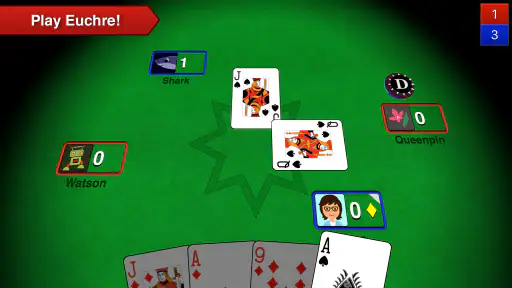
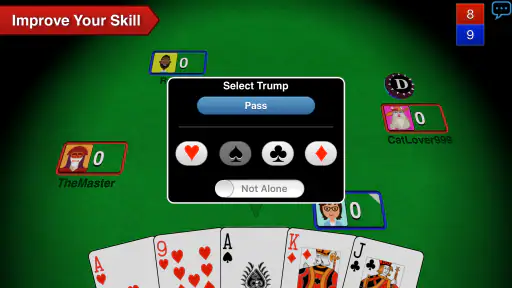
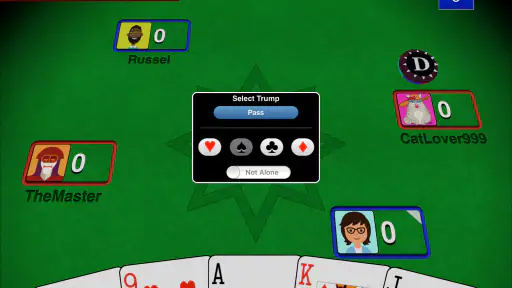
The early goal is straightforward: understand the deal, choose whether to call the trump suit, and work with your partner to take enough tricks. That clarity is one of the best things about the design. I never felt pushed through a long tutorial or buried under a collection of unrelated objectives. The immediate challenge is simply to make better decisions than I made in the previous hand.
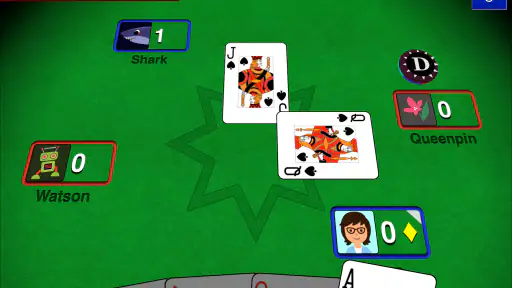
For someone new to euchre, the important adjustment is learning that the trump suit changes the value of cards in a way that is not always obvious. The right bower becomes the strongest card, while the left bower belongs to the trump suit as well. That detail changes how I read the table, especially when deciding whether a hand is strong enough to call. A beginner who treats the jacks as ordinary cards can lose a promising hand before understanding why.
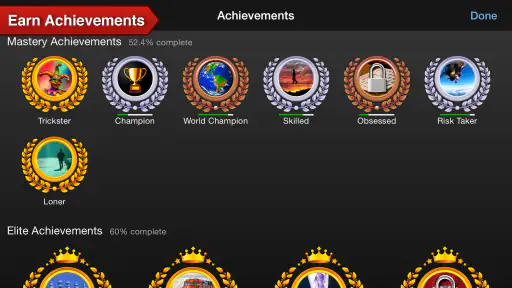
I recommend starting conservatively rather than calling trump every time a hand contains one attractive card. Early play is more useful when it becomes a lesson in risk. Ask yourself whether you have enough control to lead, whether your partner may help, and whether the opposing team could easily take the remaining tricks. The game does not need a separate achievement system to create this goal; the structure of euchre supplies it naturally.
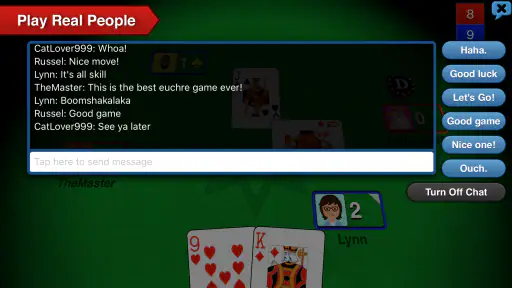
The online option also gives the opening experience a different flavor. Playing with friends is more social and unpredictable, while AI opponents are useful when I want to practice without arranging a group. That flexibility matters because euchre is most enjoyable when the wait between hands is short. I can play a few rounds during a break instead of committing to a lengthy card-game session.
One practical tip is to pay attention to the discarded card when trump is selected. It can reveal something about the dealer’s hand, but it should not be treated as absolute proof. I use it as a clue alongside the cards already played. This kind of observation gives the game more depth than its simple presentation first suggests.
What progress feels like when there is no clutter
The clearest progress signal is improvement in judgment. I notice it when I stop measuring a hand only by the highest card and start considering position, the likely distribution of suits, and what has already disappeared from play. A hand that once looked weak can become playable when I understand how to protect a partner’s strength or force opponents to spend their trump early.
That makes the game satisfying for players who enjoy gradual mastery rather than constant rewards. The interface does not need to announce every small improvement. I can feel progress when I make a correct pass, recognize that an opponent is void in a suit, or avoid leading a card that gives away control. These are quiet victories, but they are the reason I keep returning.
At the same time, players looking for a large progression map should adjust their expectations. This is a focused card game, not a role-playing game with a long chain of unlocks. The appeal is in playing more intelligently, not in collecting a growing set of characters, boards, or abilities. The main reward is sharper decision-making, not a pile of cosmetic milestones.
That distinction is important before installing it. If I want a relaxing way to practice a traditional game, the focused structure works. If I expect every match to unlock new content, the experience may feel restrained. The lack of clutter helps the core game, but it also means the motivation has to come from the cards themselves.
My most useful routine is to review one decision after a disappointing hand instead of blaming the entire deal. I ask whether I called too aggressively, failed to count a suit, or ignored the likely location of the bowers. This turns a loss into a specific lesson. It also prevents the common mistake of assuming that a bad result automatically means the strategy was wrong; euchre still involves uncertainty.
Difficulty, AI practice, and the online learning curve
The difficulty curve is shaped by the rules more than by a visible campaign. At first, the challenge is remembering the trump hierarchy. Later, it becomes reading the table and coordinating indirectly with a partner. Eventually, the difficult part is deciding when to accept a modest chance and when to protect the match from a reckless call.
AI opponents are especially useful during that middle stage. I can repeat situations without waiting for friends to be available, test whether a lead is sensible, and become more comfortable with the rhythm of a hand. They are not a replacement for human opponents in every situation, though. Human players introduce hesitation, creative calls, unusual risks, and communication habits that make online matches feel less predictable.
For a new player, I would use the AI as a practice table rather than as a final measure of skill. If a strategy works against predictable behavior, it may still fail online. Conversely, an unusual move from another person may look strange but be based on information I have not noticed. The best preparation is to learn the rules against bots, then move to multiplayer once the card hierarchy feels automatic.
One trade-off is that the game’s compact format can make mistakes feel immediate. There is little distance between choosing a suit and discovering that the call was too ambitious. I like that pressure because it keeps hands meaningful, but a player who prefers a forgiving tutorial may want to learn the rules elsewhere before relying on the app as a teacher.
Another advanced habit is counting trump cards rather than trying to remember every card in every suit. Once several trump cards have appeared, I can estimate whether my remaining strength is enough to control the rest of the hand. This is more manageable than tracking the entire deck and gives a practical advantage without turning the game into homework.
Partnership play adds another layer. I cannot directly explain my hand during a normal hand, so my leads and discards need to communicate carefully within the rules. A low card can suggest a preference, while a strong lead can force the partner to decide whether to support it. That silent coordination is where the game becomes more interesting than a simple contest of who holds the best cards.
Pacing, repeat play, and the pressure to return
The pacing works because each hand has a clear beginning, a short decision phase, and a result that leads naturally into the next hand. I can stop after a small session without feeling that I abandoned a complicated story. I can also continue when a close match makes me curious about whether a different call would change the outcome.
There is a subtle retention pressure in that structure: a loss often feels correctable. I may think I was one better decision away from turning the match around, which encourages another round. That can be motivating, but it is also where self-control matters. Because the game is free and easy to reopen, it is sensible to decide in advance whether I am playing one match or simply experimenting for a few minutes.
The free entry point makes trying it low risk, while optional in-app purchases range from $0.99 to $19.99 per item. I would treat those purchases as a personal choice rather than a reason to play. The core attraction for me is the card table, and I would not install the game expecting spending to solve a strategic problem or replace practice.
The age rating of Everyone makes it suitable for a broad audience, particularly families or friends who already know euchre. Still, the social quality depends on the people at the table. Someone seeking a solitary puzzle with no competitive element may find the multiplayer focus less appealing, while someone who enjoys traditional cards can use the AI when a full group is unavailable.
A realistic everyday use case is a short evening session with two friends who cannot meet in person. Instead of setting up a physical deck or trying to remember house rules, we can open the game and play several hands online. Another use is practicing before a family gathering: I can use the AI to refresh the trump order and work on calling decisions, then bring that confidence to a real table.
Compared with a physical deck, the app is faster to start and more convenient for remote play, but it loses some of the conversation and personality of sitting around a table. Compared with a broad collection of card games, it offers less variety but gives euchre more room to breathe. And compared with a highly competitive online card platform, its attraction is its recognizable rules and accessible format rather than a large ecosystem of modes.
Who will enjoy it, and who should choose something else
I would recommend it to players who already like euchre, people learning the game with patient practice, and anyone who wants a quick multiplayer card experience. It is also a good match for players who enjoy reviewing decisions and improving gradually. The rules create enough depth to reward attention, but the session structure remains approachable.
I would be more cautious about recommending it to someone who dislikes trick-taking games, wants a story-driven progression system, or needs a large range of card variants in one app. The focused design is a strength only if euchre itself is the reason for downloading. A general card-game collection would be better for someone who wants solitaire, poker, rummy, and other formats side by side.
New players should learn three things early: the bowers belong to trump, the dealer’s discard is a clue rather than a guarantee, and a successful call depends on the whole hand rather than one impressive card. Experienced players should use the app to sharpen timing and partnership judgment, not merely to chase quick wins against familiar patterns.
It is also worth remembering that luck remains part of the game. A smart call can fail, and a cautious pass can occasionally be punished by an unexpectedly strong opposing hand. I appreciate that balance because it keeps the result from becoming a pure test of calculation. The best players still need to manage uncertainty, which is exactly what makes a short hand worth replaying.
My verdict on the long-term progression
After using Euchre 3D Card Game Online, I see its progression as skill-based and deliberately modest. The early goal is to understand the rules and make sound calls. The next signal is recognizing patterns in the cards and coordinating with a partner through play. The later challenge is controlling risk, reading opponents, and adapting when the deal does not cooperate.
That approach will not satisfy everyone. Players who need frequent unlocks, visible ranks, or a broad reward track may find the experience too narrow. But for me, the restraint is part of its identity. The game keeps returning me to the same small set of decisions and asks me to make them better. If you want a focused euchre table rather than a heavily decorated progression system, this is an easy recommendation.
The combination of online multiplayer, AI practice, free access, and a familiar card format gives it practical value beyond a quick novelty. I can play with friends, practice alone, or use a few hands to improve before a real-world game. The optional purchases and the absence of a larger content journey are worth keeping in mind, but neither changes the central experience.
My final advice is to approach it as a game of repeated small lessons. Do not judge it after one unlucky deal, and do not measure its depth by the simplicity of its presentation. Watch the bowers, count the important cards, consider what your partner’s play is saying, and be willing to pass when the hand is not ready. If that kind of patient, decision-driven card play sounds enjoyable, A-Star Software LLC’s game has enough tension and replay value to earn a place on your phone.
Pros
- Smooth online matchmaking with players from around the world.
- Clear card animations make tricks easy to follow.
- Offers practice options for learning Euchre rules.
- Several game settings allow a more personalized experience.
- Quick rounds suit short gaming sessions.
Cons
- Online play can be frustrating when opponents disconnect.
- Some features may require in-app purchases or paid upgrades.
- The interface feels dated compared with newer card games.
- Match quality may vary depending on player experience.
- Ads can interrupt the experience for free users.
- Category
- Card
- Version
- Varies with device