Draw Puzzle: Tricky Brain Test
- 367.00
- 4.7
- Installs
- 10.00M
- Price
- Free
Screenshots
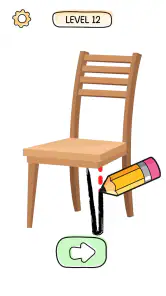
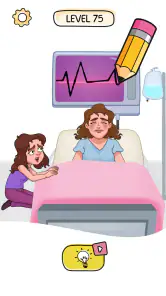
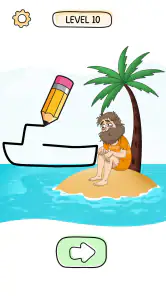
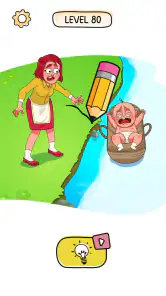
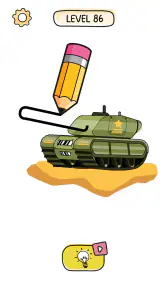
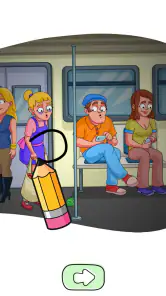
Analysis by Reviewed
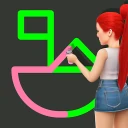
I’d approach Draw Puzzle: Tricky Brain Test as a quick, playful word-and-drawing puzzle game rather than a serious brain-training tool. The basic appeal is easy to grasp: look at a situation, work out what is missing or what would solve it, then draw your idea. That makes the first few minutes feel approachable even if you’re not used to puzzle games. The satisfying moment is not making a neat picture; it’s spotting the odd little connection the scene is asking you to make.
What to expect when you open it
The game is made by Teos Oyun and sits in the word-game category, though its draw-to-solve format gives it a different feel from a conventional word search or crossword. Its audience is broad: it is rated for Everyone, and I can see it working for a child and adult to take turns proposing answers. It is free to install, with optional in-app purchases priced from $0.99 to $5.99 per item. That gives you a low-commitment way to try the core idea, while still being worth checking your purchase settings if you share a device.
It has a 4.7 average from around 87,000 ratings, and has passed 10 million installs. Those figures suggest that the simple premise has found plenty of players, but they do not tell you whether every riddle will click for you. I’d expect some levels to feel instantly obvious and others to depend on a less literal interpretation. The game was released on September 15, 2022, and its current version is 1.1.49; it requires Android 7.0 or later.
From the first puzzle to a useful rhythm
When you start, I’d focus on the scene before drawing. Ask what the character needs, what seems out of place, or what simple mark could change the situation. Then try the smallest useful stroke rather than attempting a detailed sketch. The game is not asking you to show artistic skill, so a quick line can be a better first attempt than spending time making a careful drawing.
That approach is useful when a puzzle seems confusing: describe the problem in a few words, then test a visual answer to that problem. If your first idea does not work, I’d change the interpretation rather than redraw the same idea more carefully. That small reset keeps the game light and makes success feel like a thinking win instead of a drawing contest.
How it compares, and when I’d choose something else
Compared with a crossword, word search, or trivia quiz, this is less about recalling facts or finding letters and more about turning a riddle into a simple visual action. I’d pick it for a short break, a relaxed shared game, or a moment when I want a puzzle without a long setup. For a commute or a waiting room, one useful habit is to play in small bursts and stop after a level that has taken real thought; that keeps the game from turning idle time into an obligation.
I would choose a traditional word puzzle instead if I wanted vocabulary practice, a predictable difficulty curve, or a challenge that rewards sustained solving. I’d also skip this one if I strongly dislike trial and error or expect every answer to follow strict, literal logic. The humor and lateral thinking are part of the appeal, but they can also make a solution feel surprising rather than inevitable.
More From Our News Desk

Weather by Xiaomi Review: Clear at a Glance, Less Clear Up Close

X Under Pressure: Can It Recover When Posting Goes Wrong?

Clash of Clans Is Won Between the Battles

Android Auto Makes the Case for Quieter Car Software

MobiOffice: Transforming Mobile Productivity with Seamless Integration

EA SPORTS FC™ Mobile Soccer: Redefining Mobile Sports Gaming
The game is free, but that does not mean every part of the experience has no cost: optional purchases are available, so I’d treat them as a choice rather than something needed to understand the basic concept. A practical first-session plan is to try several puzzles, notice whether you enjoy interpreting the scenes, and decide from that—not from the urge to clear levels quickly. If you’re playing with someone else, take turns explaining the clue before drawing; comparing two different interpretations can be more fun than racing to the answer.
Getting to Know the Game
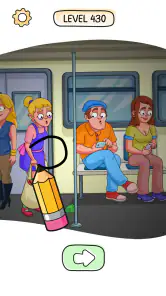
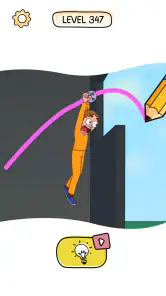
Alright, let’s dive into what Draw Puzzle: Tricky Brain Test is all about. The premise is pretty simple: you’re given a scenario, usually a funny or tricky one, and your task is to draw a solution to solve it. Sounds easy, right? Well, not quite. The game cleverly incorporates riddles and requires a bit of lateral thinking, which keeps things interesting and often hilarious.
Gameplay and Features
The gameplay is straightforward, which is part of the appeal. You don’t need to be a Picasso to enjoy the game; a simple line or squiggle can sometimes be the answer to these brain teasers. The app offers a wide variety of scenarios that range from everyday situations to completely outlandish ones, keeping you on your toes.
What I found particularly engaging is the game’s ability to make you think outside the box. It’s not just about drawing but also imagining creative solutions. Plus, the developers have done a great job with the continuous updates, adding new levels regularly, so boredom is out of the question.
Why It’s Worth a Try
If you’re wondering why you should give this app a shot, here’s the deal. It’s perfect for all ages, whether you’re a kid looking to have some fun or an adult seeking a quick mental exercise. The game doesn’t require internet access, making it a great option for those long commutes or when you're just chilling at home.
Moreover, the app’s graphics are simple yet charming, with a user-friendly interface that makes navigation a breeze. And let’s not forget the sound effects, which add a light-hearted touch to the overall experience. There’s something satisfying about hearing that little ding when you solve a puzzle.
Who gets the most out of the drawing mechanic
I think the strongest fit is someone who enjoys visual riddles but does not want the pressure of producing polished art. The drawing is a way to express an answer, not a test of hand control. That distinction makes the game approachable for people who might avoid sketching apps, and it also makes it easy to pass the phone around: each person can suggest a solution, then make a quick attempt.
It can work well as a low-effort shared activity during a quiet evening or while waiting for food. Instead of handing the device to someone and letting them tap through alone, I’d describe the scene aloud and ask what they think is missing. That turns a solo puzzle into a small conversation without needing a separate multiplayer mode. It is especially useful when the group has mixed ages or different levels of confidence with word games, because the visual clue gives everyone an entry point.
There is a trade-off, though. If you prefer puzzles where the rules are stated precisely and the answer follows a chain of formal deductions, this kind of riddle can feel loose. A solution may depend on noticing the intended visual joke rather than proving that one answer is the only logical possibility. I’d treat a stubborn level as a prompt to reconsider what the scene is hinting at, not as evidence that you need better drawing skills.
A practical way to handle tricky levels
When I hit a puzzle that does not make sense immediately, I’d divide the scene into three parts: the visible problem, the object or person affected, and the change that would make the situation better. Then I’d draw only the missing element or the simplest alteration that communicates that change. This is more useful than adding detail, because extra strokes can distract from the core idea and do not necessarily make the intended answer clearer.
Another helpful habit is to say your guess before touching the screen. For example, if the scene looks uncomfortable, ask what would relieve that discomfort; if something appears incomplete, ask what one addition would finish it. Putting the thought into words helps separate a real interpretation from random doodling. It also makes retries less repetitive: after a failed attempt, you can identify whether the problem was your reading of the scene or the mark you chose to make.
I would not rush through every puzzle just to maintain momentum. A brief pause often helps you notice an overlooked detail, while repeated fast guesses can make the game feel arbitrary. If you are playing with a child, it can be more rewarding to let them explain why they chose a particular mark than to supply the answer immediately. That keeps the emphasis on reasoning and imagination rather than on finishing a level as quickly as possible.
Where it sits among casual puzzle choices
Among familiar word games, Draw Puzzle occupies an unusual middle ground. A crossword asks you to retrieve words and fit them into a structure; a word search is about scanning for letter patterns; trivia tests what you already know. Here, the challenge starts with an illustrated situation and asks you to convert an idea into a drawing. I’d choose it when I want a puzzle that feels more like interpreting a visual joke than studying clues or memorizing facts.
That also means it may not replace those other games. If you want to build spelling confidence, practise vocabulary, or settle into a long session with a clear system of clues, a conventional word puzzle is a better match. If you want short, varied prompts that invite a quick answer, this one has the more immediate hook. Its appeal depends on enjoying the leap between what you see and what you think the scene needs.
It is also not the choice I’d make for a highly competitive session. The pleasure is in testing an interpretation and seeing whether it fits, not in measuring yourself against another player. For a friendly hand-off, take turns and compare ideas; for a serious score-focused challenge, a game built around timed rounds or explicit rules will likely feel fairer and more satisfying.
Small choices that make the first session smoother
For a first try, I’d play somewhere you can give the screen a little attention rather than opening it while multitasking. The drawings may be simple, but the clue is often in the relationship between objects, so a quick glance while answering messages can make a level seem more obscure than it is. A few focused puzzles are a better test of whether the humor and reasoning suit you than a long, distracted session.
If you share a device, it is sensible to keep purchases in mind. The game costs nothing to install, while optional items are offered at different prices; I’d make sure the person using the phone knows that before handing it over. That is a practical point for families, particularly when a child is exploring the game independently. The Everyone age rating makes the content broadly suitable, but purchase decisions still deserve the same attention as they do in any free-to-install game.
For a commute, I’d choose levels that fit the time you have rather than trying to force a long run. A short pause between stops or during a wait is enough to try a riddle, and leaving a difficult one for later is perfectly reasonable. The game’s simple draw-and-solve premise makes it easy to return to the basic activity, but the best experience comes when you are willing to look at the scene instead of tapping through automatically.
What to expect from the experience over time
The version available is 1.1.49, and the game has been around since September 15, 2022. I would approach its ongoing appeal as a matter of whether you enjoy this particular puzzle style, rather than assuming that any one game can supply endless novelty. Its central pleasure is the same from level to level: interpret a situation, make a visual guess, and see whether your idea fits. If that loop makes you smile, the format is easy to revisit; if it starts to feel repetitive, switching to a crossword or another kind of brain teaser is a sensible change of pace.
One question a first-time player may have is whether artistic ability matters. In my view, it should not be the reason to hold back: the game is built around a simple mark communicating an answer, not attractive illustration. Another is whether every riddle will feel fair. I would expect a mix of immediate connections and moments where the intended reading takes a second look, so patience with playful ambiguity matters more than drawing confidence.
The Android requirement is version 7.0 or later, which gives Android users a clear compatibility check before installing. For everyone else, the useful decision is whether the basic interaction sounds appealing: looking at a scene and drawing a small solution. The game is free to start, so trying that loop is a straightforward way to judge its fit, while remembering that optional purchases remain a separate choice.
The Final Verdict
In conclusion, Draw Puzzle: Tricky Brain Test is a delightful game that’s worth checking out. It’s not just another puzzle game; it’s a test of your creativity and wit. Whether you’re a seasoned puzzle enthusiast or a casual gamer, this app offers something refreshing to the gaming experience.
So, if you’re ready to put your brain to the test and have a few laughs along the way, download it and start drawing your way to solutions!
Draw Puzzle: Tricky Brain Test Frequently Asked Questions
Can I play Draw Puzzle: Tricky Brain Test in short sessions?
The game is built around completing individual riddle levels by drawing, so it can suit a quick puzzle break as well as a longer stretch of play. Each challenge asks you to interpret a scenario and sketch a solution, making it easy to focus on one puzzle at a time. If you enjoy casual brain teasers, that level-based format may fit your routine.
What kind of puzzles should I expect in Draw Puzzle: Tricky Brain Test?
Expect visual riddles where you respond to a tricky scenario by drawing what you think is missing or needed to solve it. The challenge is not simply making a neat sketch; you have to read the prompt carefully and work out the intended solution. That creative, problem-solving approach is the core of the game and may appeal to players who like thinking beyond obvious answers.
Can children play Draw Puzzle: Tricky Brain Test safely?
The game has an Everyone content rating, and its drawing-and-riddle format is suitable for a broad audience. Younger players may still appreciate an adult nearby if they need help understanding a puzzle or if in-app purchases are a concern. The game is free to download, but optional purchases are available, so using device purchase controls can help prevent accidental spending.
Does Draw Puzzle: Tricky Brain Test offer hints when I get stuck?
Draw Puzzle: Tricky Brain Test focuses on solving each scenario by drawing, so the main way to move forward is to examine the prompt and try a creative solution. The game may offer optional in-app purchases for hints or additional content. If you prefer not to spend, you can still approach the puzzles through your own reasoning and drawing attempts.
Is Draw Puzzle: Tricky Brain Test suitable for players who enjoy word games?
Draw Puzzle: Tricky Brain Test is categorized as a word game, but its central appeal is solving visual riddles by drawing. It suits players who like interpreting a prompt, testing an idea, and thinking creatively rather than simply answering conventional word questions. The store summary invites players to complete levels by drawing and become a riddle master.
Pros
- Engaging puzzles stimulate critical thinking.
- Variety of levels keeps gameplay fresh.
- Intuitive controls make it easy to play.
- Humorous scenarios add entertainment value.
- Encourages creativity and problem-solving.
Cons
- Ads can be intrusive during gameplay.
- Some puzzles may be overly simplistic.
- Limited hints available can frustrate players.
- Progression may feel slow for advanced users.
- In-app purchases can be expensive.
- Category
- Word
- Version
- 1.1.49