DOP 5: Delete One Part
- 1.13K
- 4.6
- Installs
- 10.00M
- Price
- Free

Screenshots

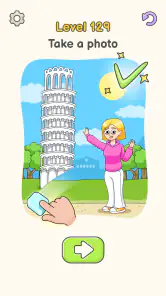
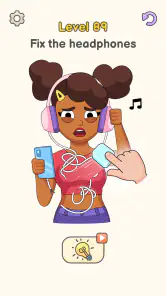
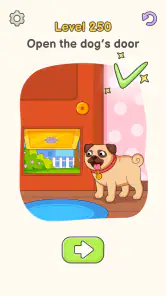
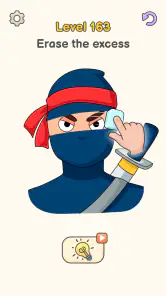

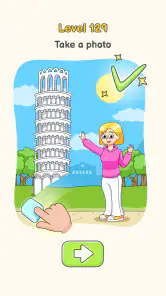
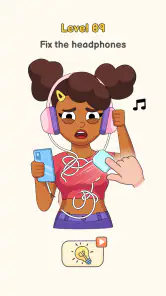
Analysis by Reviewed
Before installing, I’d set one expectation: DOP 5: Delete One Part is built around quick visual riddles, not long-form puzzle solving. You look at a drawing, decide what should disappear, and swipe to test your idea. That simple loop makes it approachable, but it also means the challenge depends more on noticing an odd detail than on planning a complicated sequence of moves.
A good fit for short, casual sessions
I’d reach for this game during a short wait, on a quiet break, or when I want a small mental diversion without needing to remember a sprawling board. A level gives you a self-contained scene to inspect, so you can stop after a puzzle rather than keeping track of a campaign. If you enjoy visual wordplay and picture-based riddles, that compact format is a real strength. If you want a story, a large collection of interlocking mechanics, or a demanding logic workout, a different kind of puzzle game is likely to hold your attention better.
It can also work as a casual pass-and-play activity: one person proposes what to erase, another looks for a different clue, and you compare ideas before making a swipe. The useful part is agreeing on a reason for the guess, not simply rubbing the whole picture until something happens. That makes the game more engaging for two people, although it remains a light puzzle rather than a substitute for a structured multiplayer game.
What to expect before you begin
The game is free to play, rated Teen, and has an average rating of 4.6 from around 42,000 ratings, with over 10 million installs. It launched on June 7, 2023, and version 1.1.20 lists Android 8.0 as the minimum operating system. Those details make it easy to judge whether it fits your device and age group; the more important question is whether you enjoy visual riddles. If you prefer elaborate logic grids or a story that carries you through a campaign, this is a different, much lighter kind of puzzle.
On a first visit, I would focus on the picture rather than trying to guess the game’s intended trick. Look at what is unusual, what seems incomplete, and which object might be hiding the clue. The illustrations are simple enough to scan quickly, and the swipe-to-erase interaction means there is little to learn before you can try an idea. That low barrier is reassuring: you can make a first attempt without a tutorial-heavy setup or a complicated control scheme.
Getting to the first “aha” moment
Each level gives you a quirky illustration and asks you to erase part of it to uncover the solution. I found that a useful first move is to pause for a moment and inspect the whole scene before swiping. A detail that looks decorative may be the key, while the largest or most obvious object may be a distraction. Make a deliberate swipe over the part that seems meaningful, then check how the image changes. This small habit turns random rubbing into a more satisfying visual deduction.
If an attempt does not work, I would not immediately sweep across the entire picture. Try one plausible area at a time and use the result to rethink the scene. That approach keeps the puzzle readable and helps you notice what the game is asking you to reinterpret. A successful solve feels best when you can explain the visual joke or hidden relationship afterward, rather than merely stumbling into the right patch.
More From Our News Desk

Clash of Clans Is Won Between the Battles

Android Auto Makes the Case for Quieter Car Software

MobiOffice: Transforming Mobile Productivity with Seamless Integration

EA SPORTS FC™ Mobile Soccer: Redefining Mobile Sports Gaming

How Microsoft OneDrive Became a Mobile Productivity Giant

How Google Translate Breaks Language Barriers Effortlessly
A practical way to get unstuck is to describe the scene to yourself in plain words before touching it: what is happening, what seems out of place, and what could be concealed behind or within an object? Then make one targeted swipe. This brief pause is especially useful when several parts look equally important, because it stops the screen from turning into a series of uninformative guesses. The goal is not to devise an elaborate theory; it is to give each attempt a reason.
Where the simple controls help—and where they can frustrate
The erasing action is easy to understand, which lets a first-time player reach a meaningful attempt quickly. There is no elaborate control vocabulary to learn before the central puzzle makes sense. At the same time, a swipe can feel imprecise if you are unsure how much of an object the game expects you to remove. I’d begin with a controlled stroke over the suspected clue rather than making a broad sweep, then reassess the picture after the response.
That distinction matters because a wrong guess and a poorly aimed guess can feel similar: neither produces the result you hoped for, but only one tells you much about your interpretation. Keeping attempts small helps you separate those possibilities. It also makes the reveal easier to understand, since you can see what changed without mentally reconstructing half the scene.
For a first session, I would not treat a quick solve as proof that every later puzzle will be effortless. The premise stays consistent, while the way a drawing invites you to interpret it can vary. When a level feels obvious, enjoy the quick win; when it does not, scanning the relationships in the scene is more productive than assuming the answer must be a tiny hidden object. That balance keeps the game relaxed without making every puzzle feel like a test.
The Gameplay Experience
In DOP 5: Delete One Part, each level presents a different scenario with a quirky illustration. Your task is to delete a part of the image to find the hidden solution, which is not always as straightforward as it seems. The game developers have done a stellar job at keeping each level fresh and surprising. The satisfaction of figuring out the right part to delete is immense, and the "aha!" moment hits you every time you solve a puzzle.
What I love about this game is the simplicity of its mechanics. All you need is a swipe of your finger to erase parts of the picture. However, don't let the simplicity fool you. The levels get progressively harder, requiring more thought and creativity. This makes the game incredibly addictive as you always feel the urge to crack just one more puzzle before putting it down.
How it compares with other puzzle styles
Among casual puzzle games, this one sits closer to illustrated riddles than to match-and-clear boards, jigsaws, or number puzzles. A jigsaw asks you to fit pieces into a visible whole; a number grid rewards keeping track of constraints; here, the key is interpreting a drawing and choosing what to remove. That makes it easier to pick up than a puzzle with rules to memorize, but it may offer less depth for someone who enjoys building a solution through several connected deductions.
I’d choose it when I want variety in the form of small visual problems, not when I want to practice a particular skill such as arithmetic or vocabulary. The trade-off is that the answer can depend on recognizing the scene’s intended joke or visual relationship. If that kind of lateral thinking feels playful, the format is appealing. If it feels arbitrary to you, a rule-driven logic game may be a fairer and more satisfying challenge.
Visuals and Sound
The graphics in DOP 5 are vibrant and engaging, with illustrations that are both fun and functional. They aren't overly detailed, which works in favor of the game’s design, keeping everything clean and easy to interact with. The sound effects add an extra layer of enjoyment, with satisfying swooshes and pops each time you erase something.
The developers have ensured that the aesthetics do not overshadow gameplay, striking a perfect balance between visual appeal and user experience. This is crucial for a puzzle game where clarity matters.
When I’d pick it up—and when I’d leave it aside
One realistic use is a brief break between everyday tasks: I can open a level while waiting for a kettle or sitting through a short pause, focus on one illustration, and put the phone away once I have solved it. The self-contained setup suits that kind of stop-and-start play better than a game that expects a long uninterrupted session. It is also easy to hand the phone to someone nearby and ask what they think the picture is missing, making a spare moment more social without requiring a shared account or a planned match.
I would skip it if I were specifically looking for a calm, methodical challenge with dependable rules and a clear chain of deductions. The visual trick can be the point, but it can also be the source of friction: a player who does not read the scene the intended way may feel they are guessing rather than reasoning. In that situation, a crossword, a sudoku-style puzzle, or a conventional jigsaw is a better choice because its constraints are more explicit.
Why You Should Play
If you’re a fan of puzzles and looking for something new to tickle your brain cells, this app is worth a try. It’s a perfect way to kill time while still engaging your mind. The app is free, which is always a plus, though there are in-app purchases and ads. However, these are not intrusive and do not take away from the overall experience.
One trade-off is that the one-swipe premise naturally limits the kind of challenge it can offer. It relies on noticing a visual clue and testing an interpretation, rather than building a solution through several linked steps. Compared with word puzzles, number grids, or conventional jigsaw games, it feels more like a succession of illustrated riddles. That makes it approachable when I am tired, but less rewarding if I want a demanding puzzle that keeps a complex chain of reasoning in play.
I would recommend it to people who enjoy playful picture puzzles and want an easy way into a level. It is less suited to players who dislike trial and error, expect a steadily unfolding story, or want every challenge to have the rigor of a logic problem. If a scene leaves you unsure, slow down and inspect the relationships between objects before erasing; if you are still not enjoying that process, switching to a puzzle built around words or numbers is a sensible choice, not a failure.
Questions worth considering before you settle in
Will it suit a younger player? The Teen age rating is worth checking before handing it over, especially if you are choosing a game for a child. Is it suitable for a few spare minutes? Yes, its individual illustrated puzzles make it a natural fit for short breaks. Does it offer the same kind of satisfaction as a logic grid? Not quite: the reward comes from spotting a visual interpretation, rather than methodically filling in a set of constraints.
Will every level be solved immediately? I would not expect that. Some scenes are easy to read at a glance, while others benefit from pausing and testing one sensible idea at a time. And is it the right choice for a player who wants a deep, continuous challenge? Probably not; I’d steer that person toward a puzzle built around longer reasoning or a more substantial progression. Knowing which kind of challenge you want makes it easier to enjoy this game on its own terms.
For a new player, I’d keep the first session simple: open a scene, take in the whole drawing, identify one detail that seems unusual, and make a small, deliberate swipe. If it works, notice why; if it does not, use that result to inspect a different relationship rather than erasing at random. That approach gives the game a fair chance to deliver its best moment—the instant a familiar-looking picture makes sense in a new way.
DOP 5: Delete One Part is a delightful mix of fun and challenge, making you think outside the box while keeping you entertained. It's a great reminder that sometimes, less is more, and in this game, a simple erase can lead to complex solutions. So, if you're ready to put your brain to the test, download it and let the puzzling begin!
DOP 5: Delete One Part Frequently Asked Questions
How does the erase mechanic work in DOP 5: Delete One Part?
Each puzzle presents an illustration and asks you to figure out which part to erase. The key is to consider how removing one detail could change the scene or reveal what is hidden, rather than simply deleting the most noticeable object. This makes observation and creative thinking central to play, and the game’s short description captures that idea: erase the boundaries of your imagination and see what’s hidden.
Is DOP 5: Delete One Part suitable for quick play sessions?
The game is built around individual illustrated puzzles, so it can suit players who want to dip in and solve a brain teaser when they have a little time. Each level asks you to inspect a scene and choose a part to erase, making the core activity easy to understand. It is also possible to play puzzles offline, which can be convenient when you are away from an internet connection.
Who developed DOP 5: Delete One Part, and what kind of game is it?
DOP 5: Delete One Part is a puzzle game developed by SayGames Ltd. Its central idea is to inspect an illustration and erase the part that changes what is happening in the scene. The appeal is in looking beyond the obvious: a small edit can reveal a solution or uncover something unexpected, making each puzzle an invitation to think creatively.
What is DOP 5: Delete One Part about?
DOP 5: Delete One Part is a puzzle game that challenges players to think creatively by erasing parts of images to solve each level. Players must determine which part of the illustration to delete in order to reveal the hidden solution. The game combines elements of brain teasers and interactive storytelling, providing an engaging and thought-provoking experience.
Is DOP 5: Delete One Part suitable for children?
Yes, DOP 5: Delete One Part is suitable for children. The game is designed to be family-friendly, with puzzles that are appropriate for all age groups. It encourages problem-solving and critical thinking skills without any violent or inappropriate content, making it a great choice for young players looking to enjoy a fun and educational gaming experience. Its content rating is Teen, so parents may want to check that rating and decide whether it fits their child before downloading.
Pros
- Engaging puzzles enhance cognitive skills.
- User-friendly interface makes navigation easy.
- Regular updates keep content fresh.
- Minimal ads for a better experience.
- Challenging levels for all ages.
Cons
- In-app purchases can be pricey.
- Some puzzles are too simplistic.
- Occasional hints are repetitive.
- Limited language options available.
- Requires constant internet connection.

- Category
- Puzzle
- Version
- 1.1.20