Daily POP Crossword Puzzles
- 1.69K
- 4.2
- Installs
- 100.00K
- Price
- Free

Screenshots
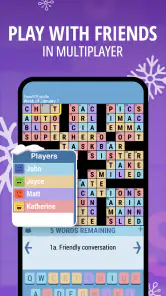

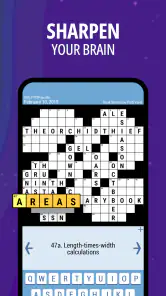
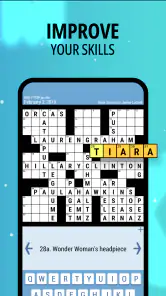
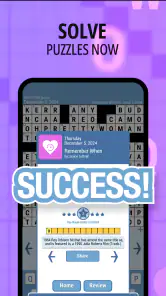
Analysis by Reviewed
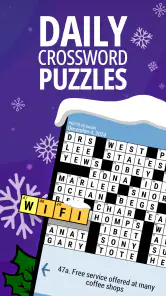
I usually judge a crossword game by a simple question: does it make me want to solve one more clue, or does it start feeling like homework after the first puzzle? Daily POP Crossword Puzzles sits on the lighter, more playful side of the word-game category. It uses pop-culture knowledge as its main flavor, so the experience feels less like studying a traditional newspaper crossword and more like taking a short entertainment quiz with a grid attached.
After spending time with it, I see the game as a good fit for casual players who enjoy familiar names, shows, music, films, celebrities, and everyday cultural references. It is free to start, rated for Everyone, and made by Puzzle Nation Apps. Its average rating is 4.2 from around 5.7 thousand ratings, with more than 100 thousand installs, which gives it a useful track record without making it feel like an overwhelming social platform.
The important decision is not whether it is a crossword game. It clearly is. The real question is whether you want a relaxed, pop-culture-focused challenge or a deeper word puzzle that rewards broad vocabulary, obscure references, and long uninterrupted solving sessions. For me, Daily POP is at its best when I want a compact mental break rather than a serious daily ritual.
How I Decide Whether Daily POP Is Worth Playing
The theme matters more than raw difficulty
The first thing I would consider is your relationship with pop culture. These puzzles are built around entertainment knowledge, so recognition can be just as important as spelling skill. If you enjoy identifying a familiar actor, song, character, television reference, or current cultural name, the clues have a satisfying “I know this” quality. That makes the game approachable even when you are not an expert crossword solver.
On the other hand, someone who prefers classic crosswords with literary vocabulary, historical references, wordplay, and deliberately tricky definitions may find the focus narrow. The game’s appeal depends on whether the subject matter feels inviting to you. A player who does not follow entertainment news or popular media may spend more time guessing than solving.
Short sessions are the natural use case
I would choose this game for the moments when I have a few minutes to spare: waiting for an appointment, taking a break from work, or winding down before bed. The format encourages a puzzle-at-a-time rhythm rather than demanding a long commitment. That is useful because I can play without preparing a notebook, remembering a complicated campaign, or keeping track of a large collection of game systems.
There is also a practical advantage to this style of play. A crossword gives me something more active to do than scrolling through short videos, but it does not require the concentration of a strategy game. I can pause when my attention drops and return later without feeling that I have lost progress in a larger match.
What I look for before choosing a free word game
“Free” does not automatically mean frictionless, so I pay attention to how comfortable the game is during ordinary use. Daily POP Crossword Puzzles is free to download and play, while optional in-app purchases range from less than a dollar to around fifty dollars per item. That wide range makes it worth checking purchase prompts carefully, especially if a child uses the device.
The game is suitable for Everyone, which makes it easier to recommend for family devices, but the content can still be more enjoyable for adults or older children who recognize the references. The age label describes suitability, not the difficulty of the clues or how familiar a player will be with the subjects.
Compatibility and maintenance
The current version is 4.2.4 and requires operating system version 9 or later. That is helpful information if you are using an older phone or tablet. I would check the device before installing rather than assuming every older iPhone or iPad will run it. The developer, Puzzle Nation Apps, has kept the game in an established version line, so this is not something that feels like an abandoned experiment.
For a decision guide, these details matter because switching to a new word game has a small but real cost. You may need to learn a different clue style, adjust to a new interface, and decide whether the game’s purchase prompts suit your habits. Daily POP is easiest to adopt when you want a familiar crossword structure with a more entertainment-centered identity.
Where the pop-culture approach works especially well
The strongest part of the experience is the emotional lift that comes from recognition. A standard clue can feel dry when I do not know the answer, but a clue connected to a familiar piece of entertainment gives me a reason to keep thinking. Even when I need to use crossing letters, the solve feels like recalling something from memory rather than simply searching a dictionary in my head.
That makes the game a pleasant shared activity. I can imagine two people solving a puzzle together on a sofa, with one person remembering a performer and the other supplying the spelling. It is also a nice option for someone who says they dislike “brain training” apps but enjoys trivia. The crossword structure adds enough thought to make the session engaging without presenting itself as a formal exercise.
The useful trick is to treat the grid as a memory map, not a test of isolated knowledge. When I get stuck, I do not stare at the clue indefinitely. I fill the answers I recognize, inspect the crossing letters, and then reconsider the uncertain clue. Pop-culture answers often become obvious once the grid narrows the possible spelling.
Three habits that make solving smoother
My first practical tip is to scan the whole puzzle before committing to one difficult clue. Easy answers create anchors, and those anchors reduce the number of possibilities in nearby entries. This is more efficient than spending several minutes trying to force a single answer from a vague memory.
My second tip is to be cautious with names. Pop-culture clues can trigger a fast guess, but names are easy to misspell and a single wrong letter can make several crossings look impossible. I prefer entering the parts I am confident about and letting the surrounding answers confirm the rest.
My third tip is to use the game as a low-pressure vocabulary routine rather than chasing perfect speed. If I rush, I turn a relaxing puzzle into a frustrating accuracy test. Slowing down also helps me notice whether a clue is asking for a title, a person, a character, or another kind of reference.
Where it beats a traditional crossword
Compared with a newspaper-style crossword, Daily POP is more immediately approachable for players who are motivated by entertainment topics. Traditional puzzles often expect comfort with wordplay, unusual definitions, abbreviations, and less familiar vocabulary. Here, the subject matter can provide a stronger entry point. I am more likely to keep trying when the answer might be a recognizable cultural reference.
It also works better for casual phone play than a printed puzzle for someone who wants convenience. I do not need to carry a newspaper, find a pen, or keep the page flat. The digital format makes it easy to open the game during a spare moment and stop when I am done.
That convenience comes with a trade-off. A paper crossword has a quiet, focused quality that some players prefer. It also avoids the distractions and purchase decisions that can accompany a mobile game. If your ideal crossword session involves a cup of coffee, a printed page, and no digital interruptions, the traditional alternative may feel more satisfying.
Where other word-game categories fit better
If you want a vocabulary-building game, a spelling game may be a better choice because it can place more emphasis on word formation and definitions. If you want a competitive experience, a multiplayer word game may provide more pressure and replay energy. If you want a pure trivia experience, a quiz app may get to the questions faster without asking you to arrange answers in a grid.
Daily POP occupies a middle ground: it combines recall, spelling, clue interpretation, and crossword structure. That combination is its identity, but it also means it will not fully replace every type of word game. I would not choose it as my only option if my main goal were advanced vocabulary, head-to-head competition, or highly technical crossword construction.
Who should skip it
I would skip this game if pop culture is not a subject I enjoy. The central theme is not a minor decoration that can be ignored; it shapes the reason many clues are fun. Players who dislike celebrity-focused references may find the content less rewarding even if they normally enjoy crosswords.
I would also look elsewhere if I want a completely offline-feeling experience, a large range of puzzle styles, or a demanding challenge that steadily moves toward expert territory. The game is designed to be accessible and entertaining, so people searching for a severe test of obscure vocabulary may outgrow its tone.
Finally, I would be careful recommending it to a child who can make purchases independently. The Everyone rating is reassuring for content, but the available purchase range means device-level purchase controls are still sensible. That is ordinary good practice for any free game with optional spending.
The cost of switching from another crossword app
Moving from a familiar crossword app is easy at the control level because the basic idea remains recognizable: read a clue, enter an answer, and use crossing letters to refine guesses. The bigger adjustment is thematic. A player coming from a general crossword may need to think less like a dictionary reader and more like someone recalling entertainment references.
There is also a habit cost. If your current app has become part of a strict morning routine, switching may feel unnecessary unless Daily POP’s subject matter is more motivating. I would test it during the same time of day as my existing game and compare which one makes me look forward to solving. Enjoyment is a better measure here than simply counting how many puzzles I open.
For new players, the switching cost is lower because there is no established solving routine to replace. I would start by playing patiently, learning the style of clues, and resisting the temptation to judge the game based on one unfamiliar reference. The first few puzzles are partly about discovering how the game expects me to think.
How the purchase model affects my recommendation
The free entry point is a genuine advantage because I can find out whether the pop-culture focus suits me before spending anything. I would not buy optional items immediately. I would first see whether the normal puzzle flow fits my schedule and whether I enjoy solving without feeling pressured to accelerate.
The presence of purchases from $0.99 to $49.99 per item means the game deserves a little financial awareness. A low-cost optional purchase can be reasonable if it improves a personal hobby, but a high-priced item should be considered carefully rather than treated as part of the basic cost of playing. I prefer to keep the free experience separate from any impulse decision made after getting stuck.
This is another area where a printed crossword or a paid, purchase-free puzzle app may suit some readers better. Those alternatives can offer a clearer sense of what the overall cost will be. Daily POP is more flexible for trying the game, but flexibility requires the player to manage optional spending deliberately.
My recommendation for different kinds of players
For a casual player who likes entertainment trivia, I recommend giving it a try. It is approachable, easy to fit into a busy day, and more distinctive than a generic word grid because its subject matter gives the clues personality. It is especially appealing if you enjoy solving with another person and comparing memories of familiar pop-culture references.
For a regular crossword enthusiast, my recommendation is more conditional. Keep your usual crossword if you value intricate wordplay, broad subject coverage, or a more traditional level of difficulty. Add Daily POP as a lighter companion when you want something less formal and more immediately recognizable.
For a parent choosing a game for a family device, the Everyone rating is a positive starting point, and the free download makes testing simple. I would still explain that optional purchases exist and use the device’s purchase protections. The game may be most enjoyable when an adult or older child can help with references that are outside a younger player’s experience.
For someone who wants a serious competitive word game, I would probably choose another category. Daily POP is better understood as a personal, relaxed puzzle session than as a contest built around speed or rankings. Its value comes from the combination of casual challenge and pop-culture recall, not from turning every solve into a high-pressure match.
My final view after weighing the alternatives
Daily POP Crossword Puzzles is a good recommendation when recognition makes word games more enjoyable for you. I like that it gives crossword solving an approachable entertainment angle and fits naturally into short breaks. The free starting point lowers the risk of trying it, while the established release and current version make it feel like a maintained choice rather than a one-off novelty.
My reservations are equally clear: the theme will not suit everyone, optional purchases require attention, and traditional crossword fans may want more variety or sharper difficulty. I would not present it as the best word game for every player. I would present it as a focused option for people who want pop-culture clues in a compact mobile format.
If that description matches what you are looking for, I think it is worth installing and playing without spending anything at first. Give yourself several sessions rather than judging it after one unfamiliar puzzle. If the references keep prompting memories and the grid feels relaxing instead of demanding, you have found a strong everyday companion. If you would rather wrestle with obscure vocabulary or compete against other solvers, switch categories early and choose a game built around those priorities.
Pros
- New crossword puzzles are added daily.
- Hints help when you get stuck on difficult clues.
- Clean layout makes the grid easy to read on phones.
- Puzzles are suitable for short
- relaxing play sessions.
- Progress tracking encourages you to maintain a solving streak.
Cons
- Some puzzles or features may require a subscription.
- The app can feel repetitive for experienced crossword players.
- Hints may reduce the challenge during difficult puzzles.
- An internet connection may be needed for new daily content.
- Advertisements can interrupt the experience for free users.

- Category
- Word
- Version
- 4.2.4