Crossword Puzzle Redstone
- 35.53K
- 4.8
- Installs
- 5.00M
- Price
- Free
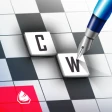
Screenshots
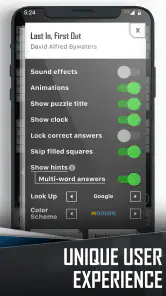
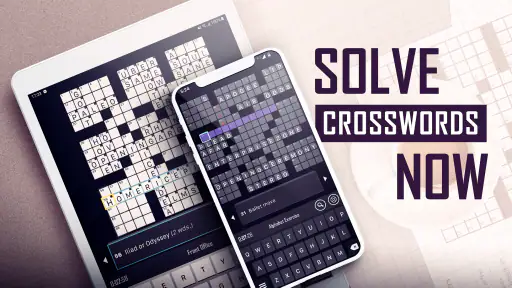
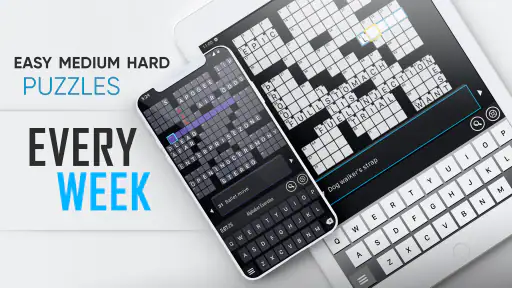
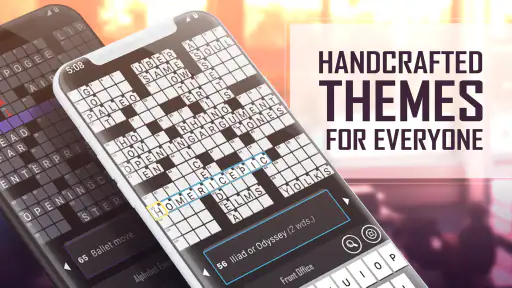
Analysis by Reviewed
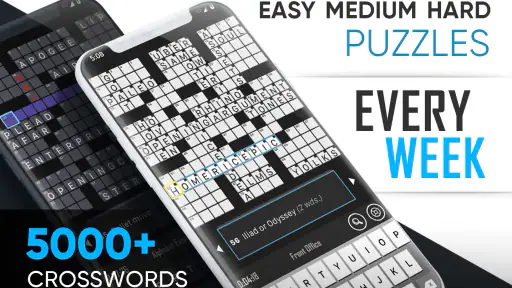
I went into Crossword Puzzle expecting a familiar word-game routine, but its appeal became clearer after several short sessions: you choose a clue, enter an answer, see whether the crossing letters support it, and gradually turn a mostly empty grid into something readable. That simple sequence is the whole point, yet it feels satisfying because every correct answer changes the next decision. I can play for a few minutes while waiting somewhere, then put it down without feeling that I have abandoned a complicated campaign.
This is a free word game from Redstone Games, aimed at players who enjoy traditional crossword solving rather than fast reactions or elaborate story content. It has built a strong audience, with a 4.8 average from around 136 thousand ratings and over 5 million installs. Those numbers suggest broad appeal, but they do not remove the important question: does its particular solving rhythm suit you? After using it, my answer is yes if you want a calm daily puzzle that can work without an internet connection, with a few practical limitations worth understanding before you commit.
How the first move sets the tone
The first action is usually the most important part of a crossword session. I scan the grid and look for a clue that feels approachable instead of forcing myself to begin at the top. A short answer, a familiar phrase, or a clue with an obvious crossing can give me the first foothold. Once I place that answer, the letters shared with nearby entries make other clues less intimidating. The game therefore rewards observation as much as vocabulary.
That opening is friendlier than a blank page because I am not expected to solve the entire puzzle in order. I can move between clues, test an answer, and return later when the surrounding letters provide more context. For a casual player, this makes the game easy to pick up. For a more experienced solver, it leaves room for a deliberate strategy: fill the entries I know, use them to narrow uncertain answers, and avoid wasting time wrestling with one stubborn clue too early.
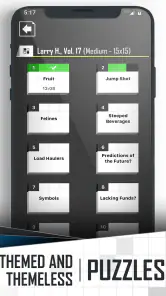
The human-made puzzle focus matters here. The experience feels built around clue interpretation rather than an endless automatic word generator. I pay attention to wording, tense, and the length of the answer, because those details guide the solve. That is a different pleasure from a word scramble, where the challenge is mainly rearranging letters, or a spelling game, where the target is often obvious once the available characters are visible.
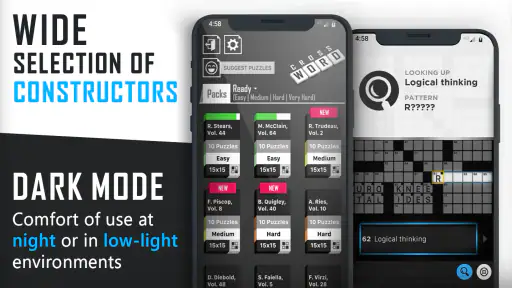
The controls are best understood as a writing surface for the grid. I tap into an entry, enter letters, and move through the answer while checking how each character affects the crossings. That directness keeps the first minute free from menus and distractions. The trade-off is that a crossword interface cannot make a difficult clue easy; it can only make the process of testing and revising answers manageable.
Choosing the right starting point
My most useful habit is to avoid treating the grid like a checklist. If I begin with the first clue and get stuck, the session can feel harder than it really is. Instead, I search for clusters where one answer may unlock several others. A longer entry crossing multiple short ones can be especially valuable, but only when the clue is clear enough to justify the attempt. This approach turns the opening into a small planning exercise rather than random tapping.
That makes the game suitable for a quiet commute, a coffee break, or a few minutes before bed. I do not need to remember a storyline or prepare a team. I simply open a puzzle and look for an entry that gives me momentum. Someone who wants immediate action, bright effects, or constant novelty may find this opening too restrained. The game asks for attention, not reflexes.
It also suits players who want to build a crossword habit without starting with a newspaper-sized challenge. The familiar format is easier to understand than many specialized word games, while the clues still leave room for surprise. I would recommend beginning with the easiest-looking section of a puzzle, not because every answer will be simple, but because early certainty makes later uncertainty less frustrating.
The feedback rhythm: every letter changes the problem
The strongest part of the experience is the feedback rhythm. A correct answer does more than add a word to the screen. It supplies letters to intersecting entries, and those letters change the clues I can solve next. The reward is therefore immediate and practical: the puzzle gives me new information. I am not merely collecting points after an action; I am improving my position inside the grid.
That rhythm creates a pleasant chain. I answer a clue, notice two new letters, recognize a possible word, and then use that word to confirm another crossing. When the chain works, the board seems to open naturally. The best sessions are not necessarily the ones where I know every answer. They are the ones where each partial success reduces the number of plausible choices.
There is also useful feedback when an idea fails. A wrong guess can expose a contradiction in several directions, encouraging me to reconsider the clue rather than repeat the same assumption. I have found it helpful to treat an uncertain answer as a temporary theory. If the crossing letters do not cooperate, I erase the theory quickly. This prevents one attractive but incorrect word from controlling the entire puzzle.
That is a subtle difference from many casual word games. In a word search, finding the target is usually the end of the task. In an anagram game, the available letters define the limits. Here, the answer I enter becomes evidence for other answers. The game keeps asking me to update my thinking, which is why a small grid can hold my attention longer than its simple presentation might suggest.
When the puzzle pushes back
Not every clue produces a clean feeling of progress. Some answers depend on a definition I interpret differently, or on a phrase that is not part of my everyday vocabulary. At those moments, the feedback loop slows down. I may have several letters but still lack confidence, and repeated guessing is not a good solution. The game is more enjoyable when I accept that a pause can be part of solving rather than a failure.
A practical technique is to fill only what I can defend, then leave a difficult entry untouched while working elsewhere. Returning with fresh crossing letters often changes the clue completely. I also read the clue again after filling nearby words, because the answer may have seemed impossible only while the grid was too empty. This is one of the game’s less obvious strengths: progress can come from changing location, not from staring harder at the same problem.
The downside is that players who dislike ambiguity may feel that the game withholds satisfaction. A crossword can be fair and still demand cultural knowledge or flexible interpretation. If you prefer word games with a clearly visible answer bank, instant confirmation, or a single obvious route, this format may feel unnecessarily indirect. I would choose a simpler spelling or matching game for children or for anyone wanting a very low-pressure vocabulary activity.
What counts as a reward here
The main reward is completion, but the path to completion matters more than a flashy celebration. I enjoy seeing an uncertain corner become stable because the surrounding answers finally make sense. The completed grid is proof that several small decisions connected correctly. That feeling is especially strong when I solved the puzzle by inference rather than by immediately knowing every word.
The game’s daily-friendly design also gives the reward a repeatable shape. I can finish a puzzle, put the phone away, and return later for another self-contained challenge. There is no need to reserve a long block of time. A short session can still feel complete if I solve a useful section, while a longer session gives me the chance to chase the final stubborn entries.
I appreciate that this reward is based on understanding rather than speed. A fast solve may feel impressive, but the game does not need to become a race for me to enjoy it. I can pause to think about a clue, revisit an answer, and continue at my own pace. That makes it a good companion for people who want mental exercise without the pressure found in timed competitive games.
There is a financial point to keep in mind. The game is free to download, with optional in-app purchases ranging from $0.99 to $34.99 per item. I would approach those purchases as a convenience or support choice rather than something necessary to understand the basic crossword loop. Anyone who wants a completely purchase-free experience should check the available options carefully before spending, especially if they are sensitive to optional extras in free games.
Offline play and everyday use
Offline access is one of the most useful practical qualities. I can use it in places where a connection is unreliable, which makes it better suited to travel, waiting rooms, or a flight than a word game that depends on being online. The important benefit is not just convenience; it changes when I can play. A puzzle can fill a gap in the day without requiring preparation or a stable signal.
Imagine having ten quiet minutes before an appointment. I open the game, solve a few obvious clues, and stop when my name is called. Later, I can return to the same mental problem and continue from the letters already placed. That stop-and-start pattern works naturally for crosswords because the puzzle preserves a sense of unfinished thought rather than demanding a full match or a complete round.
Offline play also makes the game appropriate for people who want to reduce dependence on social feeds during breaks. It gives me something focused to do, although I would not describe it as a substitute for a full learning course. The vocabulary exposure comes through clues and answers, but the game’s goal is solving, not systematic language instruction.
The content rating is Teen, so I would not automatically hand it to a young child without checking whether the clue style and presentation suit them. For older teens and adults who already understand crossword conventions, the format is approachable. Families looking for a simple shared puzzle may enjoy solving together, but players should remember that a phone-sized grid can make collaboration less comfortable than a large printed crossword.
Resetting the session without losing the habit
A good session has a natural reset point. Sometimes that is the moment I complete the grid; sometimes it is when I have reached a genuinely difficult corner and need a break. The game works because the next session does not require a new skill. I return with the same basic actions—choose a clue, enter an answer, use crossings, and reassess—but the clues create a fresh mental problem.
This reset is gentler than the restart cycle in many arcade games. There is no need to recover a streak of rapid actions or rebuild a character. I can leave after one answer or continue until the puzzle is complete. That flexibility is valuable for people whose free time changes from day to day. It also means the game can become a small routine without turning into an obligation.
My preferred stopping rule is to leave one or two unresolved entries rather than forcing a bad guess. When I return, the problem feels recognizable but not solved, and the distance from uncertainty to confidence becomes the reason to begin again. This is a better experience for me than clearing every clue through trial and error, because the pause preserves the satisfaction of making the final connection later.
The reset is less appealing if you need a strong sense of progression between puzzles. Crossword Puzzle is not the right choice for someone looking for a role-playing system, a competitive ladder, or a narrative campaign. Its continuity comes from improving your solving instincts, not from unlocking a world. Players who want visible character rewards or multiplayer interaction should look elsewhere in the word-game category.
Device fit and accessibility of the format
The game requires Android 6.0 or later, so it is available on a wide range of Android devices that still meet that baseline. On a phone, the grid is convenient for quick play, though larger screens can make clue reading and letter entry more comfortable. I would especially favor a tablet or a larger phone for long sessions, because repeatedly examining small crossings can become tiring.
The current version is 1.7.5. I mention that because players who maintain older devices often care about compatibility before installing. The straightforward crossword format should also be easier to understand than a game built around several layered modes, but ease of understanding does not guarantee ease of solving. The interface may be simple; the clues can still challenge an experienced reader.
For accessibility, I would judge the experience mainly by how comfortably you can read the clue area and select individual cells on your device. If small text or precise tapping is difficult, a larger display may help more than any change in strategy. This is another situation where a printed crossword or a desktop alternative could be preferable, particularly for someone who wants a physically larger grid and more room to annotate.
Who should play it, and who should skip it
I would recommend it to people who enjoy language, deduction, and quiet repetition. It is particularly good for someone who wants a daily word-game routine that can be interrupted and resumed. The offline capability makes it practical, while the crossing-letter system gives each correct answer a purpose beyond simply increasing a score.
It is also a good fit for a player moving from printed crosswords to mobile play. The phone format is more portable, and the ability to work through a puzzle in fragments suits modern schedules. I would suggest starting with a relaxed mindset: the goal is not to prove that you know every word immediately, but to let the grid reveal information over time.
I would skip it if your ideal game is fast, visual, or highly social. There are no reflex challenges in the core loop, and the pleasure depends on reading clues carefully. I would also hesitate to recommend it to someone who becomes annoyed by an answer that remains uncertain despite several crossings. A word-matching game with explicit choices would offer clearer feedback and less interpretive friction.
Compared with a newspaper crossword, this version is more portable and easier to fit into small breaks, but it lacks the tactile scale of paper. Compared with an anagram game, it asks for broader clue interpretation and gives more value to each letter’s position. Compared with a crossword app built around competition, its appeal is calmer: I play against the puzzle’s structure and my own assumptions rather than against a clock or another person.
Why another session begins
The complete loop is easy to describe: I choose an approachable clue, enter a possible answer, receive useful crossing letters, and use that feedback to open another part of the grid. The reward is not only a filled square; it is the growing certainty that the answers belong together. When I stop, the puzzle remains a clear invitation to return rather than a demand to keep playing.
That loop works because every stage feeds the next one. The first action creates a foothold, the feedback rhythm supplies evidence, the reward is a visible gain in understanding, and the reset leaves me with enough unfinished possibility to want another session. It is a modest design, but it is well matched to crossword solving. The game does not need elaborate systems to make a few empty squares feel meaningful.
Redstone Games has made a free word game that is easy to start but not shallow to use. Its 5M-plus installs and strong average rating reflect a format many players clearly recognize and enjoy, while the Teen rating and optional purchases are useful details to consider before installing. I would keep it on my phone for offline breaks, especially when I want something thoughtful rather than noisy.
My final judgment is favorable, with one clear condition: enjoy the act of solving, not just the idea of finishing. If you like using one answer to unlock another and you are comfortable leaving a clue for later, Crossword Puzzle offers a satisfying reason to return. If you need speed, spectacle, or guaranteed answers, a different word game will serve you better. For me, the simple cycle remains compelling because the next session always begins with one small question and the possibility that the letters will finally make everything click.
Pros
- Simple interface makes puzzles easy to start and navigate.
- Suitable for short play sessions during commutes or breaks.
- Word clues help exercise vocabulary and spelling skills.
- Progress can be enjoyed at a relaxed
- non-competitive pace.
- Works well for players who prefer traditional crossword gameplay.
Cons
- Some puzzles may feel repetitive for experienced crossword fans.
- Clue difficulty can vary noticeably between individual puzzles.
- Limited appeal if you prefer games with rich visuals or animation.
- Solving unfamiliar words may require frequent outside help.
- Replay value may drop after completing the available puzzle set.
- Category
- Word
- Version
- 1.7.5