Crossword Daily: Word Puzzle
- 1.11K
- 4.1
- Installs
- 100.00K
- Price
- Free
Screenshots
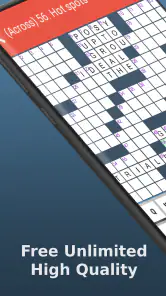
Analysis by Reviewed
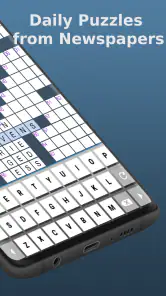
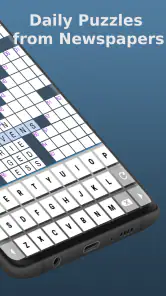
I spent time with Crossword Daily: Word Puzzle as a quiet, repeatable word game rather than a quick novelty. It comes from PocketStar and focuses on collecting crossword puzzles from different papers in one daily destination. That idea sounds simple, but it changes the rhythm of play: instead of chasing a single endless mode, I could choose a puzzle, work through what I knew, pause when I got stuck, and return later with a fresher mind.
This is a free word puzzle game for Everyone, and its appeal is easy to understand. It gives crossword fans a familiar activity without asking them to learn complicated controls or a new game system. At the same time, it is not the best match for someone who wants flashy presentation, rapid rewards, or a highly structured campaign. Its strengths are routine, variety, and the satisfaction of solving clues at my own pace.
How the daily routine creates an early goal
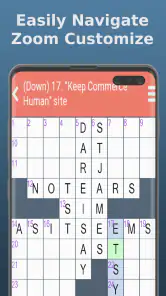
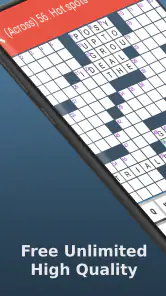
The first goal is straightforward: open a puzzle and start filling the grid. I like that the game does not need a long tutorial to explain its purpose. Crossword players can begin almost immediately, while newcomers can learn by solving the easier clues first and using the crossing letters to narrow down the harder answers.
That early loop is more thoughtful than it may appear. A clue I cannot answer on its own often becomes manageable after two or three neighboring entries are filled. This makes every correct word useful beyond its individual square. The game encourages a practical solving habit: take the low-risk answers first, build a small foundation, then revisit the uncertain clues.
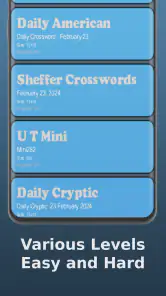
Because the puzzles come from different papers, the opening minutes do not feel tied to one fixed authorial voice. Clue wording and vocabulary can vary, so I had to adjust rather than rely on one narrow pattern. That variety is valuable for regular players, although it also means that a puzzle can feel noticeably more approachable than the next one.
I would recommend starting with a short session rather than trying to finish everything in one sitting. Crossword Daily: Word Puzzle works well when I treat a puzzle as a small mental break. Ten or fifteen focused minutes can be enough to make visible progress, and stopping before frustration takes over makes it easier to return later.
What progress feels like during a puzzle
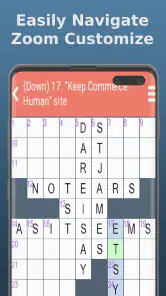
This game does not need an elaborate character system to show progress. The grid itself is the progress signal. Every correct answer creates crossing letters, opens new possibilities, and turns a blank section into something I can reason about. That immediate visual change is more meaningful here than a decorative reward would be.
I found the best momentum came from moving around the grid instead of staring at one stubborn clue. If an answer seemed too vague, I left it temporarily and searched for clues with clearer definitions. Returning with extra letters often changed the problem from guessing to deduction. This is one of the most useful habits for playing efficiently, especially when a puzzle includes unfamiliar wording.
The satisfaction is gradual rather than dramatic. There is no need for a constant stream of notifications or celebratory effects to make a solved section feel worthwhile. The reward is the growing network of letters. For me, that made the game feel calmer than many mobile titles, but players who need frequent unlocks or explicit milestones may find the feedback understated.
A practical tip is to use pencil-like thinking even if the interface does not literally offer a pencil mode: treat uncertain answers as temporary ideas, not commitments. Before entering a word, check whether its letters agree with the clues crossing it. This avoids building an entire corner around one attractive but incorrect guess.
The difficulty curve is uneven in a useful way
The difficulty does not feel like a carefully staged campaign where each level introduces one new lesson. Instead, the challenge depends heavily on the individual puzzle and the language used by its source. Some grids let me establish a rhythm quickly; others slow me down with clues that require broader vocabulary or more lateral thinking.
That unevenness is both a strength and a limitation. It keeps the daily routine from becoming completely predictable, and experienced solvers may enjoy being surprised by a tougher entry. However, beginners may not always know whether they are improving or simply facing a more demanding puzzle. A player who wants a smooth beginner-to-expert ladder may prefer a dedicated crossword app built around graded difficulty.
I also noticed that difficulty is not just about obscure words. Clue construction matters. A familiar answer can still be challenging if the wording is indirect, while a less common word may be easy when the crossing letters make it obvious. The most effective way to judge a puzzle is therefore not to count how many blanks remain, but to watch how many answers can be confirmed through crossings.
When I reached a dead end, I used a three-step approach. First, I scanned for clues with concrete answers, such as simple names, places, or everyday terms. Next, I filled the shortest entries only when the crossings supported them. Finally, I returned to the longer clues with more letters available. This workflow keeps the game challenging without turning every pause into a reason to quit.
Why the format can retain attention without feeling aggressive
The daily structure creates a gentle reason to come back. There is always the expectation of another puzzle to explore, but the game does not need to turn that habit into a stressful competition. I could play when I had time, stop when I wanted, and continue the same kind of activity later.
For an everyday scenario, I can imagine using it during a quiet breakfast, on a short break from work, or in the evening when I want something more active than scrolling but less demanding than a full strategy game. The pause-friendly nature is important. Crossword solving often benefits from stepping away, because a clue that seemed impossible can become obvious after a few minutes away from the grid.
The collection of puzzles from different papers also supports longer-term interest better than a single repeated template would. I did not approach every grid with exactly the same expectations. Some felt like warm-up material, while others asked for more patience. That variation gives the daily habit a reason to continue beyond simply maintaining a streak.
Still, the retention pressure is intentionally light. There is no strong narrative pulling me forward, no character to develop, and no large map of content to clear. The game depends on the player already enjoying crosswords. If I were looking for a progression-heavy mobile game with dramatic unlocks, I would not choose this one. Its motivation is the puzzle itself, not a reward structure placed around it.
Free access and the question of long-term value
The game is free to start, which makes it easy to test without making a commitment. It also includes in-app purchases ranging from $9.99 to $39.99 per item. That price range is worth considering before becoming a regular player, especially if I expect to use the app as my main crossword source over a long period.
My advice is to begin with the free experience and decide whether the available variety and solving rhythm fit your habits. A paid option can make sense for someone who already knows they will return frequently, but occasional players should think carefully about whether they need more access than their normal routine requires.
The age rating of Everyone is consistent with the straightforward nature of the game. I would feel comfortable recommending it to families who enjoy solving words together, although the actual suitability for a child will still depend on vocabulary and reading ability. A young player may understand the controls immediately but find some clues too advanced without help.
It is also useful to remember that a crossword is not automatically relaxing for everyone. If you dislike being stuck, the same blank squares that feel satisfying to an experienced solver may feel like friction. This is a game for people who can enjoy partial progress and are willing to leave a clue unanswered for a while.
How it compares with paper crosswords and other mobile options
Compared with a newspaper crossword on paper, the main advantage is convenience. I do not need a pen, an eraser, or a flat surface, and the phone keeps the whole activity in one place. The digital format is especially helpful when I want to solve in short sessions or carry several puzzle choices with me.
Paper still has a tactile advantage. Writing an answer by hand can feel more deliberate, and some people enjoy keeping completed puzzles. Crossword Daily: Word Puzzle is better for portability and quick access, not for preserving a physical solving ritual.
Compared with a generic word game, this title offers a more traditional solving experience. It is less about making words from a letter rack or racing a timer and more about interpreting clues and using intersections. That makes it a stronger choice for players who enjoy language, deduction, and gradual completion rather than reflexes.
Compared with crossword apps that emphasize lessons, hints, statistics, or carefully labeled difficulty tiers, this one feels more like a broad daily shelf of puzzles. That can be refreshing because I am not constantly being pushed toward a score. On the other hand, players who want detailed performance tracking or a guided learning path may find the surrounding structure too modest.
Who should play it, and who should skip it
I think it is a good fit for crossword regulars who want a convenient daily collection, casual players who enjoy quiet brain training, and people who prefer games that can be paused without penalty. It also suits anyone who likes solving through deduction rather than relying on speed.
I would be more cautious about recommending it to someone who has never enjoyed crosswords and is hoping for a game that teaches every step. The variety between puzzles can be challenging before a beginner has developed a solving method. In that case, a guided word-learning game or a crossword app with explicit tutorials may be a better first choice.
It is also not ideal for players who need strong visual spectacle, competitive leaderboards, or a story-based reason to continue. The appeal is concentrated in the grids and clues. If those elements do not interest you, the surrounding experience may not provide enough motivation on its own.
Device details and practical expectations
PocketStar has kept this release accessible to older devices, with a minimum operating system of Android 6.0. The current version is 1.11.52, and the game has been available since October 27, 2014. Those details place it in the category of an established, straightforward mobile title rather than a new release built around modern spectacle.
The game has reached over 100 thousand installs, with a 4.1 average from around 4.4 thousand ratings and about 1.1 thousand written reviews. I read those figures as a sign of a recognizable niche rather than evidence that it will suit every type of player. Crossword fans are the people most likely to appreciate what it is trying to do.
Before installing, I would make one simple decision: do you want a daily crossword habit or a broad mobile game with many kinds of activities? If the first answer is yes, the focused design is an advantage. If the second is yes, the lack of unrelated modes will probably feel limiting.
My progression verdict
Crossword Daily: Word Puzzle sustains play through a modest but effective progression loop: begin with approachable clues, build crossing letters, break through difficult sections, and return for another puzzle when the next opportunity appears. It does not disguise the fact that the crossword is the entire experience, and I respect that focus.
The early goals are clear, the grid provides honest progress signals, and the changing puzzle sources prevent the routine from becoming completely mechanical. The difficulty curve is less controlled than in a lesson-based alternative, while the retention pressure is gentler than in many free mobile games. Those trade-offs define the experience more than any extra feature would.
My final recommendation is positive for the right audience. I would suggest trying it if you want a portable crossword collection, enjoy solving at your own pace, and value small moments of concentration during the day. I would skip it in favor of a guided or more competitive alternative if you need structured lessons, extensive statistics, or a strong reward campaign. For me, its best quality is simple: the puzzle remains the reason to come back, and the app gives that habit a practical home.
Pros
- Fresh daily puzzles provide a consistent
- relaxing word-game routine.
- Simple controls make clue entry comfortable on both phones and tablets.
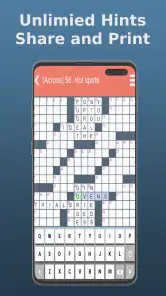
- Hints can help players continue without immediately revealing the full answer.
- Short sessions fit well into commutes
- breaks
- or casual downtime.
- Solving clues can support vocabulary practice and mental stimulation.
Cons
- A daily puzzle limit may feel restrictive for frequent crossword players.
- Some clues may be too difficult without strong general knowledge.
- Hints or extra puzzle features may depend on ads or in-app purchases.
- The experience can become repetitive if you prefer varied game modes.
- Small screens may make longer clues or grids less comfortable to read.
- Category
- Word
- Version
- 1.11.52