Cookie Jam Blast™ Match 3 Game
- 56.70K
- 4.5
- Installs
- 10.00M
- Price
- Free

Screenshots
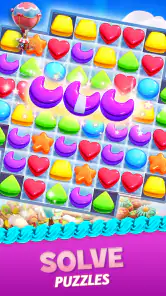



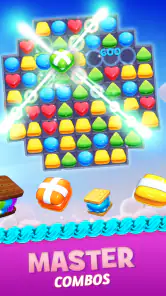
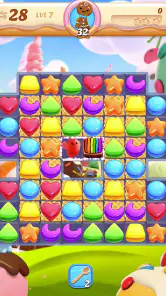

Analysis by Reviewed
I spent time with Cookie Jam Blast™ as a quick, colorful puzzle game built around matching cookies and candy. Its main appeal is easy to understand: each level gives me a compact board, I match similar pieces, and I work toward the stage objective before my available moves run out. That simple loop makes it comfortable to pick up for a few minutes, but it also gives the game enough room for planning when a level stops being straightforward.
What makes this particular match-three game worth considering is not that it reinvents the genre. It is the way the familiar matching format is packaged for short, repeatable sessions. I can open it while waiting for an appointment, play a handful of rounds, and leave without needing to remember a complicated story or a large set of controls. At the same time, the bright presentation and increasingly demanding boards encourage me to think about the order of my moves instead of tapping randomly.
Why the matching system works so well for short sessions
The central capability here is its match-three puzzle structure. I swap or arrange adjacent pieces to create groups, clear space, and pursue the goal shown for the level. That objective-based design matters because success is not always about making the biggest match immediately. A move that clears a small area can open the board and create a better chain on the next turn, while a visually attractive match in the wrong place may leave the important target untouched.
In practice, I found myself reading the board in two stages. First, I looked for an obvious move that would affect the level’s immediate requirement. Then I checked whether that move would improve the positions around it. This small pause is where the game feels more thoughtful than a purely reflex-based pastime. It remains accessible to someone who has played very few puzzle games, yet it rewards players who notice how one clear can change the options that follow.
The cookie-and-candy theme also gives the game a softer personality than a traditional jewel or tile board. The pieces are easy to distinguish, and the visual feedback makes a successful combination feel satisfying without requiring complicated instructions. I appreciate that the basic interaction can be understood almost instantly. That makes it suitable for casual players, younger users within the Everyone content rating, and adults who want something relaxing rather than an intense competitive challenge.
Jam City, Inc. keeps the focus on the board rather than asking me to learn a long list of systems before I can enjoy a level. That is a strong choice for this kind of game. The less time I spend navigating menus or studying rules, the faster I can reach the part that matters: deciding which pieces to move and when to take a risk.
How a level feels from the first move to the last
At the beginning of a stage, I usually scan for matches that can remove blockers or bring needed pieces into a more useful position. The early moves are often the safest time to prepare the board. If I spend them only on the most obvious match, I can sometimes leave the lower or less accessible parts of the layout untouched. A better approach is to consider where new pieces will fall and whether a clear near the bottom could create several opportunities at once.
That habit is one of the more useful lessons the game offers. The board is not just a collection of independent matches; it is a changing arrangement. Clearing one group can alter the next set of available moves, so I try to avoid committing to a move simply because it is visible. When several matches are available, I favor the one that opens the most space or moves me closer to the objective. This is especially helpful when the stage gives me limited room for mistakes.
I also learned not to chase every possible chain. A larger combination can be tempting, but it is not automatically the best choice if it fails to address the level’s target. In some situations, a modest match beside the relevant pieces is more valuable than a dramatic clear somewhere else. That trade-off gives the game a pleasant layer of judgement: I am constantly choosing between immediate spectacle and useful progress.
The pace is forgiving enough for casual play, but the move-based structure still creates pressure. I do not need fast fingers, and there is no reason to rush a decision. That makes it a good fit for playing with one hand during a short break. The challenge comes from planning, not reaction speed, which is one reason I would choose it over a more frantic arcade puzzle when I want to unwind.
A realistic everyday use case
My favorite way to use it is during a fragmented part of the day, such as waiting for food to be prepared or sitting in a reception area. I can play one level without setting aside a full evening, and I can stop after that level without losing the sense of what I was doing. If I have more time, I can continue; if I am called away, the game has not demanded a long uninterrupted commitment from me.
That short-session quality is more important than it sounds. Many puzzle games are enjoyable but become inconvenient when they expect a lengthy run or constant attention. Here, the individual-board format makes the experience easy to fit around ordinary routines. I would particularly recommend it to someone who wants a low-pressure distraction that still gives each play session a clear purpose.
It is less suitable if I am looking for a deep narrative, a competitive leaderboard experience, or a puzzle system that changes dramatically from one genre to another. The pleasure comes from refining my choices within the matching format. Players who need constant novelty may eventually find the familiar loop repetitive, while players who enjoy gradual variations on a comfortable formula will probably find it easier to settle into.
Small decisions that improve the experience
One practical tip is to check the whole board before making the first move, even when a match is immediately visible. The first move can determine which areas become accessible, and a few seconds of observation often prevents an inefficient opening. I also try to prioritize moves that affect the objective directly, especially when the board contains several attractive distractions.
A second useful habit is to look for matches that will create space rather than merely remove pieces. Open space increases the chance of useful new arrangements appearing, which can be more valuable than a single isolated clear. This is particularly helpful on crowded boards, where the next move may be hidden until the current one changes the layout.
Finally, I save any especially powerful opportunity for the moment when it solves more than one problem. Using a strong clear too early can leave the important area untouched later. Waiting is not always correct, but when the board is close to meeting several goals at once, patience can turn one move into a much more efficient finish. These choices are not explained by the short store summary; they emerge from paying attention to how each board develops.
Where the free model changes the decision
The game is free to download and play, which makes trying it straightforward. However, it includes in-app purchases ranging from $0.99 to $299.99 per item. That wide range is worth keeping in mind before handing the device to a child or using the game as a completely unattended distraction. I would treat optional spending carefully and decide in advance whether I want the experience to remain entirely free.
For me, the best way to approach the purchase system is to regard it as a convenience layer rather than part of the basic reason to install the game. I enjoy the matching decisions themselves, so I prefer to first see how far the free experience takes me. Players who dislike any form of optional purchase may find the presence of these offers distracting, even though the core appeal remains the board-based puzzle loop.
There is also a familiar tension between relaxation and progression. When a level becomes difficult, the temptation is to look for a quicker solution instead of studying the board again. I get more satisfaction when I replay the situation mentally and change my opening plan. That approach takes more patience, but it keeps the game feeling like a puzzle rather than a sequence of obstacles to bypass.
How it compares with other match-three choices
Compared with classic jewel-matching games, this one feels more playful because the cookie-and-candy presentation gives the board a recognizable identity. Compared with story-heavy puzzle games, it is lighter and easier to enter because I am not depending on dialogue or plot to stay interested. Its strength is the middle ground: the rules are familiar, but the level objectives and changing layouts give me reasons to think about each board individually.
On the other hand, players who want a minimalist puzzle with no decorative theme may prefer a more abstract alternative. Someone seeking a calm game with no concern about purchase prompts should also compare options carefully. I would choose Cookie Jam Blast when I want cheerful presentation and quick, goal-focused rounds; I would choose another puzzle game when I want a radically different mechanic, a story campaign, or a more stripped-back interface.
The game has reached a broad audience, with over 10 million installs and an average rating of 4.5 from around 286 thousand ratings. Those figures do not replace personal testing, but they do match my impression that the format is approachable and easy to understand. The store also shows around 57 thousand written reviews, suggesting that many players have found enough value in the short matching sessions to discuss their experience.
Device fit, age suitability, and ongoing upkeep
Its Everyone age rating makes the colorful puzzle format broadly accessible, although I would still supervise spending settings on a shared device. The minimum operating system is Android 7.0, so it is not limited only to recent phones. That is useful for families or players using an older handset, provided the device can run the current build comfortably.
The current version is 13.40.118, and the game was released on May 23, 2017. That long presence helps explain why the experience feels established rather than experimental. I would still keep the app updated when possible, especially if a device has unusual performance problems, because an older phone can respond differently from a newer one when a game has accumulated years of changes.
One limitation I noticed in the overall design is that the basic matching formula can become familiar quickly. The game depends on level arrangement and objectives to maintain interest, so it is strongest for players who enjoy incremental challenge. If I need every session to introduce a new mechanic, this will probably feel too predictable. If I like learning a system and then improving my decisions inside it, the predictability becomes part of the comfort.
Who will get the most from it
I think the best audience is someone who wants a friendly puzzle game for short breaks, especially a player who values clear goals and does not want to master complicated controls. It also works well for people who enjoy thinking ahead but do not want the pressure of real-time play. The ability to stop after a compact round makes it practical for commuting, waiting rooms, or a quiet moment before bed.
Parents and casual players should pay particular attention to the optional purchase range. The Everyone rating describes the content style, not a promise that every player will enjoy the commercial interruptions or progression pressure equally. I would install it for a family member only after checking the device’s purchase safeguards and explaining that the free download can still present paid options.
I would skip it if my priority were a completely purchase-free experience, a sophisticated story, or a puzzle game built around unusual physics and experimentation. I would also look elsewhere if I became frustrated by repeating a familiar matching loop. The game is not trying to be all of those things, and judging it by that standard would miss its actual strength.
My final recommendation
After playing it, I see Cookie Jam Blast™ as a dependable casual puzzle game rather than a groundbreaking one. Its strongest feature is the way the match-three board turns a few spare minutes into a small planning exercise. The colorful theme makes it inviting, while the need to choose useful matches instead of merely obvious ones gives the rounds enough substance to keep me engaged.
My recommendation is simple: try it if you want cheerful, objective-based puzzle sessions that fit around everyday life. Go in expecting a familiar formula, watch the optional purchases, and take time to inspect the board before moving. With that mindset, the game offers a pleasant balance of accessibility and light strategy. It is free to start, suitable for Everyone, and a good companion for short breaks, but players seeking deep originality or a fully distraction-free experience will be happier with a different kind of puzzle.
Pros
- Bright
- colorful visuals make the board easy to read.
- Frequent events add variety beyond the standard level progression.
- Short levels work well for quick gaming sessions.
- Boosters can help clear difficult boards when used strategically.
- The cheerful presentation is suitable for casual players.
Cons
- Later stages can require repeated attempts to complete.
- Limited moves may make some levels feel frustrating.
- Progress can slow considerably without extra boosters.
- The game may use substantial storage after multiple updates.
- Some players may find the core match-three formula repetitive.

- Category
- Puzzle
- Version
- 13.40.118