Connections Connect The Words
- 86.00
- 4.5
- Installs
- 10.00K
- Price
- Free
Screenshots
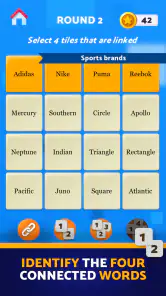

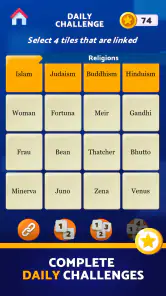

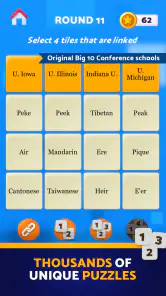
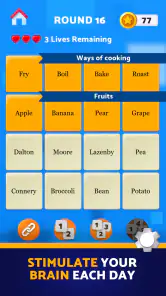
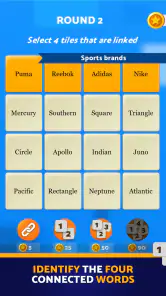

Analysis by Reviewed
I found Connections Connect The Words most interesting when I treated it as a short, focused word-game break rather than a huge puzzle platform. Its central idea is simple: connect related words and work out the intended groups. That sounds approachable, but the challenge comes from noticing which words genuinely belong together and which ones are placed there to distract me. In my experience, that makes each round feel more thoughtful than a basic anagram or crossword.
This is a free word game from InQuisiTiVe Media, aimed at Everyone and available for Android devices running version 6.0 or later. It has reached over ten thousand installs and holds a 4.5 average from around four hundred ratings, which suggests that its compact puzzle format has found a receptive audience. I would recommend trying it if you enjoy language games that reward patience, association, and a willingness to rethink an obvious answer.
How the puzzle experience feels in everyday use
Readability and navigation come before cleverness
The most important quality in a word puzzle is not visual decoration; it is whether I can read the choices quickly and understand what the game expects me to do. Connections Connect The Words benefits from its straightforward premise. I am not learning a complicated rule set before playing. I look at the available words, search for relationships, and build a solution from those observations.
That simplicity makes the game approachable for people who are new to connection puzzles. A player can begin by scanning for an obvious pair or group, then use the remaining words to test a second idea. I find this more comfortable than games that bury the main challenge under menus, currencies, character screens, or several unrelated modes. The focus stays on the words themselves.
There is also a useful mental distinction between recognizing a relationship and proving that it is the intended relationship. Many words can fit more than one theme in ordinary language. A word might describe an object, an action, a profession, or part of a familiar phrase. I have learned not to commit too quickly just because four choices seem to match. That habit is one of the game’s best learning curves: it encourages careful reading instead of rapid tapping.
For older players or anyone who prefers a calm pace, this format can be less tiring than a real-time word challenge. I can inspect the board, compare possibilities, and change my mind without needing fast reflexes. It is also a reasonable choice for a short break because the basic objective is clear enough to pick up without a long tutorial.
Still, visual simplicity should not be confused with universal ease. A word board can become demanding when several terms are similar in length, appearance, or meaning. Players who have dyslexia, limited reading vision, or difficulty distinguishing dense text may need to adjust their device’s display settings or use a larger screen. The game’s usefulness in that situation depends partly on the phone or tablet and the player’s preferred display setup.
Why the wording creates a different kind of difficulty
The strongest part of the design is the way it turns vocabulary into a sorting problem. I am not merely asked to remember a definition. I need to judge how words relate to one another and whether the relationship is specific enough to form a group. That creates a satisfying moment when a doubtful connection suddenly becomes the key to the whole board.
One practical technique helped me more than guessing randomly: I first separate words that have a very narrow meaning from words that could fit almost anything. Specific words can reveal a theme, while broad words are often the ones that create misleading combinations. I then revisit the broad words after removing a confident group. This approach saves attempts and makes the puzzle feel like reasoning rather than trial and error.
Another useful habit is to say possible groups quietly or write them down before selecting them. This is especially helpful when the words look familiar but the connection is based on a phrase, category, or secondary meaning. Speaking the group can expose a weak association that only seemed convincing at a glance. It also gives the game a more social quality when two people are solving together on the same device.
That shared-solving use case is worth highlighting. I can imagine playing during a coffee break with a friend, taking turns explaining why a group might work. One person may notice a cultural reference while another sees a grammatical link. The game supports that kind of conversation naturally because the challenge is interpretive, not dependent entirely on speed or private reflexes.
Motor and sensory considerations
As a word game, this title places much more emphasis on reading and decision-making than on precise movement. That is a positive point for players who find action games uncomfortable. The likely interaction is based on selecting words, so the physical demand should be modest compared with games that require repeated swipes, rapid taps, or coordinated movement. However, I would not describe it as effortless for every player: repeatedly choosing small text elements can still be inconvenient for someone with tremors, reduced dexterity, or fatigue in the hands.
For that reason, I would play on the largest comfortable screen available and avoid using the game when I am rushing. A stable grip, a clean display, and a little extra time can make the experience more manageable. If a player relies on a stylus or prefers a tablet for touch accuracy, that may be a better setup than a compact phone, although the practical result will vary by device.
The sensory side is mainly about text clarity and cognitive load. Word puzzles can be tiring for people who have difficulty processing similar-looking terms, especially when several choices share letters or visual patterns. I would suggest increasing system text size where possible and choosing a display setting that improves contrast for the individual player. These are device-level adjustments rather than promises about built-in accessibility, but they can make a meaningful difference.
Players with color-vision differences should also pay attention to whether any visual distinction is being used to separate states or selections. The words themselves should remain the main source of information, but a player should not have to rely on color alone to understand progress. If a screen becomes unclear, I would pause rather than repeatedly tapping and hoping the game interprets the choice correctly.
For people with auditory sensitivities, a word puzzle is generally a more comfortable category than an action title because the core task does not require sound cues. I can approach it as a quiet activity and concentrate on the language. That said, comfort still depends on the device and the game’s presentation, so I would check the sound controls during the first session and silence anything unnecessary when playing in a low-stimulation setting.
Situational access: when it fits and when it does not
This game fits well into several everyday situations. I would use it while waiting for an appointment, during a commute when I am seated safely, or in the evening when I want something more engaging than scrolling. It is also suitable for a family member who likes vocabulary but does not want a long story, a competitive leaderboard, or a complicated progression system.
A realistic example is a ten-minute break between tasks. Instead of opening a social feed and losing track of time, I can attempt a few word connections, stop when my attention drops, and return later with a fresh perspective. The puzzle format benefits from that pause because a solution that felt impossible may become obvious after I stop staring at the same arrangement.
It can also work as a low-pressure conversation starter. Two people with different language backgrounds might compare interpretations and learn how the same word can suggest different categories. I would be careful, though, about assuming that every puzzle is equally accessible to language learners. Someone still building English vocabulary may find the challenge significantly harder because the game tests cultural familiarity and word associations as well as basic definitions.
The free price makes experimentation easy, but the presence of in-app purchases between $2.99 and $18.99 per item means I would still approach optional spending deliberately. A free download is not the same as a completely cost-free experience. If I were installing it on a child’s device, I would review the device’s purchase controls first, even though the content rating is Everyone. That is a sensible precaution for any free game that offers paid items.
The game is less suitable when I need a highly structured learning tool. It may encourage vocabulary awareness, but I would not replace a language course, a spelling program, or a dedicated accessibility-focused education app with it. Its strength is casual reasoning and word association, not a formal curriculum with measurable lessons.
Remaining barriers and points of friction
The same ambiguity that makes a connection puzzle rewarding can also make it frustrating. If I cannot see why a group is considered correct, I may feel that I am missing a cultural reference rather than solving a fair language problem. This matters for players who are unfamiliar with idioms, niche categories, or regional usage. A game built around word relationships can unintentionally favor people with broader cultural exposure.
There is also a difference between a mistake caused by poor reasoning and one caused by uncertain interaction. If the selectable areas are close together, a player with motor difficulties may worry that an unintended word was chosen. That kind of uncertainty interrupts the mental challenge. I would prefer clear visual confirmation, generous touch targets, and an easy way to revise a selection, but I would judge the actual experience on the player’s device rather than assume every screen behaves identically.
Another limitation is the possibility of cognitive fatigue. The game looks approachable because the rules are easy to understand, yet finding precise relationships can demand sustained concentration. Someone with attention difficulties may enjoy the short rounds but still need frequent breaks. I found that solving one confident group at a time was more productive than trying to hold every possible relationship in my head simultaneously.
Players who want constant novelty may also find the format narrow. This is a focused word-puzzle game, not a broad collection of crosswords, trivia, spelling drills, and daily challenges. If I want several puzzle styles in one app, a larger word-game suite may offer better variety. If I want to concentrate on one distinctive type of reasoning, the narrower scope becomes an advantage.
Device compatibility is another practical consideration. The minimum operating system is Android 6.0, so many older Android devices can potentially run it, but performance and readability still vary with screen size, display quality, and system settings. The current version is 1.0.74, and I would keep the app updated through the normal store process to receive the version intended by the developer, InQuisiTiVe Media.
Who should try it, and who should choose another option
I think Connections Connect The Words is a good match for people who enjoy language patterns, lateral thinking, and puzzles that can be discussed with someone else. It is particularly appealing if I want a game that does not demand quick reactions and can fit into short sessions. The Everyone rating also makes it a reasonable title to consider for mixed-age households, while remembering that reading ability and vocabulary vary widely among players.
I would be more cautious about recommending it to someone who wants explicit teaching, accessibility controls designed around a particular disability, or a large range of game modes. A crossword app may be better for a player who likes clue-based deduction. A spelling game may be better for someone practicing letter accuracy. A visual matching game may be preferable for a person who finds dense word boards tiring. Choosing the alternative is not a criticism of this title; it simply reflects different needs.
Before spending money, I would play the free portion long enough to decide whether the puzzle style suits me. The optional items range from $2.99 to $18.99 each, so I would not buy anything merely because a difficult board made me impatient. The best value here comes from enjoying the reasoning process itself, not from trying to remove every moment of uncertainty.
My inclusive verdict
After considering both the mental challenge and the practical barriers, I see Connections Connect The Words as a thoughtful, compact choice for word-game fans. It supports slower problem-solving better than reflex-based games, and its simple premise makes it easy to explain to another person. The most inclusive way to approach it is to adapt the playing context: use a larger screen when possible, increase readable text through device settings, reduce distractions, and take breaks when the board becomes mentally crowded.
It is not the right choice for every ability or every situation. Players who need highly visible controls, specialized accessibility options, formal language instruction, or extensive variety may be happier elsewhere. Even so, I appreciate that the core challenge does not depend on speed, complex controls, or advanced gaming experience. The real test is how clearly I can recognize and question relationships between words.
For me, that balance makes the game worth trying. It is free to start, carries an Everyone age rating, and offers a focused alternative to more frantic mobile entertainment. I would recommend it to a friend who likes discussing why words belong together, provided they are comfortable with the reading demands and understand that optional purchases are available. When approached as a calm exercise in language and perspective, it delivers a satisfying kind of puzzle time without needing to overwhelm the player.
Pros
- Simple word-linking gameplay is easy to understand from the first puzzle.
- Short levels make it convenient for quick sessions during breaks.
- Gradually harder puzzles provide a satisfying sense of progression.
- Clean interface keeps attention focused on the word connections.
- Useful for practicing vocabulary
- spelling
- and lateral thinking.
Cons
- Some puzzles may depend on word associations that feel subjective.
- Difficulty can increase abruptly in later levels.
- Repeated puzzle patterns may become predictable over time.
- Hints or assistance may reduce the challenge for experienced players.
- Players seeking action or multiplayer features may find it too quiet.
- Category
- Word
- Version
- 1.0.74