Connect Balls - Line Puzzle -
- 5.77K
- 4.6
- Installs
- 10.00M
- Price
- Free

Screenshots
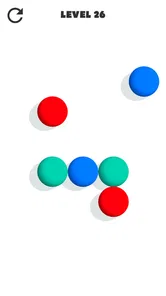
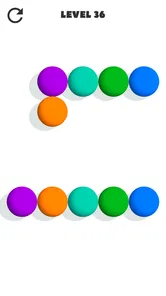




Analysis by Reviewed
I like puzzle games that make their point quickly: show me what I’m meant to do, give me a small problem to solve, and let me decide whether I want another. Connect Balls - Line Puzzle has that immediate appeal. Its central idea is easy to grasp, but planning a route that joins matching balls without crossing another line gives each board a satisfying little test of patience and spatial thinking.
A quick puzzle with a clear goal
The game is a free puzzle title from BAF, Ltd., and it works best when I want something more engaging than idle scrolling but less demanding than a long strategy game. There is no need to learn a complicated set of rules before starting: I look at the colored balls, consider how their paths might fit together, and try to connect them cleanly. That quick start is a real strength when I only have a short break.
The appeal is not just drawing a line from one point to another. A route that looks obvious for one pair can take away space another pair needs, so I’ve found it useful to scan the whole board before making the first connection. That small pause often saves me from undoing a choice or restarting my mental plan. Thinking about the paths together, rather than one color at a time, is the key practical habit I’d recommend to a new player.
Connecting the Dots in a Whole New Way
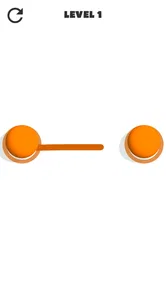
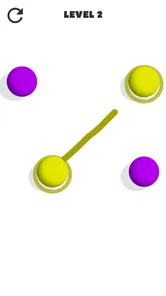
The premise of Connect Balls - Line Puzzle is delightfully simple yet devilishly tricky. The game involves linking colored balls by drawing lines between them, but here's the catch: the lines cannot overlap. This adds a layer of complexity that keeps you coming back for more, eager to try and find that perfect path to connect all the dots without crossing lines.
Gameplay That Hooks You In
What really grabs me about this game is how it manages to balance simplicity and challenge. The early levels ease you into the mechanics, letting you get comfortable with the controls and the logic behind the puzzles. But don't be fooled; as you progress, the puzzles ramp up in difficulty, requiring more strategic thinking and planning. It's this progression that keeps the game feeling fresh and keeps me hitting that "next level" button repeatedly.
Another thing I appreciate is the game's sleek design and smooth interface. The developers have done an excellent job of making sure that the user experience is as seamless as possible. The graphics are clean, and the animations are fluid, which is always a plus in my book.
Perfect for Quick Breaks or Longer Sessions
One of the standout features of Connect Balls - Line Puzzle is its versatility. Whether you have a few minutes to kill while waiting for your coffee or a longer period to really dive into the puzzles, this game accommodates both scenarios beautifully. The levels are short enough for quick play sessions but challenging enough to hold your attention for longer periods.
More From Our News Desk

 Gmail
Gmail in a Busy Inbox: Who Benefits Most?
From first account to crowded workday, Gmail earns its place through dependable search and flexible sorting—but its best fit depends on how much inbox maintenance you can tolerate.

 Prime Video
Switching to Prime Video: What Changes in Your Viewing Routine
Prime Video can make a compelling second home for streaming, but switching means learning a different catalog, rental layer, and route from browsing to playback.

 Universal TV Remote Control
 Works Best as a Reliable Backup
A phone remote earns its place through quick setup and reliable habits. Here is how to get more from Universal TV Remote Control—and where its limits show.

 Weather - By Xiaomi
Weather by Xiaomi Review: Clear at a Glance, Less Clear Up Close
Xiaomi’s weather app makes everyday forecasts quick to scan, but its calm surface can leave useful details and recovery paths harder to find than they should be.

 X
X Under Pressure: Can It Recover When Posting Goes Wrong?
A resilience-focused review of X, examining setup, mistaken posts, interruptions, weak connections, and the gaps that matter when recovery needs to be dependable.

 Clash of Clans
 Is Won Between the Battles
Its raids are quick; its community is a long-term project of coordination, teaching, rivalry, and shared responsibility—with all the friction that entails.
Latest News



Plus, the game doesn't pressure you with time limits, so you can think through each puzzle at your own pace. I often find myself pulling out my phone to tackle a few levels whenever I get a moment, and it's always a satisfying experience.
When a hint helps—and when it doesn't
When I get stuck, I treat the hint system as a way to restart my thinking rather than a button to press automatically. I’ll first check which colors have the fewest plausible routes, then reconsider the open spaces around them. If I’m still going in circles, a hint can provide a nudge without taking away the satisfaction of working out the rest myself. That makes it especially useful during a short session, when I’d rather get past one stubborn layout than abandon the game altogether.
There’s a useful distinction between being stuck because I’ve missed a simple constraint and being stuck because I’ve stopped looking at the board clearly. In the first case, a hint can help me see a route I overlooked; in the second, I get more value from pausing and rebuilding the plan from the tightest part of the layout. I try not to use help before I have made at least one deliberate attempt, because that keeps the puzzle-solving part of the game intact. A hint is most satisfying when it gets me moving again, not when it turns every board into a sequence of instructions.
Pause and return without losing the thread
This is a good fit for the ordinary gaps in a day: I can open it while waiting for a drink, solve a board, and put my phone away when my order is ready. The lack of a timer makes that stop-and-start rhythm feel natural, because I don’t have to race against a countdown. If an interruption comes midway through a puzzle, I can simply take a moment to inspect the board again when I return instead of treating the break as a failure.
For example, I might have a few minutes before a bus arrives, start a board, and then need to look up when it pulls in. A game built around timed pressure would make that interruption feel costly; here, I can leave the problem unfinished and come back to it when I have the attention to spare. When I return, I look for the path that seems most constrained rather than trying to remember every line I had in mind. That simple reset makes the game a better companion for unpredictable waits than for a planned, uninterrupted gaming session.
That freedom has a trade-off. Players who enjoy urgency, timed rounds, or competition may find the calm pace too gentle. I’d choose a fast arcade puzzle for that kind of energy; this one is better when I want to reason at my own speed and don’t mind a board taking longer than expected.
User-Friendly Features
On top of the engaging gameplay, the game offers some user-friendly features that enhance the experience. For instance, the hint system is a lifesaver for those moments when you find yourself stuck. It's great to have that little nudge in the right direction without feeling like you're cheating your way through the game.
Also, I love that the game doesn't bombard you with ads. It's rare to find a free game that doesn't overdo it on the ad front, and it's refreshing to play a game that respects your time and attention.
One practical way to keep the experience pleasant is to treat each board as a complete little task rather than opening the game out of habit whenever the screen is in reach. I get more from it when I give the layout a moment of attention, make a considered route, and stop when I have finished what I set out to do. That approach suits the game’s tidy scale and helps the repeated structure feel intentional. It is a small distinction, but it matters for a title whose appeal comes from focused attention rather than a stream of new events.
How it compares with other puzzle choices
Compared with word searches or trivia games, this one asks me to reason visually: I’m arranging paths in limited space, not recalling facts or spotting words. It also feels different from match-style puzzles, where clearing pieces and reacting to a changing board are often the focus. Here, I can take a considered look at the layout before committing to a route. That makes it a better choice for a quiet mental reset than for someone seeking rapid feedback or a social challenge.
It also occupies a different niche from a traditional jigsaw puzzle. A jigsaw asks me to identify how many pieces fit a larger picture; this game is more abstract, and I can judge my progress by whether the connections can coexist without crossing. That gives each board a more direct logic problem, but there is less visual storytelling to enjoy. If I’m in the mood to build an image gradually, a jigsaw is the better pick. If I want a compact spatial puzzle with a clear condition to satisfy, connecting the pairs is more immediately focused.
For a practical approach, I start with pairs whose positions leave them fewer sensible ways to connect, and avoid filling a narrow passage just because it looks convenient. If a route blocks another pair, I reconsider the order rather than forcing it. These are small habits, but they make the puzzles feel less like trial and error and more like a sequence of solvable decisions.
Another useful habit is to check the spaces between pairs, not only the endpoints. Two balls can look close enough to connect easily, yet the line that seems shortest may occupy the only useful corridor for a different color. I try to imagine the remaining routes after each possible connection: if one choice leaves another pair with no plausible passage, I treat that as a warning before drawing. This is less about finding a clever trick and more about avoiding a common planning mistake. The game rewards looking one move ahead, especially when several paths compete for the same part of the board.
Who will enjoy it—and who may not
I’d recommend it to anyone who likes compact logic problems, wants a casual game that doesn’t demand constant attention, or needs a low-pressure way to occupy a short wait. Its Everyone age rating also makes the basic premise approachable for a broad audience. On the other hand, if you need a strong narrative, elaborate character progression, or a changing set of mechanics to stay interested, connecting paths may feel repetitive after the novelty wears off. The core pleasure is the puzzle itself, not a story wrapped around it.
It can also work well for someone who wants a small alternative to checking the same social feeds during a spare moment. The board gives my attention one concrete job, but it does not require me to memorize a story or keep up with a chain of events. I can play a little, stop, and return later without feeling that I have missed a plot point. That makes it especially suitable for short breaks at home or while waiting, provided the person enjoys visual reasoning and has the patience to reconsider a route when the first attempt fails.
I would steer away from it if you want a puzzle game to constantly change its rules, offer a competitive leaderboard-style experience, or provide a strong sense of discovery through new settings and characters. Its appeal is concentrated in drawing paths around a board, so someone who needs a broad range of activities may tire of that focus. It is also not my choice when I want a quick burst of action: even a simple-looking puzzle can ask me to slow down and inspect the available space. Knowing that distinction makes it easier to decide whether to install it for the right reason.
It is also worth knowing how the free-to-play setup fits your expectations. The game is free to install and includes in-app purchases priced at $3.99 per item. I’d approach those as optional spending rather than something needed to understand the central appeal: the main decision each board asks you to make is still about how to route the lines. If you prefer a one-time purchase with no extra offers, this model may not be your favorite, so check the purchase details before committing money.
Repetition, replay value, and the right mood
The simple rules give the game a dependable rhythm, but they also define its limit. I can return for another board because the challenge comes from arranging the connections, yet the basic action stays familiar. That makes it an easy game to dip into, not necessarily one I’d choose for a long evening when I want constant surprises. I get the most from it in small doses, especially when I’m in the mood to focus on one clear problem and enjoy the moment it clicks.
Replay value here comes from the way I approach a board, not from a need to collect a growing set of abilities or follow a narrative. Sometimes I want to solve a layout with a clean plan; another time, I may be more willing to test an idea and backtrack mentally when it closes off a route. That change in my own approach can make familiar rules feel engaging across separate short sessions. Still, the game has a clear ceiling for players who need every new level to introduce a different kind of interaction. The appeal is the steady variation within one simple task, rather than dramatic reinvention.
Because the core challenge is visual, I find it helps to play when I can actually look at the board instead of trying to rush through it while distracted. A brief session does not have to mean a careless one: even a single puzzle can feel complete if I give it enough attention to understand why the routes fit. Conversely, if I’m too tired to compare paths, repeated attempts can start to feel like guesswork. On those evenings, I’d rather leave it for another time than blame the game for not providing the kind of effortless distraction I happen to want.
Connect Balls - Line Puzzle has an average rating of 4.5 from around 253,000 ratings, with over 10 million installs. It was released on May 21, 2022, and version 1.26.4 supports Android 7.0 and up. Those details make it an established casual option, though the best reason to try it is still the straightforward line-routing puzzle. I’d start with a few boards and see whether that measured, visual kind of thinking suits you.
In conclusion, if you're looking for a game that's both relaxing and mentally stimulating, give it a try. It's ideal for anyone who enjoys a good puzzle without the pressure of time limits or excessive ads. So go ahead, give it a download, and get ready to connect some balls!
Connect Balls - Line Puzzle - Frequently Asked Questions
What kind of puzzles will I be solving in Connect Balls - Line Puzzle?
The game is built around drawing routes between balls that match, with the aim of connecting them without letting lines overlap. It suits players who enjoy visual logic puzzles and working out a path before committing to it. The core idea is easy to understand, while planning a route can make each puzzle a more thoughtful challenge.
Can I play Connect Balls - Line Puzzle at my own pace?
Connect Balls - Line Puzzle focuses on solving line-connection puzzles, so its appeal comes from finding a valid route between matching balls. That makes it a natural fit for players who like to pause and think through a puzzle rather than rely on fast action. If you enjoy this kind of problem-solving, the simple central mechanic is easy to return to whenever you want.
Is Connect Balls - Line Puzzle suitable for casual players and families?
Connect Balls - Line Puzzle is a puzzle game with a simple central idea: connect matching balls by drawing lines. That makes it approachable for casual players, while the need to plan routes and avoid overlapping lines gives each puzzle a problem-solving element. Its Everyone age rating also makes it suitable for a broad audience, though individual preferences for puzzle games will vary.
Who makes Connect Balls - Line Puzzle, and is it a popular game?
Connect Balls - Line Puzzle is developed by BAF, Ltd. It has attracted a substantial player audience, with over 10 million installs and an average rating of 4.5 from around 253,000 ratings. Those figures suggest that many players have tried it, but ratings are only one way to judge whether its line-drawing puzzles will suit your tastes.
What is Connect Balls - Line Puzzle, and how does it work?
Connect Balls - Line Puzzle is a challenging and engaging puzzle game where the objective is to connect balls of the same color by drawing lines. The lines cannot overlap, and each puzzle becomes progressively more complex as you advance. It's a great game for those who enjoy testing their problem-solving skills. Its short description, “Connect Balls,” captures the basic goal, so the appeal is mainly in working out a valid route for each matching pair.
Pros
- Addictive gameplay mechanics.
- Simple and intuitive controls.
- Visually appealing graphics.
- Challenging levels enhance engagement.
- Suitable for all age groups.
Cons
- Contains in-app purchases.
- May have frequent ads.
- Requires internet connection.
- Limited features in free version.
- May drain battery quickly.