ClubGG Poker
- 243.00
- 3.2
- Installs
- 500.00K
- Price
- Free

Screenshots




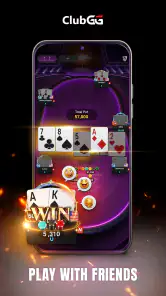
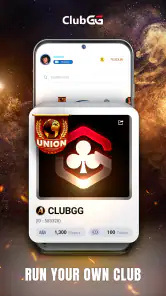
Analysis by Reviewed
ClubGG Poker is a free card game from NSUS Ltd that I found most appealing when I treated it as a way to sit down with friends rather than as a replacement for every poker app on my phone. Its store summary, “Play with Friends!”, points to the central idea, while the short description identifies it simply as ClubGG Poker. That focus matters: the experience makes more sense when you already have people to play with or a club-style group in mind.
I approached it as a first-time player, looking for a clear route from installation to a useful first session. The game is aimed at Teen users, runs on Android devices using version 6.0 or later, and is free to install. It has passed 500 thousand installs, with an average rating of 3.2 from roughly 2.6 thousand ratings. Those figures suggest a sizeable audience but also a mixed experience, so I would not install it expecting every player to find the same level of polish or convenience.
What to expect before your first table
The most important expectation to set is that this is a social poker app, not just a solitary practice tool. The name and presentation put the emphasis on clubs and friends, so the first meaningful moment is unlikely to be opening the app and immediately mastering a hand. It is more likely to come when you understand how your intended group uses it and where you fit into that group.
That makes ClubGG Poker a better match for someone who wants a regular private-style card-game routine than for someone searching for a quick puzzle game between appointments. If you enjoy discussing hands, recognizing familiar opponents and returning to the same social circle, the format has a clear attraction. If you only want anonymous, instant matchmaking, a conventional online poker platform may feel more direct.
I also recommend keeping the age rating in mind. Poker-themed games can encourage competitive thinking, and this one includes in-app purchases ranging from $0.99 to $999.99 per item. The wide upper range is a reason to decide your spending boundaries before playing, especially if the device is shared with a younger family member. The game is free to download, but “free” should not be confused with a completely cost-free experience.
The current version is 26.05.0229, and the developer is NSUS Ltd. I would check that the device has enough room and that the operating system meets the minimum requirement before troubleshooting anything else. On an older phone that still meets the software requirement, performance may depend more on the device’s general condition and connection than on the age of the operating system itself.
The kind of player who will settle in quickly
In my view, the easiest user to satisfy is someone who already has a reason to open the app: a friend’s invitation, a club they know, or a small group that wants a shared poker activity. That person can judge the app by the quality of the session instead of wondering what to do after the first screen.
A newcomer with no poker background can still try it, but should begin by learning one narrow objective at a time. Do not attempt to understand every social or competitive possibility in one sitting. First learn how to enter the relevant game, identify your own cards and follow the action. Once those steps feel natural, the strategic side becomes much less intimidating.
I would skip it if your main goal is a richly guided poker course, a purely offline game or a simple card game with no social commitment. ClubGG Poker may also be a poor fit if you dislike purchase prompts or prefer an experience where the free version feels entirely separate from optional spending. Those are not small preferences in a game designed around repeated sessions.
Setting up without getting lost
My advice for the first launch is to move slowly through the opening screens rather than tapping through them automatically. Look for the part of the experience that connects you with a group or a game, and keep the name of the club or the person who invited you available. A social poker app is much easier to navigate when you know what destination you are trying to reach.
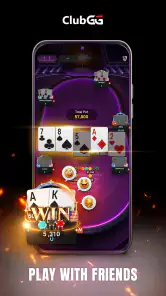
Before joining a serious session, use the first few minutes to identify the basic controls. Find where your cards are displayed, where the current action is shown and how you confirm a decision. A first-time player often loses confidence not because the poker is difficult, but because the interface gives too much information at once. Separating “where do I tap?” from “what is the best move?” makes the learning curve manageable.
One useful habit is to keep a short mental checklist: confirm the table, check whose turn it is, read the available action and only then make a decision. This prevents the common mistake of reacting to the previous player’s move before checking whether the turn has actually reached you. It also helps when the table is busy and several visual elements compete for attention.
If a friend is helping you start, ask them to explain the route into the group before discussing strategy. That is a better use of their time than giving you a long lecture about poker hands while you are still trying to locate the correct game. A short guided entry can turn the first session from a confusing menu exercise into a social activity.
A realistic first-session routine
Imagine that I have ten quiet minutes after dinner and a friend has invited me to play. I would install the game, check that the phone meets the Android requirement, open it, and keep the invitation or club details in front of me. I would then enter the intended game, watch one complete round if possible, and focus on recognizing the turn order rather than trying to win immediately.
During that first round, I would note three things: how cards are presented, how the current action is communicated and what confirms the decision. If I make a mistake, I would treat it as an interface lesson instead of a strategic failure. That distinction is important because an early mis-tap can make a new player assume they do not understand poker, when the real problem is simply unfamiliar controls.
After the round, I would ask my friend one specific question, such as “How do I know when action is on me?” Specific questions produce useful answers. Broad requests like “Explain the app” usually create too much information and make the next hand harder, not easier.
How to reach the first meaningful success
For a beginner, success should not mean winning the first hand. I would define it as entering the correct game, following a full round and making one deliberate decision without needing help. That is a realistic milestone, and it gives you a foundation for judging whether the app suits you.
Start by watching the table’s rhythm. Notice how players act in sequence and how the interface distinguishes waiting from decision time. Once you can tell those states apart, concentrate on your own cards and the action available to you. Avoid switching between chat, menus and strategy thoughts while the table is moving; that is where many avoidable errors happen.
A second practical goal is to finish a session without spending anything. Because the game contains optional purchases, I would first learn what the free experience feels like and whether your social group actually needs anything beyond it. This gives you a clearer basis for deciding later. Spending before understanding the normal flow makes it harder to tell whether a purchase solves a real problem or merely adds momentum to a new habit.
Another useful technique is to play with a patient friend rather than joining the most competitive table available. A familiar player can explain an unfamiliar screen in a few words, while strangers may assume you already know the routine. This is especially valuable if you are returning to poker after a long break and remember the rules but not the pace of a mobile table.
Once you can complete a round comfortably, add one improvement at a time. You might first work on recognizing strong and weak starting situations, then on observing how other players behave. Do not try to track every detail. The app becomes more enjoyable when the interface fades into the background and your attention can return to the social and strategic parts of the game.
Why the social setting changes the experience
Playing with people you know can make an ordinary hand more memorable, even when nobody wins much. Conversation gives the session a reason to continue, and familiar opponents let you notice patterns over time. That is the strongest argument for choosing this app over a generic card game: the value can come from the group as much as from the cards.
The trade-off is that your enjoyment depends partly on the group’s availability and behavior. If your friends rarely play, the club-centered idea loses some of its appeal. If the table is dominated by experienced players, a first-timer may feel pressured to act quickly. I would agree on a relaxed first session in advance, especially if the group includes someone who has never used mobile poker before.
For a family or friend group, I would also establish a simple spending rule before anyone begins. The game’s purchase range makes that conversation worthwhile. A shared agreement such as “we are trying the free experience first” removes awkwardness and keeps the focus on playing together rather than comparing purchases.
Common confusion and friction points
The first likely confusion is the difference between installing the game and actually having somewhere meaningful to play. A download does not automatically create a satisfying social session. If you open it without a club, invitation or clear plan, you may spend more time looking for direction than playing cards. That is why I would arrange the social side first whenever possible.
The second is confusing a poker decision with an interface decision. New players often hesitate because they are unsure whether they should act or whether the app is waiting for someone else. Before analyzing the hand, check the visual cue that identifies the active turn. This small habit reduces rushed taps and makes the table feel calmer.
A third issue is the temptation to judge the whole game after one awkward round. Mobile card games have several layers: access, table flow, decision-making and social interaction. If the first layer is unclear, the later ones cannot shine. I would give the setup a second attempt with the person who invited me before deciding that the game is unsuitable.
There is also a practical distinction between a free download and a free-first mindset. Since individual purchases can reach $999.99, I would not hand the phone to a child or let a new player explore spending options without supervision. This is particularly important for anyone who shares payment access across devices. The age rating of Teen reinforces the need for sensible boundaries.
Compared with a standard solitaire app, ClubGG Poker demands more attention and coordination but offers a stronger reason to return with other people. Compared with a broad online poker service, its club-oriented identity may feel more personal, though potentially less useful when you simply want an immediate game with whoever is available. Compared with a poker teaching app, it is better suited to playing than studying. Choosing it depends on which of those jobs you actually need done.
When another option would be better
I would choose a traditional single-player card app for a commute where I may lose connection or only have a minute to spare. I would choose a learning-focused poker product if my priority were lessons, hand analysis or structured practice. I would choose a larger matchmaking-oriented service if I had no friends or club ready to play with and wanted the app to supply the entire social experience.
That does not make ClubGG Poker weak; it makes its best use narrower and clearer. Its appeal is strongest when the people matter as much as the poker. If you already have that setting, the club approach can feel more purposeful than scrolling through anonymous tables. If you do not, the same design may feel like an extra barrier.
What to do after the first session
After I had completed a comfortable round, I would decide whether the app fits my routine by asking three practical questions. Did I know where to go when I opened it? Could I follow the action without constant help? Did the social part make me want to return? If the answer is yes to all three, the game has probably earned a regular place on the phone.
The next step should be consistency rather than intensity. Return to the same group, keep sessions short at first and pay attention to the moments that still cause hesitation. If you repeatedly miss the active turn or lose track of the table, focus on that one issue before trying to improve your strategy. A small interface habit can produce a bigger improvement than trying to memorize every poker concept at once.
I would also review the purchase approach after several free sessions, not after the first exciting hand. Ask whether an item would genuinely improve the way your group plays or whether the desire comes from wanting to recover a disappointing result. That pause is useful in any competitive game, and it is especially sensible here because the available purchase amounts vary so widely.
For groups, a good next step is to agree on a regular time and a beginner-friendly pace. The app becomes easier to recommend when everyone knows what the session is for: casual conversation, practice, or more serious competition. Clear expectations prevent an experienced player from turning a newcomer’s first evening into an uncomfortable test.
ClubGG Poker is therefore a qualified recommendation from me. I like the idea of a card game built around returning to a familiar group, and the free entry makes it easy to test that idea. I would recommend it to friends who already have a club or invitation and want their poker sessions to feel connected. I would be more cautious with someone seeking offline play, structured lessons, anonymous instant games or a strictly purchase-free environment.
My final advice is simple: prepare the social destination before installing, learn the table controls before chasing a win, and set a spending boundary before the first serious session. Follow that path and the game gives you a fair chance to discover its strongest quality: not merely dealing cards on a phone, but giving a group a shared place to play.
Pros
- Official platform with access to licensed ClubGG poker games.
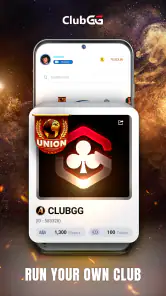
- Supports private clubs and invite-based games with friends.
- Convenient mobile format for playing poker on the go.
- Offers multiple poker tables and game formats in one app.
- Club-focused features help regular groups organize ongoing games.
Cons
- Availability and features may vary depending on your country or region.
- Real-money play can involve deposits
- withdrawals
- and account verification.
- Private clubs may require an invitation or approval before joining.
- Poker gameplay can use significant battery and mobile data during long sessions.
- Beginners may find the club system and poker options confusing at first.

- Category
- Card
- Version
- 26.05.0229