Claw Master – Roguelike Hero
- 1.44K
- 4.2
- Installs
- 1.00M
- Price
- Free

Screenshots
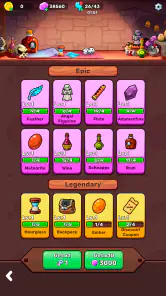

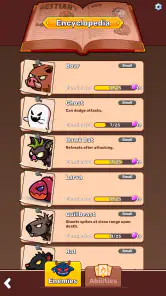
Analysis by Reviewed
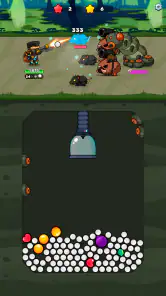
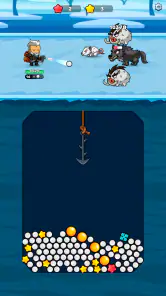
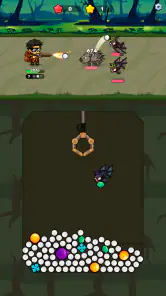
On a short break, I would treat Claw Master – Roguelike Hero as a game to focus on for a few minutes, not something to play on autopilot. Its claw-machine premise makes the first interaction easy to grasp, but the dungeon run gives each choice a longer tail: what seems like a small grab can shape how prepared I feel for the challenges ahead. That mix is what makes it stand out from a conventional arcade time-killer.
It is a better fit for someone who enjoys quick decisions and learning through repeat attempts than for someone seeking a long story or a faithful simulation of a real claw machine. If I had only a moment to spare, I would choose a simple score-chaser instead; when I can give a run my attention, this game’s blend of arcade action and roguelike progression becomes much more appealing.
A realistic way to fit it into the day
Imagine opening it while waiting for a coffee: I would make one deliberate run, notice which choices seemed to help, then put the phone away rather than trying to squeeze in distracted attempts. That approach suits the game better than playing with one eye on a conversation, because the value comes partly from connecting an early decision with what follows. It also gives a natural stopping point when the wait is over.
For players who like to improve gradually, a useful personal routine is to change only one part of the approach between runs. If I try to be more cautious and also alter every other decision, I cannot tell what made the difference. Keeping one variable in mind is not a special in-game system; it is simply a clearer way to learn from a run without turning every session into guesswork.
I would skip it when I want something genuinely passive, a one-and-done level, or a detailed RPG campaign. Those expectations point toward different kinds of games. Here, the appeal is the unusual link between claw decisions and a run with later encounters, not a promise to replace a dedicated simulator or a deeper role-playing adventure.
How a claw-machine run finds its rhythm
Start with the grab, then think about the run
The most useful way to approach a session is to treat the claw action as the core decision, not as a decorative animation between battles. Each grab asks for attention in a way that feels immediately familiar: choose what to go for, judge the attempt, and see how the outcome affects your next move. The roguelike structure gives those small decisions a longer horizon. I find myself thinking less about a single perfect grab and more about keeping a run viable.
That shift is important for anyone arriving from conventional arcade games. In a typical score-chaser, a failed move is mainly a lost chance to improve a tally. Here, dungeon crawling and boss fights give the session a sense of progression and consequence. A cautious player may prefer dependable choices over flashy ones, while someone who enjoys taking chances can lean into the uncertainty. The game’s appeal comes from making both instincts feel relevant.
You May Like

Clash of Clans Is Won Between the Battles

Android Auto Makes the Case for Quieter Car Software

MobiOffice: Transforming Mobile Productivity with Seamless Integration

EA SPORTS FC™ Mobile Soccer: Redefining Mobile Sports Gaming

How Microsoft OneDrive Became a Mobile Productivity Giant

How Google Translate Breaks Language Barriers Effortlessly
For a first session, I recommend resisting the urge to rush through every interaction. Pay attention to what the game presents before committing to a grab, then notice how that choice connects to the challenges that follow. This is a practical habit rather than a secret trick: the more clearly you understand the relationship between the claw and the run, the less likely you are to make decisions on autopilot.
A good fit for the gaps in an ordinary day
I can see myself opening it while waiting for a takeaway order or during a short break. The arcade framing makes it easy to understand quickly, while the dungeon-and-boss structure gives a session more shape than a string of disconnected attempts. If I have only a few minutes, I can focus on one run; if I have longer, I can spend that time learning which decisions tend to leave me better prepared for later encounters.
That convenience has a limit. A roguelike run asks me to stay engaged with what happened earlier, so it is not always the best choice when I am repeatedly interrupted or playing with only half my attention. If you mainly want something you can tap at randomly while doing another task, a simpler idle or score-based arcade game may fit better. Claw Master is most satisfying when I can follow a run from one choice to the next.
What the arcade and roguelike blend changes
CASUAL AZUR GAMES makes an arcade game here, but the dungeon crawl gives it a different pace from familiar one-screen reflex games. A standard claw-machine title tends to keep the whole goal in the machine: line up a grab, collect something, and try again. A typical roguelike, meanwhile, often puts most of its emphasis on combat, build choices, or map navigation. This game’s identity lies in bringing the claw mechanic into that broader run-based setting.
That combination is a strength when you want variety without leaving an approachable arcade format. It is also a trade-off: players who came specifically for a faithful physical-machine simulation may find the RPG framing takes attention away from the grab itself. And players looking for a substantial role-playing campaign should not mistake dungeon progression for a promise of a sprawling narrative. I would choose it for a playful hybrid, not as a replacement for either genre in its most elaborate form.
Small habits that make the experience smoother
Check the options before settling into a routine
Before building a repeatable play style, I would spend a moment checking the available settings and controls on the device. The value of that step is not that it unlocks a hidden advantage; it is that it helps you avoid fighting the interface. Make sure the game responds comfortably to your usual grip and that any sound or display choices suit where you tend to play. A setup that feels fine at home can be distracting in a quiet waiting room, and a brief check can prevent that friction.
I would also make a distinction between settings that change comfort and choices that affect a run. Do not assume an option will improve your odds or alter the game’s underlying rules unless the game clearly says so. Keeping that expectation grounded makes it easier to learn what actually matters: the decisions you make during play, rather than imagined menu advantages.
Use a consistent decision loop
One non-obvious habit that helps in games built around repeated attempts is to pause briefly after each meaningful outcome. Ask yourself what the grab achieved, what it cost in practical terms, and whether the next choice should be safer or more ambitious. This turns a run into a series of useful observations instead of a blur of taps. I find that even a simple mental note—“that approach left me exposed” or “I should prioritize a steadier result”—can make the next attempt more deliberate.
It is also worth separating experimentation from progression. On one run, try a different approach just to learn how it feels; on another, use the choices that have seemed dependable so far. That small distinction prevents every session from becoming a random test and gives you a clearer sense of whether a strategy is genuinely helping. It is a repeatable workflow, not an invented shortcut or a guarantee of success.
Make short sessions intentional
If you only have a brief window, decide what you want from it before opening the game. You might focus on getting comfortable with the claw interactions, or pay attention to how the run changes when you take a cautious rather than aggressive approach. A specific aim makes even a short session informative. Without one, it is easy to keep tapping without remembering what worked.
For longer sessions, I would take a short pause between runs rather than carrying frustration straight into the next one. The structure encourages another attempt, but repeating the same hurried decision is unlikely to teach much. A reset gives you a chance to change one part of your approach and judge the result. That makes the game feel more like a skill you can refine than a slot machine you simply keep pulling.
Know where the challenge can become friction
The main limitation of this format is that its two halves may not satisfy every player equally. If the claw action is the part you love, dungeon progression and boss battles can feel like extra layers between you and the machine. If you want complex RPG systems, the arcade-first presentation may feel light. The best match is someone who enjoys the tension between quick physical-style decisions and a longer run, rather than someone who expects either side to dominate completely.
There is also the usual learning curve of a run-based game: early choices can be hard to judge until you have seen how they play out later. I would not treat a disappointing first attempt as proof that the game is unfair, but neither would I assume every setback is a lesson worth repeating. If you cannot tell why a choice helped or hurt, slow down and change one thing at a time. That is more useful than chasing a complicated strategy before you understand the basic rhythm.
Price, age suitability, and ongoing spending
The game is free to download, with optional in-app purchases ranging from $0.99 to $99.99 per item. That broad range is worth keeping in mind if you are installing it for a younger player or prefer to avoid surprise spending. I would approach purchases as optional extras rather than part of the basic promise of the game, and check the device’s purchase safeguards before handing it over to a child. The content rating is Everyone 10+, so it is aimed at players aged ten and up rather than very young children.
For a quick sense of its audience, the game has an average rating of 4.2 from around 20,000 ratings, with roughly 1,400 written reviews and over a million installs. Those figures suggest it has found a substantial arcade audience, but they do not tell me whether its particular blend will suit you. I would use them as context, then decide based on whether claw-machine decisions and roguelike runs sound fun together.
Who should keep playing—and who should move on
Compatibility and the current release
Claw Master is free on Android, and its minimum operating-system requirement is Android 7.0. It was released on October 18, 2024, and the current version is 1.26.9. Before downloading, I would check that your device meets that Android requirement and that you are comfortable with the game’s optional purchase model. It is developed by CASUAL AZUR GAMES, a name worth noting if you already recognize its other casual releases.
The practical question is not just whether it runs, but whether you want to return to the same kind of decision-making. If you enjoy spotting patterns and adjusting your approach, the run structure gives you a reason to replay. If you dislike repeating attempts or prefer a fixed level that you can clear once and leave behind, a linear arcade game may be a better use of your time.
My verdict on mastering the loop
What I like most is that the claw-machine idea is not left on its own: it feeds into a larger arcade adventure with dungeon progress and boss encounters. That gives small choices more weight and makes a quick grab feel connected to what comes next. The best way to enjoy it is to build a calm routine, learn from one decision at a time, and use short sessions with a clear purpose instead of rushing through repeated attempts.
I would recommend it to arcade fans who want a little more structure than a conventional claw game, and to roguelike players curious about a lighter, more tactile-feeling premise. I would steer away if you want deep character systems, a realistic machine simulation, or a game that rewards passive play. For the right player, Claw Master is a cheerful, unusual way to turn a familiar grab into a run worth thinking about. Its strongest appeal is the connection between those quick arcade choices and the challenge waiting farther into the dungeon.
Claw Master – Roguelike Hero Frequently Asked Questions
What kind of game is Claw Master – Roguelike Hero?
Claw Master – Roguelike Hero combines claw-machine collection with roguelike action. You use a claw to pick up heroes, weapons, and other rewards, then build a team to battle enemies across stages. Runs can feel different depending on what you collect, so success involves both choosing useful rewards and adapting your strategy as challenges grow.
Is Claw Master – Roguelike Hero free to play?
The game is generally offered as a free download, but availability, pricing, and in-app purchases can vary by platform and region. Optional purchases may provide items or other advantages, while advertisements may also appear depending on the version. Check the store listing and the purchase settings on your device before downloading, especially if children might use the device.
Does the game require an internet connection?
Some mobile games allow parts of their gameplay offline but require a connection for features such as account services, events, advertisements, or purchases. Requirements can change with updates, so do not assume every mode in Claw Master – Roguelike Hero works without internet. Check the current store description, and if offline access matters to you, test the game before relying on it while traveling.
Is Claw Master – Roguelike Hero suitable for children?
The game’s cartoon-style presentation may look family-friendly, but suitability depends on the child and the content shown in the current version. Roguelike battles include repeated combat, and free-to-play features may include ads or optional purchases. Review the age rating and store content information for your region, and consider using parental controls to manage spending and screen time.
What should I check before downloading Claw Master – Roguelike Hero?
Confirm that the listing is for the correct game and developer, and check its age rating, device compatibility, storage requirements, and recent update information. Read the current privacy details and permissions, since these can vary by platform and version. Download through the official Google Play or Apple App Store listing, and make sure your device has enough free space and a stable connection for installation.
Pros
- Quick runs make it easy to play in short sessions.
- Simple controls are approachable for new players.
- Randomized upgrades add variety to each attempt.
- Unlockable heroes offer different ways to play.
- Combat rewards timing and positioning
- not just tapping.
Cons
- Run progression can feel repetitive after many attempts.
- Random upgrades may make some runs less satisfying.
- Difficulty spikes can slow progress for casual players.
- Frequent combat effects may clutter the screen.
- Ads or optional purchases may interrupt the experience.

- Category
- Arcade
- Version
- 1.26.9