Clans of London: Vampire CCG
- 493.00
- 4.5
- Installs
- 100.00K
- Price
- Free

Screenshots

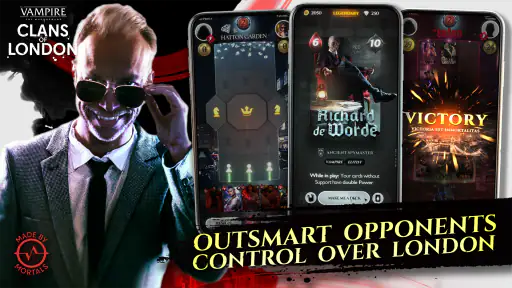
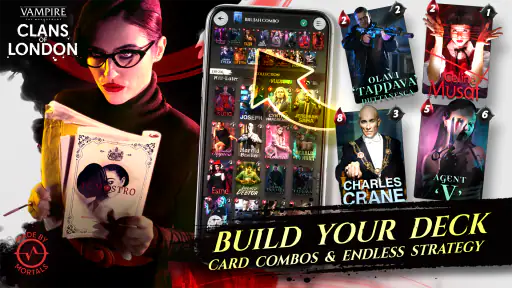
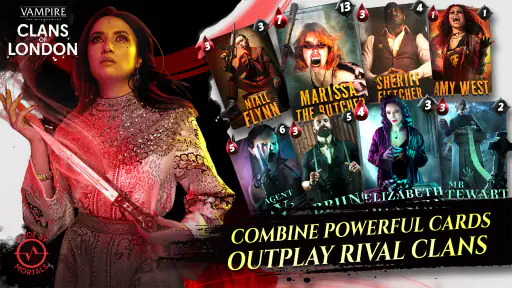



Analysis by Reviewed
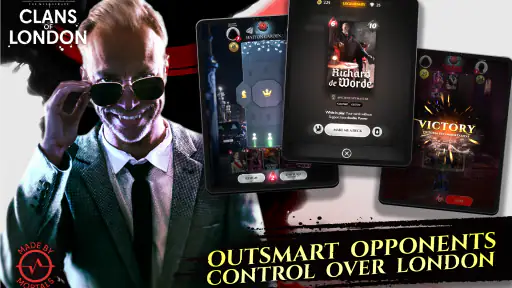
Clans of London: Vampire CCG caught my attention because it aims for something very specific: short competitive card battles with a dark vampire setting, rather than a long campaign or a relaxed solitaire experience. I found the best way to approach it is as a focused PvP game for small pockets of time. Its store summary promises vampire card battles built around fast five-minute duels, and that description matches the central appeal: you can get into a match quickly, make meaningful decisions, and leave without committing an entire evening.
That compact format also shapes my expectations. This is not the kind of card game I would choose when I want a huge narrative adventure, a slow deck-building hobby, or a purely casual distraction with no pressure. It is aimed at players who enjoy reading an opponent, managing a hand, and adjusting their plan before a brief contest slips away. The mature vampire theme gives the matches a recognizable identity, while the card-game structure keeps the experience practical on a phone.
My first impression was of a game that understands the value of a clear mood and a short session. The important question is whether the atmosphere supports the decisions or merely decorates them. In my experience, Clans of London: Vampire CCG works best when I treat its visual identity as a frame for competitive play, not as a replacement for depth. The game is free to start, developed by Well Played Games Ltd, and listed for players aged Mature 17+, so it is easy to try but clearly not designed as a family-friendly card title.
How the first match sets the tone
The opening appeal comes from the contrast between a familiar card-game routine and a more dramatic setting. I already know the basic emotional shape of a duel: prepare a plan, respond to threats, and try to make better use of limited opportunities than the person across the table. The vampire presentation gives those actions a stronger personality. A move feels more memorable when it belongs to a world of rival clans rather than an anonymous collection of cards.
Short matches are especially useful on mobile. I can imagine playing during a commute, while waiting for an appointment, or after finishing a task when I want something interactive but not exhausting. The five-minute target makes it easier to start a battle without worrying that a single mistake will trap me in a long session. At the same time, a brief match leaves less room for recovery. If I waste an early opportunity or misunderstand the opponent’s plan, the duel can feel decided before I have fully settled in.
That is the first meaningful trade-off. Fast PvP is convenient, but it exposes unclear decisions and uneven momentum more sharply than a lengthy match would. A slower card game can give a player time to rebuild a position; here, the pace encourages immediate attention. I would not launch it while distracted by a conversation or a busy environment. The small session length is helpful, but the competitive nature still demands focus.
The game’s rating gives it a broad enough audience among adult players, but the mature classification is worth taking seriously. I would not install it on a child’s device simply because it is a card game. The theme is built around vampires and clan conflict, and the age label signals that its presentation is intended for older players. For an adult who wants a darker alternative to colorful fantasy card games, that tone is part of the attraction rather than a minor detail.
A setting that speaks through factions
The phrase “Clans of London” does useful work before a card is even played. It suggests a city divided by identity, loyalty, and rivalry, which is a better foundation for a competitive card game than a vague supernatural backdrop. I read the setting as a promise that the opposing side should feel like a distinct force, not just another shuffled deck. That helps explain why the game’s mood matters: the conflict is personal and organized, not simply a sequence of unrelated attacks.
Good art direction in a card game has a practical responsibility. Cards need to be recognizable quickly, especially when a match is moving at speed. A dramatic illustration is valuable only if I can still identify what matters on the screen. The strongest visual approach for this type of game is one where color, silhouette, and faction identity help me scan the board without stopping to decode every element. That is also where atmosphere and usability meet: the darker the presentation becomes, the more important readable contrast and clear hierarchy are.
I appreciate when a game lets its world influence how I make decisions. A clan-based structure encourages me to think in terms of identity and style, not only isolated card value. Even before mastering every matchup, I can ask a useful question: what kind of conflict does this deck want to create? Does it reward pressure, patience, or careful responses? That question is more engaging than simply asking which card has the largest number.
One practical tip is to spend the first few sessions learning the language of the factions rather than chasing quick wins. I would pay attention to which cards seem to work together, what kind of opening creates pressure, and which opposing patterns repeatedly interrupt my plan. In a short duel, memorizing every detail immediately is less useful than recognizing the shape of a strategy. Once I know what a clan is trying to accomplish, I can make better choices with unfamiliar cards.
Art that supports rather than overwhelms
The vampire theme gives the game permission to be stylish, but style can become a problem if every card competes for attention. I prefer a restrained visual hierarchy: the setting can be dramatic while the active decision remains obvious. During a mobile match, I should be able to tell what deserves attention now, what can wait, and what information belongs to the opponent’s plan. If the artwork makes every element equally intense, the game becomes tiring instead of immersive.
This is also why screen size matters. On a larger phone or tablet, a card game can give its illustrations room to breathe while keeping the battlefield readable. On a smaller handset, I would expect to rely more heavily on repeated visual cues and familiar positions. My recommendation is to play the first serious matches somewhere with a stable grip and enough screen space. A five-minute duel is short, but hurried taps and cramped viewing can make a strategic loss feel like a control problem.
The London setting is most effective when it remains present without interrupting the match. I do not need a long explanation every time I play a card. I want the environment, names, colors, and illustrations to establish the mood quietly, then let the duel carry the drama. That balance is important for replayability. A scene that demands attention once may be enjoyable; a presentation that supports every match can keep the game from feeling repetitive.
Sound, pacing, and the feeling of a duel
Sound is easy to underestimate in a card game because the rules appear to be visual. In practice, audio helps define whether an action feels significant, routine, or dangerous. A well-judged soundscape can make a short match feel like a tense exchange rather than a sequence of taps. For a vampire game, I expect the audio direction to favor restraint and tension over constant noise. The setting benefits from space between events, especially when the cards are already doing most of the talking.
I usually play this kind of game with sound enabled during the first sessions, even if I later switch it off in public. Audio can help me understand the rhythm of a match: when an action has resolved, when the opponent has responded, and when the focus has shifted back to me. Once I know those cues, silent play becomes easier. That is a small but useful workflow for mobile players who want both awareness and discretion.
The five-minute structure creates a particular rhythm. There is not much room for a long warm-up, so the opening turns matter psychologically even when they do not decide the result. I try to avoid spending too long searching for a perfect line. In a short duel, a reliable plan executed quickly can be better than an ambitious plan that leaves me late. This is one of the game’s less obvious lessons: pacing is not only imposed by the timer or match length; it is also a strategic resource.
I would recommend setting a personal stopping point before beginning a session. Because matches are brief, it is tempting to continue after a loss in order to “win one back.” That can turn a convenient game into an unexpectedly long loop. A more useful routine is to play a small group of matches, then review one decision from each: the opening choice, the moment I spent a valuable response, and the point where I stopped adapting. That approach produces more improvement than simply collecting victories and defeats.
The fast format also affects emotional balance. A loss arrives quickly, which is convenient when I want another attempt, but frustrating when I feel I never had time to establish a plan. I find the game better suited to players who can treat each duel as a compact experiment. If I view every result as a verdict on my ability, the pace becomes stressful. If I use each match to test a different opening or response, the same speed becomes a learning advantage.
Where the rhythm helps and where it hurts
Compared with traditional long-form digital card games, this format is easier to fit into daily life. I do not need to reserve a large block of time, and I can stop after a single duel without abandoning a lengthy battle. Compared with simple offline card games, however, PvP adds uncertainty and pressure. The opponent does not follow a predictable script, so the short session can feel much more intense than its duration suggests.
That comparison helps define the right audience. Someone who wants a calm game for winding down may prefer a slower solo card experience. Someone who enjoys quick decisions and human unpredictability will probably get more from this one. I would also steer away from it if my main reason for playing card games is collecting without competition. The central attraction here is the duel, and the atmosphere is built around that confrontation.
Another useful habit is to separate experimentation from ranking or winning goals, whenever the game’s current structure allows that distinction. I would not take an untested deck or unfamiliar clan into every match and then blame the game for inconsistent results. First learn how the cards want to interact; then refine the list around the situations that keep causing trouble. In a short PvP environment, disciplined testing matters more than making constant dramatic changes.
When the mechanics and mood fit together
The core mechanical promise is straightforward: card battles between vampire clans, designed to resolve quickly. What makes that interesting is the tension between identity and efficiency. A card may feel perfectly suited to the setting, but a competitive match still asks whether it advances my position at the right moment. I enjoy that friction. It prevents the art from becoming a separate layer and encourages me to connect the clan fantasy with actual play decisions.
Fast matches reward a compact mental checklist. Before committing to a move, I ask what I gain immediately, what response I am inviting, and whether I will still have a useful option afterward. That third question is easy to overlook. In a longer card game, I may have time to recover from spending a resource too early. In a short duel, preserving flexibility can be more valuable than creating a visually impressive turn.
One of the strongest advanced habits for this format is tracking the opponent’s likely intention rather than reacting to each card in isolation. If the other player repeatedly protects a certain line of play, I should consider whether interrupting that pattern is better than attacking the most visible target. The vampire-clan framing makes this especially satisfying because it feels like learning an enemy faction’s habits. Mechanically, it is simply good threat assessment; atmospherically, it reinforces the idea of rival powers testing each other.
Another trade-off concerns accessibility. A short match is easy to understand as a time commitment, but it does not automatically make the strategy simple. New players may mistake speed for lightness and feel surprised when experienced opponents punish small errors. I would give myself time to learn the game’s vocabulary before deciding whether it is balanced for my tastes. Early confusion can come from unfamiliar card interactions rather than from a fundamental flaw.
The free price makes trying it less risky, but the presence of in-app purchases changes how I would approach progression. Individual purchases range from a small amount to a much larger amount, so I would avoid spending immediately. First I would establish whether I enjoy the duel loop, whether the available cards support the kind of clan style I like, and whether I can make progress without turning every match into a shopping decision. The right test is enjoyment before investment, not the other way around.
This is also where the game may differ from a physical card collection. A physical game can feel slower, more social, and more tangible; a digital PvP title offers convenience and immediate matchmaking-style competition. Clans of London: Vampire CCG sits closer to the latter experience. I would choose it when I want a ready-to-play duel on my phone, not when I want to sit around a table and discuss every move with friends.
Who will get the most from it
I think the best fit is an adult player who likes competitive card games but often lacks time for long sessions. The vampire setting is a bonus for anyone who prefers gothic or supernatural flavor to bright heroic fantasy. Players who enjoy analyzing opponents, recognizing patterns, and improving through repeated short tests should find the structure appealing. The game’s average rating is 4.5 from around 4.7 thousand ratings, and its reach has passed 100 thousand installs, which suggests that the concept has found a meaningful audience without needing to be treated as a universal recommendation.
I would be more cautious about recommending it to someone who dislikes PvP pressure, mature themes, or purchases in free-to-play games. It is also not my first choice for a player seeking a deep single-player story. The clan setting may create a strong mood, but the main reason to return is the duel itself. If I want exploration, character development, or a relaxed puzzle, I would choose a different type of card game.
For a realistic everyday scenario, imagine having ten minutes before a train arrives. I could play one match, review the decisive turn, and close the game without leaving a campaign unfinished. That is where the design makes sense. By contrast, if I am sitting with a weak connection, low battery, or only enough attention to play casually, I would skip a competitive session. The short format saves time, but it does not remove the need for concentration.
What to check before committing
I would install it with the device requirements in mind: the current version is 1.5.1 and it supports Android 7.0 or later. After opening it, I would first check how comfortable the card layout feels on my screen, then play enough matches to see whether the pacing suits me. I would also listen for the audio cues once, even if I plan to mute them later. These small checks answer more than a quick glance at the screenshots because they reveal whether the presentation helps me read the battle.
I would not judge the game solely by the first loss. Instead, I would ask three practical questions. Did I understand why the opponent gained the advantage? Could I identify a different choice for the next match? And did the vampire presentation make the duel more engaging without making the board harder to read? If the answer to all three is yes, there is a good chance the game will reward continued practice.
The developer, Well Played Games Ltd, has chosen a focused concept rather than trying to make this a general-purpose card collection. That focus is a strength when the mood, speed, and competitive structure align. It is a limitation when I want more variety in how I play. I would rather see a game commit to a clear identity than dilute it with unrelated modes, but that also means I need to enjoy its central loop because there is less reason to stay if that loop does not click.
My atmosphere verdict after weighing the whole package
Clans of London: Vampire CCG succeeds most clearly as a mood-driven short-session PvP card game. The art direction and vampire setting give the battles a sense of place, while the compact pacing keeps the experience practical on mobile. The mechanics have to carry their share of the work, and they do so best when I play thoughtfully rather than rushing simply because the match is brief.
I like the way the concept encourages a particular kind of attention. I am not only asking which card is strongest; I am watching how a clan expresses its plan, how the opponent protects that plan, and when a small response can change the rhythm of the duel. Those are the details that make the setting playable rather than superficial. The atmosphere is valuable because it gives strategic choices an emotional color.
There are clear reasons to hesitate. The mature rating rules out younger players, PvP can feel unforgiving when I am tired, and the purchase range means I would approach spending carefully. The short format can also magnify an early mistake, while players who want a substantial solo adventure may find the experience too narrowly focused. None of those points makes the game poor; they simply define its boundaries.
My recommendation is to try it if you want a free, adult-oriented card game that can deliver a tense duel in a small amount of time. Give the first sessions enough attention to learn the clan language, use sound at least once to understand the rhythm, and judge purchases only after you know the basic loop suits you. I would recommend skipping it if you want a peaceful offline pastime or a story-first fantasy game.
For me, the final appeal is the combination of setting and restraint. A vampire card game could easily become noisy or overly theatrical, but the strongest experience comes from letting the dark London identity sit behind the decisions and sharpen them. When the visuals, audio, and five-minute pace work together, each match feels like a compact encounter between rival powers. That makes this a worthwhile recommendation for the right player—not everyone, but anyone who wants their mobile card battles to have a darker voice and a quicker heartbeat.
Pros
- Strategic deck-building rewards careful planning and card synergy.
- Distinct vampire clans give matches varied playstyles.
- Short battles make it easy to fit into brief gaming sessions.
- Dark London setting creates a memorable gothic atmosphere.
- Collecting cards provides long-term goals beyond individual matches.
Cons
- Some cards may be difficult to obtain without significant grinding.
- Matchmaking can feel uneven when facing stronger or more complete decks.
- The rules may take time to understand for newcomers to card games.
- Progress can become slower after the early stages of the game.
- Online features require a stable connection to play reliably.

- Category
- Card
- Version
- 1.5.1