Circus Words: Magic Puzzle
- 687.00
- 4.6
- Installs
- 1.00M
- Price
- Free

Screenshots
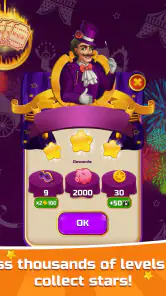
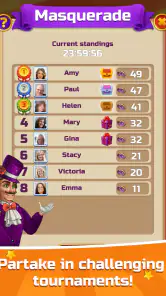
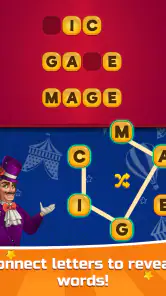
Analysis by Reviewed
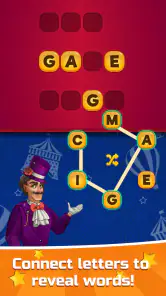
I spent time with Circus Words: Magic Puzzle as a casual word game, and my first impression was that it understands the appeal of short, low-pressure sessions. You swipe across letters, connect them into words, and work through puzzles with a colorful circus theme around the experience. It is easy to begin without learning a complicated ruleset, yet the better puzzles still make me pause and test several possible combinations.
That simplicity is the main reason I can imagine recommending it to a friend. I can open it while waiting for an appointment, play a few rounds during a quiet coffee break, and stop without feeling that I have abandoned a long match. At the same time, it is not a perfect choice for every word-game player. People who want a competitive dictionary battle, a creative word-building sandbox, or a completely purchase-free experience may find its format restrictive.
How the current version feels to play
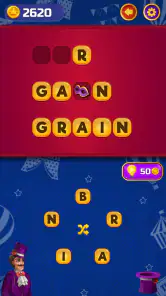
The core interaction is deliberately tactile. Instead of typing answers, I drag or swipe through available letters and look for words that fit the puzzle. That makes the game approachable on a phone because the input is quick and forgiving compared with a traditional keyboard-based word challenge. The circus presentation gives the otherwise familiar letter puzzles a lighter identity, although the real reason to keep playing is the gradual satisfaction of spotting a word that was hiding in plain sight.
I found the game best suited to players who enjoy measured progress rather than frantic competition. A puzzle can be treated as a small mental exercise: scan the letters, try a likely word, notice how the remaining spaces change, and then reconsider the less obvious combinations. This rhythm makes it useful for a short break or a relaxed evening. It also works for people who enjoy vocabulary games but do not want to memorize a large rulebook before they can start.
The game is free to download and is suitable for Everyone, which makes the basic concept easy to share across a household. Its broad audience is also reflected in its reach: it has passed one million installs and holds a 4.6 average from around 15 thousand ratings. Those figures do not replace personal testing, but they do suggest that the uncomplicated swipe-and-solve format has found a substantial audience.
One practical detail matters before installing: the game includes optional in-app purchases ranging from $0.99 to $99.99 per item. I would approach it as a free game first and decide later whether any optional purchase genuinely improves my experience. That mindset helps keep the puzzle itself at the center instead of turning every difficult moment into a reason to spend.
The small-session advantage
My favorite use case is the “five spare minutes” situation. If I am waiting for food, sitting on public transport, or taking a break from work, I can start a puzzle without committing to a long campaign. Word games that require a full uninterrupted session can feel awkward in those moments, while this style of play is naturally divided into manageable challenges.
There is also a useful stopping point after each solved puzzle. I do not need to remember a complicated position or worry about letting another player down. That makes it more comfortable than multiplayer word alternatives when I want to relax rather than compete. The trade-off is that the experience may feel less exciting for anyone who needs social pressure, leaderboards, or real-time opponents to stay engaged.
What the swipe system changes
Swiping through letters sounds like a small design choice, but it changes the way I search for answers. With a keyboard game, I usually know the word before entering it. Here, the physical movement encourages me to explore the available letters directly. I begin with obvious short words, then use the remaining letters as clues for longer or less familiar answers.
That workflow is worth remembering when a puzzle appears stuck. Rather than staring at the whole board, I focus on one cluster of letters and test combinations that share a beginning or ending. I also avoid repeatedly forcing the same familiar answer. If the puzzle does not respond as expected, the better move is often to change the order of my search instead of assuming I have missed a simple spelling error.
This is one of the game’s less obvious strengths: it turns the interface into part of the vocabulary exercise. The player is not merely entering a solution; the player is visually and physically mapping possible words. That can make the game feel more involving than a basic list of clues, even though the underlying action remains easy to understand.
Development, updates, and the experience for returning players
The game was released on June 15, 2017, and the current version is 1.499.5. That combination tells me I am looking at an established mobile title rather than a brand-new experiment. For a returning player, the important point is continuity: the game has had time to settle into its swipe-based word-puzzle identity, and the current build represents the version available now rather than the original launch state.
I would be careful, however, about reading a version number as a promise of a particular feature. A later build can reflect maintenance, compatibility work, content adjustments, or other changes without automatically transforming the game into a different genre. What I can judge from the current experience is that the central appeal remains the quick connection of letters into words. I would not install it expecting a dramatic reinvention of the format.
For existing users, that stability is mostly positive. Someone who enjoyed the straightforward puzzle loop years ago is unlikely to face a completely unfamiliar product when returning. The familiar interaction also lowers the cost of picking it up again after a long break. I can imagine remembering the basic gesture immediately, even if my vocabulary confidence takes a few puzzles to return.
On the other hand, long-term players may notice the limits of a stable formula more quickly than newcomers. When the main action is always finding and connecting words, the novelty depends heavily on the quality and variety of the puzzles. If I play for a long stretch every day, the simple loop can become predictable. I prefer it in controlled sessions, where its clarity feels refreshing rather than repetitive.
How it compares with familiar alternatives
Compared with crossword games, this title asks less from the player at the start. I do not need to interpret a clue in a particular style or understand a grid full of intersecting answers before making progress. That makes it a better fit for someone who wants direct letter manipulation. A crossword remains the stronger choice for players who enjoy clues, cultural references, and the satisfaction of solving through context.
Compared with anagram games, the swipe mechanic gives the search a more physical feel. Instead of rearranging a printed set of letters in my head and then typing a guess, I interact with the letters as I form the word. That can be more intuitive on a touchscreen. The downside is that players who love building every possible word from a single rack may prefer a purer anagram format with fewer visual distractions.
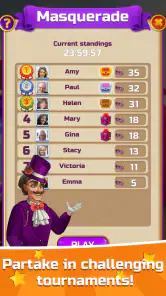
Compared with competitive word games, the appeal here is calm rather than social. I can concentrate on my own pace without worrying about an opponent’s timer or vocabulary. That is ideal when I want a private mental break. It is not the right replacement for a head-to-head game if my main motivation is ranking, bluffing, or proving that I can find words faster than someone else.
Compared with a traditional word-search puzzle, the connected-letter approach feels more active. I am not simply scanning a fixed grid for hidden entries; I am considering paths and combinations. Still, anyone who prefers a quiet visual hunt with no pressure to think of words independently may find a classic word search more relaxing.
Useful habits for solving more efficiently
My first tip is to treat the unused letters as information, not leftovers. After finding an obvious answer, I look at what remains and ask which letters now form a plausible beginning or ending. This prevents me from restarting my search from zero every time. It is especially helpful when the board contains several familiar letters that can be combined in more than one direction.
My second tip is to vary word length early. I do not spend too long hunting for an impressive long word if several short possibilities are still available. Short answers can reveal the structure of the puzzle and reduce visual clutter. Once the board is clearer, longer solutions become easier to recognize. This approach is more reliable than repeatedly guessing the most complicated word I can imagine.
My third tip is to use the game as a light vocabulary check rather than as a test of personal intelligence. Some solutions will feel obvious, while others may depend on a word I rarely use. When that happens, frustration can make the board look harder than it is. I take a brief pause, scan from a different starting letter, and return with a less rigid expectation of what the answer “should” be.
These habits also explain why I would not use the game as a formal language-learning tool without another resource beside it. Solving a word does not necessarily explain its definition, usage, or pronunciation. The game can encourage curiosity and reinforce spelling patterns, but anyone studying a language seriously should pair it with something that provides explicit teaching and feedback.
Where the experience still has friction
The biggest limitation is repetition. The swipe-and-connect loop is pleasant because it is focused, but that same focus can make extended sessions feel similar. I would recommend taking breaks rather than trying to force a long marathon. The game is strongest as a recurring casual activity, not necessarily as the only game on my phone.
There is also a difference between being accessible and being deeply challenging. New or occasional word-game players may appreciate how quickly the rules make sense. Experienced puzzle fans may want more layers around the core mechanic, such as richer clueing, competition, or a more elaborate strategy system. If I already spend a lot of time with demanding word puzzles, I would treat this as a lighter companion rather than a replacement.
The free-to-play structure deserves sensible boundaries as well. Optional purchases can be reasonable for a player who wants to support a game or obtain convenience, but I would not let a difficult puzzle pressure me into spending. My preferred approach is to play normally, use the challenge as part of the entertainment, and only consider a purchase after deciding whether I still enjoy the basic loop without it.
Another limitation is that the game’s broad Everyone rating should not be confused with universal appeal. The content is approachable, but the act of solving words can still be demanding for younger players or people who are not comfortable with English vocabulary. It may be suitable for shared play, yet I would let each player set the pace rather than assuming that a simple interface means every puzzle will feel easy.
Who should try it, and who should skip it
I would recommend it to someone who wants a free, casual word game with a clear touchscreen gesture and no need to coordinate with other players. It is particularly suitable for short breaks, quiet travel, and relaxed evening play. It also makes sense for a person returning to mobile puzzles after a long time away because the basic interaction is easy to remember.
I would be more cautious about recommending it to players who need constant novelty. If I want a story, a large strategic system, or a competitive community, this is probably not where I would start. Likewise, anyone determined to avoid all optional purchases should review the in-game experience personally and keep the free-play boundary clear before investing serious time.
The developer, Clever Apps Pte. Ltd., has positioned the game around an approachable word-puzzle idea rather than a complex simulation or narrative adventure. That focus is both its identity and its ceiling. I appreciate a game that knows what it wants to be, but I also recognize that a narrow identity will not satisfy someone looking for several different kinds of play in one download.
What I would watch going forward
For the current version, I would pay attention to whether the puzzle experience continues to feel varied over longer periods. The central mechanic is already understandable, so the meaningful question for returning users is how well the game keeps its word challenges feeling fresh. I would also watch how optional purchases fit into the ordinary rhythm of solving, because convenience should remain secondary to the puzzle itself.
I would not judge future changes by version numbers alone. What matters to me is whether updates improve the day-to-day experience without taking away the calm simplicity that makes the game approachable. A useful evolution would preserve the quick swipe interaction while giving regular players a reason to return. A change that adds complexity without improving the solving experience would be less valuable.
After using it, my recommendation is straightforward: try it if you want an easy-to-start word game for small sessions, and approach it as a relaxed puzzle habit rather than a deep competitive platform. The best part is the immediate, hands-on search for words; the main trade-off is that the same focused design can become repetitive. For me, that balance still makes it worth trying, especially when I want a quiet mental break and do not want a game demanding my full attention.
Pros
- Relaxing word puzzles with a charming circus-themed presentation.
- Easy to learn
- making it suitable for casual players of all ages.
- Large variety of levels keeps the gameplay fresh over time.
- Offline play is convenient for travel or areas without internet.
- Helpful boosters can assist when a puzzle becomes difficult.
Cons
- Some later levels may feel repetitive after extended play sessions.
- Hints and boosters can become limited without careful resource use.
- Progress may feel slow for players seeking fast-paced action.
- Small text or interface elements may be less comfortable on phones.
- Ads may interrupt the experience
- depending on the version and device.

- Category
- Word
- Version
- 1.499.5