Cargo Boom
- 16.00
- 4.5
- Installs
- 100.00K
- Price
- Free

Screenshots
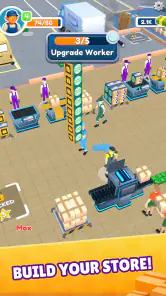
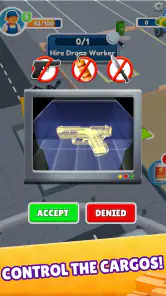
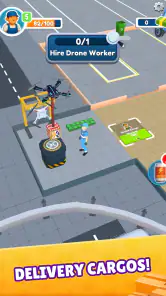
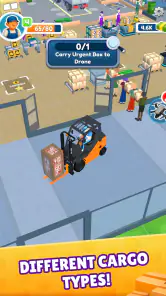
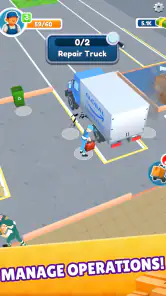
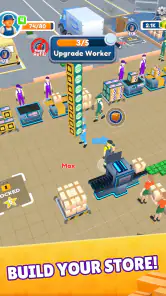

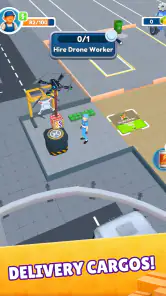
Analysis by Reviewed
I found Cargo Boom most interesting when I stopped treating it as a simple tapping game and started looking at it as a small logistics puzzle. Its basic idea is easy to understand: scan incoming boxes, bring workers into the operation, improve your hubs, and gradually turn a modest delivery setup into something much larger. That gives this free arcade game a satisfying sense of motion without demanding the long, uninterrupted sessions associated with more complex management games.
My overall impression is positive, but qualified. The appeal comes from making a few practical decisions at a time and watching a delivery network become more efficient. The limitation is that the experience can feel repetitive if you want deep planning, rich story content, or constant mechanical surprises. I would recommend it to players who enjoy incremental progress and light business simulation, especially when they want something approachable for short breaks.
How the delivery loop feels in everyday play
The first thing that works is the clarity of the central loop. Boxes arrive, scanning gives the operation a purpose, workers help keep the flow moving, and upgraded hubs make the whole network feel more capable. I never needed a long explanation to understand what I was supposed to do next. That matters in an arcade game, because the best sessions usually begin within moments rather than after a complicated tutorial.
There is also a pleasant contrast between the physical-looking warehouse activity and the broader goal of building a global delivery business. The individual box is small and immediate, while the larger ambition gives those small actions context. A scan is not just another tap; it contributes to the feeling that I am improving a working network. That connection between tiny tasks and long-term growth is the strongest reason to keep returning.
In a realistic everyday scenario, I could see myself opening the game while waiting for a bus or taking a short break between tasks. I would check the current hub, process a few boxes, decide whether a worker or an upgrade would help more, and close the game after a compact session. The design suits that rhythm better than games that punish you for leaving after only a few minutes.
At the same time, I would not describe the game as a detailed transport simulator. The emphasis is on accessibility and momentum rather than route planning at the level of a serious logistics strategy title. If you want to calculate complex schedules, balance several transport methods, or respond to a constantly changing economy, this is likely too light. Its strength is that it reduces the subject to a readable arcade framework.
Scanning is more important than it first appears
The scanning action gives the game its most recognizable identity. It is a small interaction, but it makes the player feel connected to the cargo rather than merely watching numbers increase. I found that useful because it creates a clear starting point for each cycle: inspect what is arriving, keep the flow moving, and think about what improvement will make the next cycle smoother.
My practical advice is not to rush every upgrade simply because it becomes available. I got more value from considering where the current slowdown was happening. If the operation felt held back by processing, improving that part made more sense than spending resources on a distant improvement that did not immediately affect my routine. This kind of prioritizing is a modest decision, but it is where the game moves beyond pure repetition.
Another useful habit is to treat workers as part of a workflow rather than as a decoration. Hiring one can feel rewarding, but the better question is whether that worker solves the problem I am actually experiencing. When the operation is already flowing comfortably, saving progress for a more meaningful hub improvement may be the smarter choice. That trade-off gives the early decisions more weight than the bright, simple presentation might suggest.
Upgrades create the clearest sense of progress
Hub improvements are where the long-term structure becomes easiest to understand. A stronger hub makes the delivery empire feel less like a single busy station and more like a growing network. I liked that the game gives the player a visible reason to care about development instead of presenting upgrades as abstract menu entries with no connection to the main activity.
The best way to approach upgrades is to connect them to a specific goal. I would rather improve the part of the network that helps me process the next batch of cargo than spend everything at once and then wait without a clear plan. This also prevents the progress system from becoming a blur of constant purchases. Choosing one useful improvement at a time makes the expansion feel earned.
There is a small strategic trade-off here. Immediate improvements make the current session smoother, while larger ambitions may require patience. Players who enjoy optimizing a sequence of decisions will find something to work with, even though the game remains much friendlier than a traditional management simulation. Players who prefer instant rewards may find the waiting between meaningful improvements less exciting.
What the reception and current package suggest
The game has reached over one hundred thousand installs and holds a 4.5 average from around one thousand three hundred ratings, which suggests that its central idea is connecting with a substantial audience. I would read that as evidence of a welcoming first impression rather than proof that every player will enjoy the long-term loop. Arcade management games can be appealing immediately and still lose some people once the novelty of the first upgrades fades.
It is published by Skyloft Yazılım Bilişim ve Anonim Şirketi, and the current version is 0.7.05. That version detail matters to anyone deciding whether to start now, because a game built around expansion and progression can change noticeably as it develops. I approached it as a compact, evolving arcade experience rather than as a finished replacement for a full logistics simulator.
The game is free to play, with optional purchases listed from $2.99 to $5.99 per item. I think that makes the initial decision easy: install it, try the central loop, and judge whether scanning and upgrading hold your attention before spending anything. My own recommendation is to play naturally first and avoid buying simply to hurry through a progression wall. The game is at its most satisfying when an improvement feels like the result of a choice, not merely a shortcut.
Where the experience loses momentum
The main weakness is repetition. Scanning boxes, managing workers, and improving hubs form a coherent loop, but the same clarity that makes the opening approachable can eventually make later sessions feel predictable. I enjoyed the routine when I was still learning how to prioritize improvements. Once I understood the basic rhythm, I wanted more variation in the kinds of decisions the network demanded.
This is not a fatal problem for a short-session arcade game. Repetition can be relaxing, especially when the point is to make steady progress rather than solve a new puzzle every minute. Still, it affects who should install it. If you need frequent surprises, a strong narrative, or a wide range of distinct challenges, Cargo Boom may feel narrow compared with other arcade games that constantly change their rules.
The other limitation is depth. The global delivery theme sounds broad, but the accessible structure keeps the management side relatively light. I would not choose this game when I want to model a complicated supply chain or spend an evening making detailed operational plans. A dedicated tycoon or transport strategy game would be a better fit for that mood, even if it requires more time and patience.
There is also a possible tension between free access and optional purchases. The listed price range is not unusual for a mobile game, but any progression-focused design has to be approached carefully by players who dislike spending to accelerate development. I found the fairest mindset was to regard purchases as optional convenience rather than part of the basic reason to play. If the feeling of waiting or repeating tasks bothers you immediately, the game may not become more enjoyable after spending.
Who will get the most from it
I think Cargo Boom suits players who like watching a system become more efficient. It is a good match for someone who enjoys idle-adjacent progress but still wants a clear action attached to that progress. The scanning step gives the player something concrete to do, while workers and hub upgrades provide a reason to think about the next stage.
It should also work well for people who want a management theme without a steep learning curve. You do not need prior knowledge of logistics games to understand the basic objective. The game presents a friendly path from handling individual boxes to building a larger delivery operation, so it can serve as an introduction to the genre’s ideas without overwhelming a newcomer with spreadsheets and complicated terminology.
I would be more cautious recommending it to competitive players. The appeal here is personal improvement and expansion, not the intensity of a fast multiplayer contest. Likewise, players who want a rich narrative or a carefully scripted campaign should look elsewhere. Cargo Boom is about the satisfaction of building and refining a process, not about following characters through a dramatic story.
The Teen content rating makes it suitable for an older audience than a children’s arcade title, and the minimum operating-system requirement is Android 7.0. For someone using an older Android device, that requirement is worth checking before planning a download. On supported hardware, the more important question is personal taste: whether a focused delivery loop sounds relaxing or whether it sounds like work disguised as play.
How it compares with familiar alternatives
Compared with a conventional arcade game, Cargo Boom asks for more patience and planning. A typical arcade title may focus on reflexes, quick reactions, or a high score that resets the moment a run ends. Here, the reward is cumulative. I am not only trying to perform well in one brief attempt; I am trying to make the next round of cargo easier and more productive.
Compared with a full business simulator, it is much less demanding. There is less pressure to understand a large set of interlocking systems, and the box-scanning interaction keeps the experience grounded in a simple action. That makes it easier to start, but it also means that serious simulation fans may find the decision-making too shallow. The right comparison depends on whether you value accessibility or complexity more.
It sits between those two groups in a useful way. I can play it like an arcade game when I only have a few minutes, then return later and continue the same expansion rather than starting from zero. That combination is its clearest identity. It is not trying to replace a reflex challenge or a deep tycoon game; it borrows a little from both and keeps the middle ground uncomplicated.
Small habits that improve the experience
My first tip is to identify the bottleneck before spending. Do not assume that the newest available upgrade is automatically the best one. Watch what is slowing the delivery flow, then put resources where they improve the part of the process you interact with most often. This makes each purchase easier to evaluate and reduces the feeling of upgrading randomly.
Second, use short sessions deliberately. The game’s structure is well suited to checking progress, making one or two decisions, and leaving. Trying to force a long session can expose the repetition more quickly. I enjoyed it more when I treated each visit as a small operational check rather than expecting a dramatic new event every few minutes.
Third, separate progress from impatience. If a worker or hub improvement is useful, it should solve a visible problem or support a clear next step. Spending just because the option is available can leave the network feeling no more satisfying afterward. This is especially important in a free game with optional purchases, where the temptation to accelerate can replace the pleasure of making a sound choice.
Finally, decide early whether you enjoy the theme itself. The game can make boxes and hubs feel purposeful, but it cannot turn a delivery-management loop into a completely different genre. If the idea of improving a small network sounds appealing, its simplicity works in its favor. If you are only waiting for the game to become a complex simulator, the basic design may never meet that expectation.
My final recommendation
After spending time with it, I see Cargo Boom as a focused arcade management game with a clear thesis of its own: small delivery actions become satisfying when they feed a visible expansion plan. Its best qualities are the approachable scanning loop, the understandable worker choices, and the steady feeling that hub upgrades are changing the scale of the operation.
Its weaknesses are equally clear. The routine can become repetitive, the logistics layer is lighter than the theme may suggest, and players who dislike optional acceleration in free games should approach the purchase system cautiously. Those are meaningful limits, not minor complaints, but they do not undermine the game’s intended audience.
I would recommend it to anyone who wants a relaxed, progress-driven arcade experience that fits naturally into short breaks. I would skip it in favor of a deeper tycoon game if I wanted complex logistics, and I would choose a faster arcade title if I wanted reflex-based excitement. For the right player, though, the simple pleasure of scanning one more box, making one sensible improvement, and seeing the delivery network grow is enough to make this a worthwhile free download.
Pros
- Simple controls make Cargo Boom easy to pick up and play.
- Short levels suit quick gaming sessions on mobile devices.
- Cargo-focused gameplay offers a refreshing change from typical arcade games.
- Progression provides a clear reason to keep completing deliveries.
- Bright visuals and playful presentation make the game approachable.
Cons
- Some levels may feel repetitive after extended play sessions.
- Difficulty can become uneven as later challenges introduce more obstacles.
- The game may offer limited depth for players seeking complex strategy.
- Small-screen controls can occasionally feel imprecise during busy moments.
- Ads or optional purchases may interrupt the experience for some players.

- Category
- Arcade
- Version
- 0.7.05