Gang Wars : Street Crime
- 196.00
- 4.6
- Installs
- 500.00K
- Price
- Free

Screenshots
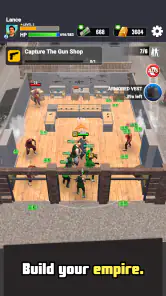
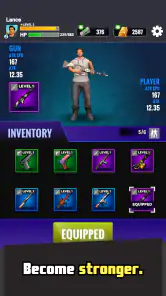
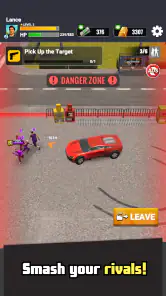
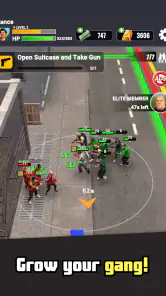
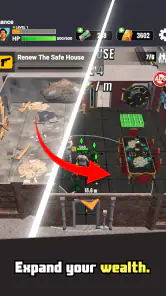
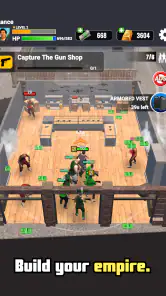
Analysis by Reviewed
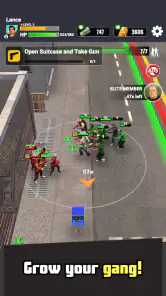
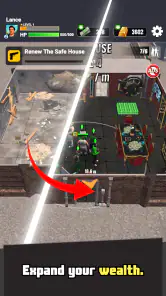
Gang Wars: Street Crime is the kind of action game that immediately points you toward conflict: assemble a crew, fight for territory, and try to keep control when the battlefield starts shifting. I found its central idea easy to understand, but the interesting part is how much pressure that simple goal can create. Every move is tied to space, timing, and the strength of the squad you bring into the fight.
As a free game from Skyloft Yazılım Bilişim ve Anonim Şirketi, it sits in a familiar mobile action space while aiming for a more territorial style of play. The store summary focuses on building a squad and capturing zones, so this is not presented as a quiet, purely solo experience. It is designed around taking ground and making your group matter.
How the street-battle concept works in practice
What I like about the premise is that it gives each match a clear purpose. Instead of simply chasing eliminations, I am thinking about where my squad needs to be and whether a captured area is worth defending. That extra layer makes the action feel more deliberate than a basic run-and-gun game, even when the controls and objectives are easy to pick up.
The best way to approach a session is to treat territory as a resource rather than a trophy. Capturing a zone may feel satisfying, but holding it can be the harder decision. If I move everyone toward one objective, I may gain control quickly while leaving another route exposed. If I divide the squad too early, I risk weakening the group that actually has to win the encounter. That tension is the foundation of the experience.
A useful habit is to pause mentally before committing to a capture. I look at the current position of my squad, the likely direction of the next confrontation, and whether the area gives me a meaningful advantage. Rushing every objective is tempting, especially when the game is built around domination, but it can turn a promising lead into a messy retreat.
This is also where the game separates itself from more straightforward mobile action titles. In a typical arcade shooter, the most obvious target is often the right target. Here, the important target may be the zone that prevents the other side from recovering. That makes awareness more valuable than simply moving quickly, and it gives experienced players something to improve beyond reflexes.
The action category is a good fit, although the territory focus adds a tactical edge. I would not recommend approaching it as a pure reaction test. Players who enjoy making quick decisions about positioning and squad movement will probably get more from it than someone who only wants short, uncomplicated shooting rounds.
The squad is more than a visual theme
Building a squad sounds simple, but it changes how I think about mistakes. When I am controlling one character, a bad push usually affects only that moment. With a group, an aggressive move can damage the entire plan. The squad becomes a tool for managing risk: I need enough force to capture, enough discipline to avoid wasting that force, and enough flexibility to respond when the situation changes.
One of the more useful approaches is to avoid treating every member of the group as disposable pressure. Even when the game encourages bold action, I find it smarter to preserve the squad’s ability to contest another zone. A narrow victory that leaves the group unable to respond may be less valuable than a slower capture that keeps options open.
This creates a practical distinction between new and experienced players. Beginners often focus on the nearest objective because it gives immediate feedback. With more time, the better question becomes whether that objective improves the next decision. That change in thinking is one of the game’s strongest reasons to keep playing after the first few sessions.
There is also a trade-off between concentration and coverage. Keeping the squad together can make a push more reliable, but it may allow the opposing side to take space elsewhere. Splitting attention can create pressure on multiple fronts, yet it also makes each mistake more expensive. I recommend learning this balance gradually instead of dividing the group simply because several zones are available.
A realistic short-session routine
For an everyday example, imagine having a few minutes during a commute or a break. I would begin by deciding on one immediate objective rather than trying to control everything at once. After the first clash, I would reassess the squad’s position before committing to another capture. If the group is already stretched, consolidating the advantage is more sensible than chasing a second area just because it is visible.
That routine makes the game easier to fit into a busy day because each session has a natural decision cycle: choose a target, contest it, then decide whether to advance or stabilize. It also reduces the frustration that comes from entering a match without a plan. The game’s simple premise supports quick starts, but thoughtful play makes those short sessions feel more rewarding.
On the other hand, players who dislike repeated territorial pressure may find the structure tiring. The appeal depends on enjoying the question of where to fight next. If you prefer a campaign with a fixed story, a calm puzzle game, or action that never asks you to defend ground, this may not be the best match.
Spending, progress pressure, and fairness
The game is free to download, which makes it easy to try without an upfront purchase. Its listed in-app purchases range from $1.99 to $49.99 per item. That is important context for anyone deciding how cautiously to approach spending: the game can be entered for free, but optional purchases cover a broad range, including a high-end price point that deserves attention before tapping through a checkout.
I would set a personal spending limit before playing, especially if the competitive side becomes absorbing. A good rule is to play several sessions first and decide whether the core loop is enjoyable without buying anything. That separates genuine interest in the action from the pressure of wanting an immediate advantage or faster progress.
The purchase information alone does not establish whether spending changes competitive strength, speeds progression, unlocks convenience, or mainly offers customization. I would not assume that purchases are harmless, nor would I claim that they make the game unfair without clearer evidence. The sensible approach is to watch how your own progress feels and avoid buying simply because a difficult match creates frustration.
This matters more in a zone-control game than in a purely decorative action title. If paid options affect the ability to build a stronger squad or recover from setbacks, then the competitive experience may feel very different for spenders and non-spenders. If they do not, the main concern becomes budget control rather than match balance. Until that distinction is clear through play, I would treat purchases as optional conveniences with a reason to be cautious.
For younger players, the Teen content rating is another reason to involve a parent or guardian in spending decisions. The rating does not tell me how much money a player will feel encouraged to spend, so I would use device-level purchase controls and discuss a limit in advance. That is more practical than relying on willpower after a tense match.
What competitive players should watch closely
Fairness in Gang Wars: Street Crime depends on more than whether two players can capture the same zone. It also depends on how much preparation, squad strength, and recovery are available before that contest. I pay attention to whether a loss feels like a result of my positioning or an unavoidable gap in resources. That distinction is central to deciding whether the game feels satisfying over time.
A useful self-check is to review the decision immediately before a failed push. Did I divide the squad, ignore another route, or attack without enough support? If the answer is yes, the loss offers something to learn. If the answer is consistently no and the same opponent wins through a resource gap, the competitive side may be less appealing for players who want a level playing field without spending.
Compared with casual action games that mainly reward quick reactions, this title gives planning a larger role. Compared with deep strategy games, it appears easier to understand because the core goal is direct: fight for zones with a squad. That middle position may suit players who want tactical choices without a complicated management layer, but it may disappoint experts looking for extensive strategic systems.
I also would not confuse a high user rating with proof that the competitive economy is perfect. The game has an average rating of 4.6 from around 12 thousand ratings, along with roughly 196 written reviews. Those figures show strong reception overall, but they do not answer the personal question of whether the balance feels comfortable to a player who refuses purchases.
Version, access, and practical expectations
The current version is 0.6.10, and the game requires Android 7.0 or later. That makes checking the operating system worthwhile before trying to install it on an older device. I would also leave enough free space for the installation and updates, although the amount needed is not something I would guess at.
The game has passed half a million installs, so it is not an obscure experiment with no visible audience. That level of adoption makes it easier to imagine finding an active community, but it does not guarantee that every region or time of day will feel equally busy. I would judge the actual matchmaking experience after several sessions rather than assuming the install figure predicts my experience.
The Teen rating also helps set expectations about tone. This is a street-crime-themed action game, not a child-focused title, and families should consider whether that atmosphere suits the intended player. Adults who want a lighter, nonviolent alternative would be better served by a different category altogether.
What I would want to learn before committing
After playing through the central loop, the biggest practical question is how much variety appears after the initial novelty of capturing zones. The premise is strong enough to carry early sessions, but long-term enjoyment depends on whether squad decisions continue to feel meaningful. I would look for changes in how objectives must be approached, how opponents create pressure, and whether my choices produce different outcomes.
Another important question is how forgiving the game is after a bad match. A healthy action loop lets me recover, adjust, and try again without feeling that one mistake has ruined the next several sessions. If progress becomes too dependent on a single failed encounter, the territorial structure could turn from exciting to exhausting. I recommend paying attention to that recovery rhythm before spending money.
I would also test the game with different play styles. A player who likes aggressive pushes should learn whether speed consistently pays off. Someone more defensive should see whether holding ground is a legitimate strategy or merely delays an eventual loss. These experiments reveal more than following the store summary because they show whether the game welcomes different kinds of decision-making.
For users wondering whether they need a powerful phone, the listed minimum is Android 7.0 or later, but an operating-system requirement is not the same as a guarantee of smooth performance on every device. I would try a few matches before making purchases, particularly on older hardware. If controls feel delayed or the screen becomes difficult to read during a crowded fight, that can undermine the tactical decisions the game is built around.
Players may also wonder whether the free entry is enough for a complete experience. My answer is to begin as a non-spender and evaluate the loop on its own. Since individual purchases can reach $49.99, I would never treat a large payment as a sensible solution to ordinary frustration. If the game is enjoyable without spending, optional purchases can remain a conscious choice rather than a requirement created by impatience.
Who should install it, and who should skip it
I would recommend it to players who like mobile action with a territorial objective, enjoy making quick squad decisions, and want matches where positioning matters as much as attacking. It is especially suitable for someone who finds ordinary action games too repetitive but does not want the complexity of a full-scale strategy title.
I would be more cautious about recommending it to players who want a clearly documented, purchase-free competitive environment. The available purchase range is enough to justify careful spending habits, and the purchase details do not by themselves explain how every option affects play. Anyone sensitive to monetization pressure should try the free experience first and keep a firm limit.
I would also skip it if your ideal game is a story-driven crime adventure. Despite the street-crime framing, the confirmed core is squad building and zone capture, not a narrative campaign. Likewise, players seeking a relaxed game for children should look elsewhere because the content rating is Teen.
My trust verdict after weighing the trade-offs
Gang Wars: Street Crime has a focused idea that works best when I stop treating every encounter as a simple attack and start thinking about territory, squad preservation, and the next move. That gives the action more texture than its short premise might suggest. The strongest moments come from choosing when to push and when to protect an advantage.
Its free price makes trying it straightforward, while the listed purchase range means I would approach the financial side with discipline. I would not promise that spending is irrelevant to competition, because the available information does not establish that. I would also not label the game unfair without seeing how those purchases operate in actual play. For me, that uncertainty is a reason to test first, not an automatic reason to reject it.
The audience response is encouraging, with a 4.6 average and over half a million installs, but my recommendation remains conditional on your priorities. If you want a compact action game built around controlling space, it is worth a careful trial. If you need a fully transparent competitive economy, a strong story, or a completely pressure-free experience, another option may suit you better.
My final advice is simple: play without spending, learn how the squad behaves, and judge whether losses feel connected to your decisions. If the answer is yes, the game has a rewarding tactical core. If every setback feels like a demand for more resources, stop there. That approach lets you enjoy what Gang Wars: Street Crime does well without allowing its optional spending to decide whether the game is worth your time.
Pros
- Simple controls make street fights easy to pick up.
- Short missions suit quick gaming sessions.
- Urban crime theme gives the game a gritty atmosphere.
- Character upgrades add a sense of progression.
- Offline play is convenient when no connection is available.
Cons
- Repetitive combat can make missions feel similar over time.
- Progress may slow noticeably without upgrades or grinding.
- Some devices may experience lag during busy scenes.
- The crime-focused content may not suit younger players.
- Limited customization reduces variety between characters.

- Category
- Action
- Version
- 0.6.10