Bubble Bus: Parking Jam Puzzle
- 1.21K
- 4.6
- Installs
- 1.00M
- Price
- Free

Screenshots

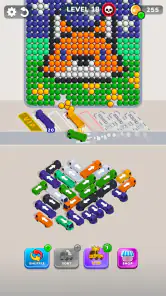
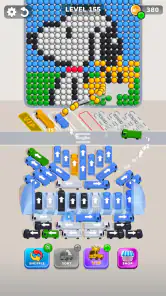
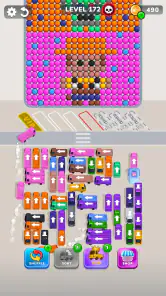
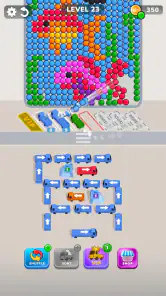
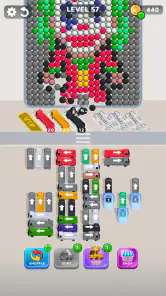
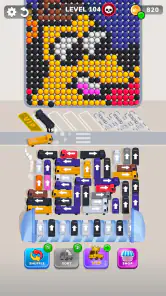
Analysis by Reviewed
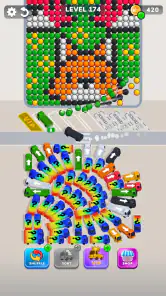
Bubble Bus: Parking Jam Puzzle is the kind of mobile game I can understand immediately: buses, colored bubbles, and a crowded traffic layout that needs to be untangled. I spent time with it as a casual puzzle game rather than treating it like a deep strategy title, and that distinction matters. Its appeal comes from quick visual decisions, the satisfaction of clearing a blockage, and the convenience of playing in short bursts. It is free to play, aimed at Everyone, and made by MOONEE PUBLISHING LTD.
The basic idea is easy to grasp, but the better question is whether it deserves a regular place on your phone after the first few sessions. My answer is cautiously positive. The game works well when I want a low-pressure mental break, especially during a commute, a waiting room, or a short pause between tasks. However, it is less convincing for anyone looking for a puzzle experience with a strong story, a large strategic system, or enough variety to become a primary game.
What the first week feels like
The opening appeal is visual and immediate. I do not need a tutorial-heavy explanation to understand what I am trying to accomplish. The board presents a traffic problem, and I work through the colored bubble and bus arrangement until the jam is sorted. That short path from seeing the puzzle to making the first move is one of the game’s biggest strengths.
In the first week, I found myself returning because each level creates a small promise: perhaps the next arrangement will require a cleaner solution, a little more patience, or a different order of movement. The individual puzzles fit naturally into spare moments. I can play one while waiting for coffee, stop when something else needs my attention, and return later without feeling that I have abandoned a complicated campaign.
That convenience is more important than it sounds. Many puzzle games ask me to remember a long chain of rules, manage several resources, or follow a story before the actual challenge becomes enjoyable. This one puts the traffic-jam problem at the center. If you like matching colors and organizing crowded spaces, the first sessions are likely to feel pleasantly frictionless.
The game’s store summary describes the central task as matching buses with color bubbles and sorting the traffic jam. In practice, I would describe the experience as visual ordering under limited space. I am not only looking for a matching color; I am also considering which move opens a route, which vehicle is blocking another, and whether clearing one area creates a better position for the next decision.
That makes the early puzzles useful as a gentle introduction to the game’s rhythm. I learned to pause briefly before touching the screen rather than moving the first obvious option. A quick scan of the whole board often prevents a later obstruction. This is a small habit, but it changes the experience from random tapping into deliberate puzzle solving.
More From Our News Desk

Clash of Clans Is Won Between the Battles

Android Auto Makes the Case for Quieter Car Software

MobiOffice: Transforming Mobile Productivity with Seamless Integration

EA SPORTS FC™ Mobile Soccer: Redefining Mobile Sports Gaming

How Microsoft OneDrive Became a Mobile Productivity Giant

How Google Translate Breaks Language Barriers Effortlessly
The most useful early habit is to plan the exit order before chasing the easiest color. A match that looks attractive can still be a poor first move if it leaves the central lane blocked. I found that looking for the piece that unlocks two or more later choices is usually more valuable than immediately completing the most visible pair.
The first-week experience is also helped by the game’s approachable identity. It is colorful and readable without asking me to invest emotionally in characters or a complicated setting. That makes it a good choice for children and adults who prefer puzzles with an Everyone content rating. Parents should still remember that free games with in-app purchases can encourage optional spending, so the purchase settings on a shared device deserve attention.
At this stage, the game feels more like a reliable snack than a full meal. That is not criticism by itself. A short puzzle can be exactly what I want when I have only a few minutes. The important limitation is that the simple presentation does not disguise what the game is: a focused sorting challenge, not a broad adventure or a competitive brain-training platform.
Where it fits in everyday use
A realistic use case is a crowded weekday morning. I might have five minutes before leaving home, open the game, solve a compact traffic layout, and close it without needing to remember a plot or prepare a long session. On a longer journey, I can play several puzzles, but I would not expect the same level of involvement as I would get from a narrative game or a more demanding logic title.
It also works well as a transition activity. I can use a puzzle after work to shift attention away from emails, or play briefly while waiting for an appointment. Because the objective is concrete, the game gives my mind something to organize without requiring the emotional commitment of a lengthy campaign.
The trade-off is that this same simplicity can make the experience feel disposable if I need constant novelty. Players who enjoy discovering new mechanics, building a collection, or making long-term strategic plans may find the first-week charm less durable. For them, Bubble Bus is more likely to become a backup game than a main one.
Why the value may or may not last
After the novelty fades, the game’s staying power depends on how much pleasure I get from the basic loop itself. The central sorting challenge is repeatable, and that gives it a useful kind of recurring value. I do not need a special occasion to play. Whenever I want a small organizational problem, the game is ready to provide one.
That does not mean every session feels equally fresh. Puzzle games built around a recognizable structure can become predictable when I stop noticing the visual theme and start seeing only the solution pattern. For me, the long-term question is not whether the buses remain cute; it is whether arranging them still gives me a satisfying sense of progress.
The game has earned a substantial audience, with more than a million installs and an average rating of 4.6 from roughly twelve thousand ratings. Those figures suggest that the straightforward concept connects with many players, but they do not guarantee that every player will enjoy extended use. A person can appreciate the first few levels and still decide that the format is too narrow for daily play.
I think the strongest recurring value comes from using it as a flexible filler game rather than forcing it into a daily routine. If I expect it to replace every other puzzle game, repetition becomes more noticeable. If I keep it available for short breaks, it remains useful because its uncomplicated structure is precisely what makes it easy to start.
One practical approach is to avoid playing until I am tired of it. A few short sessions spread across the week preserve more of the game’s appeal than a long sitting that turns every board into work. This is especially relevant for casual puzzle players: the game is at its best when it leaves me satisfied, not when I continue simply because another level is available.
Compared with traditional match-three games, this experience feels less dependent on creating chains or reacting to a constantly changing board. Compared with classic sliding-block puzzles, it has a friendlier, more colorful presentation and a more direct traffic theme. Compared with large logic collections, it offers less breadth but also less setup. I can choose it when I want one recognizable type of problem instead of a menu of unrelated challenges.
Those comparisons clarify who should keep it installed. I would recommend it to someone who likes sorting, matching, and clearing visual congestion. I would be less likely to recommend it as a first choice to someone who wants word puzzles, number puzzles, competitive rankings, or a story-driven progression system. Another puzzle app may be better if variety is the main reason you play.
How I manage the game over time
My preferred workflow is simple: open it with a specific time limit in mind, inspect the whole board, and make the first move only after identifying the likely bottleneck. When I get stuck, I do not immediately restart. I first ask whether I have mistaken a visible match for a useful match. That small distinction often reveals that the problem is my order of operations rather than an impossible layout.
I also treat difficult moments as a reason to slow down, not tap faster. In a traffic puzzle, hurried input can make the board feel more confusing because I lose track of what has been opened and what remains trapped. A calm scan from the outside lanes toward the center gives me a clearer picture of the available space.
For younger players, this can become a gentle way to practice sequencing and visual attention, although I would present it as entertainment rather than formal education. For adults, the benefit is more modest: it offers a contained task that can occupy restless attention for a few minutes. I would not choose it as a substitute for a dedicated logic course or a serious problem-solving tool.
The free entry point makes trying it easy. At the same time, the game includes in-app purchases ranging from $1.49 to $99.99 per item. That wide range is a reason for me to decide in advance whether I am willing to spend anything. The game should be evaluated as a free casual option first, not as something that automatically becomes better because money is spent on it.
If you are installing it on an older device, the minimum operating-system requirement is Android 7.1. The current version is 3.2.2, which is useful context when deciding whether an existing phone or tablet is suitable. I would still keep expectations realistic: compatibility helps with access, but it does not change the game’s core identity as a compact puzzle experience.
Maintenance, friction, and reasons to take a break
The maintenance burden is low in the sense that I do not need to manage a complicated account, learn a large ruleset, or remember a demanding schedule just to enjoy a session. The game is easy to pick up again after a gap. That makes it more sustainable than puzzle apps that punish an irregular routine or bury the main activity under layers of menus.
Its main maintenance problem is personal rather than technical: avoiding overuse of a narrow loop. When every puzzle starts to resemble the previous one, I need to rotate it with another activity instead of expecting endless freshness. Taking a break does not feel like losing progress in a story; it simply lets the basic sorting idea feel new again when I return.
There is also a spending-related friction point. Free-to-play puzzle games can be relaxing until optional purchases become part of the decision-making. I prefer to keep the game in its casual lane and judge each purchase carefully. If I find myself considering a payment mainly because I am impatient with a level, that is a good moment to close the app and return later.
Another source of fatigue is the gap between visual satisfaction and intellectual depth. Clearing a crowded board can feel rewarding, but players who want increasingly complex systems may eventually want more layers than this format provides. The game is not a poor choice because it stays focused; it is simply not designed to satisfy every kind of puzzle appetite.
I also would not choose it for a social gaming night unless everyone already enjoys quiet, individual puzzles. Its appeal is personal and task-focused. A party game, cooperative title, or competitive puzzler would create more interaction. Bubble Bus works better when I want to concentrate briefly without coordinating with anyone else.
For children, the Everyone rating makes the theme approachable, but adults should still guide spending on devices that allow purchases. For adults who dislike bright casual presentation, the visual style may feel too lightweight even when the underlying decisions are enjoyable. In that case, a minimalist logic game could be a better long-term fit.
Who should keep it installed
I would keep this game installed if I wanted an uncomplicated puzzle for commutes, queues, short breaks, or quiet evenings. It is especially suitable for players who enjoy organizing objects into a clear solution and prefer learning through play rather than reading instructions. The color-based structure is easy to understand, while the crowded layouts give the simple idea enough tension to remain engaging for a while.
I would skip it if my priority were a rich campaign, deep strategic planning, online competition, or a wide selection of puzzle types in one package. I would also skip it if I know that repeating a familiar mechanic quickly frustrates me. The game’s value comes from refinement of one idea, not from constant reinvention.
That distinction helps set fair expectations. I do not open it expecting a major gaming event. I open it expecting a few minutes of visual problem solving, and it generally serves that purpose well. Its success is modest but real: it makes a small task feel orderly, gives me a clear stopping point, and does not demand much preparation.
MOONEE PUBLISHING LTD has positioned the game in a crowded puzzle category, so its lasting advantage is not complexity. It is accessibility. The buses and bubbles give the sorting problem a recognizable identity, and the traffic-jam framing makes each board easier to read as a physical space rather than an abstract grid.
That identity matters most during the first sessions, but the practical design matters more later. I return because I can understand the challenge quickly, not because I am waiting for a dramatic story reveal. If the basic act of opening routes and arranging colors remains satisfying to you, the game can stay useful long after the initial novelty. If it does not, no amount of colorful presentation will create lasting interest.
My long-term verdict
After looking beyond the first-week appeal, I see Bubble Bus: Parking Jam Puzzle as a dependable casual puzzle rather than an essential long-term game. Its free price, Everyone rating, low learning curve, and short-session structure make it easy to recommend for the right player. I like that I can use it in small gaps without carrying a complicated system in my head.
Its limitations are equally clear. The focused mechanic can become repetitive, the game may not provide enough depth for serious puzzle fans, and the range of in-app purchase prices means I would approach spending with restraint. Those are not reasons to reject it outright; they are reasons to install it with the correct expectations.
My final recommendation is to try it if you want a colorful traffic-sorting puzzle that can live quietly on your phone and be useful whenever you have a few spare minutes. Keep it as a rotating break game rather than a duty, and its simple loop has a better chance of staying enjoyable. If you need variety, narrative, or demanding strategy, choose a different puzzle experience instead.
In my experience, Bubble Bus: Parking Jam Puzzle earns lasting space when I treat its simplicity as the feature, not a promise of something larger. It does not need to become a daily obsession to be worthwhile. A game that reliably gives me a calm, focused pause can have a place on my device, provided I recognize when the traffic jam is no longer relaxing and move on for a while.
Bubble Bus: Parking Jam Puzzle Frequently Asked Questions
Who developed Bubble Bus: Parking Jam Puzzle, and what kind of game is it?
Bubble Bus: Parking Jam Puzzle is a puzzle game from MOONEE PUBLISHING LTD. Its focus is on sorting colorful buses and matching passengers, giving it a straightforward premise that is easy to grasp before you start. If you enjoy traffic-jam puzzles that ask you to think about move order rather than rely on fast reactions, its central idea should feel familiar and approachable.
What is Bubble Bus: Parking Jam Puzzle?
Bubble Bus: Parking Jam Puzzle is a casual puzzle game centered on organizing colorful buses and passengers in crowded parking areas. The main objective is to solve each traffic arrangement by moving vehicles in the correct order, matching passengers, and clearing the route without creating an unsolvable blockage. It combines simple tap controls with increasingly challenging levels and bright, accessible visuals.
How do you play Bubble Bus: Parking Jam Puzzle?
Gameplay is based on planning each move before tapping a bus or vehicle. You generally need to free blocked buses, match passengers with the correct colors, and use the available parking space efficiently. Early stages are easy to understand, but later puzzles require careful sequencing because one careless move can trap other vehicles. The controls are designed for quick touchscreen play.
Is Bubble Bus: Parking Jam Puzzle free to download?
Bubble Bus: Parking Jam Puzzle is free to download, with optional in-app purchases ranging from $1.49 to $99.99 per item. You can start with the core puzzle experience without paying, while purchases are available for players who choose to spend on additional options. Consider your preferences around optional spending before downloading, particularly if children will be playing on a device with access to purchases.
Does Bubble Bus: Parking Jam Puzzle work without an internet connection?
Many of the basic puzzle levels may be playable offline, which makes the game suitable for short sessions while traveling or when mobile data is unavailable. However, an internet connection may still be required for advertisements, cloud saving, special events, updates, rewards, or purchases. Offline functionality can vary between versions, so it is best to test the game after installation.
Pros
- Simple controls make it easy to start playing immediately.
- Short levels are ideal for quick breaks or casual sessions.
- Colorful visuals give the game a cheerful
- accessible style.
- Increasing difficulty provides a steady sense of progression.
- Offline play makes it convenient when no internet is available.
Cons
- Some levels may feel repetitive after extended play sessions.
- Later puzzles can become challenging without much guidance.
- Ads may interrupt the flow between levels.
- The game may encourage retries through limited move solutions.
- Progress and rewards can feel slow without optional purchases.
- Category
- Puzzle
- Version
- 3.2.2