Mechangelion - Robot Fighting
- 2.64K
- 4.6
- Installs
- 50.00M
- Price
- Free

Screenshots





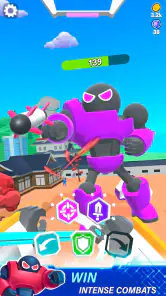
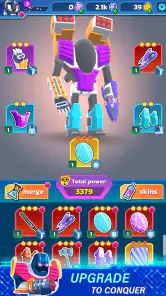
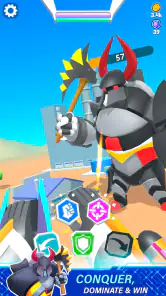
Analysis by Reviewed
I spent my first sessions with Mechangelion - Robot Fighting expecting a quick casual distraction, and that is exactly where it makes its best first impression. The idea is easy to understand: step into a robot arena, fight mechanical opponents, and keep moving from one short encounter to the next. It is a free game from MOONEE PUBLISHING LTD, aimed at players aged Everyone 10+, and its simple presentation makes it approachable even if you do not usually play action games on a phone.
What surprised me was how quickly the game creates a sense of progress without asking me to learn a complicated control scheme. I could pick it up during a spare moment, understand the immediate objective, and get into the action without reading a long explanation. That makes it a natural fit for short breaks, especially when I want something more active than a puzzle but less demanding than a full competitive game.
My longer-term opinion is more cautious. The opening appeal is clear, but a casual robot fighter has to do more than look exciting in the first few rounds. It needs enough variety, manageable progression, and a comfortable relationship with in-app purchases to earn a regular place on a phone. Mechangelion has a strong reason to try it, but whether it stays installed depends heavily on how much repetition you personally tolerate.
What the first week feels like
The first week is the easiest part of the experience to enjoy. The robot-versus-robot theme gives every match an immediate identity, while the short-session format keeps the game from feeling like a major commitment. I never felt that I needed to reserve a long block of time before opening it. A few minutes can be enough for a satisfying burst of arena action, which is exactly what I want from a casual mobile game.
The straightforward structure also helps the game work for different levels of experience. Someone who rarely plays games can understand the basic appeal almost instantly, while a more regular mobile player can focus on improving timing and making better decisions during fights. It does not bury the central idea under a large amount of setup, and that restraint is one of its strongest qualities.
A realistic everyday use case is a commute with an unpredictable amount of free time. If I have only a few minutes before reaching my stop, I can start a session without worrying about abandoning a long story sequence or letting a team down. The same applies to waiting rooms, short breaks, or the final part of an evening when I want interaction rather than passive scrolling.
The robot theme does some important work here. A generic arena game can feel interchangeable, but the steel-warrior presentation gives the encounters a more memorable flavor. It is not enough by itself to guarantee lasting interest, yet it makes the initial loop easier to return to than an abstract collection of battles would be.
More From Our News Desk

Clash of Clans Is Won Between the Battles

Android Auto Makes the Case for Quieter Car Software

MobiOffice: Transforming Mobile Productivity with Seamless Integration

EA SPORTS FC™ Mobile Soccer: Redefining Mobile Sports Gaming

How Microsoft OneDrive Became a Mobile Productivity Giant

How Google Translate Breaks Language Barriers Effortlessly
I also appreciate that the game is free to start. That lowers the risk of trying it, particularly for players who are unsure whether robot combat will hold their attention. The store listing shows a 4.6 average from around 101 thousand ratings, and the game has passed 50 million installs, so it clearly has broad reach. Those figures do not decide whether it suits me, but they do suggest that the basic format connects with a large mobile audience.
During the opening period, my main advice is to avoid treating every early reward as a reason to spend immediately. The first sessions are naturally exciting because almost any improvement feels meaningful. I would play long enough to understand the normal rhythm of fights before deciding whether purchases add value for my habits. That small pause helps separate genuine enjoyment from the temporary rush of starting something new.
Why the opening loop works
The strongest early quality is accessibility. Mechangelion does not require me to remember a complicated set of systems before I can enjoy a fight. The arena concept is readable, the robot focus is distinctive, and the casual category is reflected in how easily the game fits around the rest of my day.
That accessibility also makes it a reasonable choice for a shared household device, provided the player meets the age guidance. A family member can understand the premise without needing a long tutorial session from someone else. At the same time, the Everyone 10+ rating is a useful reminder that this is not meant to be treated as a game for very young children simply because the controls are approachable.
The first-week weakness is that novelty can hide repetition. Robot battles are appealing when the setting still feels fresh, but the same basic activity can lose impact if each session begins to feel too familiar. I noticed that the game is most enjoyable when I approach it as a compact action break, not as an endless substitute for a deeper console-style combat game.
What remains after the novelty fades
The more important question is what happens from month to month. Casual games do not necessarily need a huge amount of content to be worthwhile, but they do need a reason to return that feels better than simply repeating the opening excitement. In my view, Mechangelion works best for players who enjoy gradual improvement and short bouts of action, rather than players who need a constantly changing world.
Its recurring value comes from the basic satisfaction of entering an arena and trying to handle the next encounter more effectively. That can be enough for a player who likes compact goals. I can imagine opening it several times in a week when I want a quick mechanical challenge, especially if I am not in the mood for a story-heavy game or a long multiplayer session.
The trade-off is that casual accessibility can limit depth. A game that is easy to understand may also offer fewer reasons to study it intensely. If I want a highly strategic combat system, a large roster with complex interactions, or a strong social competition layer, I would probably look elsewhere. Mechangelion is more comfortable as a personal pick-up-and-play activity than as a serious long-term esport or a replacement for a full fighting game.
One useful way to judge its recurring value is to ask whether I still enjoy the individual fights when I remove the excitement of unlocking something new. If the answer is yes, the game has a sustainable core for me. If the answer is no, progression alone is unlikely to keep it installed forever. This is an important distinction because the opening rewards can make almost any mobile game feel more varied than it will later.
The game’s current version is 3.5, and it runs on Android 8.0 or later. That makes it accessible to many Android users without requiring a recent flagship device, at least in terms of the stated operating-system requirement. I would still judge the experience on the particular phone in use, because smoothness, screen comfort, and battery behavior can affect whether a short-session game becomes a daily habit.
For someone who plays casually, the best routine is to set a natural stopping point rather than chase every possible session. I found that the game is easier to enjoy when I use it as a small part of my day. Playing whenever I have a spare moment can be pleasant, but forcing repeated sessions after the battles start to blur together turns its greatest strength, simplicity, into a weakness.
Who gets the most value
I would recommend it most to players who like robot themes, quick arena encounters, and games that can be understood without a large time investment. It is also a good candidate for someone who wants a free download before committing money to a new mobile game. The low entry barrier gives the player room to decide personally whether the combat loop has enough appeal.
It is less suitable for people who want a substantial narrative, carefully balanced competitive play, or a game that changes dramatically from one session to the next. Players who become frustrated by repeated battles should be especially selective. The robot presentation may draw them in, but the theme cannot carry the entire experience if the underlying loop no longer feels rewarding.
I would also skip it if my main priority were a completely purchase-free experience. The game is free, but its in-app purchases range from $0.99 to $99.99 per item. That wide range means I would pay close attention to the purchase flow and keep a personal limit in mind. A free starting point is helpful, but it does not automatically mean the full experience will feel equally comfortable for every spending style.
Maintenance, friction, and the cost of returning
By maintenance, I mean the small pressures that decide whether a game remains installed: how much attention it asks for, how often I feel pushed toward spending, and whether returning after a break feels welcoming. Mechangelion benefits from being casual because it does not demand that I reorganize my day around it. I can treat it as an optional activity rather than a responsibility.
That is a meaningful advantage over games built around lengthy sessions or constant social coordination. If I stop playing for a few days, I do not feel as though I have neglected a team or fallen hopelessly behind a live community. For an adult with an uneven schedule, that flexibility may matter more than having a huge amount of content.
The maintenance burden becomes more noticeable when I try to turn the game into a strict daily routine. Repeating a similar style of battle can make the habit feel mechanical, particularly if I am playing out of obligation rather than interest. My practical suggestion is to rotate it with other games instead of making it the only game on the phone. That preserves its value as a quick change of pace.
Another friction point is the relationship between free play and purchases. I would not assume that every player will experience the balance in the same way, but the listed purchase range is enough reason to approach spending deliberately. I prefer to enjoy the free portion first, decide what I actually want from the game, and avoid buying simply because a temporary reward makes the next session feel urgent.
This is also where the game differs from simpler offline-style casual alternatives. A basic puzzle or arcade title may offer fewer thematic thrills but can be easier to treat as a completely disposable five-minute activity. Mechangelion offers more personality through its robot arena setting, yet that added progression appeal can make me think more about upgrades, rewards, and whether I am keeping pace.
Compared with deeper action games, the opposite trade-off appears. A larger combat game may demand more storage, more learning, and more time, but it can provide stronger long-term variety. Mechangelion wins when convenience matters more than complexity. It loses when I want every return to reveal a new strategic layer.
Where fatigue starts
The main source of fatigue is not the robot theme; it is the possibility that the central activity becomes predictable. Once I understand the basic rhythm, I need the fights themselves to remain satisfying. If I am only returning to collect another reward or maintain momentum, the experience feels less like play and more like a checklist.
Short sessions can create a second kind of fatigue. Because it is easy to start, I may open the game repeatedly without deciding what I actually want from it. That is convenient at first, but it can make the app blend into other quick entertainment on my phone. I get more from it when I open it with a clear purpose: one or two arena sessions during a break, then close it.
The third issue is expectation. The store summary presents a fantasy of fighting robots in an arena and becoming a steel warrior. That is a useful snapshot of the mood, but I would not interpret it as a promise of a deep simulation or a large-scale fighting campaign. The game is better judged as casual robot action than as a serious mechanical combat simulator.
Players who need constant novelty should therefore be careful. The first week can be exciting, and the large install base shows that the concept has wide appeal, but popularity does not remove the personal question of repetition. I would give it a fair trial, then notice whether I am choosing it voluntarily or merely opening it because it is already installed.
My long-term verdict
After looking beyond the initial novelty, I see Mechangelion as a solid casual option with a clear audience rather than a universal recommendation. Its best qualities are immediate readability, a memorable robot-arena identity, and the ability to fit into small gaps in the day. Those qualities are genuinely useful, especially for players who want action without the commitment of a larger game.
The game earns lasting space on my phone when I use it in moderation. It works well as a compact diversion between more demanding activities, and I like that I can return without preparing for a long session. Its free price makes trying it easy, while the Everyone 10+ rating helps set an appropriate expectation for the intended audience.
Still, I would not call it an automatic long-term keeper. If my interest depends on constant unlocks, major changes, or deep combat mastery, the appeal may fade once the first-week excitement settles. The purchase range also means I would keep spending under control rather than allowing the progression loop to decide for me.
My final advice is simple: try it for the robot theme and the quick arena rhythm, but judge it by how it feels after the rewards stop feeling new. The real test is whether a single fight remains enjoyable when you have nothing to prove and nothing you need to buy. For casual players who answer yes, this game can become a dependable short-break companion. For everyone else, a deeper fighting game or a more varied action alternative will probably make better use of long-term attention.
Overall, I would recommend downloading Mechangelion - Robot Fighting if you want a free, approachable robot game for brief sessions and are comfortable deciding for yourself how much repetition and optional spending fit your habits. I would skip it if I were searching for a rich story, serious competitive depth, or an experience that continually reinvents its combat. Its lasting value is real, but it comes from disciplined, occasional play rather than from demanding a permanent place at the center of my gaming routine.
Mechangelion - Robot Fighting Frequently Asked Questions
Does Mechangelion - Robot Fighting have a campaign or stages to progress through?
The game is built around progressing through stages, where you take your mech into fights against enemy machines, monsters, and bosses. Winning battles gives you opportunities to improve your robot and prepare for tougher encounters. This structure suits players who enjoy short combat challenges with a sense of forward movement, rather than a game centered only on one endless arena.
Is Mechangelion - Robot Fighting easy for beginners to learn?
Mechangelion - Robot Fighting uses straightforward controls, so new players can get into the robot battles without needing to master a complicated control scheme first. The basic objective is clear: take your mech into the arena and defeat its opponents. As the stages become more demanding, upgrading your robot can help you handle stronger enemies and challenging bosses.
What kind of game is Mechangelion - Robot Fighting, and what do you do in it?
Mechangelion - Robot Fighting is a casual game centered on arena battles between powerful robots. You control a mech through fights against enemy machines, monsters, and challenging bosses. Its straightforward controls make it easy to get into, while upgrades to weapons, armor, and combat abilities give you ways to strengthen your robot as you move through the stages.
What is Mechangelion - Robot Fighting?
Mechangelion - Robot Fighting is an action game focused on battles between powerful customizable robots. You control a mech through fast-paced fights against enemy machines, monsters, and challenging bosses. The game combines simple controls with upgrade systems, allowing you to improve weapons, armor, and combat abilities as you progress through its stages.
Is Mechangelion - Robot Fighting free to download and play?
Yes, Mechangelion - Robot Fighting is free to download, and you can usually make progress without paying. Optional in-app purchases are available, with prices ranging from $0.99 to $99.99 per item. These purchases may help unlock upgrades or resources more quickly, so it is worth checking purchase settings if you are downloading the game for a child or want to avoid accidental spending.
Pros
- Fast-paced robot battles are easy to learn but remain satisfying.
- Large mech designs and attack animations look impressive on mobile screens.
- Short matches fit well into quick gaming sessions.
- Upgrading robots gives battles a clear sense of progression.
- Offline play makes it convenient when an internet connection is unavailable.
Cons
- Energy or waiting systems may limit how long you can play continuously.
- Some upgrades and powerful robots can feel difficult to obtain without spending.
- Combat can become repetitive after mastering the main attack patterns.
- Ads may interrupt the experience
- especially between battles or rewards.
- The game may require substantial storage and perform poorly on older devices.
- Category
- Casual
- Version
- 3.5