Bonza Planet
- 1.62K
- 4.3
- Installs
- 100.00K
- Price
- Free

Screenshots


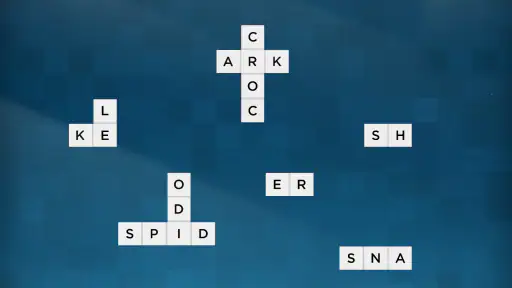
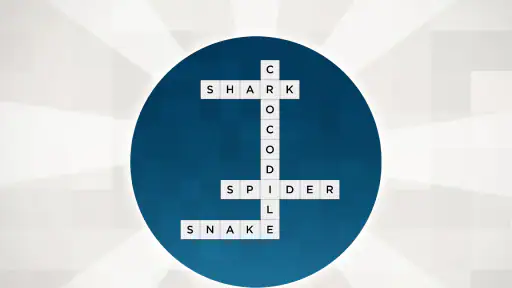

Analysis by Reviewed
I went into Bonza Planet expecting a straightforward word game, but its appeal is more thoughtful than that. Developed by Minimega, the team behind Bonza Word Puzzle, it turns word finding into a relaxed exercise in arranging ideas. I found it most enjoyable when I wanted something quieter than a competitive crossword and more purposeful than endlessly scrolling through short videos. The game is free, suitable for Everyone, and easy to pick up in a spare moment, although its optional purchases and occasionally narrow clue logic mean it will not suit every kind of puzzle fan.
My overall view is simple: this is a good choice if you like discovering connections between words and prefer a gentle pace over pressure. It is less convincing if you want a large competitive scene, strict crossword conventions, or a game that gives you unlimited variety without asking you to consider optional spending. The strongest part is the way each puzzle encourages a small moment of recognition rather than a frantic search for isolated answers.
How the puzzle experience feels in everyday play
A word game built around connections
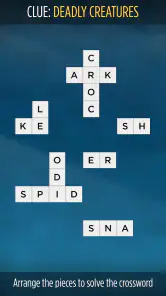
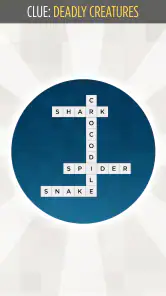
The central pleasure comes from looking at a group of word fragments and working out how they belong together. Instead of treating every answer as an independent clue, I found myself thinking about the theme first, then testing how the pieces might combine into a complete set. That change in perspective makes the game feel closer to solving a compact language riddle than filling in a traditional grid.
That distinction matters. In a normal crossword, I usually move from clue to clue, relying on crossing letters to rescue a difficult answer. Here, the challenge is more about recognizing the relationship between pieces and placing them in a sensible arrangement. A word that looks obvious on its own may not be useful until I understand the rest of the puzzle. The result is a satisfying back-and-forth between guessing and checking.
I also appreciated that the format works well in short sessions. If I have a few minutes while waiting for an appointment, I can attempt a puzzle without needing to remember a complicated story or manage a large inventory. When I have more time, I can slow down and examine the wording carefully. That flexibility is one of the game's practical strengths.
Why the presentation supports the thinking
The Bonza style is at its best when it keeps attention on the words rather than surrounding them with noise. The experience feels designed for observation: I look at the available pieces, try a possible connection, and adjust when the arrangement does not make sense. That simplicity makes the game approachable for people who enjoy language but do not necessarily consider themselves serious puzzle experts.
There is also a useful sense of physical order in solving. Moving from uncertainty toward a complete arrangement gives each puzzle a visible shape, so progress is not only about seeing a correct answer but also about seeing the structure become clearer. I found that especially rewarding after being stuck, because one correct idea often helped the remaining pieces fall into place.
My advice is not to force the first interpretation that comes to mind. When a puzzle seems resistant, I go back through every fragment and ask whether I am reading it too literally. I also try grouping pieces by possible meaning before committing to a final arrangement. This small habit saves time and makes the game feel less like random guessing.
Where it fits among familiar word games
Compared with a crossword, Bonza Planet feels less dependent on specialist knowledge and more dependent on flexible association. A crossword rewards familiarity with clues, abbreviations, and crossing letters. This game rewards noticing how words can sit beside one another and recognizing the theme that holds them together. Someone who finds crosswords intimidating may find this approach more welcoming.
Compared with a word-search game, it is more interpretive. A word search usually gives me a fixed list of targets and asks me to locate them. Here, the satisfaction comes from understanding why the pieces belong together, not simply spotting a hidden sequence. That makes the solving process more mentally active, but it can also feel less predictable when the intended relationship is not immediately clear.
It is different from rapid word challenges as well. There is no reason to treat every puzzle like a race. I prefer taking a moment to inspect the theme and then making deliberate moves. Players who enjoy timers, leaderboards, or constant pressure may find the pace too calm, while anyone looking for a mindful language break will probably appreciate it.
Small habits that improve the experience
One useful approach is to separate certainty from possibility. I try not to lock a piece into place merely because it can form a familiar word. Instead, I keep a mental note of strong matches and compare them with the remaining fragments. This prevents an attractive early answer from sending the entire solution in the wrong direction.
Another helpful tactic is to read the puzzle as a whole before focusing on a single piece. The theme often provides more guidance than any individual fragment. If I start with the most unusual-looking word, I can sometimes use it as an anchor and work outward. If that fails, I switch to the most flexible fragment and see which combinations leave a coherent remainder.
I also recommend stopping briefly when frustration starts to build. Because the puzzles rely on association, staring at the same arrangement can make me less imaginative. Returning after a short break often changes how I interpret a word. This is not a game that rewards brute force as much as it rewards a fresh angle.
What makes it appealing for shared play
Although I mainly approached it as a personal game, the format is easy to discuss with another person. A friend can suggest a possible connection without needing to learn complicated controls, and disagreements usually center on interpretation rather than reaction speed. That makes it suitable for a quiet conversation or a casual family puzzle session.
The Everyone age rating also fits that accessible character. The language challenge can be enjoyed by a broad audience, though individual enjoyment will still depend on vocabulary and familiarity with the themes. A younger player may need occasional help with an unfamiliar word, while an experienced word-game player may move quickly through easier moments.
The important limitation: interpretation can become friction
The same flexibility that makes the game interesting can also make it frustrating. When I cannot see the intended relationship, the problem is not always a lack of vocabulary. Sometimes I am simply approaching the theme from a different direction. In those moments, the game can feel less transparent than a crossword, where crossing letters usually show me exactly which assumption is wrong.
This is the main weakness I would explain to a friend before recommending it. If you prefer puzzles with one clearly signposted route, the open-ended word associations may feel arbitrary. I sometimes reached a point where I had several plausible ideas but no satisfying way to rank them. The eventual solution could be enjoyable, but the path toward it was not always equally clear.
That issue also affects the game's suitability for impatient players. A quick session can turn into a longer one when a single stubborn arrangement refuses to make sense. I do not see that as a serious flaw for a relaxed puzzle game, but it is worth knowing if you want every round to deliver immediate progress.
Free access and the question of spending
The game is free to download, which makes it easy to try without committing money first. Optional in-app purchases range from $0.99 to $46.99 per item, so I would encourage new players to decide in advance how they want to approach the game. The free entry point is useful, but anyone who becomes deeply invested should pay attention to purchase prompts and keep spending within a personal limit.
I do not think the presence of optional purchases automatically undermines the experience. For me, the important question is whether the basic puzzle loop is enjoyable before spending anything. If you are satisfied with the available free experience, there is no need to treat purchases as part of the core appeal. If you dislike games that include any form of optional payment, however, this may not be the right fit.
Who should give it a try
I would recommend it first to people who enjoy wordplay, thematic puzzles, and calm problem solving. It is particularly well suited to players who like the moment when several apparently unrelated pieces suddenly reveal a common idea. The game also works for casual players who want something they can open briefly without learning a large set of rules.
It may be a good bridge for someone who has tried crosswords but found them too dependent on trivia or clue conventions. The emphasis here feels more intuitive, even though some themes can still demand patience. It is also a sensible option for a family member who enjoys language games but does not want a competitive app full of timers and rankings.
I would be more cautious about recommending it to players who need constant novelty, measurable competition, or highly explicit instructions. Someone who prefers anagrams, speed rounds, or word searches may find the slower interpretive process less rewarding. Likewise, if you want a game that tests spelling under pressure, this is not the experience I would choose first.
Device expectations and keeping the game usable
The current version is 5.0.1 and requires Android 5.0 or later. That makes the compatibility requirement relatively approachable for people using older supported Android devices, though smooth play will still depend on the condition of the phone or tablet. Before installing, I would check the operating system rather than assuming every older device will run it.
Because the game is built around reading and arranging words, screen comfort matters more than raw performance in my experience. A larger display can make it easier to inspect several pieces at once, especially when I am comparing possible relationships. On a small screen, I would take extra care with placement and avoid rushing through a puzzle simply because the available space feels cramped.
What I would change in my own routine
I would not use this as my only word game. Its best role is as a slower companion to more direct formats. On a day when I want a quick mental warm-up, I might choose a word-search game. When I want a deeper, more reflective challenge, I would open this one. That contrast keeps its particular style from becoming repetitive.
A realistic use case is a short evening break after work. I can play one puzzle while having tea, pause when I need to think, and return later without feeling that I have fallen behind. The game does not demand the same attention as a long strategy title, but it still gives me something concrete to solve. That balance is more valuable to me than a large collection of distracting features.
Another use is language practice through context. I would not treat it as a formal vocabulary course, but connecting words by theme can make unfamiliar terms more memorable than seeing them in isolation. This works best when I take time to understand the relationship instead of simply trying combinations until something fits.
How the reputation matches the experience
The game has an average rating of 4.3 from around 10 thousand ratings, with roughly 1.6 thousand written reviews. It has passed 100 thousand installs, which suggests that the concept has found a substantial audience without making popularity the sole reason to try it. My own experience broadly matches that positive reception, but with the qualification that the open-ended clues will divide players more than a highly mechanical word game would.
It was released on June 16, 2015, and the current version shows that it remains available as an established title rather than a brand-new experiment. I would not choose it because it is recent; I would choose it because the core idea still works when I want a thoughtful puzzle that can be played at my own pace.
My final recommendation
Bonza Planet is a carefully focused word game with a clear identity. Its strongest quality is the way it asks me to build connections, not merely identify answers. That gives ordinary short sessions a little more depth and makes successful solutions feel earned. The free price makes trying it straightforward, while the Everyone rating and simple premise make it approachable for a wide range of players.
The trade-off is that its clues can sometimes feel opaque, particularly when my interpretation does not match the intended theme. Players who want certainty, speed, or competitive pressure should look toward a crossword, anagram race, or word-search alternative instead. I would also keep the optional purchase range in mind and decide beforehand whether I want to spend anything.
My verdict: try it if you enjoy calm, theme-driven word puzzles and like discovering the logic behind a group of fragments. I would recommend it to a friend who wants a thoughtful break rather than a demanding contest. It is not flawless, but Minimega has created a distinctive format, and when the connections click, the result is genuinely satisfying.
Pros
- Creative crossword-style puzzles with a relaxing
- accessible format.
- Planet-themed content makes learning geography and nature more engaging.
- Short levels are convenient for quick sessions on mobile devices.
- Simple controls work well on both phones and tablets.
- A wide variety of topics keeps the puzzle experience from feeling repetitive.
Cons
- Some puzzles may feel too easy for experienced crossword players.
- Later content or extra puzzle packs may require additional purchases.
- Clues can occasionally feel vague without strong general knowledge.
- The game may become repetitive during longer play sessions.
- Progress can feel slow if you prefer fast-paced
- competitive games.

- Category
- Word
- Version
- 5.0.1