Block Crush!
- 5.08K
- 4.6
- Installs
- 50.00M
- Price
- Free
Screenshots
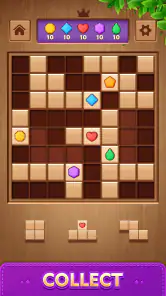
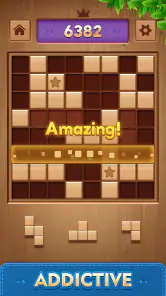
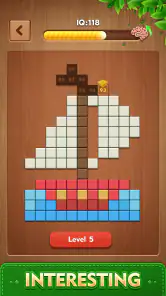
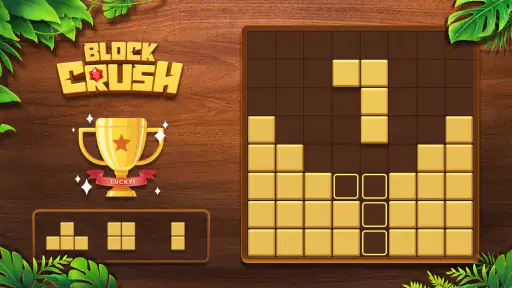
Analysis by Reviewed
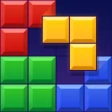
I like Block Crush! most when I treat it as a small, quiet puzzle rather than a game I need to master. The appeal is immediate: place shapes on a board, complete lines, and make room for the next pieces. That simple loop makes it easy to pick up during a short break, but it also leaves the experience dependent on whether you enjoy planning around a tightening grid. My overall view is that it’s a welcoming block puzzle for casual play, not a deep strategy game or a particularly varied challenge.
What makes it worth a closer look is how much of the decision-making comes from ordinary space management. I can enjoy it without learning a complicated rule set, but I still need to pay attention to the board I’m creating. That balance is the reason I’d suggest it to someone who wants a brief, hands-on puzzle, while being cautious about recommending it to anyone expecting a campaign or a steady stream of new mechanics.
Why the simple board works
A puzzle you can understand at a glance
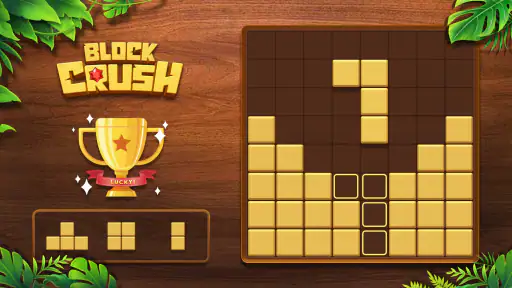
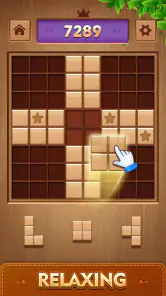
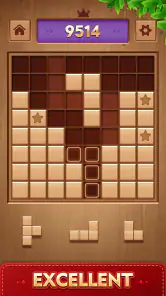
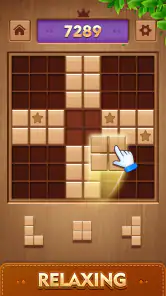
As a puzzle game from Wonderful Studio, Block Crush! keeps its central task clear. You fit the available blocks into open spaces and clear lines, so the main question is practical: which shape should go where to preserve useful room? There is little barrier between opening the game and making a meaningful move. I don’t need to remember a story, learn a set of special controls, or commit to a long session before the puzzle starts making sense.
That clarity is its strongest quality. A block puzzle can be satisfying even when a single move is modest, because placing a shape well can protect several future options. I find myself scanning not only for an immediate line but also for awkward gaps that might make later placements difficult. The board rewards a little foresight without demanding elaborate calculations, which suits a relaxed game better than a puzzle that constantly interrupts play with instructions or new systems.
The title’s “crush” idea is best understood as the satisfaction of clearing space through careful placement, not as a promise of a complicated set of mechanics. The basic rules remain approachable, and the challenge comes from the changing relationship between shapes and empty cells. That makes the game easy to recommend to someone who already likes arranging pieces, while also explaining its limit: if you want several distinct modes or a steadily unfolding campaign, this compact premise may feel too narrow.
Small decisions matter more than fast reactions
I would not approach this as a reflex test. The useful habit is to pause briefly before placing a block and compare the board’s open areas with the shapes at hand. A piece that fits neatly now can still leave a pocket too small for later shapes. When I’m playing casually, I try to keep a broad, usable area open rather than filling every available corner just to clear a line quickly. That is a practical trade-off: an immediate clear can feel rewarding, but preserving flexible space may be more valuable.
This is one of the more interesting parts of a familiar format. The game does not need complicated rules to create tension; the board itself turns careless placement into a problem. It also means that a bad sequence can feel more frustrating than a single obvious mistake. If I focus only on the next placement, the board can become cramped before I notice. A slower scan is more useful than rushing, especially when a block has only one or two sensible positions.
For a short everyday session, that balance is appealing. I can make a few considered moves while waiting for something, then put the game down without needing to remember a narrative thread. It works as a low-pressure mental pause, although “relaxing” should not be taken to mean that every board state is comfortable. The calm comes from the straightforward format; the puzzle can still become demanding when there is little room to maneuver.
Where it sits among block puzzles
Compared with the usual alternatives in the block-puzzle category, Block Crush! leans on the enduring pleasure of fitting shapes and clearing lines rather than asking me to follow a more elaborate theme. That makes it easy to understand and easy to revisit. Some players will prefer that restraint, particularly if they want a familiar puzzle without extra rules getting in the way. Others may find it too similar to the broader genre and want a game with more distinctive objectives, a stronger progression structure, or a different kind of challenge.
The key question is not whether the core loop is complicated; it is whether that loop stays enjoyable for you. If you like testing placements, keeping space open, and recovering from a crowded board, there is enough decision-making to make a quick session engaging. If you need frequent novelty to stay interested, the repeated focus on arranging blocks may wear thin. I see this as a dependable take on a recognizable puzzle idea, rather than an attempt to reinvent it.
Against a conventional jigsaw or a fixed-answer logic puzzle, the pleasure here is less about reaching one intended solution and more about managing the space in front of you as it changes. That makes it easier to dip into, but less satisfying if you want a clear “solved” moment at the end of every challenge. I would choose a word puzzle or a varied logic collection when I want a different mental task; I’d choose this when I specifically want to arrange shapes and make practical choices without a long setup.
Limits, audience, and verdict
The friction to consider before installing
The same simplicity that makes the game accessible also creates its main limitation: the experience can feel repetitive. The central activity remains block placement and line clearing, so players looking for a broad collection of puzzle types should choose something more varied. There is also a strategic ceiling. You can improve your placement habits and make more thoughtful choices, but this is not the kind of game I would pick for layered logic problems, complex planning systems, or a long-form challenge with a changing set of rules.
There is a second, smaller friction in how easy it is to overfill the board. A move that looks tidy in isolation may leave an unusable pocket, and a line clear does not automatically mean the overall position has improved. My practical tip is to judge placements by the shape of the remaining open space, not just by how satisfying the current clear looks. When the board is already crowded, I would favor moves that keep a large area usable, even if they do not produce the most immediately pleasing result.
That advice helps, but it cannot remove the basic uncertainty of a placement puzzle. Sometimes the pieces available simply make the board awkward, and the game’s appeal depends on accepting that constraint rather than expecting a perfect solution every turn. I would skip it if random-feeling setbacks make you angry, if you want a strong sense of advancement, or if you prefer games where every challenge has a carefully defined solution. Its strengths are comfort and accessibility, not a guarantee of a smooth run.
One useful way to keep that uncertainty from spoiling a session is to set a modest goal before you start: try to preserve open space, or look for a chance to clear a line without splitting the board into awkward pockets. That shifts attention from chasing a perfect run to making a sound decision with the pieces available. It also gives a short session a satisfying purpose even when the board eventually becomes difficult to manage.
Who is most likely to enjoy it
I’d recommend it to people who want a casual block puzzle they can understand quickly and play in short stretches. It is a sensible fit for someone who likes tidy visual problems, wants a little planning without a steep learning curve, or needs a lightweight game to return to between other activities. One realistic use is a few moves during a coffee break: pause, check the remaining spaces, place a piece, and stop whenever the break ends. The puzzle does not ask you to set aside a long block of time before it becomes enjoyable.
It is less suited to someone who wants a competitive experience, a story-led game, or a puzzle collection where each session introduces a substantially different task. Those players may be happier with a logic game built around fixed solutions or a title that offers more variety in its central challenges. If you’re unsure which side you fall on, the best test is whether the basic act of fitting shapes already sounds appealing. If it does, the straightforward format is a strength; if it sounds like repetition, extra time with the game is unlikely to change that.
For a more specific everyday fit, I can imagine opening it while waiting for a takeaway or sitting through a quiet stretch of a commute, making a few moves and then closing it when I reach my stop. It suits moments that are too short for a story game but long enough for a small concentration task. I would not rely on it as a way to fill an entire evening unless I already knew I enjoyed repeating this kind of board puzzle; the narrow focus is both its convenience and its boundary.
The audience is broad: the game is rated Everyone, and its easy-to-grasp premise makes it approachable for adults as well as casual players of different ages. It is free to play, which lowers the barrier to trying it, but I would still judge it by the kind of puzzle you want rather than by that convenience. The broad reach is reflected in an average rating of 4.6 from around 676 thousand ratings, while more than 50 million installs show how widely it has been picked up. Those figures suggest a well-established audience, but they don’t guarantee that its deliberately focused loop will suit every player.
A focused recommendation, not a universal one
Block Crush! was released on December 14, 2021, and its current version is 3.0.7. It supports devices running Android 7.1 or later. I mention those details because they help set expectations for someone deciding whether the game is a practical fit, while the most important decision remains personal: do you enjoy making room on a grid, one block at a time? The answer matters more than the game’s popularity or its simple presentation.
For someone trying it for the first time, I’d begin by checking the whole board before each placement instead of immediately choosing the most obvious gap. Then I’d watch what that move does to the remaining open areas. This is a more useful way to learn the game’s rhythm than treating each cleared line as an automatic win: line clearing matters, but so does leaving shapes somewhere sensible to go. That small habit makes the puzzle feel more deliberate without turning it into homework.
My verdict is positive but specific. I would recommend Block Crush! to a friend who wants an uncomplicated, low-commitment puzzle and enjoys thinking a move or two ahead. Its best moments come from preserving space and finding a placement that keeps the board workable, not from spectacle or a wide range of activities. The repetition and occasional cramped positions are real drawbacks, so it is not my pick for someone seeking deep strategy or constant novelty. If a familiar block puzzle sounds relaxing in short doses, though, this is an easy one to try.
Block Crush! Frequently Asked Questions
What is Block Crush!, and how do you play it?
Block Crush! is a block-puzzle game built around fitting shapes onto a board. You choose from the available pieces and place them in open spaces, aiming to complete rows or columns so they clear and create room for more blocks. The basic controls are easy to learn, but planning ahead matters: a piece that fits now may leave awkward gaps that make later moves difficult.
Does Block Crush! require an internet connection?
The core puzzle experience is generally suited to short, offline play, so you may be able to play without a steady connection. However, features such as advertisements, optional rewards, events, or online leaderboards may require internet access, and availability can depend on the version of the app. If offline access is important to you, check the store listing and test the game in airplane mode before relying on it while traveling.
Is Block Crush! free to download, and does it include ads or in-app purchases?
Block Crush! may be offered as a free download, but free access does not necessarily mean an entirely ad-free experience. Many mobile puzzle games show ads, offer optional purchases, or provide rewarded ads for bonuses; the exact arrangement can vary by platform, region, and app version. Review the current Google Play or App Store listing for pricing and purchase details, and use your device’s purchase controls if you want to prevent accidental spending.
Is Block Crush! suitable for children?
The simple block-placement rules can make Block Crush! approachable for a wide range of ages, and the puzzle format encourages spatial planning. Still, suitability depends on the current version’s advertising, in-app purchase options, and any online features, rather than gameplay alone. Parents should review the store’s age rating and privacy information, check whether ads or purchases are present, and consider enabling parental controls before letting a child play.
What should I check before downloading Block Crush! on Android or iOS?
Before installing, confirm that the app is the intended Block Crush! title from a trustworthy developer and that it supports your device’s operating-system version. Check the latest store listing for required storage, permissions, recent updates, user feedback, age rating, ads, and in-app purchases. These details can change over time and may differ between Android and iOS, so the official Google Play or Apple App Store page is the best place to verify them.
Articles Related to Block Crush!
Clash of Clans Is Won Between the Battles
Its raids are quick; its community is a long-term project of coordination, teaching, rivalry, and shared responsibility—with all the friction that entails.
Android Auto Makes the Case for Quieter Car Software
The car interface is no longer judged by how much it can do, but by how quietly it helps. Android Auto shows what drivers now expect—and what still gets in the way.
MobiOffice: Transforming Mobile Productivity with Seamless Integration
MobiOffice: Word, Sheets, PDF is redefining mobile productivity with a surprising blend of functionality and innovation.
EA SPORTS FC™ Mobile Soccer: Redefining Mobile Sports Gaming
Dive into EA SPORTS FC™ Mobile Soccer, where immersive gameplay and strategic depth transform mobile sports gaming.
Pros
- Simple drag-and-drop controls are easy to learn.
- No time limit lets you plan moves at your own pace.
- Short rounds make it convenient for quick play sessions.
- Block placement adds a satisfying spatial-puzzle challenge.
- Bright visuals make the board easy to read.
Cons
- A poor placement can quickly leave the board with no room.
- Gameplay may feel repetitive after extended sessions.
- There is little variety in the core block-clearing mechanic.
- Later rounds can demand careful planning to keep space open.
- Ads or in-app purchases may interrupt the experience.
- Category
- Puzzle
- Version
- 3.0.7