Bird Sort 2: Color Puzzle
- 613.00
- 4.7
- Installs
- 1.00M
- Price
- Free
Screenshots
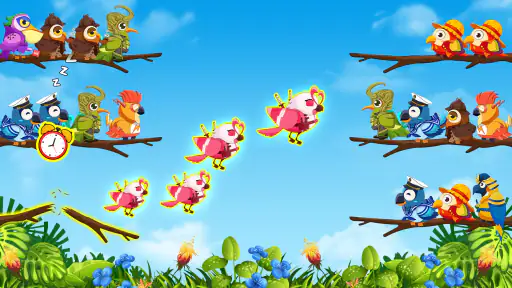
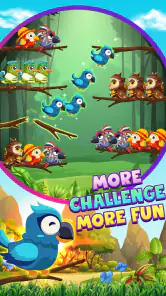
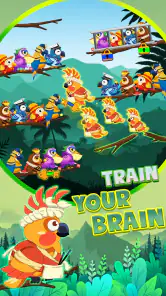
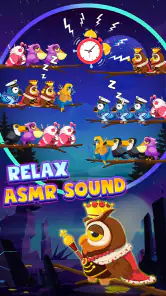


Analysis by Reviewed
I approach a color-sorting puzzle as a small problem to solve, not a game that needs a long setup, and Bird Sort 2: Color Puzzle fits that mood well. It is a free puzzle game from FALCON GAME, with a 4.7 average from around 14,000 ratings and over a million installs. The first few moves are easy to understand, so I can get from opening the game to making a useful move without studying instructions.
What to expect when you start
The central task is to move birds between tubes and gather matching colors together. The appeal is in judging which move will leave room for the next one: a move can look tidy now but make later sorting harder. If you have played other sorting puzzles, the basic idea will feel familiar, but the bird theme gives this one a lighter, more playful feel than versions built around liquids, screws, or other objects.
The game is rated Everyone, and its simple tap controls make it approachable for a broad range of players. That does not mean every puzzle stays effortless. As levels become more demanding, I find it helps to pause before moving a bird and check whether the destination tube will still be useful afterward. The challenge comes from planning, rather than learning complicated controls.
Gameplay and Features
So, here's the lowdown. The game is essentially about sorting birds by color into tubes until all the birds of the same hue are snuggled together. Sounds simple, right? Well, that’s the beauty of Bird Sort 2: Color Puzzle. It starts off easy enough to lull you into a false sense of security, but as you progress, the levels become more challenging, requiring a bit more thought and planning.
One practical habit makes the early puzzles easier: treat empty space as a resource, not just a place to park a bird. Before a move, I look for a sequence that keeps at least one tube available for reorganizing colors. When the board gets crowded, moving a bird simply because it matches can close off a useful route. Thinking one step beyond the obvious match is a small adjustment, but it makes the puzzle feel more deliberate.
For a first session, I would play a few opening levels slowly rather than tapping quickly to clear the screen. That gives you a feel for how each move changes the options available. If you get stuck, retrace the last few moves mentally and look for the point where a tube stopped being flexible; that is often more helpful than repeating the same sequence. It is a gentle way to learn the game’s logic without turning a relaxing break into a test.
One of the things I love about this game is its simplicity. The interface is clean, and the controls are intuitive. You just tap to move the birds from one tube to another. It's a game that doesn’t require a tutorial, which is always a plus in my book.
More From Our News Desk

Clash of Clans Is Won Between the Battles

Android Auto Makes the Case for Quieter Car Software

MobiOffice: Transforming Mobile Productivity with Seamless Integration

EA SPORTS FC™ Mobile Soccer: Redefining Mobile Sports Gaming

How Microsoft OneDrive Became a Mobile Productivity Giant

How Google Translate Breaks Language Barriers Effortlessly
The Aesthetic Appeal
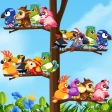
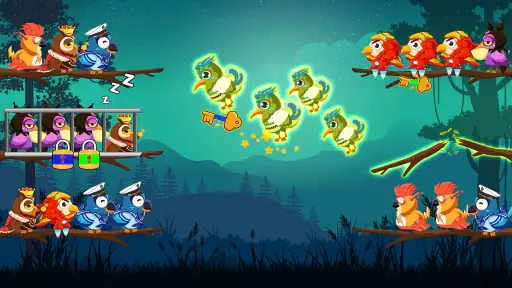
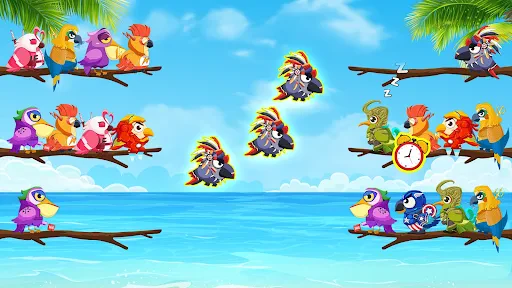
Let’s talk about the visuals for a sec. The game is bright and colorful, which really helps lift your spirits. The bird characters are adorable, and the animations are smooth, adding to the overall pleasant experience. It’s like a little burst of sunshine right on your phone screen.
Sound-wise, the game keeps it simple. The background music is soothing, which complements the game’s relaxing vibe perfectly. It’s the kind of background score that keeps you focused without becoming distracting.
A first-session approach that pays off
For someone opening the game for the first time, the most reassuring thing is that the central action is easy to grasp: select a bird, choose a tube, and watch how the arrangement changes. I would use the first puzzle as a low-stakes demonstration rather than a race. The meaningful early success is not simply finishing; it is noticing that a move made a later choice easier. Once that clicks, the game’s basic rhythm becomes much less mysterious.
A useful way to judge a move is to ask two questions before committing: does this expose a color I need, and will I still have somewhere to put a different color afterward? That quick check helps prevent a common beginner mistake: filling the only convenient open space with a bird that could have waited. It is not a complicated strategy system, just a small bit of foresight that turns random tapping into a plan.
If a move leaves you unsure, pause rather than trying to repair the whole board at once. Trace the most recent change and identify what it blocked or revealed. This makes the puzzle easier to reason about and gives you a practical way to learn from a dead end. I find that kind of short reset more satisfying than tapping faster and hoping the layout sorts itself out.
Making it fit your day
This works best for short gaps when you want something more engaging than scrolling but do not have the time or energy for a long game. I can picture opening it while waiting for a ride or taking a quiet break between tasks: one puzzle gives my attention a clear focus, and I can stop when I need to return to what I was doing. It is also a reasonable choice for someone who enjoys visual logic but does not want a story, characters to manage, or a complicated control scheme.
A realistic routine would be to play during a settled wait, such as sitting in a lobby before an appointment, rather than while crossing a busy street or juggling a conversation. The board asks for enough attention that interruptions can make you lose track of which tube you meant to keep open. In a quiet five-minute pause, that focus is part of the appeal; in a rushed moment, it can make even a simple puzzle feel inconvenient.
It may also suit a shared household phone or a casual handoff between family members, since the tap-based sorting is immediately legible and the age rating is Everyone. I would still expect different players to enjoy different levels of challenge: someone who likes planning can take their time, while a player looking for constant novelty may lose interest once the familiar sorting pattern settles in.
Compared with a word puzzle, the sorting task asks less of your vocabulary and more of your ability to picture a sequence of moves. Compared with a fast arcade game, it is calmer and gives you room to think. The trade-off is that players who want varied objectives, narrative progression, or action may find the repeated tube-sorting format too narrow. If you prefer puzzles that constantly change their rules, a broader puzzle collection may suit you better.
Against the usual color-sort alternatives, the birds make the board feel friendlier, but the underlying appeal is still the familiar work of separating colors while preserving space. Players who already enjoy liquid-sorting games will recognize the same kind of planning, so the theme may be the deciding factor rather than a wholly different puzzle style. If you want a fresh mechanic every few minutes, a collection with several puzzle types is a safer choice; if you like refining a simple rule through increasingly careful decisions, this focused format makes more sense.
The main friction is that a seemingly harmless move can leave the board less flexible, so this is not always a game I would play while distracted by a conversation or rushing through a queue. I also would not assume that a relaxing look means every later puzzle will be trivial. Its value depends on enjoying the process of planning; if you dislike reconsidering moves, the gradual increase in challenge may feel more like a chore than a soothing break.
Common sticking points and sensible expectations
The most likely confusion for a new player is mistaking a visible match for an automatically good move. Matching colors is the goal, but the order matters: moving a bird can use up the space needed to uncover or regroup another color. I recommend checking the destination tube as well as the source before each tap. That habit is more useful than trying to memorize a perfect sequence, especially while you are still learning to read the arrangement.
Another expectation worth setting is that “relaxing” describes the presentation more than a promise that every board is effortless. When the layout becomes crowded, taking a moment to plan is part of the activity. If you prefer a puzzle that can be played almost entirely on autopilot, this may not be your ideal choice once the decisions become tighter. On the other hand, if you enjoy a calm screen with a small problem to untangle, the extra thought can be exactly what keeps it engaging.
For a first-time player wondering whether to spend money, I would begin with the free download and see whether the core sorting loop holds your attention. In-app purchases are available, with items ranging from $1.99 to $94.99, but my recommendation is to decide based on your own enjoyment rather than treating a purchase as necessary to understand the basic puzzle. The game is free to start, so there is room to find out whether its pace suits you before considering optional spending.
Choosing whether to keep playing
The game is free to download, though it offers in-app purchases ranging from $1.99 to $94.99 per item. I would start with the free experience and decide whether I enjoy the puzzle loop before spending anything. The game is currently at version 2.0.6 and requires Android 7.0 or later. It was released on August 30, 2023, and has gathered around 613 written reviews as well as its larger pool of ratings. Those details make it easy to place, but the more important question is whether its particular kind of repetition suits you.
For practical planning, the Android requirement means it is worth checking that an older device meets the minimum before expecting to install it. The game has passed a million installs, which gives a prospective player a sense that it has found a sizeable audience, but popularity alone cannot tell you whether the repeated sorting will be your kind of fun. I would treat the first few puzzles as a personal test: do you enjoy spotting a better sequence, or are you already hoping the game will switch to a different activity?
My practical recommendation is to try it when you want a compact, low-pressure sorting challenge, then notice whether planning each move feels satisfying or tiresome. It is a better fit for patient players who like gradual logic puzzles than for anyone seeking a big variety of modes or a strong sense of progression. If the first successful sort gives you that small “I worked it out” feeling, it is worth keeping on your phone for spare moments; if you are already wishing the next level would do something entirely different, another puzzle style is probably a better match.
Who is most likely to enjoy it
I would recommend it most readily to someone who likes a clear goal and does not mind repeating the same basic action while the arrangement changes. It is a particularly comfortable choice for casual players who want visual logic without needing to learn a complicated control scheme. The bird presentation keeps the sorting task approachable, while the need to preserve room gives patient players something to think about beyond simple color matching.
I would steer away from it if your ideal puzzle game is built around new rules, elaborate stages, a story, or a rapid stream of rewards. It is also not the one I would choose when I have only a few distracted seconds and cannot keep the board in mind. There is no contradiction in finding it both easy to pick up and occasionally demanding: the controls are simple, but making a good sequence still takes attention.
Why You'll Love It
If you’re anything like me, you’ll find that this game is a great way to unwind after a long day. It’s challenging enough to keep you engaged but not so difficult that it becomes frustrating. Plus, it’s one of those games that you can easily pick up and play whenever you have a few spare minutes.
I also appreciate the fact that it doesn’t bombard you with ads every few seconds. There are some ads, sure, but they’re not intrusive, which is a huge plus in my book.
In conclusion, if you’re looking for a game that offers a perfect balance of challenge and relaxation, Bird Sort 2: Color Puzzle is definitely worth checking out. It’s a charming little game that’s sure to put a smile on your face and keep your brain happily occupied.
Bird Sort 2: Color Puzzle Frequently Asked Questions
Does Bird Sort 2: Color Puzzle have simple controls for new players?
Bird Sort 2: Color Puzzle is built around a straightforward sorting idea: arrange birds by color on branches. That makes the basic concept easy to grasp, even if you have not played this particular puzzle before. The challenge comes from working out the order of moves as the puzzles become more demanding, so newcomers can learn the rules while still having room to think ahead.
What makes Bird Sort 2 different from other sorting puzzle games?
The game’s store summary describes Bird Sort 2 as a different take on sorting, emphasizing birds and a greater challenge. Its central activity is arranging birds by color, rather than sorting other familiar objects. If you enjoy puzzles that use a clear visual rule but ask you to plan your moves, this bird-themed approach may offer a change of pace from other sorting games.
Is Bird Sort 2: Color Puzzle free to download, and what does it cost inside the game?
Bird Sort 2: Color Puzzle is free to download and play, so you can try its bird-sorting puzzles without paying upfront. It also offers optional in-app purchases, with prices ranging from $1.99 to $94.99 per item. These purchases are separate from the free starting experience, so consider your preferences before buying anything.
What kind of game is Bird Sort 2: Color Puzzle, and who developed it?
Bird Sort 2: Color Puzzle is a puzzle game developed by FALCON GAME. Its central activity is sorting birds by color, with the store summary presenting it as a distinct take on bird sorting that aims to offer more challenge and fun. If you enjoy arranging objects according to a simple rule, its premise may appeal to you.
What is the main objective of Bird Sort 2: Color Puzzle?
Bird Sort 2: Color Puzzle is a fun and engaging puzzle game where the main objective is to sort birds of the same color onto one branch. As you progress through levels, the puzzles become more challenging, requiring strategic thinking and planning to sort all the birds correctly. The game offers a vibrant and colorful interface, making it visually appealing and enjoyable for players of all ages.
Pros
- Engaging and addictive gameplay
- Simple controls for easy navigation
- Visually appealing graphics
- Increasing difficulty levels
- Suitable for all ages
Cons
- Contains ads that may disrupt play
- Limited free levels available
- In-app purchases can be pricey
- Requires internet for some features
- No multiplayer option
- Category
- Puzzle
- Version
- 2.0.6