AltLife Sim
- 71.00
- 4.3
- Installs
- 50.00K
- Price
- Free

Screenshots


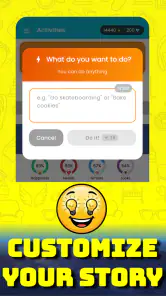
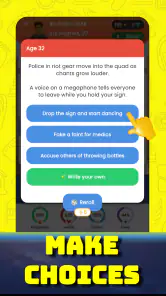




Analysis by Reviewed
I went into AltLife Sim expecting a quick life simulator and found a game built around small decisions, unexpected turns, and the temptation to replay a life just to see how one different choice changes everything. Developed by Bountiful Games, LLC, it sits in the simulation category, but it feels less like managing a city or running a business and more like experimenting with a fictional biography.
The central appeal is simple: you make choices for a character, follow the consequences, and decide whether to accept the path that unfolds or try again with a different approach. That makes it easy to understand within minutes, while still leaving room for curiosity. I can play it casually when I have a short break, yet I also find myself returning when a particular outcome makes me wonder what would have happened if I had taken another route.
It is free to start, carries a Teen content rating, and includes optional in-app purchases ranging from $1.99 to $99.99 per item. That combination matters because this is the kind of game where replaying and experimenting are the main reasons to stay. If you enjoy testing possibilities rather than chasing reflex-based action, it is worth examining closely.
How the current version feels in everyday play
The current release is version 0.21.2, and that number gives useful context: this is a developing simulator rather than a finished, feature-packed life-management classic. I would not approach it expecting the enormous breadth of a long-established alternative. Instead, I see it as a focused experience whose strength comes from turning ordinary decisions into a sequence worth exploring.
My favorite way to play is to treat each run as a short story. I make a choice, read the result, and avoid rushing immediately into another tap. The enjoyment comes from noticing how the character’s direction changes over time. A cautious run feels different from an impulsive one, not necessarily because every result is dramatic, but because the accumulated decisions give the playthrough its own identity.
That design also makes the game suitable for fragmented time. I can play while waiting for an appointment, stop after a few decisions, and return later without needing to remember a complicated control scheme. It is not demanding in the way a strategy game with a large map or a competitive game can be. The mental effort is mainly interpretive: I decide what kind of life I want to create and then respond to what happens.
There is a trade-off here. Players who want constant animation, direct control, or a strong sense of physical action may find the experience too text- and choice-oriented. The game asks me to imagine the significance of an event rather than deliver it through elaborate visual spectacle. For me, that is part of the charm, but it will not satisfy someone looking for a traditional action game disguised as a simulator.
Choice is the real gameplay loop
The most important thing to understand is that AltLife Sim is not primarily about winning in a conventional sense. I do not play it to defeat an opponent or complete a fixed sequence of missions. I play it to explore consequences. That changes how I judge a run: an unfortunate result can still be interesting if it creates a story I would not have seen by always choosing the safest option.
I recommend making a deliberate first run instead of immediately searching for the most successful path. Choose what feels natural, observe the rhythm of the game, and pay attention to how much control you actually have. On a second run, experiment more aggressively. This two-step approach makes the simulator more revealing because it separates learning the interface from testing the possibilities.
A useful habit is to keep a personal rule for each playthrough. One character might prioritize stability, another might take risks, and a third might be guided by curiosity. This is not a feature I am claiming the game formally tracks; it is a way of giving my own decisions structure. Without that kind of intention, repeated choices can start to feel like tapping through prompts rather than shaping a life.
Another practical tip is to pause after an unexpected outcome instead of instantly restarting. The urge to reset is strong when a run takes a disappointing turn, but the less convenient result is often where the story becomes more memorable. If I restart every time something goes wrong, I reduce the simulator to a search for an ideal result and lose much of its experimental value.
What the version and release timing suggest
The game was released on July 15, 2026, and its current version, 0.21.2, places the experience in an early stage of its product evolution. I read that as a reason to judge what is playable now rather than assume that future updates will solve every limitation. The present version should earn its place on your phone through the decisions and replay value it already offers.
At the same time, an early version can be appealing to people who enjoy watching a project develop. The current state feels like a foundation for a life-simulation idea rather than a claim to cover every possible part of living. That distinction helps set expectations. I would be comfortable recommending it to someone who enjoys discovering a game’s direction, but less comfortable recommending it to someone who wants a fully mature simulation with years of accumulated depth.
The version number is also a reminder to keep expectations measured around long-term variety. A simulator depends heavily on the range and quality of its situations. Once I have seen a substantial portion of what the current build offers, the question becomes whether the decision structure continues to surprise me. That is the area I would watch most closely as the game evolves.
Who benefits most from the format
This is a good match for players who like interactive stories, decision games, and lightweight simulations. If you enjoy asking “what if?” and replaying a scenario from a new angle, the format works naturally. It also suits people who prefer games that can be played in short sessions without demanding precise timing or uninterrupted attention.
I can imagine recommending it to a friend who likes discussing fictional choices. One person can describe a reckless run, another can try to build a stable life, and both can compare how their decisions shaped the experience. That social conversation does not require multiplayer; the game’s value comes from the different stories each player creates for themselves.
It is less suitable for anyone who needs a clear objective, a developed avatar they can move around, or a detailed economy to manage. Players who prefer conventional management simulators may find the control level too indirect. In those games, I usually manipulate resources, layouts, schedules, or production systems. Here, my influence is expressed through choices and interpretation, so the satisfaction is more narrative than managerial.
How it compares with familiar life simulators
Compared with a large life simulator, AltLife Sim is easier to pick up but narrower in the kind of interaction it emphasizes. I am not spending most of my time decorating a home, controlling a character in a physical space, or balancing a complex set of visible systems. The focus is the sequence of decisions itself, which makes the game quicker to understand and less intimidating.
Compared with a choice-based story, it feels more open-ended because I am not simply following a writer’s fixed plot. The appeal is the possibility of creating a different personal history through repeated runs. That freedom can be more replayable than a single branching story, though it may also feel less emotionally directed if I prefer carefully authored characters and dramatic scenes.
Compared with a traditional management game, the trade-off is depth versus accessibility. A management alternative may give me more precise tools and clearer feedback, while this game gives me a faster route into experimentation. I would choose AltLife Sim when I want to explore a life path casually; I would choose a detailed management simulator when I want to optimize systems over a longer session.
Practical questions before installing
The game is free to download, so the initial barrier is low. However, optional purchases are part of the experience, with individual items priced from $1.99 up to $99.99. I would approach that range carefully and decide in advance whether I am comfortable spending anything. The free entry point makes it reasonable to test the core loop first rather than buying immediately.
The Teen rating is another useful guide. I would not treat the game as a children’s title, especially if a younger player might interpret life events without context. For teenagers and adults who are comfortable with the subject matter implied by a life simulator, the rating is a straightforward signal to consider before installing.
Android users should note that the listed minimum operating-system requirement is Android 7.0. That covers many older devices, although compatibility in practice can still vary by phone and software environment. If you are using an older handset, I would leave enough storage and test the free version before making any purchase.
The game has a 4.3 average from around 439 ratings, with roughly 71 written reviews, and it has passed 50,000 installs. Those figures suggest that it has attracted a real audience without making it one of the enormous mainstream games. I see that as consistent with its niche appeal: it is easy to try, but its success depends on whether the player personally enjoys replaying decisions.
Where the experience still has room to grow
The biggest limitation is the risk of repetition. Because the core activity is moving through choices and outcomes, the game needs enough variation to keep each new run meaningful. Once I understand the general rhythm, familiar patterns can become more noticeable. That does not make the game poor, but it does mean the long-term experience depends on how much surprise remains after the first enthusiastic sessions.
There is also a difference between freedom and perceived freedom. A game can offer many choices while still making outcomes feel predictable if the consequences do not diverge enough. I pay attention to whether a decision changes the direction of a run or merely changes the wording of the next event. The more clearly my choices shape the character’s story, the stronger the simulation feels.
The purchase structure creates another point of friction. Optional spending can be harmless for a player who is content with the free experience, but the broad price range means I would not recommend treating purchases as an automatic part of play. New users should first learn what the basic loop provides. If the free version already gives enough room to experiment, spending becomes a personal choice rather than something needed to understand the game.
I also would not choose this title when I want a polished, high-production presentation. Its appeal is conceptual and interactive rather than visual spectacle. Someone looking for rich animation, deep customization, or a large world to explore may be happier with a different simulation. That is not a criticism of the idea; it is a reminder to match the game with the kind of simulation you actually enjoy.
What I would watch as it develops
For future versions, I would watch the variety of life paths more than the number of additions. A new option is valuable when it creates a genuinely different strategy or story, not merely another prompt that leads to the same kind of result. The strongest evolution would make me reconsider my assumptions and encourage new styles of play.
I would also look for improvements that make long sessions feel more coherent. The best life simulators give players a sense that separate decisions belong to one continuous history. When events connect naturally, I become invested in the character rather than treating each screen as an isolated question. That continuity is especially important for a game built around repeated runs.
Another thing worth watching is how the balance between free play and optional purchases develops. A free simulator should let a curious player understand its main appeal without feeling pushed toward spending. If future changes preserve that balance, the game will remain approachable while still giving committed players reasons to support it.
My recommendation after spending time with it
I recommend AltLife Sim to anyone who likes experimenting with fictional lives, especially if you enjoy short sessions and replaying decisions from different perspectives. Its strongest quality is the low-friction way it turns a simple choice into a reason to continue. I can open it without preparing for a long campaign, yet a surprising result can still keep me thinking about the next run.
I would skip it if your idea of simulation requires direct control, detailed resource management, or a highly visual world. I would also be cautious if you are easily frustrated by repeated scenarios or if you prefer games with a single well-defined path to completion. This is a game about exploring possibilities, not checking off a final objective.
The free starting point makes the decision easy: try the core experience, establish your own play style, and see whether the outcomes feel varied enough to justify returning. Keep the in-app purchase range in mind, and do not confuse the game’s early version with a promise of a fully expanded simulator. Its best use is as a compact choice laboratory, where the fun comes from seeing how a different decision can turn an ordinary virtual life into a completely different story.
For me, that is enough to make it worth keeping installed, with realistic expectations. Bountiful Games, LLC has a clear foundation here, and the current build already works when I approach it as an experiment rather than a complete imitation of real life. If later development deepens the consequences and broadens the variety without losing the quick, readable format, this could become a much stronger recommendation for fans of life simulation games.
Pros
- Deep life simulation with many choices and possible outcomes.
- Covers careers
- relationships
- finances
- health
- and personal goals.
- Easy-to-learn interface makes starting a new life straightforward.
- Short play sessions work well for casual mobile gaming.
- Replayability comes from experimenting with different life paths.
Cons
- Some progression can feel repetitive after several playthroughs.
- Random events may occasionally make outcomes feel unfair.
- The amount of text can become tiring during longer sessions.
- Certain features may require in-app purchases or extra resources.
- Limited visual variety may disappoint players seeking rich graphics.

- Category
- Simulation
- Version
- 0.21.2