Alphabet Scape: search words
- 180.00
- 4.4
- Installs
- 10.00K
- Price
- Free
Screenshots
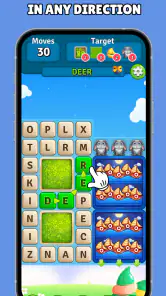
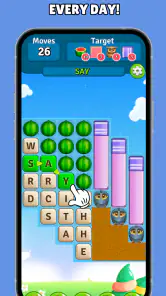
Analysis by Reviewed
I spent time with Alphabet Scape as a quiet word game rather than treating it like a race against other players. That distinction matters. Its basic appeal is easy to understand: you look for words, keep your attention on the letters, and turn a short break into a small mental exercise. It is aimed at people who enjoy word puzzles but do not necessarily want the noise, speed, or constant competition found in many mobile games.
The game comes from Salomo Interiors SL and is free to install. It is listed for Everyone, so it is a natural fit for family devices and casual players who want something approachable. I also found its identity refreshingly focused. The store description presents it as a way to keep the mind active through calm word puzzles, and that is a better description of its mood than calling it an intense challenge.
My overall impression is positive, but not unqualified. The free entry point makes it easy to try, while the presence of optional purchases means I would still approach it with a little spending discipline. If you want a relaxed vocabulary game for short sessions, it is worth considering. If you need deep word definitions, a strict competitive ladder, or a completely purchase-free experience, another type of word app may suit you better.
How the word-search experience feels in everyday use
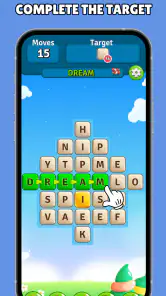
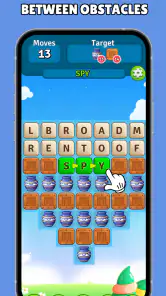
The most useful way to play is to treat each session as a mental reset. I can imagine opening it while waiting for an appointment, taking a few minutes between tasks, or winding down without committing to a long story campaign. The word-search format gives the mind one clear job: scan, connect what you recognize, and decide whether a possible word is worth trying.
That simplicity is the main strength. There is very little to learn before you can begin, which makes the game friendly to people who do not usually play mobile titles. Someone who finds large strategy games tiring can still understand the purpose immediately. It also works for players who enjoy vocabulary puzzles but prefer visual searching over clues, definitions, or anagrams.
I would not describe the experience as a replacement for a full language-learning tool. Finding a word can make you notice spelling patterns, but the activity is primarily about recognition and concentration. If your goal is to build vocabulary systematically, an app built around definitions, pronunciation, spaced repetition, or sentence practice will be more useful. Alphabet Scape is better understood as light cognitive entertainment with a word theme.
One practical tip is to avoid playing every puzzle as if it must be solved in one burst. I found the format more pleasant when I scanned broadly first, noticed obvious short words, and then returned to the less familiar combinations. That approach reduces the feeling of staring helplessly at a crowded letter arrangement. It also makes the game feel more like a calm observation exercise than a test of speed.
Another useful habit is to change the way you look at the board when you get stuck. Instead of repeatedly tracing the same familiar pattern, I would search from unusual starting letters, look for common endings, and check whether a longer word is hiding around a shorter one. This is not a magic solution, but it turns frustration into a repeatable method. The game rewards patience more than frantic tapping.
A good fit for short breaks and gentle concentration
The calm presentation suggested by the store summary is important because word games can easily become stressful when they rely on timers, lives, or aggressive reward loops. Here, the appeal is the chance to focus on one small puzzle at a time. I would recommend it to someone who wants a screen activity that feels more deliberate than scrolling through social feeds.
It can also work well in a shared household. The Everyone age rating makes it suitable for a broad audience, although younger players may still benefit from an adult helping with unfamiliar words. That is one of the more enjoyable ways to use a game like this: one person spots a possible arrangement, another confirms it, and the puzzle becomes a small collaborative activity rather than a solitary test.
For a realistic everyday scenario, imagine having ten minutes before a train arrives. A large action game may take too long to load into a meaningful session, while a competitive multiplayer title may demand attention you do not have. A word puzzle is easier to pause mentally and physically. You can make progress, stop when your time is up, and return later without needing to remember a complicated storyline or team strategy.
That convenience has a trade-off. Players who need a strong sense of narrative progression may find the experience thin. The satisfaction comes from solving the current arrangement, not from exploring a world or developing a character. I would skip it if your idea of a good mobile game depends on rich stories, animated battles, or a large collection of interconnected systems.
Progress without turning every session into a test
Word games often sit between relaxation and pressure. Even when the rules are simple, a player can start feeling that every unsolved word represents failure. My advice is to decide what you want from the session before starting. If you want to relax, treat hints or pauses as part of the experience rather than evidence that you are playing badly. If you want a sharper challenge, spend longer exploring the board before seeking help.
This flexible attitude is especially useful for people who play at different energy levels. On a tired evening, recognizing familiar words may be enough. On a more focused morning, you can deliberately search for less obvious paths and resist the urge to finish immediately. The same basic activity can therefore serve as a gentle break or a more concentrated vocabulary workout, depending on how much effort you bring to it.
I also think this is where the game may divide players. Some people enjoy the steady rhythm of searching and completing. Others need increasingly complex mechanics to stay interested. If every puzzle feels too similar after the novelty fades, the format may not hold your attention. A more varied word game, a crossword app, or a daily puzzle with a fixed challenge may provide a stronger long-term routine.
The current version is 12.505, and the game supports devices running Android 7.1 or later. Those details make it accessible to many older Android phones, which is useful if you are installing it on a secondary device rather than a recent flagship. Still, compatibility alone does not tell me how every phone will feel in practice, so I would judge the experience on your own device after a short trial rather than assuming every screen will be equally comfortable.
Spending, hints, and keeping the game fair to yourself
The game is free, but it includes in-app purchases ranging from $0.99 to $104.99 per item. That is the most important point to understand before installing it. A free download lowers the barrier to entry, yet the available purchase range means the game should not be treated as automatically cost-free in the broader sense. I would check the purchase controls on the device, especially if children use the same account.
I cannot fairly claim that spending is required to solve puzzles, because that would go beyond what I can establish from the product information. I also would not assume that every purchase has the same role. The sensible approach is to play without buying anything first and see whether the free experience already gives you enough enjoyment. If you feel pushed to spend simply to continue enjoying a casual word game, that is a sign to stop and reconsider rather than purchase automatically.
There is a useful psychological distinction here. Paying for an optional convenience can be acceptable when you knowingly value the time saved. Paying because the game has made you anxious about being stuck is a different decision. I would reserve purchases for a deliberate choice, not for a moment of irritation. Setting a personal limit before playing is more reliable than deciding while frustrated.
For families, device-level purchase protection is particularly important. The Everyone rating describes the intended age suitability, but it does not replace supervision of spending. I would make sure the account requires approval before any transaction and explain to younger players that the free download does not mean every item inside the game is free.
From a fairness perspective, a solo word puzzle is naturally less vulnerable to the competitive problems found in multiplayer games. You are not directly defeating another person who may have paid for an advantage. That makes the purchase question more personal: the concern is whether spending changes your own sense of challenge and value, not whether a paying opponent has an unfair edge.
How it compares with familiar word-game alternatives
Compared with crossword apps, Alphabet Scape is a better choice for players who like discovering words inside a visual arrangement rather than solving clues. Crosswords usually ask you to interpret a definition and manage crossing answers; this style of game asks you to inspect letters and recognize possible words. If clue-solving is the part you love, a crossword will probably feel richer. If visual scanning is more relaxing, Alphabet Scape has the clearer advantage.
Compared with anagram games, the experience is less centered on rearranging a fixed group of letters into a target answer. That makes it easier to play casually, because you can search the available layout instead of constantly calculating combinations. The downside is that players who enjoy the satisfaction of exhausting every possible anagram may find the search less intellectually demanding.
Compared with word-learning apps, it offers less structured education. It may encourage attention to spelling and word shapes, but it does not occupy the same role as lessons, flashcards, or pronunciation practice. I would use it as a pleasant supplement, not as my main tool for learning a language or preparing for an exam.
Compared with daily puzzle apps, it appears better suited to open-ended casual play than to a shared daily ritual. A daily format can create a strong habit because everyone receives the same challenge and has a reason to return at a particular time. Alphabet Scape is more appealing when you want to play according to your own schedule, without making the puzzle part of a public routine.
That comparison also clarifies who should skip it. I would not choose it for serious competitive players who want rankings and head-to-head tension, for learners who need detailed explanations of every word, or for people who strongly prefer one predictable purchase with no optional spending. Those users may be happier with a dedicated crossword platform, a vocabulary course, or a premium word game with a clearly defined payment model.
What I would check before committing time or money
The rating gives the game a reassuring first impression: it holds a 4.4 average from around 865 ratings, with roughly 180 written reviews. That level of response suggests that many players find the basic idea worthwhile, but a rating cannot tell me whether the experience matches your preferred difficulty, screen size, or tolerance for purchases. I would read recent comments with one question in mind: are people praising the puzzle flow itself, or mainly discussing issues around progression and monetization?
The game has passed the ten-thousand-install mark, which places it in the category of an established small mobile title rather than an unknown download with no visible audience. That is encouraging, but it is not a guarantee of a perfect fit. I still recommend treating the first session as a test. Notice whether the letter layouts are comfortable to inspect, whether the pace feels calming rather than repetitive, and whether you can enjoy it without feeling drawn toward paid items.
One detail I would keep in mind is the difference between accessibility and depth. The low learning curve is excellent for a quick start, but the same simplicity may limit the game for experienced word-game fans. Before recommending it to a serious puzzle enthusiast, I would ask whether they enjoy relaxed repetition. Someone who wants increasingly intricate rules may outgrow it, while someone who wants a dependable few minutes of concentration may appreciate exactly that restraint.
I would also avoid judging the game solely by how quickly a puzzle can be completed. A short solution is not necessarily a weakness if the purpose is to create a small pause in the day. The better test is whether you finish a session feeling refreshed, curious, or at least pleasantly occupied. If you instead feel that you are repeating the same search without meaningful satisfaction, the game is probably not earning space on your phone.
My final view on Alphabet Scape
Alphabet Scape is an inviting free word game for people who want calm, accessible puzzle sessions. I like its suitability for short breaks, its broad age rating, and the fact that the central activity can be enjoyed without learning a complicated rule set. The developer, Salomo Interiors SL, has positioned it around a straightforward idea, and that focus is exactly why it may work for casual players.
Its biggest limitation is also its simplicity. It is not the right pick for anyone seeking a full vocabulary course, a deep crossword experience, or a competitive arena. The in-app purchase range deserves attention as well: although the game costs nothing to download, I would play with purchase safeguards enabled and decide in advance whether optional spending is acceptable for me.
My recommendation is to try it as a low-pressure word-search companion, not as a promise of endless depth. Give it a few sessions, use patient scanning instead of frantic tapping, and judge whether the rhythm fits your day. If you enjoy recognizing patterns and want a gentle way to keep your attention active, it is an easy game to recommend to a friend. If you want rigorous learning, complex progression, or a completely fixed cost, choose a more specialized alternative instead.
Pros
- Relaxing word-search gameplay suitable for short sessions.
- Simple controls make it easy for beginners to start playing.
- Helpful hints can assist when you get stuck on difficult puzzles.
- Progression provides motivation to complete more word challenges.
- Works well as a casual brain-training activity.
Cons
- Some puzzles may feel repetitive after extended play.
- Hints or extra features may be limited without in-app purchases.
- Small text can be difficult to read on compact screens.
- Difficulty may not increase consistently across all levels.
- Ads can interrupt the experience between puzzles.
- Category
- Word
- Version
- 12.505