60 Seconds! Atomic Adventure
- 2.24K
- 3.9
- Installs
- 1.00M
- Price
- $3.99

Screenshots
Analysis by Reviewed
My first impression of 60 Seconds! Atomic Adventure is that its cheerful presentation is a sly setup: the house is about to become a scramble, and every second spent deciding what to carry has a cost. I like that contrast. Robot Gentleman’s adventure game uses a family’s attempt to prepare for disaster to make ordinary choices feel urgent, then lets the fallout’s absurdity soften the bleak premise. It suits short visits when I want a story-shaped challenge rather than a long, uninterrupted quest.
A catastrophe told through household choices
The central appeal is how personal the emergency feels. Instead of beginning with a broad map or a military mission, the game makes the home itself the immediate problem: there is too much to consider and not enough time to do it all. That framing gives familiar objects a new kind of weight. A practical item is not just loot; it represents one possible answer to a future problem, and choosing it means leaving something else behind.
That focus also makes the game easy to understand without making every decision easy. I can grasp the basic pressure quickly, but I cannot assume that a sensible-looking choice will guarantee a smooth run. For me, that uncertainty is where the dark comedy gets its bite. The joke is not separate from the survival challenge; it grows from watching ordinary plans meet circumstances that refuse to cooperate.
The game has a Teen content rating, which is worth considering for younger players and for anyone who prefers to avoid disaster-themed humor. Its presentation is playful, but the premise still revolves around a family trying to survive a nuclear catastrophe. I would describe the tone as cartoonish rather than carefree: it makes the bleakness easier to approach without removing it.
The Race Against Time
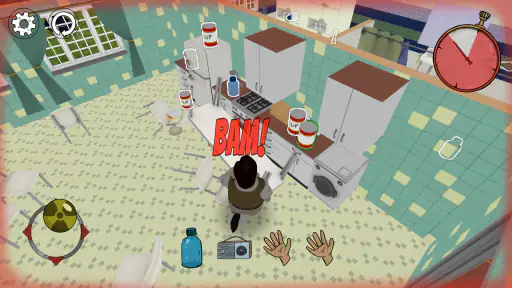
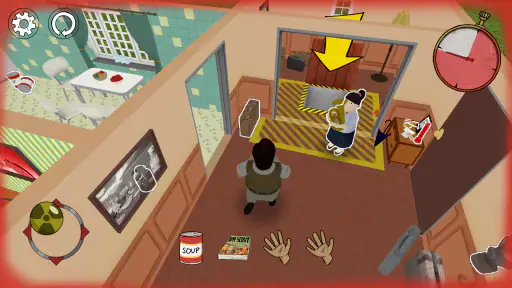
As soon as you launch 60 Seconds! Atomic Adventure, you're thrown into the shoes of Ted, a regular guy with an extraordinary task: gather supplies and family members to survive the impending nuclear disaster. But here's the twist—you only have 60 seconds to do it all! Talk about a nail-biter! The game does an excellent job of creating a sense of urgency and panic as you scramble around the house, dodging obstacles and making split-second decisions. It's an adrenaline rush that keeps you on your toes every single time.
Scavenging Like a Pro
Now, let's talk about the scavenging aspect. With your heart racing, you must decide what's essential for survival. Do you grab the canned soup or the first-aid kit? How about the radio or the gas mask? It’s a frantic dash to prioritize what could mean life or death in the fallout shelter. The game cleverly incorporates strategy, and each playthrough feels different based on the choices you make. I found myself constantly reevaluating my decisions, trying to optimize my scavenging strategy for the best outcome.
My practical tip is to resist treating the opening dash as a memorization test. Learning the house helps, but a rigid route can backfire when an obstacle or a changed priority disrupts the plan. I get more value from deciding what matters most before the countdown begins, then adjusting when the situation changes. A useful run is not necessarily one with a perfect haul; it is one that gives me a clearer sense of how a choice affects the family’s options later.
More From Our News Desk

Clash of Clans Is Won Between the Battles

Android Auto Makes the Case for Quieter Car Software

MobiOffice: Transforming Mobile Productivity with Seamless Integration

EA SPORTS FC™ Mobile Soccer: Redefining Mobile Sports Gaming

How Microsoft OneDrive Became a Mobile Productivity Giant

How Google Translate Breaks Language Barriers Effortlessly
Making the countdown work for you
The most useful way I have found to approach the opening is to set a small priority rather than try to collect everything. I might focus on securing the family and a sensible mix of supplies, then accept that some useful objects will be left behind. That keeps the countdown from turning into a frantic attempt to carry every appealing item. The trade-off is real: a carefully chosen haul can still leave a gap, but a plan that can bend is more useful than one that depends on a flawless route.
When I have only a few minutes, the scavenging phase is the part I can most easily treat as a compact session. I can make a quick attempt, see what I managed to bring into the shelter, and leave the longer consequences for a later break. That makes the game a reasonable fit for a commute or a short pause, provided I am not expecting a fully self-contained action burst. The choices made in that brief scramble are meant to matter afterward.
Life in the Fallout Shelter
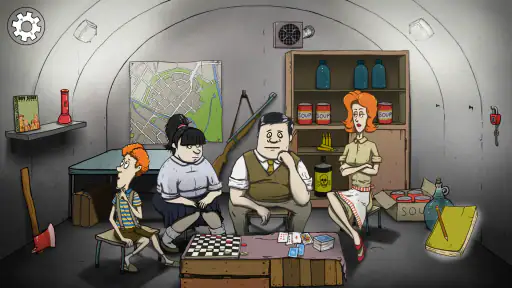
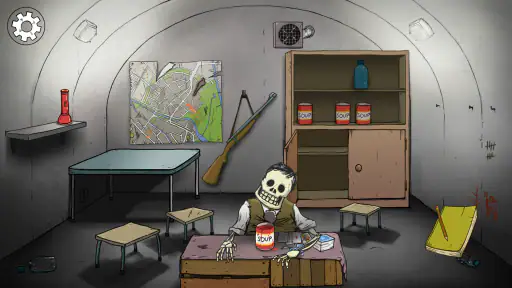
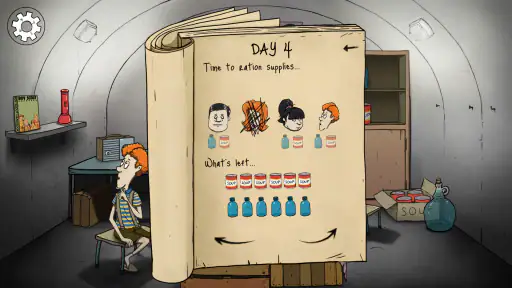
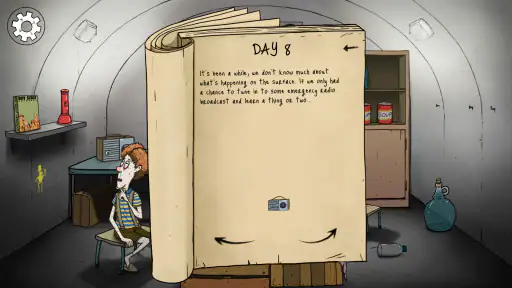
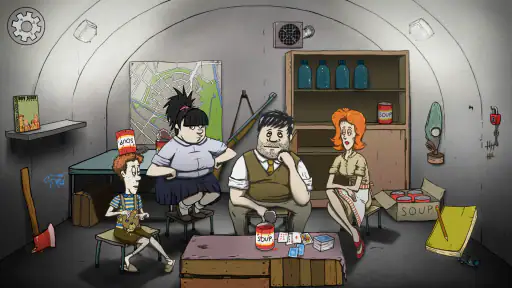
Once the initial chaos subsides and you find yourself in the shelter, the real challenge begins. Surviving with limited resources and keeping your family sane is no easy task. You'll face random events that require quick thinking and adaptability. Will you send someone to explore the wasteland? How will you handle the rationing of food and water? The game’s narrative is peppered with dark humor, making even the bleakest situations entertaining. It's a brilliant blend of survival mechanics and storytelling that keeps you engaged throughout.
This change in pace is a big part of the appeal: the opening asks for quick movement, while shelter decisions reward patience and attention to consequences. I would not play the two parts with the same mindset. During a busy evening, I can do a fast scavenging attempt, put the phone down, and return when I have time to think through the next survival choice. That stop-and-start rhythm makes the game easier to fit around everyday life than a continuous action adventure, though it is less satisfying if I want constant movement or direct control throughout.
It also helps to think of supplies as a set of trade-offs rather than a checklist. A useful item can still be the wrong pickup if it takes space or time away from something more important to the run. I try to notice which shortage is actually threatening the family before choosing what to do next, instead of reacting to every event as if it were equally urgent. That habit makes losses feel more instructive, even when a run ends badly, and gives repeat attempts a purpose beyond simply hoping for luck.
Decisions that are easier to live with
When a shelter event presents an uncomfortable choice, I find it helps to ask what problem is most immediate, rather than automatically choosing the option that sounds safest in isolation. The family’s condition and the supplies already available shape what a decision means, so the same response can feel sensible in one run and costly in another. That is a useful reason to pay attention to the current state of the shelter before acting: it keeps me from making choices by habit.
There is a trade-off between learning from a failed run and trying to control every detail. I enjoy noticing how an early shortage can narrow later options, but I do not think the game is at its best when I treat each attempt like an exam with one correct answer. Its uncertainty is part of the design. If I need predictable progress and dislike losing a run because circumstances turn against my plan, this may feel more frustrating than rewarding.
The Charm of Retro Graphics and Sound
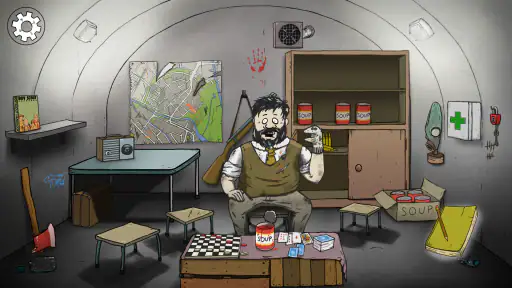
One of the things I absolutely loved about this game is its retro-inspired graphics and sound design. The art style is reminiscent of classic cartoons, giving it a whimsical yet slightly eerie vibe. The soundtrack, with its catchy tunes, adds to the overall atmosphere, enhancing the feeling of impending doom while keeping things light-hearted. It’s a perfect match for the game’s theme, and I couldn’t get enough of it!
The setting feels coherent because its old-fashioned domestic world and cartoon presentation keep the disaster from turning into grim realism, while the dark jokes still let the consequences land. Sound helps sell the mood, but I see it as seasoning rather than the main reason to play; the decisions and their fallout carry the experience. If I am playing somewhere noisy or prefer to keep audio low, the visual tone and choices still do much of the work. The humor may not suit someone who wants a serious, emotionally grounded account of catastrophe.
Who Will Enjoy This Kind of Survival Story?
I would recommend it to players who enjoy replaying a compact scenario, weighing imperfect options, and watching a family’s situation evolve from one decision to the next. It is especially suited to someone who likes a little pressure at the start but prefers strategy and consequence afterward. If you usually choose survival games for expansive exploration, precise combat, or a continuous world to roam, this is a different kind of adventure and may feel narrow. Its focus is a tightly framed household crisis, not a broad wasteland tour.
Compared with a typical action-focused survival game, the pleasure here is less about reflexes or fighting and more about planning under uncertainty. Compared with a purely narrative adventure, it asks you to accept practical trade-offs instead of only following a fixed story. That blend is appealing, but it also means that a bad outcome can feel harsh when a small early decision closes off later possibilities. I find it best to treat each attempt as a self-contained story rather than expecting every run to produce a clean victory.
Finding the right kind of replay
For a player who likes to compare outcomes, a useful habit is to change one priority on a later attempt rather than trying to overhaul every decision at once. If I adjust several things together, it is harder to tell which choice made the biggest difference. A small change gives each run a clearer purpose and helps the repetition feel like experimentation, not simply starting over. That approach suits the game’s compact setup better than expecting a long campaign to steadily open into a much larger world.
It is also a better fit for someone who enjoys stories with messy outcomes than for someone chasing a clean, optimized win. Some runs will leave me feeling that I made the wrong call, and sometimes the appeal is seeing how the family’s situation develops anyway. If I want a survival game built around exploration, combat, or a large environment, I would choose another kind of adventure. If I want a short, unusual scenario whose decisions keep giving me something to think about, this has a more distinctive angle.
Practical Fit, Cost, and Compatibility
The game costs $3.99, has a Teen age rating, and is currently at version 1.3.147 for Android devices running 5.0 or later. It has an average rating of 3.9 from around 25,000 ratings, with about 2,200 written reviews and over one million installs. Those figures suggest a sizable audience, but they do not remove the key question: do you enjoy repeating a scenario to see how different choices play out? I would consider the price worthwhile if that loop sounds fun; if you want a long campaign with broad exploration, I would look elsewhere.
A realistic way I would use it is during a commute or a quiet break: make one hurried attempt, then handle the shelter’s next decisions when I can give them attention. It is not the best pick for a moment when I need a game that can be paused at any instant without losing my train of thought, or when I only want a quick burst of action with no follow-up planning. The Teen rating is also worth keeping in mind for younger players, since the premise centers on nuclear disaster and survival, even though the presentation is comic.
On Android, the minimum system requirement is version 5.0, and the current release is 1.3.147. I would check that my device meets the requirement before buying, then think about whether the stop-and-start decision loop fits how I usually play on a phone. The price is a one-time decision to weigh against the kind of replay the game offers: its value depends less on how long I want to roam and more on whether I enjoy revisiting a familiar crisis with different priorities.
Where the Mood Meets the Mechanics
Released on December 21, 2017, this adventure game has a clear identity: brisk preparation gives way to slower, consequence-heavy survival, all framed by a playful take on a frightening setting. Robot Gentleman’s approach works best when I accept that the game is asking me to improvise, not solve the opening once and then coast. The limited space and competing needs make every decision legible, while the humor keeps failure from feeling relentlessly bleak. The main friction is that repetition and unpredictable outcomes will not suit players who want steady forward progress or complete control.
The main question I would ask before choosing it is not whether the premise sounds interesting, but whether I enjoy making decisions without knowing exactly how they will turn out. If I do, the shift from frantic preparation to careful shelter management gives the experience a satisfying shape. If I prefer action to remain constant, or want a survival world that invites prolonged exploration, the change of pace may feel like a mismatch rather than a clever contrast.
In conclusion, 60 Seconds! Atomic Adventure is a wildly entertaining game that combines frantic action with strategic decision-making. Whether you're a fan of survival games or someone looking for a unique gaming experience, this app is sure to keep you hooked. It's a delightful mix of chaos, humor, and challenge that will have you coming back for more, trying to beat your previous record and survive just one more day. So, grab your phone and give it a go—you won't regret it!
60 Seconds! Atomic Adventure Frequently Asked Questions
What is 60 Seconds! Atomic Adventure about?
60 Seconds! Atomic Adventure is an adventure game built around a dark comedy of scavenging and survival in the nuclear wasteland of 1950s America. Its premise mixes a frantic rush to gather what you can with the difficult choices that follow in the shelter. If you enjoy stories where resource decisions and unexpected setbacks shape each attempt, its bleakly comic setting may appeal to you.
Who developed 60 Seconds! Atomic Adventure?
60 Seconds! Atomic Adventure was developed by Robot Gentleman. The game’s identity comes from its unusual combination of an end-of-the-world setting, dark humor, time-pressured scavenging, and survival decisions. That mix gives it a distinctive tone compared with a straightforward action adventure, so it may be especially appealing if you like games that balance tense choices with comic situations.
How much does 60 Seconds! Atomic Adventure cost?
60 Seconds! Atomic Adventure is a premium game priced at $3.99. It is a paid download rather than a free-to-play title, so players can consider the purchase before installing. The game is a darkly humorous adventure about scavenging and survival in the nuclear wasteland of 1950s America, with its central challenge focused on making choices under pressure.
What is the core gameplay of 60 Seconds! Atomic Adventure?
60 Seconds! Atomic Adventure is a darkly humorous survival game that challenges players to gather supplies and family members within a 60-second timeframe before a nuclear bomb hits. Once in the fallout shelter, players must make strategic decisions to ensure their survival through resource management and problem-solving scenarios. The game offers a unique experience in blending time management with survival strategy.
Is 60 Seconds! Atomic Adventure suitable for all age groups?
While 60 Seconds! Atomic Adventure is designed for a wide audience, it is important to note that the game includes themes of nuclear apocalypse and survival, which may not be suitable for very young children. It’s recommended for players aged 12 and up due to its complex decision-making elements and dark humor. Parents should review the content to ensure it aligns with their expectations. The game carries a Teen content rating, so families may want to consider that classification when deciding whether it is appropriate.
Pros
- Intense and fast-paced gameplay
- Unique and engaging art style
- Multiple endings to discover
- Challenging yet rewarding experience
- Highly replayable with different strategies
Cons
- Limited tutorial for beginners
- Can be overwhelming initially
- Not suitable for casual gaming
- No multiplayer mode available
- Requires focus and quick decision-making

- Category
- Adventure
- Version
- 1.3.147