Yu-Gi-Oh! Master Duel
- 13.43K
- 4.5
- Installs
- 5.00M
- Price
- Free

Screenshots







Analysis by Reviewed
I find Yu-Gi-Oh! Master Duel easiest to enjoy when I treat it as a serious card game that happens to fit on a phone, not as a quick, casual match app. Its appeal comes from learning how cards interact, shaping a deck around a plan, and seeing whether that plan holds up against another player. That depth is exciting, but it also means a new player should expect a learning curve rather than instant wins.
Where the game stands today
KONAMI’s free card game has been available since February 2, 2022, and version 2.3.0 is its current release. It has earned an average rating of 4.5 from around 232,000 ratings, with more than 5 million installs. Those figures suggest a substantial audience, but the experience is still most rewarding if you enjoy studying card effects and adjusting your approach after a loss. It is rated Teen, runs on Android 6.0 or later, and offers optional in-app purchases ranging from $0.99 to $79.99 per item.
The version number is useful context, but I wouldn’t read it as a promise that every rough edge has disappeared. The game’s core attraction remains the digital version of Yu-Gi-Oh!’s intricate duels: there are many effects to follow, and a single interaction can change the direction of a match. For returning players, that familiarity is a strength; for newcomers, it can make the first sessions feel busier than the polished presentation suggests.
The Duelist’s Playground
From the moment you launch Yu-Gi-Oh! Master Duel, you’re welcomed with a vibrant and animated interface that brings the dueling field to life. The app offers a variety of modes that cater to both beginners and seasoned players. Whether you’re looking to brush up on your skills or dive straight into competitive gameplay, Master Duel has got you covered.
Gameplay and Features
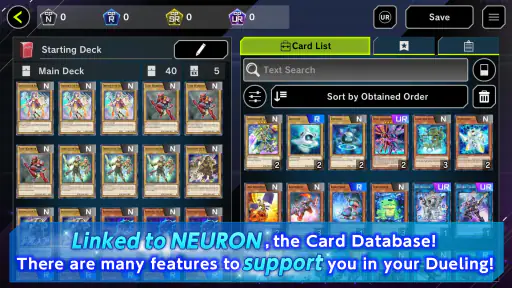
The app stays true to the roots of the Yu-Gi-Oh! trading card game by offering an authentic experience. You can build and customize your decks with over 10,000 cards available, which sounds like a massive sandbox for creativity. The thrill of collecting iconic cards and strategizing your deck is truly unmatched. Plus, the app frequently updates with new cards and events, keeping the gameplay fresh and exciting.
What I absolutely love about this app is the comprehensive tutorial mode. It’s perfect for newbies to understand the nuances of the game without feeling overwhelmed. And if you’ve ever felt the adrenaline rush of a live duel, the online multiplayer mode doesn’t disappoint. It’s as competitive as it gets, with players worldwide ready to duel it out for the top spot.
Learning the rules without rushing
For a first session, I’d start with the tutorial rather than copy a competitive deck and jump into online matches. A useful habit is to read an unfamiliar card’s effect before committing to a play, then watch how the opponent responds; that turns a loss into a lesson about timing or interaction instead of a frustrating blur. When a duel gets complicated, pausing to inspect the field and the cards involved is often more valuable than making the fastest possible move.
More From Our News Desk

Clash of Clans Is Won Between the Battles

Android Auto Makes the Case for Quieter Car Software

MobiOffice: Transforming Mobile Productivity with Seamless Integration

EA SPORTS FC™ Mobile Soccer: Redefining Mobile Sports Gaming

How Microsoft OneDrive Became a Mobile Productivity Giant

How Google Translate Breaks Language Barriers Effortlessly
This is also where the game differs from simpler digital card battlers. Those can be easier to pick up for a few minutes at a time, while Master Duel rewards familiarity with Yu-Gi-Oh!’s rules and layered card effects. If you already enjoy the physical game, the digital format makes it easier to test a deck without arranging an in-person match. If you want a light, low-attention game to play while distracted, I’d choose something simpler.
Building a deck with a plan
With such a large card pool, I wouldn’t try to collect or use everything at once. Choose a clear style you enjoy, then build around cards that support the same game plan. Before spending resources or making purchases, look through the available cards and decide what your deck is missing; chasing every appealing card can leave you with a collection that is broad but difficult to use coherently. The optional purchases can cost from $0.99 to $79.99 per item, so I’d set a personal limit and treat buying as optional rather than a shortcut to understanding the game.
A practical everyday use is a short session during a break: play a tutorial exercise, review a deck, or fit in a duel when you have enough time to follow it properly. I wouldn’t start a match if I only had a moment and might need to leave suddenly. Online play asks for attention, and the opponent’s choices are part of the experience; stepping away mid-game can spoil the match for both players. This is a better fit for a deliberate pause than for filling every spare minute.
Visuals and Audio
Visually, the game is a masterpiece. The card animations are smooth, and the dueling arenas are nothing short of spectacular. Each card comes to life with detailed artwork and animations that make every duel a visual feast. Coupled with a dramatic soundtrack and sound effects, the game keeps you on the edge of your seat with every draw, summon, and attack.
Moreover, the app’s user interface is intuitive and easy to navigate. Even if you’re new to digital card games, you’ll find your way around the settings, decks, and duels effortlessly. It’s a well-thought-out design that enhances the overall gaming experience.
What returning players should expect
For existing Yu-Gi-Oh! players, the card-game familiarity is the biggest reason to stay: deck construction and duel decisions remain the main draw, while the digital presentation makes it possible to play without laying out physical cards. New cards and events provide reasons to revisit, though regular additions can also mean that a deck you enjoy may need attention as the environment changes. I’d keep a flexible mindset and regard a favorite list as a starting point, not something guaranteed to stay ideal forever.
The main friction is not that the game lacks depth, but that depth can make matches hard to follow when several effects resolve in sequence. The tutorial helps, yet it cannot replace experience with the wide range of cards. I’d recommend taking one unfamiliar interaction at a time rather than trying to memorize everything. That approach is slower at first, but it makes the game feel far less opaque.
Community and the limits of social play
Another standout aspect of Yu-Gi-Oh! Master Duel is its thriving community. The game allows you to connect with friends, join clans, and participate in tournaments. The social features are robust, making it easy to share strategies, discuss tactics, and even trade cards. This sense of community keeps the game engaging and adds a layer of depth to the overall experience.
I’d pick it for someone who likes experimenting with decks, enjoys competitive decisions, or wants a familiar way to play Yu-Gi-Oh! digitally. I’d hesitate to recommend it to anyone who dislikes reading rules text, prefers very short matches, or wants a card game with little pressure to keep learning. Its many options are a strength only if you find that kind of complexity enjoyable.
How it fits beside other card games
Compared with more streamlined card games, Master Duel asks more of your attention and knowledge but gives Yu-Gi-Oh! fans a closer match to the card game they already know. Compared with playing with a physical deck, it offers convenient digital duels and animated presentation, while losing the in-person feel of handling cards and talking across a table. The better choice depends on what you want: use this when you want the rules-heavy Yu-Gi-Oh! experience, and choose a simpler alternative when speed and easy onboarding matter more.
There’s also a practical difference between learning here and learning around a physical table. In person, another player can explain a confusing interaction as it happens, while online you may need to slow down, inspect the cards, and work out why a play succeeded or failed. That makes solo study and patient experimentation especially useful. I’d keep a note of one question from each confusing duel—such as which effect changed the result—then look for that interaction in a later session instead of trying to master the whole card pool at once.
Making a first week less overwhelming
If I were introducing a friend, I’d suggest splitting the early sessions into separate jobs. Use one session to learn the controls and basic flow, another to test a deck idea, and a later one to try online competition. That separation helps identify whether the obstacle is the rules, the deck’s strategy, or simply the pressure of playing against another person. It also makes it easier to stop at a natural point instead of turning every spare moment into an attempt to improve.
One useful trade-off is that copying a popular deck can show how a focused strategy is assembled, but it may hide the reasoning that makes each card belong. I’d use a copied list as a study example, not as a finished answer: identify its central play, notice which cards support that play, and then decide whether the style suits you. A deck that looks powerful on paper can still feel awkward if its decisions don’t match the way you like to think through a duel.
Choosing when to play and what to learn
For someone deciding whether to install it, the key question is not simply whether they like card games; it is whether they enjoy following a chain of effects closely. The Teen rating is worth keeping in mind for younger players and families, while the strategic demands matter just as much for adults who want an easygoing game. I’d recommend it to a Yu-Gi-Oh! fan who is curious about digital play, or to a patient newcomer who genuinely likes reading and testing rules. I’d steer away anyone who mainly wants a quick, low-effort distraction.
When a match ends in a way that seems sudden, I’d replay the sequence mentally from the last clear decision rather than blame the whole deck. Was a key card used too early? Did an opponent’s effect interrupt the plan? Even one answer can suggest a small adjustment for the next duel. That kind of review is a more useful routine than constantly changing several cards at once, because it lets you see whether a change actually improves the plan you want to play.
What I would keep an eye on
As the game continues to receive cards and events, I’d watch how those changes affect the decks and matchups I enjoy, rather than assuming that every update will suit my play style. Version 2.3.0 tells me which release I’m considering now; it doesn’t by itself tell me what will change next. For a returning player, checking the current in-game options before committing to a new deck is a sensible way to avoid building around an assumption.
That leaves a clear answer to the practical question of whether it is worth trying: it is free to start, and its depth gives patient players plenty to learn, but optional purchases and a demanding card pool make it wise to approach it at your own pace. I’d begin with the tutorial, choose one deck direction, and decide after a few focused sessions whether the dueling itself keeps me curious.
For existing players, the best thing to watch is not just what new cards appear, but whether they give you a reason to rethink a deck you already understand. A returning user can come back with a specific goal—practice a familiar style, explore a new card choice, or simply enjoy a duel—rather than treating every new release as a demand to rebuild from scratch. That keeps the game’s steady stream of possibilities from turning into homework.
In conclusion, Yu-Gi-Oh! Master Duel is not just a game; it’s an experience that brings the beloved trading card game to the digital world in a spectacular fashion. Whether you’re a hardcore duelist or a casual player, the game offers something for everyone. So, grab your virtual deck and get ready to duel your way to the top!
Yu-Gi-Oh! Master Duel Frequently Asked Questions
How much storage space should I have available before downloading Yu-Gi-Oh! Master Duel?
It is sensible to leave room for the game and its files to install, and to keep some free space available for updates. Yu-Gi-Oh! Master Duel is a digital card game with online play, so downloading it also requires an internet connection. Check your device’s available storage before starting, particularly if you have several large apps or games installed.
Does Yu-Gi-Oh! Master Duel require an internet connection?
An internet connection is important for the online duels that are part of Yu-Gi-Oh! Master Duel. The game also has solo play, which gives you a way to learn and play outside competitive duels, but you should plan to connect when downloading and accessing online features. If you expect to play while offline, consider that the experience may be more limited than online play.
What is Yu-Gi-Oh! Master Duel, and what kind of game is it?
Yu-Gi-Oh! Master Duel is a digital trading card game from KONAMI, built around the familiar Yu-Gi-Oh! dueling experience. Players use cards to create decks and compete in duels, with solo and online play among its main features. It is a card game aimed at Teen players, so newcomers should be ready to learn its rules and strategy as they play.
What platforms is Yu-Gi-Oh! Master Duel available on?
Yu-Gi-Oh! Master Duel is available on multiple platforms, including Android, iOS, Windows, PlayStation, Xbox, and Nintendo Switch. The cross-platform availability allows players to duel with friends and opponents across different devices, providing a seamless gaming experience regardless of the platform you choose.
Is Yu-Gi-Oh! Master Duel free to play?
Yes, Yu-Gi-Oh! Master Duel is free to play. Players can download the app without any initial purchase. However, the game does offer in-app purchases that can enhance gameplay, such as purchasing additional cards or packs to build stronger decks. These purchases are optional and not necessary to enjoy the game fully.
Pros
- Stunning graphics enhance gameplay experience.
- Authentic card game mechanics for enthusiasts.
- Regular updates with new cards and events.
- Cross-platform play increases accessibility.
- User-friendly interface for all players.
Cons
- Steep learning curve for new players.
- In-app purchases can be expensive.
- Occasional server connectivity issues.
- Limited offline features available.
- Some bugs affect gameplay stability.
- Category
- Card
- Version
- 2.3.0