Word Wars - Word Game
- 20.26K
- 4.4
- Installs
- 5.00M
- Price
- Free

Screenshots


Analysis by Reviewed
Ever found yourself in a heated debate over a word’s legitimacy in Scrabble? Word Wars - Word Game is here to settle those disputes once and for all, while keeping you entertained on your daily commute or lazy Sunday afternoons. Let me walk you through my experience with this app, which is available on both Android and iOS.
Checking the basics before you play
One practical question before downloading is whether this is a paid game. It is free to install, although optional in-app purchases are available at prices ranging from $0.99 to $99.99 per item. I’d make that distinction clear if a child shares my device: free to start does not mean every item is free, so I would keep purchase controls in mind and read an item’s details before buying.
The game is made by PlaySimple Games and is rated for Everyone. Its current version is 1.856, and Android players need version 9 or later. That gives you a straightforward compatibility check before installing. The 4.4 average from around 84,000 ratings and more than 5 million installs suggest that plenty of people have tried it, but those figures are context rather than a guarantee that its pace or competitive style will suit you.
First Impressions
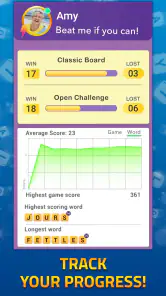
Right off the bat, Word Wars - Word Game strikes you with its vibrant and inviting interface. It’s got this no-nonsense look that I find really appealing. You’re not bombarded with unnecessary features or flashy animations. The main menu is straightforward with options to start a new game, check your stats, or tweak settings to your liking. It's simplicity at its finest, and trust me, that's a good thing.
Who Will Enjoy This Kind of Word Match?
What makes this style of play useful in everyday life is that a match can be approached in short visits rather than demanding a whole uninterrupted afternoon. I’d use it while waiting for an appointment or during a quiet commute, then come back to the board when I have time to consider a move. That rhythm suits people who enjoy thinking between other tasks; it is less appealing if you want a fast game that begins and ends in a few minutes.
It also works best for someone who likes a little social competition alongside the word puzzle. A friend can make the board feel personal, while a random opponent gives you a chance to test your choices against someone whose style you do not already know. If you mainly want a private vocabulary exercise, a solo word puzzle may be a better fit. Here, the appeal is not only finding words but deciding how to use them against another player.
Gameplay Mechanics
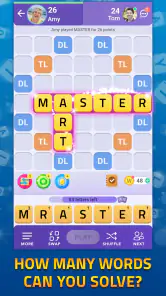
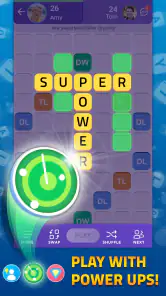
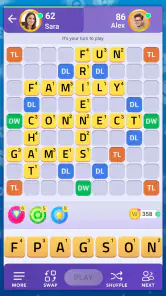
Jumping into the game, you’ll notice it’s very similar to other word games like Scrabble, but with its own unique twists that keep things fresh. You can play against random opponents or invite friends to join in on the fun. The game randomly assigns you seven tiles, and your job is to create words on the board. Sounds simple, right? But here’s where the strategy kicks in. You’ve got to think about maximizing your score with double and triple letter or word spaces. It’s not just about making words; it’s about making the right words.
You May Like

Clash of Clans Is Won Between the Battles

Android Auto Makes the Case for Quieter Car Software

MobiOffice: Transforming Mobile Productivity with Seamless Integration

EA SPORTS FC™ Mobile Soccer: Redefining Mobile Sports Gaming

How Microsoft OneDrive Became a Mobile Productivity Giant

How Google Translate Breaks Language Barriers Effortlessly
One thing I particularly enjoyed is the ‘Swap’ feature. If you’re stuck with a bunch of vowels or impossible letters, just swap them out. It’s a game-changer, especially when you’re trying to outsmart a particularly savvy opponent. The timer is another neat addition, adding a sense of urgency to your gameplay. You can’t just sit there forever pondering your next move.
Small Decisions That Change a Turn
A practical habit I’d recommend is checking the whole board before settling on a word. A tempting long play is not automatically the best one if it opens a valuable space for your opponent. I try to compare the immediate points with the position the move leaves behind, especially when a premium square is nearby. That little pause makes the game feel more strategic than simply searching for the longest word in your rack.
The swap option is most useful when the letters are genuinely blocking useful plays, not just because the rack looks awkward at first glance. Before using it, I’d scan for short words that can connect to existing tiles; a modest placement may preserve a better opportunity for the next turn. The timer does add pressure, so this is not an ideal choice for anyone who wants unlimited time to inspect every possibility. It rewards a balance between careful play and being willing to make a decision.
Making the pace work in daily life
For example, I might start a game while waiting for a train, play a turn, and use the remaining minutes to look over the board rather than rushing into a word. If I know I’ll be busy, I would avoid starting a match at a moment when I cannot keep an eye on the timer. That small bit of planning helps keep a casual game from turning into an obligation, particularly when I am playing someone I know and want to give their turns proper attention.
The format is a better fit for brief pockets of focus than for playing one-handed while doing something demanding. Even if a turn seems simple, checking open premium spaces and possible connections takes attention. I would choose a different kind of word game when I want an entirely self-paced distraction; this one is more satisfying when I can give the board a proper look and accept that another player is part of the experience.
Social Interaction
One of the standout features of Word Wars - Word Game is its social component. You can chat with your opponents in-game, which is perfect for a little friendly banter or strategizing. It’s not as intrusive as you might think; the developers have done a great job of keeping it light and optional. So, if you’re not feeling chatty, you can simply ignore it. But honestly, it adds a fun layer to the game when you’re playing with friends.
For a realistic routine, I can picture starting a match with a friend during a lunch break, making a move, then returning later rather than keeping both people focused on the same screen. That makes the social side flexible, though the timer means I would still keep an eye on the game instead of assuming every turn can wait indefinitely. If you prefer a strictly offline pastime, or dislike playing against strangers, that competitive setup may be a reason to choose a different word game.
Learning and Improving
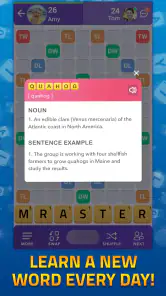
If you’re a word nerd like me, you’ll appreciate the educational aspect of the game. You get to learn new words and expand your vocabulary with every match. There’s also a handy dictionary feature that lets you check the meaning of any word played on the board. This is especially useful for those pesky words your opponent throws out that sound made up (spoiler: they’re not).
I find the dictionary most valuable when I use it as a prompt to remember a word, rather than checking it and immediately moving on. When an unfamiliar play appears, looking up its meaning can turn a competitive moment into a small learning opportunity. It is not a replacement for a dedicated language-learning course, but it gives curious players a reason to notice and revisit vocabulary that naturally comes up in a match.
Performance and Usability
The app runs smoothly, with no noticeable lag even when you’re in a heated match. It’s relatively light on storage, so you don’t have to worry about it hogging your phone’s precious space. Plus, it doesn’t drain your battery as quickly as other games I’ve tried. The developers have clearly put a lot of thought into optimizing for performance, which is always a win in my book.
PlaySimple Games develops the game, which is free to install and rated for Everyone. It has a 4.4 average from around 84,000 ratings, and has passed 5 million installs. The current version is 1.856, and it requires Android 9 or later. Those details make it easy to judge basic compatibility, but I’d still check that your device meets the requirement before downloading, particularly if you use an older phone.
Spending, Competition, and What to Expect
The game is free, with in-app purchases priced from $0.99 to $99.99 per item. That range is worth noticing before you start, especially if you share a device with a child or prefer to keep game spending controlled. I would treat purchases as optional rather than a necessary part of deciding whether to try it. The listed price range does not tell me what every item does or whether a particular purchase changes a match, so I would read the purchase details in the app before spending.
For fairness, I would separate the basic word challenge from assumptions about paid advantages. The purchase information confirms that optional items are available, but it does not establish whether they affect competitive outcomes. I wouldn’t claim that buying something makes a player stronger, nor that every match is completely unaffected by purchases. If spending balance is central to your choice, check what each item offers and decide whether you are comfortable with it before joining games.
Compared with a traditional board game, this format is easier to carry around and lets you play with friends or random opponents without arranging a physical table. Compared with a quick solo word search, it asks you to plan around an opponent and the board, so it is more tactical but also less relaxing. That difference is the key trade-off: choose it for turn-based competition and vocabulary play, not simply to passively browse words.
How it compares with other word games
If I want the familiar feel of a physical tile game but do not have a board or another person beside me, this app offers a convenient alternative: play against friends or random opponents from a phone. A solo anagram or word-search game is a better choice when I want immediate feedback and complete control over when a session ends. Word Wars asks me to think spatially as well as linguistically, because the value of a word depends on where it fits and what it leaves open.
That difference also explains who may want to skip it. Someone who dislikes timers, waiting for another player, or the possibility of a competitive exchange may find a solo puzzle calmer. And a player looking for a structured vocabulary course should choose a learning-focused app instead; the dictionary can make a match educational, but learning words is not the same as following a planned lesson.
Monetization and Ads
Now, let’s talk about the elephant in the room: ads. Yes, they’re present, but they’re not overbearing. You get a short ad after every few turns, but it’s not enough to disrupt your gaming flow. There are also in-app purchases available if you want to remove ads entirely or buy some extras like additional tile swaps. It’s all pretty standard and doesn’t feel like a cash grab.
Because ad frequency and purchase contents can shape the experience, I’d give the game a few sessions before deciding whether it suits your patience and budget. A player who is comfortable with occasional interruptions may be happy to keep playing for free, while someone who wants a completely uninterrupted match may find the pauses irritating. The purchase range alone is not a reason to spend; I would only consider an item after confirming its exact contents and deciding that it solves a problem I actually have.
What I would check before spending
The important distinction is between knowing that purchases exist and knowing what a particular item changes. I would open the purchase details in the game, check the exact item and its price, and then ask whether it addresses a real annoyance for me. If I am only curious about the game, I would play without buying anything first. That is the clearest way to judge whether the base experience is enjoyable on its own rather than spending in response to a frustrating turn.
For a household with children, I would also make the purchase range part of the decision before handing over the phone. The Everyone age rating makes the game broadly suitable in content terms, but it does not remove the need to manage spending on a shared device. Being clear about that boundary is more useful than assuming every optional purchase is necessary—or assuming that none of them matters.
Final Thoughts
So, is Word Wars - Word Game worth downloading? Absolutely! Whether you’re a seasoned wordsmith or just looking for a fun way to kill some time, this app has something for everyone. It’s easy to pick up but challenging to master, with just the right mix of competitiveness and casual fun. Plus, it’s a great way to stay connected with friends, especially if you’re all word game enthusiasts.
Overall, Word Wars - Word Game hits all the right notes. Give it a shot, and you might just find yourself hooked. Happy word hunting!
Word Wars - Word Game Frequently Asked Questions
What kind of game is Word Wars, and what makes its word challenges appealing?
Word Wars is a word game from PlaySimple Games built around making words from a set of letters and competing for points. Its familiar board-game style gives players room to think about both vocabulary and where to place each word. The store summary highlights playing with friends, making it a fit for people who enjoy a relaxed word challenge with a competitive element.
Can I play Word Wars with friends or other players?
Word Wars is designed as a multiplayer word game where players can compete with friends or opponents found through matchmaking. The published review describes inviting friends through social media or an invite link, then starting a game after they accept. It also mentions random matchmaking with players worldwide, giving you another way to find an opponent when friends are unavailable.
Is Word Wars free to download, and what should I know about purchases?
Word Wars is free to download, so you can try its word-game format without paying upfront. It also offers in-app purchases, with items ranging from $0.99 to $99.99. The existing review describes optional coins and power-ups, while noting that the game can be enjoyed without spending money. Consider your purchase preferences before downloading, especially if children will use the app.
What is Word Wars - Word Game?
Word Wars is an engaging multiplayer word game where players compete to create words from a given set of letters. The objective is to score the highest points by strategically placing words on the board, similar to classic word games. It's available for both Android and iOS devices.
How do I play Word Wars with friends?
To play Word Wars with friends, you can either invite them via social media or send an invite link directly through the app. Once they accept, you can start a game session and compete against each other. The app also allows random matchmaking with players worldwide.
Pros
- Engaging multiplayer challenges.
- Variety of word puzzles to solve.
- Smooth and intuitive interface.
- Regular updates with new features.
- Encourages vocabulary improvement.
Cons
- In-app purchases can be pricey.
- Occasional ads disrupt gameplay.
- Requires a stable internet connection.
- Limited offline play options.
- Some puzzles repeat frequently.

- Category
- Word
- Version
- 1.856