Total War: MEDIEVAL II
- 623.00
- 4.6
- Installs
- 100.00K
- Price
- $13.49
Screenshots
Analysis by Reviewed
In a household that shares a tablet, Total War: MEDIEVAL II can work well when someone wants a strategy game that rewards a longer stretch of attention rather than a few quick taps. One person can guide a campaign for a while, then hand the device over at a natural pause. The important distinction is that this is still one player’s run: sharing the screen doesn’t make it a cooperative game, and a change of hands can mean inheriting decisions without knowing why they were made.
Passing the device without losing the thread
Before handing it over, I’d leave the campaign at a clear stopping point and explain the immediate situation: which front needs attention, what the next move is, and whether a battle is pending. That small handoff helps avoid accidental decisions made in the middle of a complicated turn. It also gives a younger or less experienced player a manageable way to explore, such as reviewing the map or choosing what to focus on next, while the main campaign remains guided by whoever owns the save.
For a household with different tastes, the game is best treated as a shared conversation rather than a family party game. One person may enjoy weighing diplomacy and expansion; another may prefer watching battles unfold. If everyone expects to control the same campaign, agree on who makes the final calls before starting. The pleasure comes from connected choices over time, so conflicting plans can quickly turn a shared session into a frustrating tug-of-war.
Think about the commitment before buying
The mobile edition is a paid strategy game from Feral Interactive, priced at $13.49, with in-app purchases listed at $6.49 per item. I’d make the purchase decision around the person who will actually play it, not just the number of people who might take a turn. It suits someone who already likes campaign planning and tactical battles; it is a harder sell for a household looking for a cheap, casual game to dip into together.
It also helps to decide whose campaign progress matters. On a device used by several people, separate play sessions can blur together if players do not communicate about where they left off. I would agree on a simple routine—one player’s campaign at a time, or a spoken handoff before anyone makes a major move. That is not a special feature; it is just a practical way to protect a long-running strategy game from avoidable mix-ups.
Age, comfort, and who should sit this one out
The game is rated Teen, so I would consider whether its medieval warfare and strategic themes are a comfortable fit for the younger people who use the device. Age suitability is only one part of the decision: the layered planning can also be demanding for someone who is new to strategy games. I’d introduce it with a short explanation of the map and the difference between campaign decisions and battles, rather than expecting a first-time player to understand every consequence straight away.
If your household prefers brief rounds, simple touch controls, or a game built around simultaneous cooperation, this is probably not the right choice. I’d also skip it if the intended player dislikes managing several concerns at once; the campaign asks for patience, and battles reward attention rather than frantic tapping. For that kind of player, a lighter strategy title or a straightforward action game may be a better fit.
More From Our News Desk

Clash of Clans Is Won Between the Battles

Android Auto Makes the Case for Quieter Car Software

MobiOffice: Transforming Mobile Productivity with Seamless Integration

EA SPORTS FC™ Mobile Soccer: Redefining Mobile Sports Gaming

How Microsoft OneDrive Became a Mobile Productivity Giant

How Google Translate Breaks Language Barriers Effortlessly
For the right person, though, handing over the device can be a useful way to share interest in history and tactical thinking. I’d keep the expectations clear: the game offers a substantial solo strategy experience that can be discussed or watched together, not a built-in household coordination system. That distinction makes it easier to enjoy without asking it to do something it was not designed for.
Keeping shared play low-pressure
A shared device also makes it worth separating the social part of playing from responsibility for the campaign. I’d let someone who is curious watch a battle or talk through possible moves without treating every suggestion as a vote. That approach makes the game easier to enjoy across different experience levels: a newcomer can ask why a decision matters, while the regular player keeps the overall plan coherent. It is a better fit for relaxed household play than passing control back and forth after every small action.
If several people want their own progress, I would first check how the device and game handle separate play before relying on that arrangement. The safest practical assumption is not to make a second person’s campaign depend on an untested setup. For a shared tablet, agreeing on one active run and communicating before major choices is less convenient than separate personal devices, but it avoids confusion about whose decisions shaped the current situation.
Who gets the most from this kind of strategy
I’d recommend it most to someone who likes the contrast between slow, consequential campaign planning and direct battlefield decisions. It can also suit a history-minded player who enjoys thinking about territory, alliances, and the consequences of expansion, even when the fun is more about running a plausible empire than following a scripted story. It is less suitable for anyone who wants a clear objective that can be finished in a short sitting or a game where every person around the screen has an equal role.
Compared with mobile strategy games built around quick matches, this asks for more continuity: remembering what happened before, considering what a choice will affect later, and accepting that a campaign is not a neat sequence of self-contained rounds. Compared with a simpler turn-based map game, the real-time battles add a more immediate tactical layer, but also ask for more attention. That trade-off is the reason I’d choose it over lighter alternatives when I want a deeper evening game, and choose something else when I want a quick distraction.
The Grand Campaign
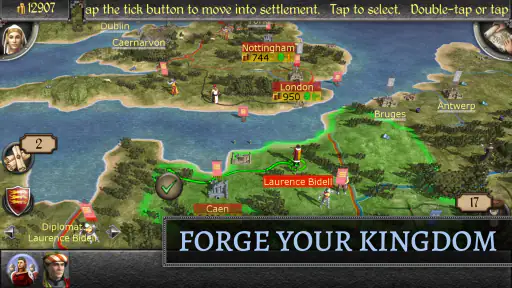
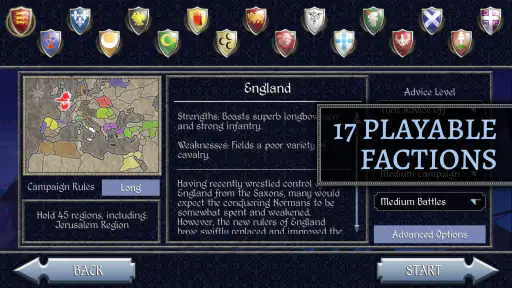
First off, let's dive into the heart of the game—the grand campaign. In Total War: MEDIEVAL II, you get to choose from a variety of factions, each with its unique strengths and strategies. Whether you're leading the English longbowmen or the fierce Mongol horsemen, every choice matters. The campaign map is vast, offering a myriad of territories to conquer and alliances to forge. It's like a history lesson, but one where you're calling the shots!
Real-Time Battles
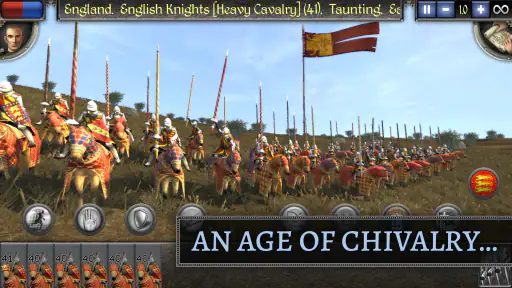
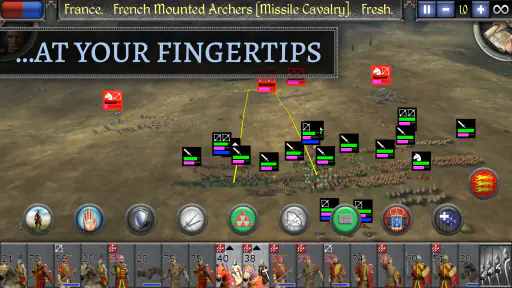
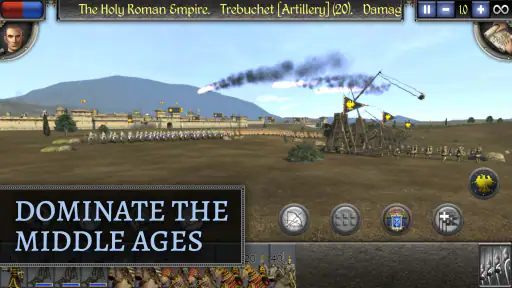
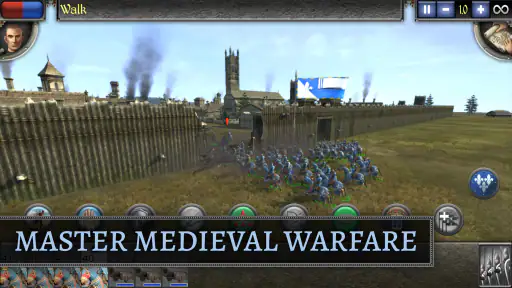
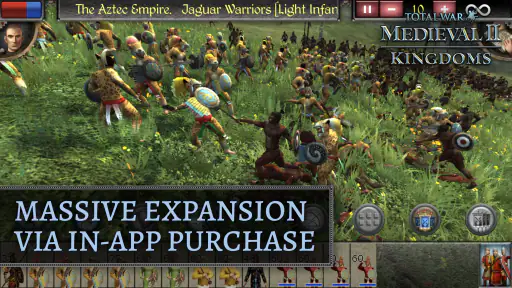
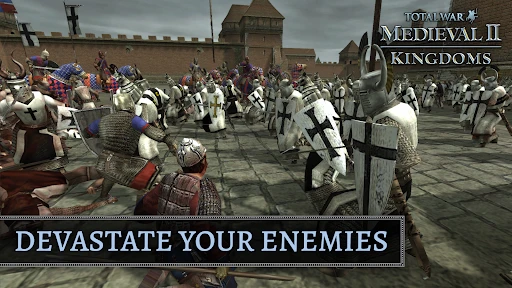
The real-time battles are where the action truly heats up. Picture this: thousands of troops clashing on the battlefield, cavalry charges, archers raining arrows, and siege engines breaking down walls. The graphics are pretty impressive for a mobile game, and the controls are surprisingly intuitive. You'll feel like a true general, making split-second decisions that could turn the tide of battle.
Strategic Depth
But it’s not all about brute force. Strategy plays a crucial role. You need to manage your resources, develop your cities, and maintain public order. Diplomacy is key—sometimes it's better to negotiate than to fight. And don't forget about religion; it can be a powerful tool or a source of unrest within your empire.
One of my favorite aspects of the game is the attention to detail. From the historical accuracy of the units to the dynamic weather conditions affecting your battles, it all adds up to an immersive experience. Plus, the music and sound effects are top-notch, really pulling you into the medieval world.
Challenges and Rewards
Now, let's talk about the challenges. The AI can be quite cunning, especially on higher difficulties. Expect them to exploit any weakness in your strategy. But that's what makes every victory so rewarding. There's nothing quite like outsmarting your opponent after a grueling campaign.
However, be prepared to invest some time. The game isn’t something you can just pick up for a quick session. It demands attention and planning, but the payoff is definitely worth it. Whether you're a seasoned veteran of strategy games or a newcomer, Total War: MEDIEVAL II offers a rich and engaging experience that will keep you coming back for more.
Compared with lighter mobile strategy games that focus on short rounds or simplified choices, this one asks me to think across two scales: the broader campaign and the battles fought within it. That combination is its defining appeal, but it also explains why it can feel demanding on a phone or tablet. I find it works best when I can give it a focused stretch of time, rather than trying to squeeze a complex decision into a distracted moment.
Making a campaign easier to manage
A useful habit is to choose one clear priority before each session, such as stabilizing a territory or preparing for a particular conflict, instead of trying to solve every problem at once. That keeps the campaign’s many demands from becoming a blur. In battles, I’d pause to read the situation before committing troops: a dramatic charge is satisfying, but a poor approach can cost more than a careful repositioning. The game rewards deliberate choices, so resisting the urge to act immediately is often part of the strategy.
For a realistic everyday session, I might start a campaign decision during a quiet break, then save the battle or major planning for later when I have time to concentrate. That split suits the game better than treating every visit as a complete, quick match. If I only have a few minutes, I would avoid beginning a decision-heavy stretch and return when I can follow through. This is especially useful on a shared device, where another person may otherwise pick up a campaign at an awkward point.
Cost, compatibility, and what to expect
Feral Interactive’s game has an average rating of 4.6 from around 7.7 thousand ratings, with over 100 thousand installs. Its Teen age rating is worth considering alongside its strategic complexity, particularly if younger players share the device. The current version is 1.4.1RC5, and the game was released on April 7, 2022. Those details place it as an established mobile strategy option, but the bigger question for me is whether its depth fits the way you actually play.
The listed minimum operating-system requirement is 9, which is useful to check before buying on an older device. I’d also think about the screen I plan to use: the campaign map and battlefield both ask me to inspect changing situations, so a larger tablet may feel more comfortable for extended play than a small phone. That is a matter of preference rather than a reason to rule out the mobile version, but it is worth weighing if you expect to play mostly in short bursts or while moving around.
The game’s paid entry price makes sense to me only if the intended player wants a substantial strategy experience, rather than a casual title several household members will sample once. There are in-app purchases listed at $6.49 per item, so I would make sure the person responsible for the purchase understands that these are separate from the initial cost. For a younger player using a shared device, it is sensible to settle household purchasing expectations beforehand; that is a general device-use conversation, not a game feature.
What a first session should teach you
For a newcomer, I would resist trying to master the whole campaign at once. Start by looking at the map and identifying what seems most urgent, then make a small number of deliberate choices and observe their consequences. When a battle begins, take time to understand where the opposing force is and what your own units can do before committing. The most useful early lesson is not a particular winning tactic; it is that campaign choices and battlefield choices are connected, so rushing through either layer can make the other harder.
That learning curve is also why I would not hand the game to a first-time strategy player with no context and expect an instantly smooth session. A brief explanation from someone who knows the campaign can turn the first encounter from a wall of unfamiliar decisions into an interesting puzzle. If nobody in the household wants to guide that introduction, a simpler strategy game may be a more welcoming starting point, with this one saved for when the player is ready to spend time learning its systems.
Where it fits in a household
As a household choice, I see this as a focused solo game that can create conversation around the screen, not a shared-control experience designed to keep everyone equally busy. The person who likes planning can steer the empire; another person can ask questions, suggest priorities, or enjoy the spectacle of a battle. That arrangement works best when the group is comfortable with one player making the final decisions and when everyone understands that progress belongs to the campaign being played.
If you’re buying for a family member, I’d consider both their appetite for long-term planning and whether the Teen rating fits your household’s expectations. If you’re buying for yourself on a shared device, agree on a clear handoff and keep the campaign’s immediate priorities easy to explain. Those small choices matter more here than trying to turn it into a party game. For a player who wants a rich medieval strategy campaign and has the patience to learn it, it is a compelling pick; for brief, cooperative, or low-effort play, I would look elsewhere.
So, if you're looking for a game that combines historical strategy with epic battles, give it a shot. It's a journey through history where every decision counts, and trust me, you'll be hooked.
Total War: MEDIEVAL II Frequently Asked Questions
Is Total War: MEDIEVAL II a good fit for someone new to strategy games?
Total War: MEDIEVAL II is a strategy game built around managing a campaign and directing battles, so it asks players to think ahead rather than rely on quick reactions alone. Its mix of diplomacy, warfare, and empire planning can take time to learn, but it offers a substantial experience for anyone curious about historical strategy. The Teen content rating may also help families decide whether its themes are appropriate.
How much does Total War: MEDIEVAL II cost, and are there extra purchases?
The game costs $13.49, so it is a premium download rather than a free-to-play strategy title. Total War: MEDIEVAL II also lists in-app purchases at $6.49 per item. The published questions below describe the main game as focused on delivering a complete strategic experience, with optional additional content rather than purchases being central to ordinary play. Check the purchase details before downloading so the total cost fits your budget.
What is Total War: MEDIEVAL II about?
Total War: MEDIEVAL II is a strategy game that combines turn-based campaign gameplay with real-time tactical battles. Set in the Middle Ages, players take control of one of numerous factions to expand their empire through diplomacy, warfare, and strategic planning. The game delivers a deep, immersive experience with historical accuracy and complex gameplay mechanics, making it a favorite among strategy enthusiasts.
What platforms is Total War: MEDIEVAL II available on?
Total War: MEDIEVAL II is available on multiple platforms, including Windows PC, macOS, and Linux. Recently, the game has been adapted for iOS and Android devices, allowing players to enjoy the strategic depth and historical gameplay on the go. The mobile version maintains the core features of the original game, although some controls and interfaces have been optimized for touchscreens.
Does Total War: MEDIEVAL II support multiplayer mode?
Yes, Total War: MEDIEVAL II includes a multiplayer mode. Players can engage in battles against each other online, either in one-on-one scenarios or team-based battles. The multiplayer mode provides a competitive element to the game, allowing players to test their strategies and skills against others worldwide. However, the mobile version may have limitations compared to the desktop version regarding multiplayer features.
Pros
- Immersive historical strategy experience
- Complex battle tactics and management
- Extensive modding community support
- Rich
- detailed medieval setting
- Varied factions with unique units
Cons
- Steep learning curve for beginners
- Dated graphics compared to newer games
- Occasional AI pathfinding issues
- Resource-heavy
- may lag on older devices
- Limited multiplayer options
- Category
- Strategy
- Version
- 1.4.1RC5