Tomb Raider™
- 297.00
- 4.9
- Installs
- 50.00K
- Price
- $19.99

Screenshots
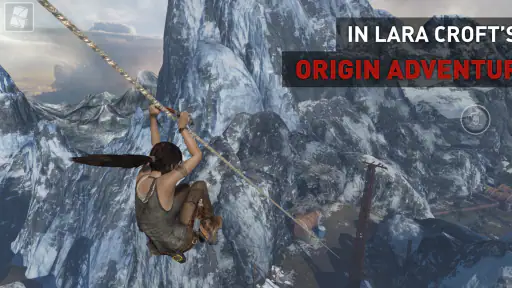
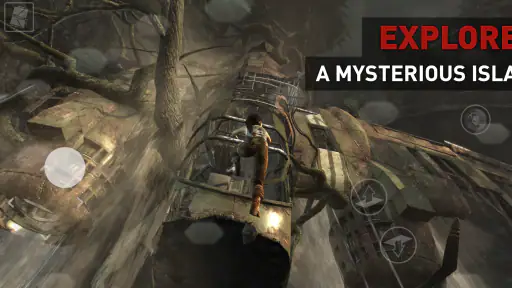
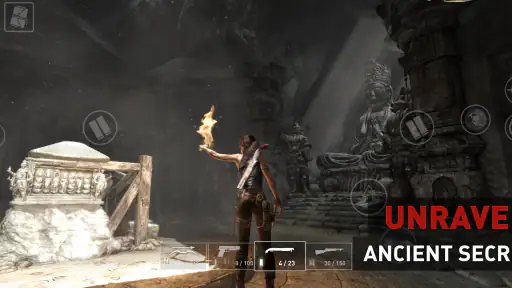
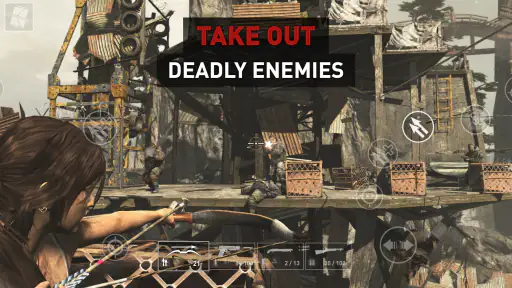
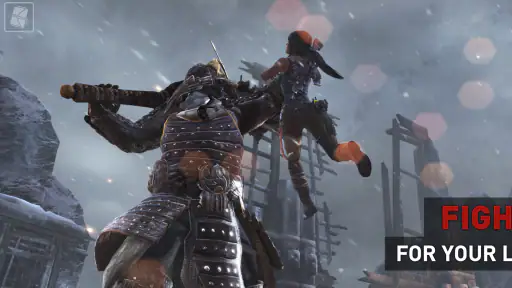
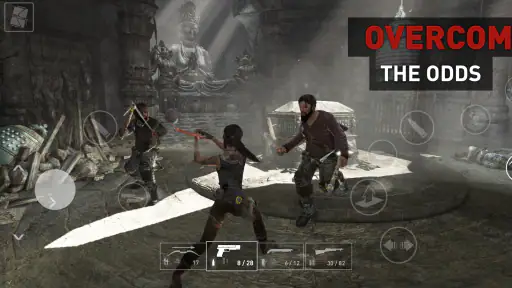
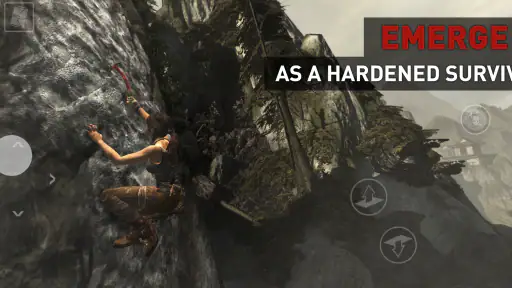
Analysis by Reviewed
I expected a straightforward action game when I started Tomb Raider™, but the opening hours quickly showed me that this is better understood as a complete adventure built around constant movement, careful observation, and sudden bursts of danger. Lara Croft’s journey is presented as an origin story, yet the game does not rely only on spectacle. It repeatedly asks me to climb, search, fight, solve, and then decide whether I am ready to push farther.
That rhythm is what makes the Android version from Feral Interactive interesting. It is not the kind of mobile game I open for a quick round while waiting in a queue. I play it when I want a substantial action experience and can give it proper attention. The touch controls make it accessible, but the scale and seriousness of the adventure make a controller or a larger screen especially appealing for longer sessions.
How the action starts and why I keep going
The first thing I noticed was how quickly the game establishes its basic promise: Lara enters a dangerous place, I take control, and every apparently simple route can hide a climb, a trap, a puzzle, or an enemy encounter. Movement is not just travel between battles. Reaching the next ledge or finding a way through a blocked area is part of the reward.
That matters because the action feels more satisfying when I understand what led to it. I may spend time examining a space, testing a route, and looking for a useful angle. Then the game changes pace. A jump becomes urgent, an enemy appears, or the environment turns into a hazard. The contrast gives the combat more impact than it would have if every room were filled with enemies.
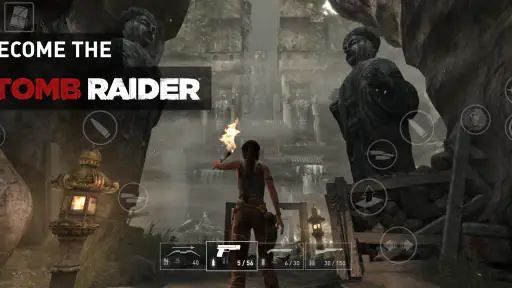
On a phone, I found that the quality of the experience depends heavily on how I hold the device and how much screen space I have available. Touch controls can work, but action games with movement, aiming, camera control, and interaction naturally demand more attention from my hands. I prefer playing with the device supported rather than trying to operate everything while walking or standing.
A controller is the better choice for anyone who wants the most precise response. Touch input remains useful when convenience matters more than perfect control, especially during exploration and slower puzzle sections. My advice is to treat the control method as part of the purchase decision. If you dislike playing serious action games with touch controls, the mobile format may not change your mind.
The game’s mature rating also matches the tone I encountered. This is not a lighthearted treasure hunt designed for very young players. The danger, violence, and atmosphere give the adventure weight, so I would choose it for older players who are comfortable with a darker action story. The listed content rating is Mature 17+, which is important to consider before handing the game to someone else in the family.
More From Our News Desk

Clash of Clans Is Won Between the Battles

Android Auto Makes the Case for Quieter Car Software

MobiOffice: Transforming Mobile Productivity with Seamless Integration

EA SPORTS FC™ Mobile Soccer: Redefining Mobile Sports Gaming

How Microsoft OneDrive Became a Mobile Productivity Giant

How Google Translate Breaks Language Barriers Effortlessly
Exploration gives the combat a purpose
What I like most is the way exploration prepares me for action without making every discovery feel like a checklist. I move through an area, notice a possible path, and often have to remember a visual clue or return to an earlier location after gaining a better understanding of the environment. That creates a useful sense of place. The world is not merely a series of arenas connected by loading screens in my mind; it becomes a set of spaces I gradually learn.
The practical tip here is to slow down before assuming that the obvious route is the only route. When I rush directly toward the next objective, I can miss the environmental logic that makes a puzzle enjoyable. I also find it helpful to pause after a major encounter and look around again. The change from combat mode to observation mode is easy to overlook, but it is often where the game’s most rewarding details begin.
This is also where the game differs from many mobile action alternatives. A typical free-to-play action title may be designed around short battles, repeated rewards, and frequent menu interruptions. Tomb Raider™ feels more like a continuous console-style adventure adapted for a portable device. I am not constantly being asked to manage a stream of currencies, wait for energy, or compare promotional items. The trade-off is that the game asks for more patience and concentration.
The feedback rhythm: danger, control, and recovery
The core feedback loop is easy to describe: I explore, encounter a threat, react under pressure, survive, and then use the calmer moment afterward to understand where to go next. That alternating rhythm is the reason another session begins. A difficult moment creates tension, while the next stretch of exploration gives me room to recover and feel capable again.
Good action feedback is not only about winning. It is also about understanding why I failed. When a jump goes wrong or an enemy catches me off guard, I can usually identify the mistake: I moved too quickly, misread the space, or entered a fight without enough awareness. That clarity makes a reset feel fair rather than random.
I would not call the experience effortless. Players who want a completely relaxed mobile game may find the attention required tiring, particularly when playing on a smaller screen. Camera management and movement can become more demanding when my fingers cover part of the display. For me, the tension is worthwhile, but it reinforces the idea that this is a focused game rather than background entertainment.
One useful habit is to separate the two mental tasks the game asks for. During exploration, I concentrate on landmarks, routes, and possible interactions. During combat, I stop trying to admire the surroundings and focus on positioning, timing, and immediate threats. Switching deliberately between those modes makes the controls feel less overwhelming and helps me avoid treating every problem as a fight.
The action also benefits from restraint. I do not need to sprint through every section simply because the game allows movement. Taking a moment to read the space can prevent a careless mistake, and the reward is not always a visible item. Sometimes the reward is simply entering the next encounter with a better plan.
What counts as a reward here
The strongest reward is progression through Lara’s transformation. I am not only moving from one location to another; I am seeing her become more capable and more prepared for the dangers ahead. That gives ordinary actions—climbing, searching, surviving, and solving—a larger purpose.
There is also a more immediate reward in learning the environment. The first time I enter a new area, it may look confusing or hostile. After I understand its routes and hazards, the same space becomes readable. That change in my own knowledge is one of the game’s best forms of progression, and it is something a short mobile battle game usually cannot reproduce.
For players who enjoy completion, the appeal comes from looking beyond the most direct path. I find that optional exploration has more value when I am willing to remember places I could not fully investigate immediately. Instead of trying to clear everything in one pass, I focus on understanding the main route and return mentally to the details that seemed deliberately placed.
This approach also helps with limited playtime. On an ordinary evening, I might play until I reach a natural pause, then stop rather than forcing myself through the next dangerous sequence. The game is more enjoyable when I end a session with a clear sense of what I accomplished: I solved a route, survived an encounter, or learned how an area works. That makes it easier to resume later without feeling lost.
The purchase model changes how I judge those rewards. The price is $19.99, so I expect a substantial experience rather than a disposable download. There is no reason for me to evaluate it by the standards of a free five-minute game. The right question is whether I want a premium action adventure on my phone, not whether it offers the same instant accessibility as casual alternatives.
When a session resets
Every action game needs a reset point, and here the reset is part of the learning process. After a failed attempt, I return with a clearer idea of what caused the problem. That is especially useful when the challenge came from a sequence rather than a single enemy. I can change my route, slow down, or approach the same danger with better timing.
I recommend stopping at a sensible checkpoint or natural break instead of quitting in the middle of a confusing section. When I return with a fresh mind, environmental puzzles are easier to read, and I am less likely to repeat the same impatient mistake. This is a small but important difference between playing it as a committed adventure and treating it like a disposable mobile distraction.
The reset loop may frustrate players who expect immediate progress after every attempt. Tomb Raider™ does not remove the possibility of setbacks simply because it is on Android. If you want an action game that lets you win almost automatically, this is not the right fit. Its satisfaction comes from adapting after a mistake, not from avoiding mistakes altogether.
My everyday use case is a quiet evening with the phone or tablet propped up, headphones available, and enough uninterrupted time to follow the story and explore properly. I would not choose it for a crowded commute where I might need to stop every few minutes. A short interruption can break the concentration needed for navigation, combat, and remembering why a particular area matters.
That does not mean every session has to be long. I can still make progress in a shorter window if I begin near a clear objective or a familiar section. The key is choosing a stopping point that preserves my understanding of the current area. If I quit while I am still trying to work out a puzzle, I may spend the next session reconstructing my thoughts before the action becomes enjoyable again.
Who should choose this version
I would recommend it to players who want a full-scale action adventure rather than a collection of disconnected mobile activities. It suits people who enjoy exploration, environmental puzzles, tense encounters, and the feeling of gradually mastering a dangerous world. Fans of Lara Croft’s character will find the origin-focused structure appealing, but knowledge of the series is not required for me to understand the central journey.
It is also a good option for someone who wants to replace several smaller action games with one paid experience that has a stronger sense of continuity. The absence of a free-to-play progression loop is a genuine advantage for my attention. I can focus on the adventure instead of wondering whether the next obstacle is designed to push me toward a purchase.
I would skip it if my priority is instant play, one-handed operation, or extremely short rounds. I would also hesitate to recommend it to a young player because of the Mature 17+ rating and the serious tone. Someone who mainly enjoys competitive multiplayer may prefer a game built around repeated matches and social interaction rather than a directed single-player journey.
Storage planning and device comfort are practical considerations I would handle before buying any premium mobile game of this scale. I would make sure the device has room for the installation and close unnecessary apps before playing. I would also test touch controls early; if they feel awkward during the first action sequence, a controller may be the difference between enjoying the game and abandoning it.
How it compares with familiar mobile alternatives
Compared with free action games, this feels less fragmented. I am not moving between a battle screen, a reward chest, and a long upgrade menu every few minutes. The reward is tied to the adventure itself: understanding a location, surviving its dangers, and seeing Lara’s story continue. That makes the experience calmer in one sense, even though the actual encounters can be intense.
Compared with a traditional console version, the Android release offers convenience but asks me to accept the compromises of a portable screen and touch input. A larger display and physical controls can make aiming, camera movement, and environmental reading more comfortable. The mobile version wins when I value having the adventure with me and can provide a suitable setup.
Compared with lightweight puzzle adventures, it has more physical urgency and a stronger action identity. Compared with pure shooters, it gives exploration and traversal a much larger role. That middle position is important: I would not buy it expecting nonstop combat, and I would not buy it expecting a quiet puzzle game. Its appeal is the movement between those extremes.
Feral Interactive is a reassuring developer choice for this kind of adaptation because the game clearly needs more than a simple screen resize. The current version is 1.4RC6, and I would keep the game updated through the normal store process so I am using the latest available build. I would not judge it by the standards of a tiny casual title; the ambition here is to bring a substantial adventure to Android.
The long-term verdict on the loop
The repeatable pattern is what stays with me. I begin by entering an unfamiliar space, receive feedback through movement and danger, earn progress by solving or surviving, and then reset my expectations for the next area. The reason I start another session is not merely to collect another reward. I want to see whether the next challenge will test my combat, my observation, or my ability to connect clues from earlier exploration.
The average rating is 4.9 from around 11K ratings, with over 50K installs, which suggests that the mobile adaptation has found a receptive audience. I treat those figures as useful context rather than a substitute for my own preferences. The game can be highly rewarding, but the price, mature content, and control demands still make it a selective recommendation.
My final view is positive, with a clear condition: play it as a serious adventure, not as a quick phone diversion. The best experience comes from giving the environments time, using a comfortable control setup, and accepting that failure is part of the rhythm. If that sounds appealing, Tomb Raider™ offers a convincing reason to return after each reset: there is always another route to understand, another danger to overcome, and another piece of Lara’s origin journey waiting beyond the next climb.
Tomb Raider™ Frequently Asked Questions
What is the age rating for Tomb Raider™?
Tomb Raider™ is rated Mature 17+, so it is intended for adult players. The game is an action experience centered on Lara Croft’s origin adventure, and its mature rating is worth considering before downloading it for yourself or someone else. Check that the rating is appropriate for the person who will play.
What is Tomb Raider™ about?
Tomb Raider™ is an action-adventure game centered on Lara Croft, an archaeologist who explores dangerous ruins, solves environmental puzzles, and battles hostile enemies. The experience combines platforming, exploration, combat, and story-driven missions. Depending on the mobile edition available in your region, the game may be based on a classic Tomb Raider adventure or a mobile adaptation with controls and presentation adjusted for touchscreens.
Can Tomb Raider™ be played offline on Android or iOS?
In many versions, the main single-player campaign can be played offline after the game has been installed and any required files have finished downloading. However, an internet connection may still be needed for the initial download, account services, updates, cloud features, advertisements, or license verification. Because requirements can vary between editions and stores, check the listing for your device before downloading.
Does Tomb Raider™ support touch controls and external controllers?
The mobile version is designed to be playable with touchscreen controls, usually using virtual buttons or an on-screen movement system for navigation, jumping, climbing, aiming, and combat. Some devices and editions may also support compatible Bluetooth controllers, which can make precise platforming and shooting more comfortable. Controller compatibility can differ by operating system, model, and game version.
Is Tomb Raider™ free to download?
Tomb Raider™ is a paid game priced at $19.99. It presents Lara Croft’s complete origin adventure as a premium download, so players can review the cost before installing it. The game is developed by Feral Interactive, and checking the purchase screen on your platform is a sensible step before confirming your download.
Pros
- Excellent mix of exploration
- puzzles
- and platforming.
- Lara Croft’s controls feel responsive and easy to learn.
- Atmospheric environments capture the classic Tomb Raider spirit.
- Multiple secrets reward careful exploration beyond the main path.
- Works well for players who enjoy challenging retro-style adventures.
Cons
- Some camera angles can make jumps and navigation frustrating.
- The difficulty spikes may feel harsh for casual players.
- Backtracking can become tedious in larger areas.
- Visuals and animations look dated compared with modern adventure games.
- The full experience may require a purchase after limited content.
- Category
- Action
- Version
- 1.4RC6