Parking Jam: Car Parking Games
- 5.46K
- 4.4
- Installs
- 10.00M
- Price
- Free
Screenshots
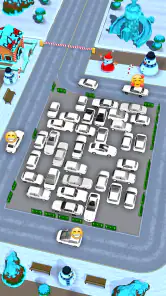
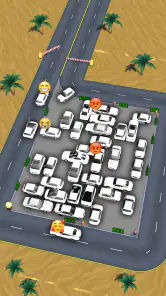
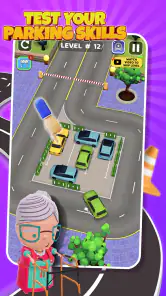
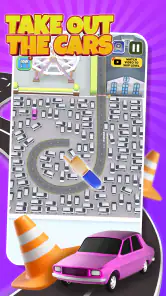
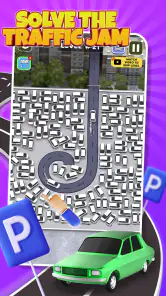
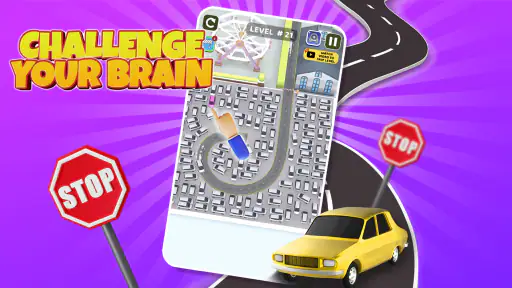
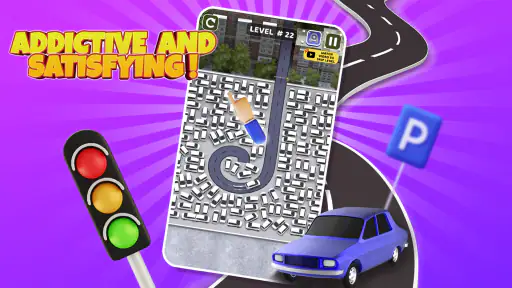
Analysis by Reviewed
When I want a quick puzzle that asks me to think a few moves ahead, I’m more likely to reach for a parking-grid game than a sprawling strategy title. Parking Jam: Car Parking Games is built around that compact idea: work out which vehicles need to move so the one blocking the way can get out. It is easy to understand at a glance, but the challenge comes from spotting the right order rather than simply swiping at whatever is nearest.
Who will enjoy solving the gridlock?
I’d recommend it to anyone who likes small logic puzzles and wants something that can be played in short sessions. You don’t need to learn a complicated ruleset before starting, and the familiar sight of a crowded lot makes the objective immediately clear. It suits a coffee break, a quiet wait, or a few minutes at home when I want an activity that feels more focused than scrolling.
It is less suited to players looking for a deep strategy game with long-term planning, a story, or a broad range of systems. The decision-making is local to the parking layout: each move changes what can pass, and the satisfaction comes from finding a sequence that clears the exit. If that kind of spatial reasoning feels repetitive rather than relaxing, a different puzzle style will probably hold your attention longer.
Getting Started with the Parking Madness
So, I downloaded Parking Jam: Car Parking Games on a whim, thinking it would be just another casual game to pass the time. Boy, was I wrong! It starts simple enough, easing you into the mechanics with a few straightforward levels. But don’t be fooled—this game ramps up the difficulty pretty quickly, and you’ll find your brain bending in ways you never expected.
The Gameplay Experience
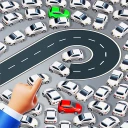
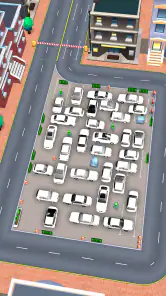
Imagine a jigsaw puzzle where every piece is a car, and you need to move them all to exit the lot. You slide the cars forwards and backwards, trying to unclog the jam without causing any fender benders. It’s a game of strategy that requires forethought and patience. The controls are super intuitive, just swipe to move, but mastering the game is another story.
One of the things I love about this game is the sheer variety of vehicles. You’re not just dealing with the standard sedans and SUVs, oh no. There are buses, trucks, and even limos that add layers of complexity to each level. Plus, the game throws in some nifty obstacles like barriers and one-way lanes to keep you on your toes.
A useful way to approach tougher layouts
When a level starts to feel tangled, I find it helps to stop treating the exit-blocking car as the only problem. First, trace its path out, then identify the vehicle that prevents the first necessary move. That often reveals a short chain of dependencies. Moving cars at random can make the lot look busier without bringing the exit any closer, so I use each swipe to test a specific idea and pause if the layout becomes harder to read.
More From Our News Desk

Weather by Xiaomi Review: Clear at a Glance, Less Clear Up Close

X Under Pressure: Can It Recover When Posting Goes Wrong?

Clash of Clans Is Won Between the Battles

Android Auto Makes the Case for Quieter Car Software

MobiOffice: Transforming Mobile Productivity with Seamless Integration

EA SPORTS FC™ Mobile Soccer: Redefining Mobile Sports Gaming
Long vehicles and one-way lanes reward a little extra patience: check the direction a vehicle can travel and whether it needs more open space than a smaller car. A move that clears one lane may still trap another vehicle against a barrier. Thinking about where each car will end up—not just where it starts—turns the game’s simple controls into a genuine planning exercise.
Graphics and Sound
Visually, Parking Jam doesn’t disappoint. The graphics are vibrant and colorful, perfect for keeping your eyes glued to the screen. It’s not the most graphically intensive game out there, but it’s charming in its simplicity. The sound effects are equally delightful, with satisfying clicks and clunks as you maneuver the cars.
How it compares with other puzzle choices
Compared with word puzzles or trivia games, this one is more visual and spatial: you work with lanes, vehicle lengths, and blocked routes instead of clues or facts. Compared with larger strategy games, it asks for much less commitment and keeps the problem immediately in view. That makes it a handy choice when I want a clear objective and a quick mental workout, though players who prefer changing mechanics or a bigger sense of progression may find a broader puzzle game more rewarding.
A realistic use is a short break when I have a little attention to spare but cannot settle into a long session. I can examine the layout, make a few considered moves, and stop when I need to. If I’m tired or distracted, though, a tricky arrangement can feel more irritating than soothing; this is a better fit when I’m willing to slow down and think rather than play on autopilot.
Choosing the right moment to play
The best time for me to open a parking puzzle is when I have enough focus to look at the whole board, even if I only have a few minutes. On a bus ride or while waiting for someone, I can pick up a layout, plan a route, and put the phone away without needing to remember a plot or a long chain of objectives. That makes the game easier to fit into scattered pockets of time than a strategy game built around longer sessions.
There is a small trade-off: a pause is useful only if I can still see the arrangement clearly when I return. Before setting the game aside mid-level, I try to remember the one or two vehicles that are holding up the exit rather than every move I have made. That keeps a quick interruption from turning into a fresh round of aimless shuffling when I come back.
I would also avoid treating every level as a race. The puzzle is about ordering moves, and a rushed swipe can obscure which lane was actually free. If I notice myself repeating the same move without learning anything from it, I stop and inspect the board from the exit backwards. That reset in perspective is more useful than simply moving faster, especially on layouts with long vehicles or directional restrictions.
Why It’s So Addictive
What really hooks you is the sense of accomplishment after solving a particularly tricky level. It’s that "just one more level" feeling that keeps you playing long past your bedtime. Plus, the game is updated regularly with new content, so there’s always a new puzzle waiting to test your mettle.
Where another puzzle might be a better fit
Parking Jam works best when the challenge is a visible arrangement and the answer comes from rearranging it. Someone who likes matching games may prefer quick pattern recognition and a more immediate, repeatable action; someone who enjoys word puzzles may want the satisfaction of finding a clue or a phrase. Neither is better in general, but they use different kinds of attention. I reach for this game when I want to reason about space, not when I want to unwind with a task that asks very little planning.
For players who want a larger strategic arc, a puzzle with several interacting systems or a campaign may be a better choice. This game’s appeal is precisely that it keeps the question narrow: which vehicle must move next, and what will that unlock? That focus is a strength during a short break, but it can also make the experience feel samey if you want each level to introduce a fundamentally different kind of problem.
It is also worth considering how you react to being stuck. A dense parking layout can be satisfying when I enjoy testing possible sequences, but frustrating if I expect every attempt to make visible progress. I recommend taking a moment to trace the exit route before moving anything. If that kind of careful observation sounds like work rather than play, a less spatial puzzle is likely to suit you better.
What to expect before installing
TapNation’s free strategy game is rated for Everyone, and it has a 4.4 average from around 65,000 ratings, with over 10 million installs. It first appeared on June 25, 2020, and version 6.10.0 requires Android 7.0 or later. Those details make it easy to judge whether it suits your device and audience, but the more important choice is whether you enjoy repeating a clear puzzle loop as the layouts become harder.
The game is free to start, with in-app purchases ranging from $0.49 to $89.99 per item. I’d go in expecting optional spending to be part of the experience and decide for myself whether anything offered is worth buying; there is no need to treat a purchase as a requirement for enjoying the basic parking puzzles. If you prefer games with no in-app purchase options at all, this may not be your ideal pick.
Before installing, I’d ask myself two practical questions: do I enjoy thinking through spatial puzzles, and am I comfortable with a free game that offers optional purchases? The first matters more than whether I usually play strategy games, since this is a compact logic challenge rather than a large-scale tactical experience. The second is a personal boundary; I can simply decide not to spend, but anyone who would rather avoid purchase prompts and options entirely may be happier with a paid puzzle or a different free game.
There is little to learn before starting, which makes it easy to hand the phone to someone else and explain the goal in a sentence. That simplicity can make it suitable for a shared waiting-room moment or a casual turn-taking challenge: one person can suggest a move while another checks what it opens. I would keep the advice collaborative rather than competitive, because the fun is in seeing the solution emerge, not in racing through the board.
One useful habit is to make a mental distinction between a move that opens space and a move that solves a dependency. Shifting a vehicle may create room, but it does not necessarily help the car at the exit. I look for the smallest move that exposes a new route, then reassess instead of committing to a long chain based on an early guess. This is a simple way to keep the board legible and reduce unnecessary back-and-forth.
Another trade-off is that the familiar vehicle theme sets expectations the game does not need to meet as a driving simulator. I would not install it for realistic parking practice, steering, or learning road rules; its cars are puzzle pieces, and the pleasure comes from their position and movement constraints. If you want to practise driving or explore a detailed vehicle environment, a driving game is the more appropriate category. If you want a tidy logic problem dressed in a parking lot, this is much closer to the mark.
Switching to it from another casual puzzle is low effort because the central task is straightforward, but the habit it rewards is specific: observe, plan, move, and reassess. I would not choose it when I want a narrative, a competitive match, or a puzzle that changes its basic rules from level to level. I would choose it when a compact traffic layout sounds more appealing than another round of guessing or matching.
In a world where we’re often overwhelmed by options, Parking Jam: Car Parking Games offers a delightful escape. It’s a perfect blend of challenge and fun, making it a must-have app for puzzle lovers everywhere. Whether you’re looking to kill some time or give your brain a workout, this game delivers in spades. So, are you ready to take on the parking challenge?
Parking Jam: Car Parking Games Frequently Asked Questions
Is Parking Jam: Car Parking Games suitable for short play sessions?
Yes. Parking Jam: Car Parking Games is built around individual parking-lot puzzles, so you can focus on solving a challenge rather than committing to a long, continuous session. The turn-based feel of moving vehicles into open spaces makes it easy to pause between puzzles and return when convenient. It suits players who want a quick strategy game during a break.
Does Parking Jam: Car Parking Games require fast reactions or precise controls?
The main challenge is planning, not reacting quickly. You work out which vehicles need to move and in what order to open a route through the crowded lot. That makes the game approachable for players who prefer thoughtful puzzles to action games that demand rapid inputs. Take time to consider the available moves before shifting cars, especially when a vehicle could block another.
Who developed Parking Jam: Car Parking Games, and what is its age rating?
TapNation developed Parking Jam: Car Parking Games, and it has an Everyone content rating. Its straightforward car-moving puzzles are designed for a broad audience, including families and casual puzzle fans. The rating can help when deciding whether it is appropriate for someone in your household, while adults may also enjoy the planning involved in untangling increasingly challenging parking-lot layouts.
What kind of game is Parking Jam: Car Parking Games?
Parking Jam: Car Parking Games is a strategy puzzle game from TapNation, built around solving a crowded parking-lot challenge. Its central idea is to work out how vehicles can move so the car that needs to leave has a clear route. If you enjoy compact puzzles that reward planning rather than fast reactions, this is the sort of gameplay the title focuses on.
What is the main objective of Parking Jam: Car Parking Games?
Parking Jam: Car Parking Games is a puzzle game where the main objective is to strategically move cars and clear a congested parking lot. The player must slide vehicles around to create a clear path, enabling the main car to exit. Each level increases in difficulty, requiring careful planning and problem-solving skills to progress.
Pros
- Intuitive control system.
- Challenging puzzles.
- Variety of levels.
- Engaging graphics.
- Free to play.
Cons
- Contains ads.
- Limited free levels.
- In-app purchases.
- Occasional bugs.
- Requires internet.
- Category
- Strategy
- Version
- 6.10.0