Story Match
- 446.00
- 4.9
- Installs
- 5.00M
- Price
- Free

Screenshots






Analysis by Reviewed
I approach Story Match as a casual puzzle game with a story-shaped wrapper: it gives a familiar match-three format a reason to feel like more than a string of boards. That combination is appealing when I want a quick bit of play with a narrative thread to return to, rather than a demanding game that needs my full attention. Its cheerful presentation sets an inviting tone, though the puzzle decisions remain the main event.
A gentle fit for everyday breaks
The game is easiest to picture in the small gaps of a day: I might open it while waiting for a kettle to boil, play a level during a commute break, then put my phone away without needing to remember a complicated control scheme. The match-three setup makes it approachable, while the story gives each session a sense of forward motion. If I wanted a deeper narrative with substantial dialogue or a puzzle game built around one-off brainteasers, I’d choose something else; this is better suited to players who enjoy a light story alongside familiar tile matching.
That distinction also helps set expectations. The narrative is part of the appeal, but the central activity is still matching pieces, not making a long series of consequential choices. I’d treat the story as a pleasant reason to continue, rather than expect the kind of branching drama found in a dedicated interactive-fiction game. For a puzzle fan who likes a little context, that balance can work well; for someone seeking a story-first experience, it may feel too slight.
Practical details and a useful trade-off
Developed by LinkDesks Daily Puzzle, this free puzzle game is rated Everyone and has a 4.9 average from around 56,000 ratings, with more than 5 million installs. It was released on October 10, 2024, and version 1.16.1 runs on Android 6.0 or later. In-app purchases range from $0.99 to $99.99 per item, so I’d check the purchase prompts carefully and decide in advance whether I want to spend anything. The free entry point makes it easy to try, but a free-to-play structure can make patience and spending choices part of the experience.
A practical tip is to use the story as a stopping point rather than chasing an extended session. Finish a board, see what the next narrative beat offers, and pause there if you only meant to take a short break. That keeps the game’s progress satisfying without letting a quick distraction quietly take over more time than intended. I’d also be mindful of purchase prompts if handing the device to a child, even though the game’s age rating is Everyone.
Who will enjoy its particular balance
I’d put this in front of someone who already likes swapping tiles but wants a little emotional or narrative framing around the routine. That framing can make a return session feel more purposeful than opening a bare sequence of puzzles, especially if you enjoy seeing a story move along in small pieces. It also suits players who prefer clear, familiar actions over learning a new control system. The story does not need to carry the whole experience; it works best as a companion to the board.
By contrast, I would steer a player toward a different kind of game if they want a puzzle that changes its rules from level to level, a contemplative logic challenge with no time pressure, or a substantial character drama. Story Match’s appeal lies in the overlap between matching and light narrative, not in replacing either with something radically different. That is a useful distinction before installing: if the matching itself is not enjoyable for you, the story wrapper is unlikely to turn every board into a fresh kind of puzzle.
More From Our News Desk

Weather by Xiaomi Review: Clear at a Glance, Less Clear Up Close

X Under Pressure: Can It Recover When Posting Goes Wrong?

Clash of Clans Is Won Between the Battles

Android Auto Makes the Case for Quieter Car Software

MobiOffice: Transforming Mobile Productivity with Seamless Integration

EA SPORTS FC™ Mobile Soccer: Redefining Mobile Sports Gaming
Engaging Storylines at Every Turn
Imagine diving into a world where every decision you make influences the outcome of the story. That’s exactly what Story Match offers. The app combines elements of storytelling with match-3 puzzles, creating a dynamic gameplay experience that keeps you on your toes. Each level you complete unveils a new chapter in the story, and trust me, each one is more captivating than the last.
Gameplay Mechanics: Easy to Learn, Hard to Master
At first glance, the game mechanics might seem familiar if you’ve ever played a match-3 game before. However, Story Match brings a fresh twist to the genre. You’re not just mindlessly matching tiles; each match you make affects the storyline and character development. It’s like being part of a choose-your-own-adventure book, but with colorful tiles and power-ups that add layers of strategy to your decisions.
The controls are intuitive, making it easy for even the most casual gamer to dive right in. But don’t be fooled – the levels get progressively challenging, requiring you to strategize and plan your moves carefully. It’s this balance of simplicity and complexity that makes Story Match so addictive.
What the puzzle loop asks of you
When I settle into a board, I try not to treat every available match as equally valuable. A move that clears a tempting cluster may be less useful than one that sets up a better position for the next turn. That is a small but worthwhile habit in any match-three game: pause for a moment, scan the board, and consider whether a match helps with the immediate objective rather than simply making the screen look busy. It keeps the play thoughtful without turning a casual session into homework.
There is a trade-off here for people who prefer puzzles with a single precise solution. Match-three play generally asks you to assess a changing board, make a sensible choice, and adapt as pieces shift. If that flexible, visual decision-making feels satisfying, the familiar format is a strength. If you would rather solve a fixed logic problem and know that every clue has one answer, a dedicated brainteaser collection is likely a better fit than a story-led tile game.
I also find it helpful to separate two questions after a difficult level: did I enjoy working through the board, and did I want to see what happened next? The first tells you whether the core puzzle suits you; the second tells you whether the narrative is doing its job. If only the story is keeping you there, it may be worth taking a break rather than pushing through frustration. If the board itself is enjoyable, a slower pace can be part of the fun rather than a reason to spend.
Using short sessions well
A realistic routine might be opening the game during a lunch break, finishing one board, and leaving the next story beat for later. That gives the session a natural endpoint and makes it easier to fit around work or errands. On a longer evening, I’d still avoid starting when I know I have to leave immediately: a puzzle may take more attention than a quick glance at the phone, and stopping mid-session is less satisfying than finishing a board cleanly.
For anyone who wonders whether the game works as a quick distraction, my answer is yes, with one qualification: it is quick to understand, not necessarily a promise that every visit will be brief. The story can encourage one-more-level thinking, so setting a personal limit before opening it is more reliable than expecting the game itself to end the session for you. This is especially useful if you are trying to keep phone breaks short.
Visuals and Soundtrack: A Feast for the Senses
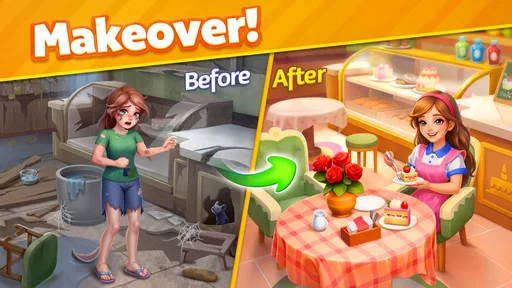
Let’s talk about the visuals. The graphics in Story Match are nothing short of stunning. Each scene is beautifully crafted with vibrant colors and intricate details that make the stories come alive. The characters are well-designed, each with their unique appearance and personality that adds depth to the overall narrative.
And the music? It’s like the cherry on top! The soundtrack complements the gameplay perfectly, enhancing the mood and drawing you deeper into the story. Whether it's a suspenseful moment or a joyous victory, the music adapts to fit the scene perfectly.
How the presentation shapes the mood
What I value in a story-and-puzzle combination is not just attractive artwork, but whether the presentation makes the repeated board-solving feel connected to a wider setting. Here, the colorful scenes and character-focused framing give the game a warmer tone than a plain grid of tiles. That can be a genuine advantage when I want something gentle and approachable, though visual charm cannot replace interesting decisions. If a board becomes repetitive for you, a polished scene may soften the routine but will not change its underlying mechanics.
The sound has a similar role: it supports the mood rather than becoming the reason to play. I’d use the game with audio when I want a more immersive, relaxed session, and silence when I am in a shared space or listening to something else. That is a practical way to enjoy the presentation without making the soundtrack a requirement. A puzzle should still make sense when you are focused on the board, and I would not rely on music or effects to tell me how to solve a level.
For readers deciding whether to play with sound on, the useful question is what kind of break they want. If you like a game to create a small, self-contained atmosphere, the music and scenes help establish one. If you mostly want a quiet matching challenge while waiting somewhere, the core appeal is still there in the visual puzzle loop. Either way, I would judge the game by whether the combination feels pleasant over repeated visits, not by a first impression of colorful art alone.
Compared with other puzzle choices
Compared with a straightforward match-three game, the clearest reason to choose this one is its story framing: there is a narrative thread alongside the familiar act of matching. Compared with a story game, its emphasis is reversed. You spend your attention on boards, with story serving as context and motivation rather than the main form of play. That middle ground will appeal to people who want both in modest portions, but it can disappoint someone who expects the depth of a narrative adventure or the novelty of a puzzle built around unusual rules.
It also differs from a collection of independent logic puzzles. Those games tend to reward careful deduction and often let you put a problem down without feeling you are leaving a continuing plot unfinished. Story Match is better when you want a steady rhythm of familiar play and small narrative steps. If you value variety above all else, rotating between distinct puzzle types may be more satisfying; if you like returning to one recognizable format, its consistency is part of the point.
That comparison helps answer another common decision: is it suitable for someone new to mobile puzzles? I think it is approachable if they are comfortable with simple tile matching and want a soft introduction to casual game sessions. A newcomer who dislikes matching games should start with a different puzzle style rather than assume the story will compensate. Likewise, an experienced player seeking a demanding strategy game may find the accessible presentation more important than deep tactical complexity.
Keeping spending and expectations comfortable
The game is free to start, but optional purchases can reach $99.99 per item. I would not treat that range as a recommendation to buy anything; it is a reason to be deliberate. Before tapping a purchase prompt, ask whether the item solves a problem you actually care about or just promises to move you along faster. If you are happy to play at your own pace, you can try the game first and decide later whether spending has any value for you.
For a family device, the Everyone age rating makes the game broadly approachable, but it does not remove the need for sensible purchase settings and supervision. I would explain to a child that a free download can still present paid options, and I would check how purchases are controlled on the device before handing it over. That advice is not a criticism of the puzzle loop; it is simply a practical way to keep casual play from turning into an unexpected expense.
Another useful expectation is that “free” describes the starting cost, not necessarily every possible route through the experience. A player who dislikes in-app purchases may still prefer to try it without spending, but should be comfortable ignoring prompts and progressing at a pace that feels acceptable. If that kind of choice is irritating to you even when optional, a one-time-purchase game with no purchase decisions may be a calmer match for your habits.
Final Thoughts: A Game Worth Your Time
In a world flooded with mobile games, finding one that offers both entertainment and engagement can be rare. But Story Match manages to do just that. It’s a game that not only entertains but also challenges your mind and captivates your heart. Whether you’re a fan of puzzles, a lover of stories, or just looking for something new to try, I’d say give Story Match a shot. You won’t be disappointed!
My recommendation is more measured than that final burst of enthusiasm: I’d try it if the match-three loop already sounds appealing and a light narrative would make familiar boards more inviting. Its strongest use is as an easy-to-understand game for short breaks, with a colorful setting and a story thread that can encourage you to return. It is not the choice I’d make for a story-first evening, a puzzle that constantly reinvents its rules, or a completely purchase-free experience.
So my advice is simple: install it when you want approachable tile matching with a little atmosphere, play a few sessions at your own pace, and see whether both halves of the experience work for you. Keep an eye on purchase prompts, choose a natural stopping point after a board, and do not feel obliged to continue just because a new story moment is waiting. For the right player, that balance of familiar mechanics and gentle narrative makes it an enjoyable companion to everyday downtime.
Story Match Frequently Asked Questions
Can I play Story Match at my own pace, or does it focus on timed challenges?
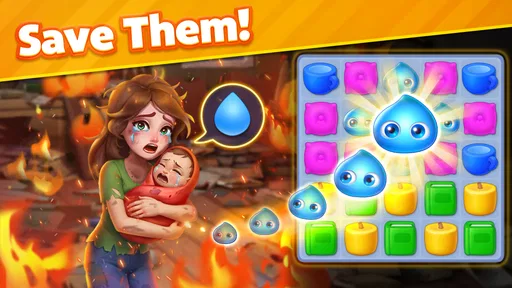
Story Match is a puzzle game centered on matching three items, with a story-focused theme about helping people in need. That makes it a potential fit if you enjoy combining puzzle play with a compassionate narrative. Before downloading, consider whether this basic match-three premise sounds appealing; the game’s central idea is matching items while spreading love and compassion.
What kind of game is Story Match?
Story Match is a puzzle game built around matching three items. Its short store description is “Story Match,” while its summary invites players to match three and help those in need, spreading love and compassion. That gives the game a story-focused, charitable theme alongside its puzzle gameplay, making it a choice for players who enjoy matching challenges with a narrative purpose.
Is Story Match free to download, and does it include in-app purchases?
Story Match is free to download, so you can try its puzzle gameplay without an upfront purchase. It also offers optional in-app purchases, with prices ranging from $0.99 to $99.99 per item. Before buying anything, check the purchase details shown in your app store and on your device, especially if children may be using the game.
What is Story Match and how does it work?
Story Match is an engaging app that blends social networking with storytelling. Users can create and share short stories, join communities, and connect with other story enthusiasts. The app uses AI to help match users with similar interests, enhancing the storytelling experience by connecting like-minded individuals.
Is Story Match available for both Android and iOS devices?
Yes, Story Match is available for both Android and iOS devices. Users can download the app from the Google Play Store for Android devices or the Apple App Store for iOS devices. The app is designed to work seamlessly across different platforms, ensuring a consistent experience for all users.
Pros
- Engaging storytelling elements.
- Interactive choices enhance gameplay.
- Beautiful and immersive graphics.
- Wide variety of story genres.
- Frequent updates with new content.
Cons
- In-app purchases can be expensive.
- Requires stable internet connection.
- Limited free content available.
- Advertisements can be intrusive.
- Some stories are too short.