Stardew Valley
- 13.36K
- 4.6
- Installs
- 1.00M
- Price
- $4.99

Screenshots
Analysis by Reviewed
My favorite thing about Stardew Valley is how it turns an ordinary day into a small set of meaningful choices. I can spend that day looking after crops, meeting someone in town, gathering materials, or exploring, and the game rarely insists that I do everything at once. That freedom is a big part of its charm, but it also asks me to decide what I want from a session. If you enjoy making your own plans rather than following a mission marker from one task to the next, this role-playing game has a lovely way of making even a brief visit feel like progress.
Welcome to Your New Life
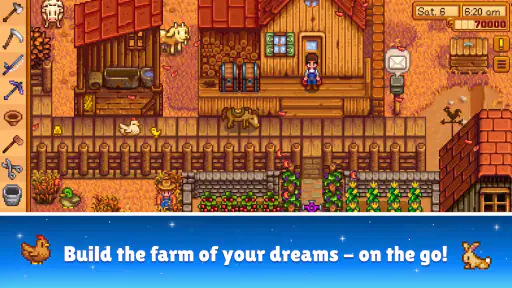
In Stardew Valley, you inherit your grandfather’s old farm plot in a place called Pelican Town. Armed with some tools and a few coins, you set out to begin your new life. The game kicks off as you arrive at your new home, and from there, the world is pretty much your oyster. You can farm, fish, mine, or even make friends with the quirky townsfolk. The freedom this game offers is refreshingly liberating.
A Farming Rhythm That Rewards Planning
The farm is the strongest reason I keep coming back. A day gives me a compact window to choose what matters: water crops, gather materials, visit a neighbor, or head out exploring. That choice makes each session feel purposeful, but it also means I have to accept that I cannot do everything before bedtime. I’ve found it helpful to decide on one main goal before setting off, especially when a crop needs attention or I want to reach a particular place.
There is a useful trade-off in how I spend early days. Planting more crops can bring in more income, yet every extra row adds watering work until tools and farm improvements make the routine easier. I prefer expanding gradually instead of filling every available patch at once. It leaves time for the rest of the valley and prevents the farm from turning into a chore. That balance is a good example of why this role-playing game feels more involved than a simple planting-and-harvesting loop.
The Addictive Allure of Farming
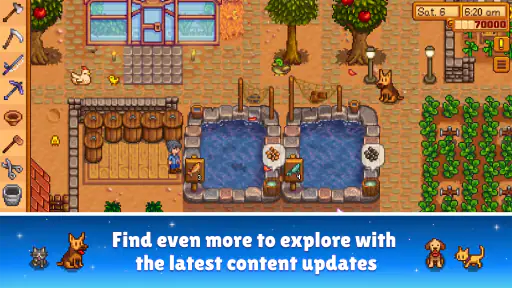
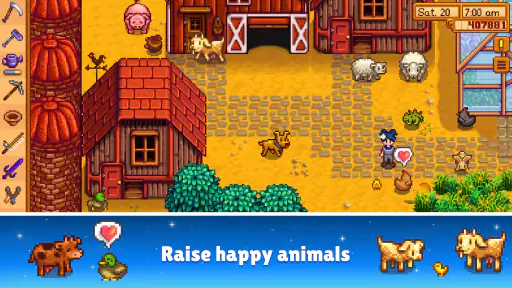
Now, I know what you’re thinking: farming, really? But trust me, there’s something incredibly satisfying about planting seeds, watering them daily, and watching them grow into valuable crops. It’s like a zen garden experience but with digital veggies. Plus, as you progress, you can upgrade tools, expand your farm, and even raise livestock! It’s a perfect blend of relaxing yet engaging gameplay.
One practical habit I recommend is to treat the farm layout as a workload decision, not just a decorating choice. Leaving open space can make movement easier and keep daily chores manageable, while adding another planting area commits you to recurring attention. I also like to separate “must do today” from “nice if there’s time”: crop care comes first when it is due, while optional errands can wait. That simple priority keeps the game’s open structure from turning into a personal checklist that feels more demanding than the game itself.
Making Short Sessions Count
For an ordinary evening, I might play through one in-game day while waiting for dinner or winding down before bed. I choose a manageable task, such as tending crops and checking nearby areas, rather than beginning a long trip I may not want to finish. The calendar and recurring farm duties give me natural stopping points, although the “one more day” feeling can make a quick check-in last longer than planned.
More From Our News Desk

Clash of Clans Is Won Between the Battles

Android Auto Makes the Case for Quieter Car Software

MobiOffice: Transforming Mobile Productivity with Seamless Integration

EA SPORTS FC™ Mobile Soccer: Redefining Mobile Sports Gaming

How Microsoft OneDrive Became a Mobile Productivity Giant

How Google Translate Breaks Language Barriers Effortlessly
On a phone, touch controls make this a different experience from playing with a controller or keyboard. I would take a little time to get comfortable with movement and actions before committing to a risky trip into the mines. A small planning habit helps: keep a clear purpose for the outing and avoid filling the day with errands that send you in opposite directions. This is especially useful when you want to play in brief bursts rather than settle in for a longer session.
A good first mobile session is one where you experiment without pressure: walk around the farm, learn how your chosen controls handle everyday actions, and keep the day’s plan close to home. I would not use an early session to judge the whole game by how quickly I can earn or explore. Its appeal builds as routines become familiar, and a little patience with the interface makes later trips feel less fussy. If a control method feels awkward, adjusting how you approach tasks—rather than rushing through them—can make the phone version much more comfortable.
It also helps to think of an in-game day as a complete unit instead of a timer to beat. If I have only a few minutes in real life, I choose work that can be finished near the farm; if I have a longer stretch, I can commit to traveling farther and handling a more ambitious goal. That distinction answers a common practical concern: the game can fit short visits, but it is not automatically a perfect “play for thirty seconds” experience. The daily cycle gives structure, while the freedom to choose a modest task makes shorter play possible.
More Than Just a Farm
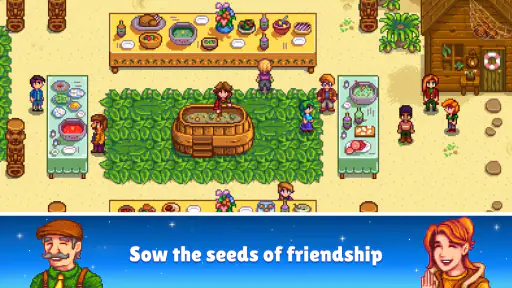
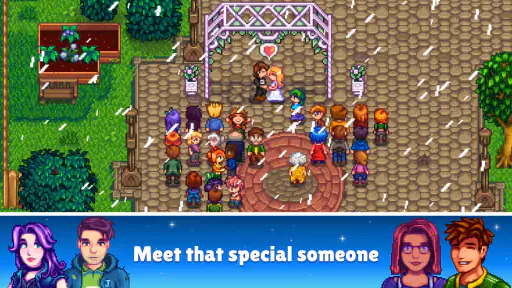
What makes Stardew Valley truly special is the depth of its world. Besides the farming, there’s a thriving community waiting to be explored. Each character in Pelican Town has their own story, personality, and schedule. As you interact with them, you can form friendships, and even romantic relationships, which adds another layer of immersion to the game. It’s these small town dynamics that keep the game feeling alive and vibrant.
Getting to know people works best when it becomes part of a route instead of a separate checklist. I can talk to someone while passing through town, then continue with my day, rather than repeatedly crossing the map just to make a social visit. If you enjoy character-driven role-playing games, that everyday contact gives the farming a human center. If you mainly want fast dialogue and a tightly guided story, though, the slower pace and open-ended routine may feel less compelling.
That route-based approach is useful for players who want to meet the cast without letting social visits swallow every session. I might combine a town stop with another reason to be there, or simply greet people I happen to pass. It is a small change in mindset, but it keeps relationships feeling like part of village life instead of another bar to fill. The trade-off is that anyone hoping for a tightly paced, dialogue-led narrative should expect a looser experience: the game lets curiosity set the order in which its stories unfold.
Exploration and Adventure
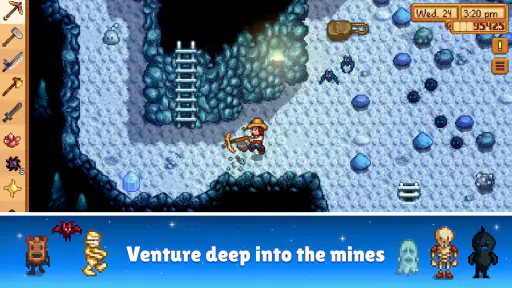
For those craving adventure, the game doesn’t disappoint. You can delve into the mines to fight monsters and find treasures. Each level you descend into presents new challenges and rewards. It’s a fun diversion from the day-to-day farming activities and adds a nice balance to the gameplay.
The mines also make a good test of how much preparation suits you. I try not to treat a trip as an afterthought when the day is nearly over: decide whether gathering resources or pushing deeper is the goal, and leave enough room for the return. The change from calm farm chores to combat gives the game welcome variety, but it may not suit someone who wants a purely peaceful simulator. Players who prefer a focused action RPG may also find the mining is only one strand in a much broader routine.
When I want a lower-pressure outing, I think about what would make the trip worthwhile even if I do not reach a major milestone. A resource-gathering run can still be useful, while a push into unfamiliar areas asks for more attention and a willingness to accept risk. This is one of the clearest ways the game differs from a conventional action RPG: combat is available, but it does not take over the whole experience. If fighting is your main reason to play, the mines may feel like a side activity rather than the central attraction.
What the Mobile Version Suits
ConcernedApe’s mobile release is a paid role-playing game, priced at $4.99, and its content rating is Everyone 10+. It has a 4.6 average from around 177,000 ratings, with over 1 million installs; that level of interest makes sense for a game people can return to at their own pace. The current version is 1.6.14.10 and it runs on Android 5.0 or later. I’d consider it a strong choice if you want a substantial solo game rather than a quick competitive match or a short, linear adventure.
It is not the best fit if you dislike repeating daily tasks, managing several goals, or making your own plans. The usual alternatives in this role-playing category often put more weight on combat, a directed plot, or short missions; this one gives farming and ordinary village life equal room alongside exploration. That blend is its appeal, but it asks for patience. The game was released on March 13, 2019, and its staying power comes less from urgency than from the pleasure of gradually shaping a life in the valley.
For a day-to-day example, imagine opening the game during a quiet break and choosing one practical job: tend the crops, then use any spare time to look around nearby. On another evening, you might head to town because you want to build a connection, or plan an outing for resources when you can give the trip more attention. The value is not that every session is dramatic; it is that different kinds of progress remain available. I find that variety more satisfying than a game built around repeating the same combat encounter, though players who need a clear chain of urgent objectives may prefer that more directed structure.
The price makes most sense if you expect to return to it rather than finish it in a single focused burst. Its appeal comes from living with the routine and gradually choosing new priorities, so someone who wants a short, tightly plotted experience may get less from it. ConcernedApe is the developer behind this mobile role-playing game, and the release is aimed at players comfortable with its Everyone 10+ content rating. Those details help set expectations, but the main question is personal: do you want an open-ended farm-and-village life, or a game that tells you exactly what to do next?
One useful way to avoid losing momentum is to give each session a loose theme: farm maintenance, meeting people, or exploration. I do not mean following a rigid schedule; the point is simply to make a choice before the day fills with little distractions. When plans change, that is part of the fun, but a starting intention helps me judge whether I have enough time for a trip away from home. It also makes it easier to stop at a satisfying point without feeling that I left several unrelated chores unfinished.
A Feast for the Senses
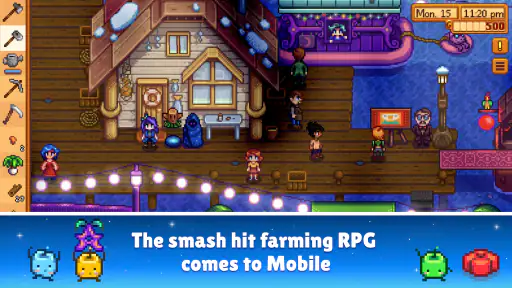
The pixel art style is just delightful. It’s colorful, charming, and full of character. Coupled with the soothing soundtrack, the game provides an atmospheric experience that’s hard to put down. It’s like stepping into a lovingly crafted storybook world that never feels dull.
That gentle presentation is a real strength when I want to unwind, but it should not be mistaken for a game with no demands. Choosing how to use the day, keeping farm work under control, and deciding when to explore still require attention. The calm look and sound soften those decisions rather than removing them. I like that contrast: the valley feels welcoming, while the underlying routine gives me reasons to return and refine how I spend my time.
Who Will Feel at Home in the Valley
I would recommend it most to players who enjoy self-directed progress, gentle routines, and a world that rewards curiosity without making every moment urgent. It is especially appealing if you like alternating between practical farm work, small social encounters, and occasional adventure. The mobile version suits someone who can settle into a day at a time and is happy to learn by trying things, rather than needing a tutorial-like objective to dictate every move.
I would steer away if repetitive upkeep quickly irritates you, if you want combat to be the main event, or if you prefer a story that unfolds in a fixed order. The farm’s steady chores can become work if you expand too quickly, and the freedom to choose can feel like a lack of direction when you are unsure what matters. For those players, a more combat-focused role-playing game or a linear adventure with clear missions is likely a better match. Here, the pleasure is in shaping your own priorities, not racing toward a prescribed ending.
For me, the best recommendation is a simple one: try it when you are in the mood to build a routine, not when you want instant spectacle. The farm gives each day a useful anchor, while the town and mines provide alternatives when that routine needs a change. Once I stopped treating every activity as something I had to complete, the open-ended design became easier to enjoy. That balance—steady responsibilities with room to wander—is what makes this a distinctive mobile role-playing game and a purchase I would suggest to the right kind of player.
Stardew Valley Frequently Asked Questions
Is Stardew Valley a good choice if I want a game I can play in short sessions?
It can be. Stardew Valley is organized around in-game days, so you can use a session to tend crops, visit town, fish, or work on another small goal. There is plenty to discover over time, but you do not need to make every session a major milestone. Its flexible activities make it easy to return to your farm when you have time.
How much storage space does Stardew Valley need, and will it run on my device?
The Android version requires Android 5.0 or later, which is the main compatibility check to make before downloading on that platform. If your device meets that requirement, you can consider whether it is a comfortable fit for playing a detailed farming and role-playing game on a phone or tablet. Checking available storage on your device before installing is also a sensible step.
Is Stardew Valley suitable for players who want a calm, unhurried game?
Yes, Stardew Valley works well for players who enjoy setting their own pace. You can spend a day tending crops, fishing, crafting, exploring, or getting to know the townspeople, rather than following one fixed route through the game. There are also quests and seasonal events to add direction when you want it, so the experience can feel peaceful without becoming aimless.
What should I know about the cost and age rating before downloading Stardew Valley?
Stardew Valley is a paid game, priced at $4.99, rather than a free download with optional purchases. It is rated Everyone 10+, which can help families decide whether it suits a younger player. The game is a role-playing farming experience, centered on running a farm, exploring, and interacting with a town, so it is a different kind of choice from a fast-paced action game.
What is Stardew Valley about and what can players expect from it?
Stardew Valley is a farming simulation role-playing game where players take on the role of a character who inherits a run-down farm. The game offers a rich experience with farming, fishing, crafting, and building relationships with townspeople. Players can expect a relaxing yet engaging gameplay with endless possibilities for creativity and exploration, as well as seasonal events and quests.
Pros
- Engaging and immersive gameplay.
- Rich storyline with diverse characters.
- Beautiful pixel art graphics.
- Multiple farming
- crafting
- and social activities.
- Regular updates and community events.
Cons
- Time-consuming for casual players.
- Limited multiplayer options.
- Can be overwhelming for new players.
- Some tasks can feel repetitive.
- Controls can be tricky on smaller screens.

- Category
- Role Playing
- Version
- 1.6.14.10