STAR: Super Tricky Amazing Run
- 4.87K
- 4.2
- Installs
- 50.00M
- Price
- Free
Screenshots
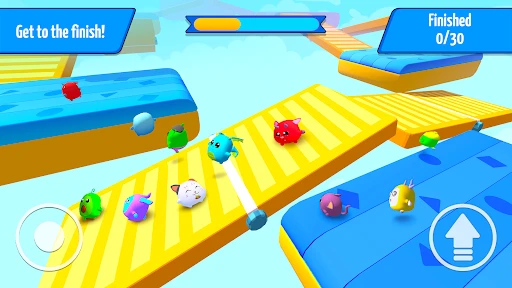
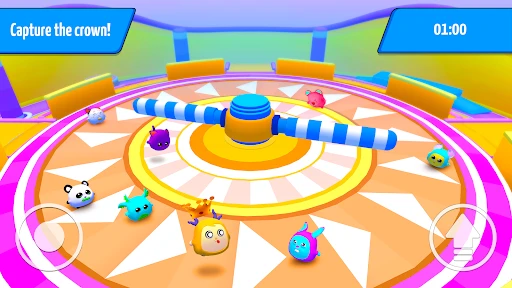
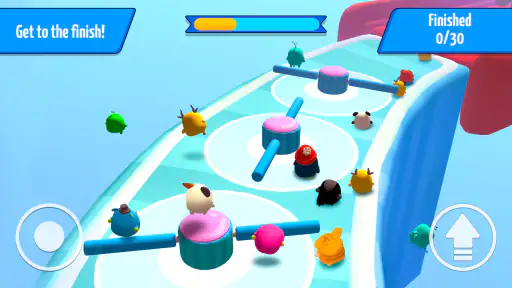
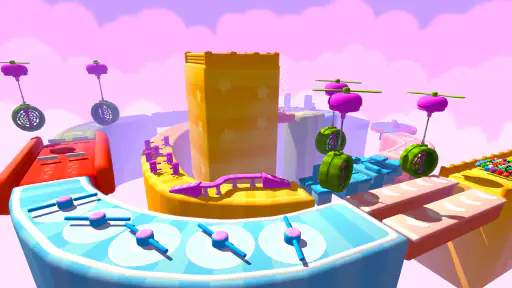
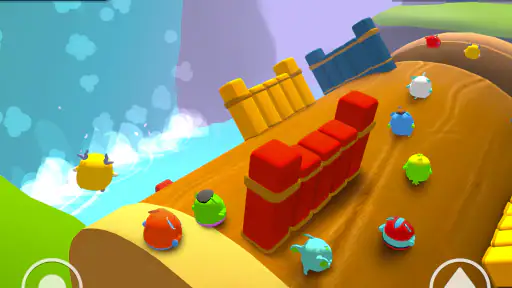
Analysis by Reviewed
My first impression of STAR: Super Tricky Amazing Run is that it makes a strong case for a quick try, not an automatic permanent spot on my phone. Its appeal is immediate: obstacle-course action, comic setbacks, and the temptation to try again after a near miss. The real test comes later, when the surprises become familiar and I have to decide whether the runs themselves are still fun.
The first few sessions: quick laughs and quick retries
In my experience, this arcade game is best approached with a light mood. The awkward falls and sudden reversals are part of the entertainment, not interruptions to a serious competition. I’d open it while waiting for a ride or taking a short break, when I want something immediate rather than a story or a long campaign. A useful habit is to stop after a frustrating run, take a moment, and return with fresh attention; rapid retries can turn a funny stumble into needless irritation.
The premise is simple enough to understand without a long warm-up, which helps if you’re handing the phone to a friend or younger family member. The content rating is Everyone, though a child’s comfort with losing and trying again still depends on the child. I’d also keep in mind that purchases are available: the game is free to start, with in-app items priced from $0.99 to $99.99 each, so it’s sensible to check purchase settings before sharing a device.
The Gameplay: A Wild Ride
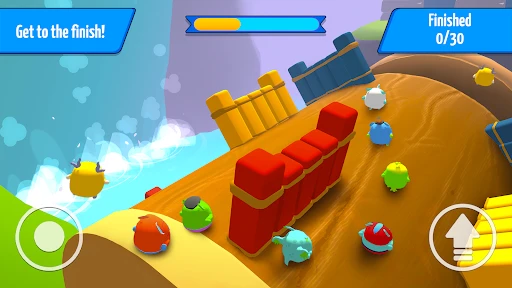
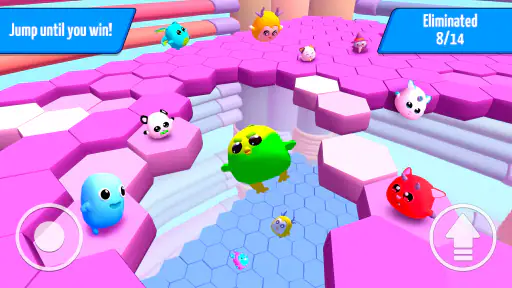
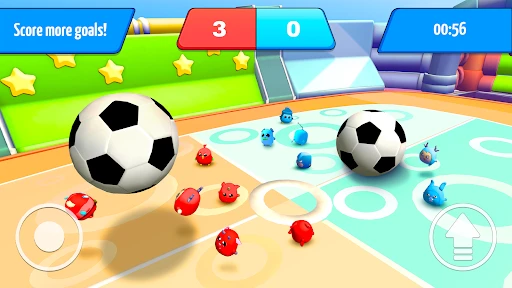
Right off the bat, the first thing you'll notice about STAR: Super Tricky Amazing Run is its vibrant and whimsical design. The colors pop, and the characters have this quirky charm that makes you feel like you're in some sort of animated wonderland. But don’t let the cute graphics fool you. This game is all about challenging your reflexes and agility.
The premise is simple: navigate through a series of unpredictable obstacles and try to reach the finish line without getting knocked out. Sounds easy, right? But trust me, these levels are packed with traps, moving platforms, and unexpected twists that make each run feel unique. And just when you think you've got the hang of it, the game throws in a curveball to keep you guessing.
A Game of Strategy and Luck
One of the things I absolutely love about this game is the blend of strategy and luck. Sure, you can plan your moves and try to anticipate the obstacles, but sometimes, it's all about going with the flow and adapting on the fly. It's a refreshing change from games that are overly predictable, and it keeps the excitement levels sky high.
As you progress, you'll unlock different characters, each with their own unique abilities. This adds a layer of strategy, as you'll need to choose the right character for each level to maximize your chances of success. It's like a puzzle within a puzzle, and I found it incredibly satisfying to figure out the best combinations.
More From Our News Desk

Clash of Clans Is Won Between the Battles

Android Auto Makes the Case for Quieter Car Software

MobiOffice: Transforming Mobile Productivity with Seamless Integration

EA SPORTS FC™ Mobile Soccer: Redefining Mobile Sports Gaming

How Microsoft OneDrive Became a Mobile Productivity Giant

How Google Translate Breaks Language Barriers Effortlessly
Why You’ll Get Hooked
Let's be honest, the real reason we play games is for that sweet sense of accomplishment when we finally conquer a tough level. And STAR: Super Tricky Amazing Run delivers that in spades. The difficulty curve is just right, giving you enough of a challenge without feeling impossible.
The game also features a social aspect, allowing you to compete with friends and see who can rack up the highest score. It’s a great way to add some friendly competition and motivation to keep improving. Plus, the bragging rights are a nice bonus!
Who will enjoy it, and who may prefer something else
I’d recommend this to someone who likes brief, lively rounds and doesn’t mind a degree of unpredictability. It suits casual players who want an arcade diversion more than people looking for deep progression, precise control, or a carefully balanced competitive game. Compared with a conventional high-score arcade title, the knockout-race setup puts more emphasis on reacting to hazards and recovering from mishaps than on simply repeating a score route. If you prefer a calm puzzle or a game where practice reliably removes randomness, another genre will probably fit better.
For a practical example, I can imagine playing a few rounds during a lunch break, then sharing the phone with a friend to see who handles the obstacles more smoothly. That works best when both players enjoy laughing at failures; it is less appealing if one person gets annoyed by losing or if you have only a moment and need to stop mid-session. The social competition gives play a reason to return, but it is most valuable with friends who are already interested rather than as a substitute for a larger community or a long-term goal.
Small habits that make short sessions work
I find this kind of race easier to enjoy when I set a small aim before starting: get through a difficult stretch more cleanly, make a better decision around a hazard, or simply see whether a different character changes how I approach a run. That gives a short session some shape without pretending every attempt will produce a clear improvement. It also helps me notice when I’m repeating runs out of frustration rather than because I’m still having fun.
If I’m passing the phone around, I’d agree on a simple turn-taking rule before the first run. The game’s appeal is partly in watching someone else misjudge an obstacle, but an informal contest can become irritating if players disagree about whose turn it is or what counts as a fair comparison. I’d keep the challenge friendly and brief, especially with younger players, and treat a shared laugh as the point rather than insisting on a definitive winner.
Keeping the game in rotation
After the novelty fades, I’d judge its staying power by whether I still enjoy the moment-to-moment runs, not by how many characters I have unlocked. A small personal challenge—trying a different character or aiming to finish a tricky section more consistently—can make a session feel purposeful without turning play into homework. Since luck remains part of the appeal, I wouldn’t expect every attempt to feel like measurable progress. That is a strength when I want surprises, and a weakness when I want control.
The main maintenance burden is modest: it is a mobile arcade game rather than a commitment that demands a daily routine. Still, free-to-play purchasing options can make casual play feel less casual if you browse items impulsively, so I’d decide in advance whether I’m happy to spend nothing. The game is from CASUAL AZUR GAMES, is free to download, and has a 4.2 average from around 236,000 ratings, with over 50 million installs. It is rated for Everyone; the current version is 2.1.0.5 and requires Android 8.0 or later. Those details make it easy to place, but they don’t guarantee that its style will suit every player.
What to expect from a longer-term habit
For recurring value, I’d think of it as a game to revisit when I want quick action, not something that needs a daily streak or a fixed schedule to make sense. That distinction matters if my phone is already crowded with games that compete for regular attention. STAR has a clear place in a rotation when I want a lively change of pace; if I’m looking for a deeper arc that rewards long sessions and careful planning, I’d reach for a different kind of game instead.
One practical question is whether it works as a shared family or friend activity. I think it can, provided the group enjoys playful competition and doesn’t mind that a run can go wrong. The Everyone rating makes it broadly suitable by content category, but it doesn’t mean every child will enjoy the frustration of losing or retrying. I’d let the person playing decide whether the slapstick failures are funny or simply annoying, and I’d keep purchase settings in mind before handing over a device.
Another useful question is whether paying is necessary to enjoy it. I’d start with the free version and decide based on the actual runs, rather than treating purchases as a required part of getting started. The available item prices span from $0.99 to $99.99, so I’d be deliberate about any purchase and avoid browsing spending options when I’m only looking for a quick distraction. If I want a strictly no-spend habit, setting that expectation early makes the game easier to keep casual.
When the novelty starts to wear thin
The same unpredictability that gives a run its comic energy can also be the source of fatigue. If I lose because I misread a hazard, I can take that as a reason to adjust next time. If a setback feels arbitrary, though, another retry may not feel like learning; it may feel like rolling the dice again. That tension is central to the game’s appeal, so I wouldn’t recommend it to someone who needs every failure to teach a precise lesson.
There is also a limit to how much a social score challenge can carry the experience. Friends can make a short session more entertaining, but if nobody around me wants to play, I’d have to find motivation in the runs themselves. That can be enough for occasional visits, yet players who depend on a deep solo progression path may find the loop too light. I’d see the social element as a welcome extra, not a reason to expect a large ongoing community or a structured competitive scene.
Compared with many familiar arcade alternatives, this is less about mastering one repeatable route and more about handling a race whose obstacles can disrupt a plan. That makes it a better pick when I want lively reactions and funny reversals than when I want to refine a score through precise repetition. A high-score game may suit me better on a day when I’m in the mood to practice the same pattern; a calm puzzle is a better fit when I want control and reflection. Choosing by mood is more likely to keep STAR enjoyable than expecting it to cover every kind of play.
My lasting verdict is that STAR: Super Tricky Amazing Run earns a place as an occasional pick if silly obstacle runs and friendly score-chasing are your kind of fun. I wouldn’t choose it as my main game for deep strategy or a predictable skill ladder, and repeated surprises may eventually become repetitive. But when I want a colorful, low-commitment arcade session and can laugh off a bad run, it has a clear use. I’d try it free, keep spending optional, and let the enjoyment of the actual rounds—not the first burst of novelty—decide whether it stays installed.
STAR: Super Tricky Amazing Run Frequently Asked Questions
Does STAR: Super Tricky Amazing Run have a large download community?
STAR: Super Tricky Amazing Run has attracted a substantial player community, which may be reassuring if you enjoy popular arcade games. Its broad reach suggests that many people have tried the knockout-race concept, though popularity alone does not guarantee that every player will enjoy it. The questions below cover its audience, gameplay, costs, connectivity, and device compatibility.
What should I expect from the knockout-race concept before downloading?
The game’s central idea is a knockout race built around running, stumbling, and falling. That playful, chaotic premise is a good fit for players who enjoy arcade challenges and do not mind a little slapstick competition. If you are looking for a slower or more story-focused experience, this race-based style may be less appealing.
Is STAR: Super Tricky Amazing Run suitable for younger players?
STAR: Super Tricky Amazing Run is an arcade game with an Everyone age rating, making it suitable for a broad audience. Its store summary describes a knockout race where players run, stumble, and fall, so the focus is on playful obstacle-course competition. Parents can still review the game together with younger players and decide whether its style is a good fit.
Who develops STAR: Super Tricky Amazing Run, and how popular is it?
STAR: Super Tricky Amazing Run is developed by CASUAL AZUR GAMES. It has an average rating of 4.2 from around 236,000 ratings, with about 4,900 written reviews and over 50 million installs. Those figures point to a widely played arcade game, though individual experiences can vary depending on what a player enjoys.
What is STAR: Super Tricky Amazing Run?
STAR: Super Tricky Amazing Run is a thrilling and adventurous mobile game available for both Android and iOS platforms. It offers players a unique and challenging experience as they navigate through various obstacle courses. The game is designed to test your reflexes and timing, making it an exciting choice for those who love action-packed gameplay.
Pros
- Intuitive controls make gameplay easy.
- Highly engaging multiplayer mode.
- Vibrant graphics enhance user experience.
- Regular updates with new content.
- Challenging levels keep players hooked.
Cons
- Contains in-app purchases.
- Requires internet connection to play.
- Occasional lag in multiplayer mode.
- Ads can be intrusive at times.
- Limited customization options.
- Category
- Arcade
- Version
- 2.1.0.5













