Pusoy Go-Competitive 13 Cards
- 287.00
- 3.9
- Installs
- 5.00M
- Price
- Free
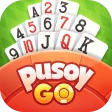
Screenshots





Analysis by Reviewed
I approached Pusoy Go-Competitive 13 Cards as a quick card-game option rather than something to play only when I have a long stretch of free time. Its focus is the familiar thirteen-card Pusoy format, but the experience is built for people who want repeated rounds, quick decisions, and a competitive feel on a phone. After spending time with it, I found that the main appeal is not a huge collection of distractions; it is the simple loop of arranging a hand, judging risk, and trying to read the table better than the other players.
That makes it easy to recommend to someone who already knows Pusoy or enjoys traditional card games with a little more pressure than solitaire. It is less suitable for a player looking for a deep tutorial, a relaxed offline pastime, or a broad card-game collection in one polished package. The game is free to install, although optional purchases range from 49 cents to $99.99 per item, so I would approach the shop carefully and decide in advance whether I am comfortable spending money during play.
How a normal session feels from the first hand
The basic workflow is straightforward: open a round, examine the thirteen cards, arrange them into legal groups, and make a decision before the table moves on. The interesting part is that the hand is not solved simply by finding the strongest combination. I also have to consider how the cards should be divided between the front, middle, and back portions of the hand, while keeping the arrangement valid. A powerful back group can be wasted if the other sections become too weak or break the required order.
I found it useful to slow down during the first few hands instead of trying to copy the fastest players. The first question I ask is whether the hand naturally suggests a pair-based arrangement, several connected cards, or a stronger combination that should be protected. Only after that do I decide how much strength to place in each section. This habit prevents a common mistake: building one impressive group and leaving the rest of the hand unable to compete.
The game works best in short sessions. A single round gives me enough time to focus, while several rounds create a rhythm in which I start noticing how often I overvalue a high card or chase a combination that is unlikely to improve. That repeatable structure is one of the strongest reasons to keep the game installed. I can play while waiting for an appointment or during a short break without needing to remember a large campaign or a complicated set of objectives.
For a newcomer, the most important practical issue is learning the hand-ranking logic and the arrangement rules before worrying about speed. Pusoy is unforgiving when a hand is set incorrectly. A player who understands the legal structure will usually improve faster than someone who simply taps through every decision. I would recommend playing cautiously at first, reviewing why a hand worked or failed, and then gradually reducing hesitation.
What I look for before committing a hand
My repeatable routine begins with sorting the cards mentally into three groups: cards that clearly belong together, cards that might support more than one plan, and cards that are mainly useful as flexible fillers. The middle group deserves the most attention. A card that can complete a straight, support a pair, or strengthen a smaller group should not be assigned too early. Keeping that flexibility for a few extra seconds often produces a better overall arrangement.
I also compare the strength of the three sections instead of judging them independently. A hand with one excellent combination may look attractive at first, but it can be weaker than a balanced hand that gives me a realistic chance in every comparison. This is a subtle difference between playing for visual satisfaction and playing for consistent results. When I am unsure, I prefer an arrangement that remains competitive across the whole hand rather than one that depends on a single spectacular group.
Another useful habit is to treat the first round as information gathering. I pay attention to the pace of the table and to how aggressively opponents appear to arrange their hands. I do not assume that a quick move means a strong hand, but the tempo helps me decide whether I should spend more time checking my structure or accept a safer arrangement. This is not a guaranteed reading system; it is simply a way to avoid making every decision in isolation.
Settings and phone habits worth checking
Before playing seriously, I would check the available in-game settings and the phone’s own sound and notification controls. Card games depend heavily on concentration, and an unnecessary alert can interrupt the few seconds in which I am comparing possible arrangements. I prefer a quiet setup, especially when I am trying to learn rather than casually tapping through a round.
I also recommend checking how the game displays cards, buttons, and confirmation actions on your particular screen. A layout that feels comfortable on a large phone may feel cramped on a smaller one. If a control is easy to hit accidentally, I slow down around that part of the interface instead of relying on rapid taps. In a game where one mistaken action can affect the entire hand, careful touch habits matter more than saving a moment.
The current version is 3.4.26, and the game requires Android 6.0 or later. That makes it accessible on a wide range of Android phones, but compatibility alone does not guarantee an equally comfortable experience on every device. I would keep the system updated where possible, close distracting apps, and avoid playing with a nearly exhausted battery if I am entering a longer session. Those are small steps, but they reduce the chance that a technical interruption ruins a carefully arranged hand.
I would also review purchase controls before letting another person use the phone, particularly a child or younger family member. The content rating is Teen, and the optional items can cost as much as $99.99 individually. I do not see spending as necessary to understand the card play, but it is still sensible to know where purchase prompts appear and to keep the payment process under control.
Faster play without throwing away judgment
Speed comes from recognizing patterns, not from tapping as quickly as possible. After several rounds, I began identifying hands that almost arrange themselves. When the cards contain an obvious strong group and a clear supporting structure, I can move quickly because the number of sensible options is limited. When several cards serve multiple purposes, I deliberately stay slower. The fastest players are not necessarily rushing every hand; they are spending time only where the decision is genuinely difficult.
A useful shortcut is to identify the least flexible cards first. Cards that do not connect well with the rest of the hand can often be assigned early, while connected cards remain available for a more valuable combination. This reduces the mental clutter of considering every possible arrangement at once. It also helps me avoid breaking a useful sequence merely to create a pair that looks stronger in isolation.
I try to make a provisional arrangement, then challenge it once. Instead of repeatedly rebuilding the hand, I ask whether moving one card would improve the weakest section without making another section illegal or clearly inferior. If the answer is no, I stop searching. This habit is especially helpful on a phone because endless rearranging can lead to confusion rather than better play.
Another faster pattern is to separate “certain” decisions from “hopeful” ones. A certain decision is supported by cards already in the hand. A hopeful decision depends on an unlikely improvement or on assuming that opponents have weak arrangements. I give priority to the certain structure unless the hopeful option offers a clear strategic reason. This keeps the game from turning into a series of attractive but fragile guesses.
These habits do not remove the competitive element. They make it easier to reserve attention for the parts that actually matter: balancing the hand, preserving flexibility, and avoiding an illegal or badly ordered setup. I found that this approach made the game feel calmer without making it dull.
Where experienced play still reaches its limits
No arrangement method can eliminate uncertainty. The cards determine what is possible, and opponents may produce stronger hands even when my structure is sound. That is important because the game can feel unfair if I judge every loss as a personal mistake. I try to separate a poor decision from a reasonable arrangement that simply met a better hand.
There is also a limit to reading opponents through pace or presentation. A quick move may reflect confidence, familiarity, or simply a player who does not want to spend time optimizing. I use those signals only as background context. I would not recommend building a strategy around assumptions about another player’s personality or intentions.
The competitive format can also be demanding for people who prefer completely relaxed card games. Even when the rules are familiar, the pressure to arrange the hand correctly makes each turn more involved than a casual matching game. If I want something I can play with almost no concentration, a simpler solitaire-style alternative is a better choice. If I want a wider selection of classic games rather than one central format, a general card-game collection may offer more variety.
On the other hand, players who already enjoy Pusoy may appreciate the focused design more than a broad collection. The game gives the thirteen-card format room to breathe, and repeated rounds make improvement feel tangible. I can work on one specific weakness, such as overloading the back group or leaving the front group too weak, and then see whether my next hands reflect better judgment.
The rating sits at 3.9 from around 84 thousand ratings, while the game has passed 5 million installs. Those figures suggest a sizable audience, but they do not guarantee that every player will enjoy the same aspects I did. I would treat the popularity as a reason to try it, not as proof that it will suit someone who dislikes competitive card play or purchase prompts.
Who should install it, and who should skip it
I think this is a good fit for players who know the basic Pusoy rules, enjoy analyzing card arrangements, and want a free mobile game for short competitive sessions. It is also useful for someone learning to think in terms of balance rather than simply collecting the strongest visible combination. The repeated format creates a natural practice loop: arrange, compare the result, notice the weak section, and adjust the next hand.
I would be more cautious recommending it to a complete beginner who expects the app to teach every rule patiently. The game is easier to appreciate when the player already understands the general idea of thirteen-card Pusoy or is willing to learn through experimentation. Someone who dislikes timed decisions, competitive pressure, or the possibility of optional spending may find the experience tiring rather than entertaining.
It is not my first choice for a family card night where everyone wants to talk and take turns slowly. A physical deck or a local multiplayer option may be more social in that setting. I also would not choose it when I want a story, character progression, or a large range of modes. Its strength is concentration on a recognizable card format, not a broad entertainment package.
For an everyday example, I can imagine opening it during a commute while waiting for the next stop, playing a few rounds with sound reduced, and closing it without losing progress in a long narrative. In that situation, the short-session structure works well. By contrast, if I am already distracted, tired, or trying to play while handling another task, I would skip a serious round. A rushed arrangement is more likely to be frustrating than relaxing.
My verdict after building a repeatable routine
Playjoy PH has made a focused card game that rewards attention to structure. The best way to enjoy it is not to chase speed from the beginning, but to build a reliable routine: inspect the whole hand, protect flexible cards, balance the three sections, and challenge the arrangement once before committing. Once that process becomes familiar, the rounds move faster naturally.
I like that the game can serve both casual and improving players. I can play a quick hand without preparing for a major session, yet there is enough decision-making to keep repeated rounds from feeling completely automatic. The main friction comes from the competitive demands and the need to stay alert, along with the presence of optional purchases that require sensible boundaries.
Released on April 29, 2019, it has had time to establish itself as a recognizable mobile card title, and its Teen rating is worth keeping in mind when deciding whether it suits a younger player. It remains free to start, but I would treat the in-app shop as separate from the core reason to install it. The real value is in practicing better arrangements, not in spending to make a hand feel more satisfying.
My recommendation is clear but specific: install it if you want a dedicated Pusoy experience and enjoy improving through repeated decisions. Start slowly, check your phone and game settings, and use the same hand-review habits every round. Skip it if you want a fully relaxed solitaire game, a broad card-game library, or a deeply guided beginner experience. For the right player, it is a compact and engaging way to turn thirteen cards into a surprisingly thoughtful contest.
Pros
- Fast matchmaking makes it easy to start a game quickly.
- Competitive tables provide a more engaging challenge than casual play.
- Simple card controls are easy for new players to understand.
- Short rounds fit well into brief gaming sessions.
- Online competition adds replay value beyond playing against bots.
Cons
- A stable internet connection is required for online matches.
- Skill gaps can make some tables feel unfair for beginners.
- Random card deals may strongly influence the final result.
- Frequent matches can become repetitive without additional modes.
- In-game rewards may encourage extended play or optional spending.
- Category
- Card
- Version
- 3.4.26