Pocket Mine 2
- 2.42K
- 4.3
- Installs
- 1.00M
- Price
- Free

Screenshots



Analysis by Reviewed
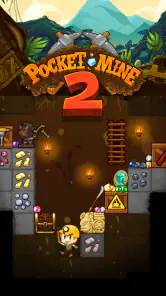
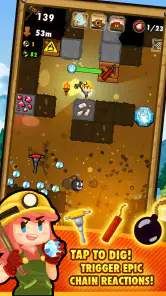
I went into Pocket Mine 2 expecting a quick arcade distraction, and that is exactly where it works best. It is a digging game from Roofdog Games in which I tap blocks, descend through underground areas, and keep exploring rather than follow a long, complicated story. The basic idea is immediately understandable, but the appeal comes from deciding how far to push each run and when to stop before a short session turns into a frustrating one.
That simplicity makes it easy to recommend to someone who wants something playable with one hand and without a long tutorial. It is free to download, rated Teen, and available for devices running Android 6.0 or later. The current version is 6.10.0, so anyone installing it today should still check that their phone meets the minimum software requirement before expecting a smooth start.
The game has built a sizable audience, with over one million installs and an average rating of 4.3 from around 67,000 ratings. Those figures do not replace personal experience, but they do fit my impression: this is a focused arcade title with a clear hook, not an obscure experiment that takes hours to understand.
How the digging loop feels after the first few sessions
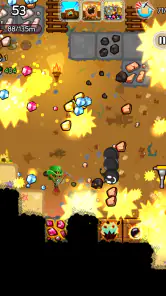
The central interaction is wonderfully direct. I tap blocks to dig, watch the path open, and react to what appears below. There is no need to learn a large control scheme, which is important on a phone because the game feels comfortable during a short break, while waiting for transport, or when I only have one free hand. The first few minutes are about learning the rhythm of tapping and seeing how quickly the simple action becomes surprisingly absorbing.
What keeps the loop from feeling like a single repeated gesture is the tension between immediate progress and better choices. I am not merely tapping at random; I am trying to read the available route, collect what seems worthwhile, and avoid wasting a run on an unhelpful direction. That gives the arcade format a little more thought than its controls initially suggest.
One useful habit is to treat each run as a small decision-making exercise rather than a race to clear everything in sight. When I focus on a sensible route instead of tapping every possible block, the session feels more controlled. This is especially helpful on a smaller screen, where frantic tapping can make it harder to notice what is happening underneath the next layer.
The island-based setting also gives the game a sense of forward movement. I am not staring at one identical underground space forever; the larger goal is to explore the islands that make up its world. That broader structure matters because it gives individual digging sessions a reason to connect. A quick run can stand alone, but it also feels like one step in a longer journey.
Why it suits short, repeatable play
My favorite use case is a ten-minute gap in the day. I can open the game, complete some digging, and put the phone away without needing to remember a complicated plot or reconstruct a large strategy. That makes it more convenient than many arcade games that depend entirely on a single high-score attempt, because the exploration theme gives the repeated sessions a little context.
It is also a good fit for players who enjoy gradual discovery but do not want a traditional role-playing game. The game keeps the focus on tapping and exploration, so it avoids the heavier menus, dialogue, and long battles that can make larger adventure games feel like a commitment. If you want a calm, low-friction mobile activity with some forward momentum, this is where it makes the strongest case.
There is a trade-off, though. The same accessibility that makes the game easy to start can make the action feel repetitive if you need constant mechanical variety. Players looking for precise platforming, complex puzzles, or a deep competitive system may find the core tapping loop too narrow. I would not choose it as my main game for a long evening unless I was specifically in the mood for repetitive arcade progression.
Progression brings motivation, but also pressure
The game’s progression is most enjoyable when I let it remain a series of manageable goals. Reaching a new area, improving the outcome of a run, or simply going a little farther gives the next session a purpose. That structure is more satisfying than an endless score counter because it makes exploration feel tangible.
At the same time, progression can create the familiar mobile-game pressure to keep playing after a session has stopped being fun. I noticed that the urge to continue is strongest when I am close to a personal target. That is not automatically a flaw—many arcade games depend on that “one more attempt” feeling—but it is worth recognizing before spending money or turning a short break into a much longer session.
My practical advice is to decide what you want from a run before starting it. If the goal is simply to relax, tap at a comfortable pace and stop when the session becomes repetitive. If the goal is to make progress, pay closer attention to route choices and avoid spending effort on every tempting block. This small distinction makes the game feel less like an endless obligation and more like an activity I control.
Another useful approach is to separate experimentation from advancement. Early in a session, I am comfortable trying a less obvious route just to understand how the game responds. Later, when I want a productive run, I use what I learned instead of repeating the same uncertain choices. That workflow makes the simple mechanics feel more deliberate and reduces the frustration of feeling that taps were spent without a clear purpose.
Spending, fairness, and what I would tell a friend
The game is free, but it includes in-app purchases priced from $1.49 to $29.99 per item. That is the key fact to keep in mind before installing it. I can try the core experience without paying, which lowers the barrier to entry, but the presence of paid items means I would approach progression with a budget in mind rather than assuming every part of the experience is designed only around free play.
I do not think a free download should automatically be treated as a bad deal. For me, the fair question is whether the unpaid loop is enjoyable on its own. Pocket Mine 2 has enough of a complete identity in its digging and exploration to make a no-spend trial worthwhile. I would install it, play for several sessions, and decide whether the basic rhythm is satisfying before considering any purchase.
What I would not do is spend simply because a run feels slow or because I am close to a goal. That is the moment when a small purchase can become an emotional reaction rather than a considered choice. If I ever paid, I would want the purchase to make sense as a deliberate way to support a game I already enjoy, not as a rescue for a progression loop that has begun to feel uncomfortable.
From the information available about the purchase model, I can confirm the price range, but I would not claim that every paid item affects progress in a particular way. The exact value of each item should be checked in the game before buying. That distinction matters for fairness: a low-cost option may be convenient, while a higher-priced item may feel unnecessary depending on how someone plays.
Can a free player compete fairly?
Pocket Mine 2 is not the game I would choose if my main concern were ranked competition or proving that spending never matters. Its appeal is personal exploration and arcade progress, not a clearly defined contest between players. Because of that, I judge fairness less by competitive balance and more by whether a free player can enjoy the central activity without feeling forced into a purchase immediately.
On that standard, the free starting point is useful. I can learn the controls, decide whether the digging loop holds my attention, and find out whether the island exploration suits me before paying anything. That is a healthier way to approach a game with optional purchases than assuming the listed price tells me the whole story.
Still, players who dislike any form of monetization pressure should be cautious. Even when the main interaction is enjoyable, the awareness of purchasable items can change how I view a slow section or a failed attempt. If you want a completely purchase-free arcade experience with no temptation to accelerate anything, a paid game with a single upfront price may be a better match.
Who should install it, and who should skip it?
I would recommend it to someone who likes compact arcade sessions, tactile tapping, exploration themes, and gradual goals. It is particularly suitable for casual players who want something they can understand quickly but revisit repeatedly. The low control complexity also makes it approachable for people who do not enjoy games that begin with several screens of instructions.
I would be more hesitant to recommend it to a player who needs rich narrative, detailed character development, or highly technical controls. It is also not my first choice for someone seeking a serious multiplayer contest, because the strongest part of the experience is the personal rhythm of digging and exploring rather than direct competition.
Compared with an endless runner, this game gives me more freedom to think about where I am going instead of reacting only to obstacles moving toward me. Compared with a match-three title, it offers a more continuous sense of descent and discovery rather than isolated puzzle boards. Compared with a traditional mining simulation, it is much lighter and more arcade-focused, so it is easier to pick up but less likely to satisfy someone who wants detailed management or realistic resource planning.
That comparison explains its specific niche. It is not trying to replace every other mobile genre. It works when I want a simple action that still gives me a reason to continue, and it loses some appeal when I want either deep strategy or a fully self-contained premium experience.
Questions I would settle before downloading
Is it suitable for a quick daily routine? Yes, provided you enjoy repetition. The controls are simple enough for short sessions, and the island exploration gives those sessions a longer-term direction. I would not expect every run to feel dramatically different, but I would expect the basic loop to remain easy to return to.
Does it require a modern phone? No. The stated minimum is Android 6.0, which makes it accessible to older compatible devices. That does not guarantee identical performance on every handset, so I would still keep expectations sensible if the phone is old or has limited free storage, but the software requirement itself is not demanding by current standards.
Is the Teen rating something parents should consider? Yes. Anyone choosing the game for a younger player should review the rating and supervise purchases through the device’s normal controls. The free entry point is convenient, but the presence of purchasable items means a family device deserves the same spending safeguards as any other game with optional transactions.
Will every player enjoy the progression? No. The game’s strength is its focused loop, and that is also its biggest limitation. If tapping through block-based routes feels satisfying to you, the repetition can become relaxing. If you need frequent new mechanics, the same structure may start to feel narrow before the exploration goal has enough time to compensate.
Does the game deserve a trial? I think so, especially for arcade fans who prefer exploration to reflex-heavy obstacle courses. I would begin without spending, play across several separate sessions rather than judging it after five minutes, and pay attention to whether progress feels enjoyable or merely urgent. That test tells me more than the install count or rating ever could.
My verdict after living with the loop
Pocket Mine 2 succeeds because it understands the value of a clear mobile action. Tapping blocks, choosing a route, and pushing deeper into its island world are easy to grasp, yet they create enough small decisions to support repeat play. Roofdog Games has kept the concept approachable, and the result is a game I can recommend when someone wants an arcade title that does not demand a large time commitment at the start.
My recommendation comes with boundaries. I would keep spending optional and deliberate, because the free download is the right way to discover whether the core loop works for you. I would also avoid expecting a complex adventure, a deep competitive ladder, or unlimited mechanical variety. Those are not the reasons I would install this game in the first place.
The best reason to try it is the balance between one-tap accessibility and a surprisingly persistent urge to explore. The worst reason would be downloading it while hoping it will become a completely different genre after the opening sessions. If you enjoy short digging runs, accept some repetition, and are comfortable treating purchases carefully, this free arcade game is an easy one to sample. If you want a fixed-price experience with no spending decisions at all, or if repetition quickly wears you down, I would choose another option instead.
For my own use, I would keep it installed as a break-time game rather than a centerpiece. That is a compliment: it knows how to fill a small gap without asking me to learn a complicated system. With its Teen rating, Android 6.0 minimum, free entry, and optional items, it is approachable, but the final trust verdict depends on playing with a clear budget and honest expectations. Try the digging first, judge the pressure second, and only then decide whether it belongs in your regular rotation.
Pros
- Simple tap-based gameplay that is easy to learn and play casually.
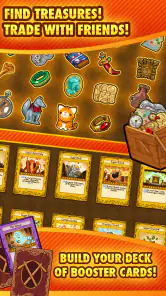
- Many collectible artifacts and cards add variety to mining runs.
- Bright cartoon visuals make the game appealing to younger players.
- Different worlds provide new environments and progression goals.
- Offline play makes it suitable for short sessions without a connection.
Cons
- Energy limits can interrupt longer play sessions.
- Progress may feel slow without spending premium currency.
- Random rewards can make collecting specific items frustrating.
- The interface may feel cluttered with events and upgrade options.
- Repeated mining actions can become monotonous over time.

- Category
- Arcade
- Version
- 6.10.0