Phantom Match
- 47.00
- 4.4
- Installs
- 100.00K
- Price
- Free
Screenshots
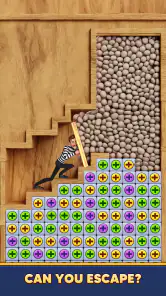
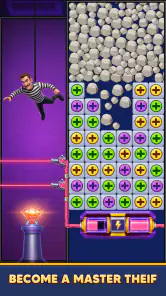
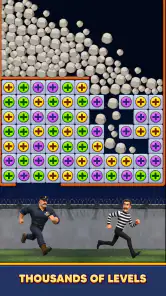
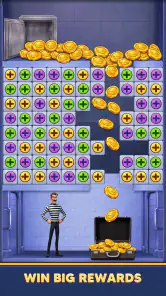
Analysis by Reviewed
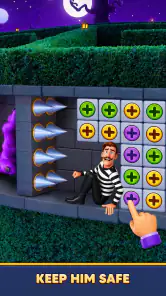
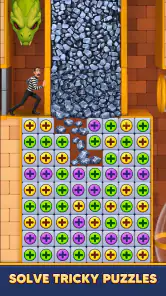
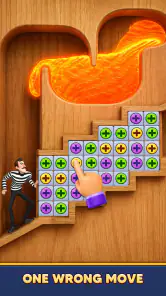
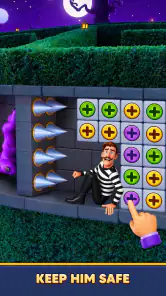
Phantom Match is a puzzle game from Gamee Global that mixes tile matching with a light heist theme. I spent time with it expecting a familiar match-style routine, but the extra goals give each board a slightly different rhythm: I am not only clearing pieces, but also opening a path through obstacles, gathering loot, and trying to finish the escape cleanly. That combination makes it easy to understand in a few minutes while still leaving room for better decisions.
The game is free to download and is suitable for Everyone, which makes it a reasonable choice for short sessions on a shared family device or during a spare moment in the day. It has an average rating of 4.4 from around 11 thousand ratings, and the listing shows over 100 thousand installs. Those numbers suggest a healthy early audience, although they do not change the most important question: whether its particular blend of matching and heist objectives suits the way you like to play.
How the basic heist puzzle loop feels
The baseline workflow is straightforward. I look at the board, identify a useful match, clear it, and watch how the result affects the obstacles and loot around it. The important shift from a plain matching game is that the largest immediate move is not always the best one. A flashy clear can be less valuable than a smaller move that opens the route I need or positions the board for a later combination.
That makes the game feel more purposeful than a simple exercise in removing identical pieces. The heist framing gives me a reason to scan the whole layout before touching anything. I am thinking about access as well as points, and that small change is what gives Phantom Match its identity.
For a new player, I recommend resisting the urge to make the first available match. Start by checking where the obstacles are concentrated and which loot is difficult to reach. If one move clears a central blockage, it may create several options at once. If another move only removes pieces from an already open corner, saving it can be wiser.
This habit is especially useful during a quick everyday session. Imagine having a few minutes before leaving home: I can open the game, play one board, and stop without needing a long uninterrupted commitment. The individual actions are simple enough for casual play, but the objective-based layout gives that short session more substance than endlessly making identical matches.
The game is also approachable because the central idea does not require specialist puzzle knowledge. Anyone familiar with match-three mechanics can understand the starting point, while people who usually find those games repetitive may appreciate having obstacles and loot to prioritize. I would still describe it as a casual puzzle experience rather than a deep strategy game. Its decisions are meaningful within a board, but they are not built around a complicated long-term system.
What I watch before making a move
My most reliable opening routine is to inspect three things in order: the available matches, the blocked areas, and the route toward the required loot. This takes only a moment, yet it prevents a common mistake: clearing pieces simply because they are easy to reach. The board often rewards preparation more than speed.
I also pay attention to what a move will leave behind. A match that creates a clean shape for the next turn can be more useful than one that produces a larger-looking immediate clear. This is not a guaranteed formula, because every board develops differently, but it is a repeatable way to make decisions less random.
Another practical tip is to treat the escape objective as part of the puzzle from the beginning, not as an afterthought. If I focus only on collecting loot, I can reach the end of the board with an awkward arrangement and fewer useful options. Planning the exit early keeps the final moves from feeling like emergency repairs.
Settings and controls worth checking first
Phantom Match is the kind of game where the most valuable setup work is practical rather than dramatic. Before settling into longer sessions, I check the available in-game options and make sure the presentation feels comfortable on my device. Puzzle boards depend on quick visual reading, so a distracting layout, uncomfortable sound level, or inconvenient notification pattern can make the experience feel harder than it really is.
I would not assume that changing every option improves performance. My preference is to adjust only what affects concentration and then leave the rest alone. A quiet setting is useful when I am playing in public or late at night, while sound can help some players notice that a move has completed. The right choice depends on where I play, but the important point is to make the game fit the situation instead of letting the situation interrupt every board.
It is also worth checking the device requirements before installing. The current version is 2.3 and requires Android 7.1 or later. That is a modest requirement for many Android phones, but older devices should still be checked before assuming compatibility. On a supported phone, the game is best approached as a quick, focused puzzle rather than as something that needs a high-end gaming setup.
Because the game is free, I would also look at the purchase flow with a clear head before spending time in it. Optional in-app items range from $1.49 to $99.99 per item. That is a very wide range, so I would avoid treating every offer as part of the normal cost of playing. My advice is simple: play the free portion first, decide whether the board design genuinely holds your attention, and set a personal spending limit before considering any purchase.
This matters particularly for younger players. The Everyone rating makes the game broadly accessible, but an age rating does not replace sensible purchase controls on a family device. If a child will be playing, I would make sure the device’s purchase safeguards are already configured. That is a useful precaution for any free puzzle game with optional items, and the broad price range makes it especially relevant here.
Faster patterns that still preserve control
Once I became comfortable with the basic loop, I stopped trying to solve every board by looking for the biggest available match. A faster and more consistent approach is to search for moves that do two jobs at once: remove an obstacle while improving access to loot, or collect an item while opening a useful follow-up. These dual-purpose moves reduce wasted turns and keep the board moving toward the actual objective.
I also scan from the edges toward the center when the layout feels crowded. Clearing an outside area can expose information that was hidden behind it, while a central move may leave the edges disconnected from the route I need. This is not a rule I follow blindly, but it is a helpful default when several matches appear equally attractive.
Another repeatable habit is to pause after a major clear. The board can change enough that the best next move is no longer the one I noticed before the animation finished. Moving immediately may feel faster, but taking a brief look at the new arrangement usually produces better control. In a puzzle built around obstacles and escape routes, the board after the clear is the real starting point for the next decision.
When I am playing casually, I use a simple priority order: open the route, collect reachable loot, then preserve a clean way out. When the board makes that order impossible, I adapt rather than forcing it. For example, an obstacle that blocks several future matches may deserve attention before a nearby piece of loot. The useful skill is not memorizing a single sequence; it is recognizing which part of the board is currently limiting everything else.
These habits also explain why I would not recommend rushing through every level. The game is more satisfying when I treat each board as a small planning problem. Players who enjoy quick visual reactions but dislike pausing to evaluate may find the pace slightly less exciting than a pure arcade matching game. Players who like making a plan and then seeing it work will probably get more from the heist structure.
Where the strategy reaches its limits
Phantom Match has enough structure to reward careful play, but I would not mistake that for unlimited depth. The core actions remain familiar, and players looking for a large competitive system, elaborate character development, or a long-form narrative may find the experience too focused. Its appeal comes from refining decisions on individual boards, not from building a broad world around them.
There is also a natural tension between the casual format and the goal-based design. Some sessions are ideal for a quick break because the objective is immediately readable. Other boards may require more attention than I expected, especially when an early move closes off a useful route. That variation is welcome for me, but anyone wanting a completely mindless time filler should know that the game occasionally asks for real concentration.
The purchase range is another point I would keep in mind. Since the game is free, it is easy to try without a commitment, but the presence of optional items means the experience should be evaluated on its own free-play rhythm. I would not buy anything simply because a board became inconvenient. First I would replay the situation mentally, identify whether I missed a route, and decide whether the problem was my move rather than a need for assistance.
That approach is useful because the game’s strongest satisfaction comes from solving the board yourself. If a player regularly bypasses the part that requires planning, the heist theme loses much of its purpose. Purchases may suit someone who wants convenience, but they are less appealing to me when the main enjoyment is learning how to read the layout.
Compared with a standard match-three alternative, Phantom Match is a better fit when I want objectives beyond simply reaching a score or clearing a set number of pieces. The obstacles and loot provide a reason to think about position and sequence. A traditional matching game may be better for someone who wants an instantly familiar loop with minimal planning, while a more elaborate puzzle title may be preferable for players seeking complex mechanics and a longer strategic arc.
Who will get the most from it
I think the game suits players who enjoy compact puzzle sessions but want each board to have a clear purpose. It is a good match for someone who likes scanning a layout, choosing between several reasonable moves, and improving through repetition. It also works for casual players who do not want to learn a large ruleset before starting.
It is less suitable for people who need a completely offline-style distraction with no purchase considerations, or for anyone who becomes frustrated when a seemingly good move produces a less useful board. I would also point players toward a different category if they want direct competition, deep story progression, or a highly technical puzzle system. Phantom Match stays centered on its matching-and-heist formula.
For families, the Everyone rating makes it approachable, but I would still supervise spending rather than assuming the rating covers that concern. For older Android devices, checking the Android 7.1 minimum before downloading is sensible. For everyone else, the main decision is about taste: do you want matching to serve a route and loot objective, or do you prefer the simpler satisfaction of clearing pieces without those extra priorities?
My verdict after learning its rhythm
After settling into the game, I found that its best quality is the way it turns ordinary matching into a small planning exercise. The most enjoyable boards are not necessarily the ones with the biggest clears; they are the ones where I spot a route, remove the right blockage, collect what matters, and leave myself a sensible escape. That sequence gives the game a recognizable personality without making it difficult to start.
My recommendation is to play slowly at first, inspect the options before each important move, and use the settings to keep the presentation comfortable for your surroundings. Once the basic workflow becomes familiar, focus on dual-purpose matches and pause after major clears so the new board can be read properly. Those simple habits make the experience more consistent than chasing the first obvious match.
Phantom Match is a good free puzzle choice for players who want short sessions with more direction than a basic matching board. Gamee Global keeps the entry point approachable, while the obstacle, loot, and escape structure gives experienced players something to optimize. I would skip it if I wanted a deep strategy game or a purely effortless time filler, but for a focused casual heist puzzle, it earns a place on my device.
Pros
- Atmospheric visuals create a memorable supernatural puzzle experience.
- Short levels make it easy to play during quick breaks.
- Match mechanics are simple to learn but become more demanding over time.
- The themed presentation gives ordinary puzzles extra personality.
- Progression encourages repeated play as new challenges appear.
Cons
- Some stages may feel repetitive after extended play sessions.
- Difficulty spikes can make later puzzles frustrating without careful planning.
- Energy or waiting systems may limit uninterrupted gameplay.
- The supernatural theme may not appeal to players seeking realistic settings.
- Ads or in-app purchases can affect the otherwise smooth experience.
- Category
- Puzzle
- Version
- 2.3