My Solitaire-Card Game
- 3.00
- 4.7
- Installs
- 10.00K
- Price
- Free
Screenshots
Analysis by Reviewed
I usually turn to solitaire when I want something quiet, familiar, and easy to leave after a few minutes. My Solitaire fits that mood, but it adds enough variation to keep the traditional card layout from feeling completely routine. Developed by Misiona Puzzle, this free card game combines classic solitaire play with Joker moves, custom themes, and daily challenges. I found its appeal less in dramatic surprises and more in the small rhythm of making a move, seeing the board open up, and deciding whether one more turn might rescue the deal.
That rhythm matters because solitaire is not really about a single exciting moment. It is about repeated decisions: which card to uncover, when to move a stack, whether to protect an empty column, and when to admit that a promising layout has run out of options. This version gives those decisions a slightly broader shape without abandoning the recognizable rules and pace that make the genre comfortable.
How the first move sets the tone
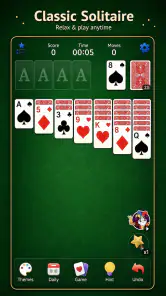
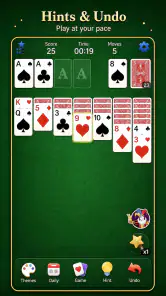
The opening action is deliberately simple. I can scan the tableau, look for exposed cards, and begin moving what is immediately available. There is no complicated onboarding to learn before the game becomes enjoyable. Anyone who already knows standard solitaire can settle in quickly, while a new player can understand the basic objective by following the visible card relationships and the gradual movement toward completed suits.
That familiarity is one of the strongest reasons to try it. Many card games add layers of missions, currencies, competitive rankings, or elaborate progression systems. My Solitaire keeps the focus on the board in front of me. The game asks me to think about the current arrangement rather than manage a larger account or keep up with other players.
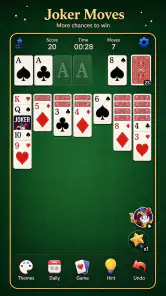
The Joker moves are the first feature that changes the usual feel. They give the game an extra tactical possibility, so a difficult position does not always feel like a dead end immediately. I would not treat a Joker as permission to move carelessly, though. The useful question is not simply whether it can solve the problem in front of me, but whether spending that flexibility now will leave the remaining tableau easier or harder to read.
That creates a small but meaningful trade-off. A Joker can help uncover a blocked card, but using a special move too early may remove the pressure that makes the puzzle satisfying. I get better results when I first inspect every ordinary move, especially moves that expose a face-down card or create an empty space, and only then consider the Joker as a rescue or setup tool.
For a short break, this is a good starting point. I can open a deal, make a few deliberate moves, and stop without feeling that I have abandoned a long campaign. The same design also works for a longer sitting because a nearly solved board can encourage me to continue after the first few minutes.
Why the board remains readable
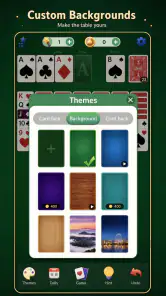
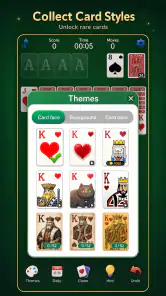
Solitaire can become tiring when the visual presentation makes cards difficult to distinguish or when decorative elements compete with the layout. The custom themes are useful here, not only as decoration. I prefer a theme that gives the card faces and empty spaces clear contrast, because the practical value of a theme is whether I can evaluate the board quickly without second-guessing what I am seeing.
This is also where personal preference matters. Someone who enjoys a more decorative table may appreciate changing the atmosphere between sessions, while a player who wants maximum clarity will probably settle on the least distracting option. I would choose based on visibility first and style second. A pretty background is not an advantage if it makes a long session harder on the eyes.
Because the game is rated for Everyone, it is an approachable choice for a broad audience. That does not mean every player will enjoy it equally. Younger players looking for fast animation or constant rewards may find the deliberate pace too restrained, while adults who want a calm mental exercise may see that restraint as the main attraction.
The feedback rhythm: move, reveal, reconsider
The most satisfying part of a solitaire round is the feedback after each action. I move a card, a hidden card may become available, and the board immediately offers a new question. Sometimes the reward is obvious: a useful card is uncovered or a suit advances. Other times the feedback is more subtle, such as creating an empty column that could later accept a valuable stack.
That sequence gives the game its natural pulse. The action is placing or transferring a card. The feedback is a clearer tableau, a newly available option, or the realization that a move has closed off a route. The reward is not always a win; often it is simply gaining information. Then the board resets mentally, because I have to reassess the position rather than follow the plan I had a moment earlier.
I especially like that the board can change in value after one apparently ordinary move. A card that looked unimportant may become the key to freeing a column. Conversely, moving a long stack because it is legal can make the next several choices worse. My practical tip is to pause after every reveal instead of tapping through the obvious sequence. The pause helps separate genuinely helpful progress from movement that only looks productive.
The Joker system adds another layer to this feedback rhythm. When a normal line of play stalls, a Joker can change the available options and make the next decision feel earned rather than random. The limitation is that the feature can soften the consequences of poor planning. Players who enjoy strict, traditional solitaire may prefer to use Joker moves sparingly or treat them as emergency tools rather than part of every solution.
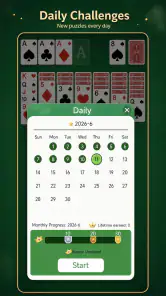
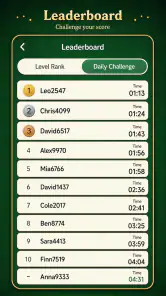
Daily challenges give the routine a reason to return. I see them as a focused variation on the regular game: instead of opening a board only because I have a spare moment, I can make the challenge the purpose of that session. The attraction is not a grand reward system but the simple habit of checking in, testing my approach against a particular layout, and trying to improve how I read the opening position.
A useful way to approach a daily challenge is to treat the first attempt as reconnaissance. I pay attention to which columns become blocked, which suit seems to need early attention, and where a Joker would have the most leverage. On a later attempt, that knowledge can make my choices more intentional. This is a more satisfying use of the challenge format than rushing through it just to mark it complete.
A realistic everyday session
Imagine having a short wait before an appointment. I can start a round, make the obvious opening moves, and use the next few minutes to work through the first meaningful decision. If the board opens well, I may continue. If it becomes awkward, I can stop without losing an evening to a complicated progression system. The game suits that kind of fragmented time because the core activity is self-contained and understandable at any point.
On a different day, I might use it as a wind-down activity. In that setting, the custom theme can help create a less repetitive atmosphere, while the familiar rules keep the mental effort manageable. I would not call it a replacement for a deep strategy game, but it offers enough planning to keep my attention without demanding the same commitment.
The main friction is also connected to this simplicity. If I want a card game with a strong social layer, changing opponents, elaborate events, or a wide range of modes, this is probably not the best match. Its strength is concentration on one board, so players who need constant novelty may run out of reasons to continue once the basic loop becomes familiar.
What counts as a reward
Winning a round is the obvious reward, but My Solitaire works better when I recognize the smaller rewards along the way. Revealing a buried card, preserving a useful empty column, or finding a route through a position that initially looked closed can all make a session feel worthwhile. This matters because not every deal will end in a clean victory, and a game that only feels rewarding when I win would become frustrating quickly.
The Joker moves strengthen the feeling of recovery. A board that has stalled can become active again, but the best moments still come from combining that help with careful planning. I enjoy the feature most when it gives me a new line to evaluate, not when it simply erases the consequences of every mistake. That distinction keeps the game closer to a puzzle than to an automatic completion tool.
The daily challenges provide a second kind of reward: continuity. They encourage a regular habit without requiring me to spend a long time each day. For someone who likes checking off a small personal routine, this can be enough motivation. For someone who expects substantial unlocks, collectible items, or a visible long-term campaign, the appeal may feel limited because the pleasure remains centered on playing the cards themselves.
The rating of 4.7 from roughly two hundred ratings suggests that the current audience has responded warmly, and the game has passed ten thousand installs. I would read those figures as signs of a focused app that has found a receptive group, not as proof that it will suit every solitaire player. A high average cannot replace personal preferences about difficulty, presentation, or the importance of traditional rules.
Since the game is free, the decision to try it is straightforward. I can test the regular rounds, themes, Joker moves, and daily challenges without committing money first. That makes it easier to recommend to a friend who wants a low-pressure card game. The more important question is not cost but whether the player enjoys a quiet loop that asks for attention in small doses.
Who will get the most from it
I would recommend it to someone who already likes classic solitaire but wants a little more flexibility. The Joker moves can make difficult positions feel less final, and the daily challenges add a reason to return. It is also a good fit for players who prefer solo games that do not require coordination, fast reactions, or a stable group of opponents.
It works particularly well for people who enjoy improving their decision-making rather than chasing spectacle. I can experiment with the order of moves, learn to protect important spaces, and gradually become more disciplined about when to use a special move. Those lessons are modest, but they give repeated sessions more purpose than simply tapping whichever card is currently convenient.
I would be more cautious about recommending it to a player who wants a strict purist version of solitaire. The Joker mechanic changes the tension, and even if it is optional in spirit, its presence may make the experience feel less traditional. Likewise, anyone seeking a large collection of card variants should look elsewhere; this game’s identity is built around refining one familiar format instead of offering a broad arcade-style package.
Resetting the session without losing the appeal
Every solitaire round eventually reaches a natural reset. I either complete the layout, recognize that the remaining cards no longer offer a practical route, or decide that I have learned enough from the current attempt. The reset is important because it keeps failure from becoming a major event. A new board offers a clean start, but I can carry forward a better understanding of what went wrong.
I find the reset most satisfying when I avoid restarting at the first inconvenience. If I abandon a board as soon as a move looks awkward, I miss the chance to practice recovery. Instead, I try to identify whether the problem came from using a column too early, moving a stack without uncovering anything, or spending a Joker before the board truly needed it. That small review turns a lost round into useful feedback for the next one.
The reason another session begins is usually very specific: I want to test a different opening order, use the Joker at a better moment, or see whether a new theme makes the board easier to read. Daily challenges add another trigger, giving me a clear reason to return even when I am not chasing a personal best. This is a healthier loop than one based only on endless rewards, because the motivation comes from understanding the puzzle.
The current version is 2.2, and it supports devices running Android 6.0 or later. That makes it accessible on a range of Android phones and tablets, including older hardware that may not be suited to more demanding games. I still think screen size will affect comfort: a larger display should make long card stacks easier to inspect, while a small phone may encourage shorter sessions and more careful tapping.
That device consideration is worth keeping in mind before choosing it as a daily game. If I am playing during brief breaks, a phone is convenient. If I want to study a complicated tableau for a long time, a larger screen is more comfortable. The game’s simple presentation helps, but it cannot remove the basic difficulty of reading many cards on a compact display.
Where alternatives may be better
The usual solitaire alternatives divide into a few clear groups. A bare-bones classic version is better for a player who wants the most traditional rules and no special twist. A large solitaire collection is better for someone who wants to switch between several variants in one sitting. A competitive card app is better for players who need opponents, rankings, or a sense of public performance.
My Solitaire occupies the middle ground. It preserves the recognizable solo puzzle, then adds Joker moves, themes, and daily challenges without turning the experience into a broad platform. That focus is its advantage when I want a dependable routine. It is also its limitation when I want variety beyond the central format.
Compared with a completely plain solitaire game, I find the daily challenge gives this one more structure and the Joker gives difficult boards more personality. Compared with a feature-heavy alternative, it feels easier to understand and less demanding to maintain. The choice depends on whether I value a clean, repeatable loop or a constant stream of new systems.
My verdict on the complete loop
My Solitaire succeeds because its cycle is easy to feel: I make a card move, receive immediate information from the changed tableau, gain a small reward through discovery or progress, reset when the board is finished or blocked, and begin again because the next layout may reward a better decision. The loop is calm, readable, and suited to both brief pauses and longer quiet sessions.
The Joker moves are best treated as tactical tools rather than shortcuts, and the themes are most valuable when they improve readability rather than merely changing decoration. The daily challenges give regular players a reason to return, while the free price lowers the barrier for anyone curious about the format. Those details make it more distinctive than a completely plain solitaire app without pushing it into an overly complicated direction.
I would choose it for a friend who wants a familiar card game with a few thoughtful additions, especially if that friend enjoys learning from each board instead of needing constant action. I would point a traditionalist toward a stricter classic version and a variety-seeker toward a larger collection. For everyone in between, this is a well-focused option that understands why solitaire remains enjoyable: one clear decision, one visible consequence, and the quiet temptation to try the next round.
Pros
- Simple rules make it easy for beginners to start playing.
- Smooth card controls work well on both phones and tablets.
- Short rounds are ideal for quick breaks or casual play.
- Offline access lets you play without a Wi-Fi or mobile connection.
- Clean visuals make cards easy to read on smaller screens.
Cons
- Frequent ads may interrupt play
- especially between rounds.
- Limited game variety can make the experience feel repetitive.
- Some features may require in-app purchases to unlock fully.
- No multiplayer mode for competing with friends or other players.
- Battery use may increase during longer gaming sessions.
- Category
- Card
- Version
- 2.2