Monster House
- 458.00
- 4.6
- Installs
- 1.00M
- Price
- Free

Screenshots
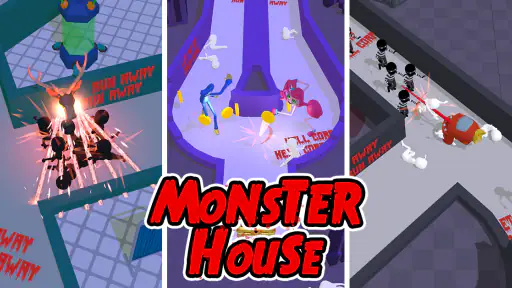
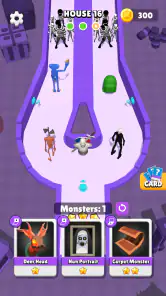
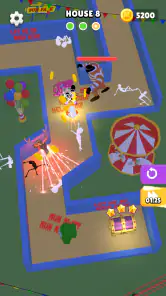
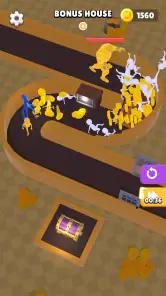


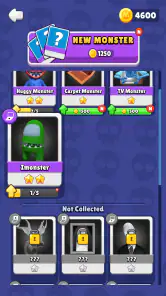
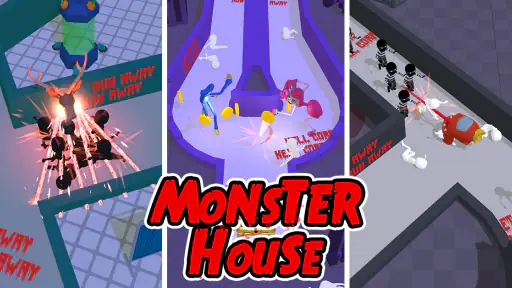
Analysis by Reviewed
I went into Monster House expecting a quick arcade distraction, and that is exactly where it makes the best impression. Developed by AlohaFactory, this free game turns the idea of building up monsters into a compact mobile experience. Its central appeal is easy to understand: you begin with a small collection of creatures and work toward making them stronger. I found it approachable within minutes, but it still gives you enough choices to make each short session feel purposeful.
That simplicity is important when deciding whether this is the right game for you. Monster House is not trying to replace a large role-playing game, a deep strategy title, or a story-heavy adventure. It is better suited to players who want a light arcade game that can be opened without a long tutorial or a large commitment. If you enjoy gradually improving a roster and checking in for a few minutes at a time, it has a clear advantage.
The game is free, carries an Everyone age rating, and runs on Android devices using version 8.0 or later. That makes it fairly easy to try on an older compatible phone or tablet. Its current version is 1.2.7, and the store page shows a 4.6 average from around 18 thousand ratings, with more than a million installs. Those figures suggest that the basic monster-growth formula has found a broad audience, although popularity alone is not a reason to keep a game installed. The more useful question is whether its rhythm matches the way you normally play.
How to decide if Monster House fits your play style
The first few sessions are about learning the rhythm
My first recommendation is to judge Monster House by its loop rather than by its opening screen. The “grow stronger” idea is deliberately direct, so the enjoyment comes from repeating actions, noticing progress, and deciding what deserves attention next. This is a good structure for a waiting-room game, a short commute, or a few minutes before bed. It does not demand the same concentration as a traditional arcade game that expects constant reflexes.
That also means the game may feel too gentle for players who want immediate intensity. If your favorite arcade titles are built around fast reactions, difficult timing, or a high-score chase, Monster House may not provide enough pressure. I would choose it for progression and collection-minded play, not for a pure test of speed.
A useful way to evaluate it is to ask what kind of reward you prefer. The game favors small improvements that accumulate. You are likely to appreciate seeing monsters become more capable over time more than you would appreciate a single dramatic victory. Players who enjoy that gradual curve should give it a fair trial; players who need a strong story or a constantly changing challenge may lose interest sooner.
What makes the monster theme work
The monster setting gives the progression a recognizable identity. Instead of improving an abstract score or a generic avatar, you are investing attention in creatures that make the collection feel more personal. That distinction matters on mobile, where many arcade games can blur together after the first few minutes. Here, the monster-focused presentation gives the routine a reason to continue.
I also like that the premise does not require specialist knowledge. You do not need to understand a complicated fictional world before making useful decisions. The game communicates its main purpose quickly, which is especially helpful for younger players and anyone who prefers games that explain themselves through play.
Still, the theme cannot carry the entire experience by itself. Once the novelty of the monsters settles, the quality of the progression loop becomes the deciding factor. I suggest paying attention to whether you enjoy the repeated improvement process rather than assuming the creature design will be enough to maintain interest.
Where it is strongest compared with familiar arcade choices
Monster House wins when you want an arcade game with a sense of accumulation. Many quick arcade alternatives are built around a single run, a score, or a restart. That format is excellent when you want a sharp burst of action, but it can feel disposable if you prefer to leave each session with something lasting. This game gives your short visits a continuing thread through monster growth.
It is also less intimidating than many strategy-oriented alternatives. A deeper strategy game may offer more control, more systems, and more long-term planning, but it usually asks you to learn more before your decisions feel meaningful. Monster House is easier to approach because its goal remains visible. I can recommend it to someone who wants a little management without turning mobile play into homework.
Another strength is its broad accessibility. The Everyone rating makes it suitable for a family-friendly audience, and the low operating-system requirement opens the door to devices that cannot handle demanding modern games. That does not guarantee identical performance on every phone, but it does make the game a practical first choice for casual players who do not own a recent flagship device.
Three practical habits that improve the experience
The first useful habit is to treat each session as a small planning exercise instead of tapping through every available action immediately. When the game presents more than one possible improvement, I find it better to decide which monster or upgrade supports the way I want to play next. Even in a simple arcade structure, spending attention in a deliberate order makes progress feel less random.
Second, use short sessions intentionally. Monster House is easier to enjoy when you stop after a clear piece of progress rather than forcing a long play period. I would open it while waiting for food, make a few improvements, and close it before the loop becomes repetitive. This keeps the game in its strongest role: a lightweight companion rather than a full evening activity.
Third, do not judge your progress only by the newest monster or the most visible improvement. In games built around gradual growth, earlier choices can shape how satisfying later sessions feel. I recommend noticing which actions give you the clearest sense of momentum and prioritizing those. That simple observation is more valuable than trying to copy an imagined “perfect” route that may not suit your habits.
A realistic everyday use case
Imagine having ten minutes before an appointment. A competitive multiplayer game may be a poor choice because you could be interrupted, while a story game may not give you enough time to settle into its atmosphere. Monster House fits that gap better. You can open it, work on your monsters, see a visible change, and put the phone away without feeling that you abandoned a complicated mission.
The same pattern works for a parent looking for something approachable to share with a child. The monster-growth premise is easy to discuss, and the age rating supports a family-friendly context. I would still recommend that an adult pay attention to the purchase options, especially if a child uses the device independently. The game is free to start, but in-app purchases cost $2.99 per item, so device-level purchase controls are sensible.
Where another category may be a better choice
I would skip Monster House if your main goal is a rich narrative. The game’s appeal is its playable loop, not a long dramatic campaign. A story-driven adventure will be more satisfying if you want character development, dialogue, exploration, and a strong ending. Choosing this game for those qualities would create the wrong expectation from the beginning.
I would also look elsewhere if you want serious competitive play. A dedicated online arcade or action game is a better fit for leaderboards, rapid reactions, and direct competition. Monster House feels more personal and incremental. Its value comes from the relationship between your decisions and monster growth, not from proving that you can outperform another player in a tense match.
Players who dislike repeated progression loops should be cautious as well. The central idea is intentionally focused, and that focus is both its charm and its limitation. A broader strategy game may offer more variety between sessions, while a traditional arcade game may deliver more immediate excitement. Monster House sits between those options: lighter than a full strategy title, but more persistent than a score-only arcade game.
Understanding the free-to-play decision
Because the game is free, the sensible approach is to install it without treating the first session as a commitment. Try the core loop, notice how quickly you feel rewarded, and decide whether the monster-growth process remains enjoyable after the initial introduction. You do not need to spend money to find out whether the basic style suits you.
The purchase structure deserves a calm, practical look. Items are priced at $2.99 each, which may be acceptable for someone who wants to support the game or speed up a particular part of the experience. I would not buy anything during the first few minutes. First learn what normal progress feels like, then decide whether a purchase adds enjoyment or merely removes the patience the game is designed to encourage.
This is also where Monster House differs from a paid arcade game. A one-time purchase usually gives you a clearer idea of the total cost before you begin. The free model lowers the barrier to entry, but it asks you to manage your own spending decisions. For me, that makes the game easiest to recommend to adults who are comfortable with optional purchases and to families that have already configured purchase protections.
Device fit and accessibility considerations
The Android requirement of version 8.0 or later is modest, so the game is not limited to the newest hardware. That is helpful if you want a casual title for a secondary phone or an older family tablet. I would still leave enough storage and close unnecessary apps if your device is aging, because general device condition can affect any game even when its operating-system requirement is reasonable.
The Everyone rating is another practical advantage. It makes Monster House easier to consider for a shared household device than a game built around mature themes. The rating does not remove the need for supervision around purchases, but it does make the game’s general presentation more approachable for a wide range of players.
What the developer’s update position means for a new player
A new player is joining a game from AlohaFactory that currently identifies itself as version 1.2.7. I would install the latest available build rather than relying on an old copy, because current versions are the best starting point for judging how the game feels today. This is a small point, but it prevents an outdated installation from shaping your opinion of the experience.
More importantly, I would avoid making a long-term decision based only on the first day. Games centered on growth are designed to become more interesting as your collection develops. Give the loop enough time to show whether the improvements feel meaningful, but do not continue out of obligation if the repeated actions already feel like work. The right test is sustained enjoyment, not simply reaching a particular early milestone.
My recommendation for different kinds of players
For a casual player, I think Monster House is an easy recommendation. It is free to try, simple to understand, family-friendly, and built around progress that can fit into short breaks. The monster theme gives it more personality than an anonymous score-chasing game, while the arcade category keeps the experience lighter than a large role-playing or strategy title.
For a younger player, it can also work well when an adult has handled purchase settings. The controls and premise are approachable, and the Everyone rating makes the content broadly suitable. I would present it as a game about gradual growth rather than as an endlessly exciting action experience, because that description better matches its pace.
For an experienced gamer, my recommendation is more conditional. Try it if you want a low-pressure side game to keep on your phone. Skip it if you are looking for deep systems, demanding combat, or a substantial narrative. The game does not need to be complex to be enjoyable, but its narrow focus means it will not satisfy every kind of arcade fan.
After spending time with it, my view is that Monster House succeeds by knowing what it wants to be. It offers a friendly monster-growth loop instead of pretending to be a massive adventure. Its best feature is the ability to turn a few spare minutes into visible progress without a steep learning curve. The trade-off is that the same focused loop can become repetitive for players who need constant novelty.
If that trade-off sounds acceptable, I would download it and test the free experience before considering any purchase. Start with short sessions, make deliberate improvement choices, and see whether watching the monsters grow keeps pulling you back. If you want a gentle arcade game with an ongoing sense of collection and development, Monster House is worth trying. If you want competition, story, or complex strategy first, another category will probably serve you better.
Pros
- Simple controls make it easy to start playing quickly.
- Short play sessions suit casual gaming on mobile devices.
- The spooky theme creates a fun atmosphere for horror fans.
- Exploration encourages curiosity and careful observation.
- Runs well on many modern Android and iOS devices.
Cons
- Some sections may feel repetitive after extended play.
- The difficulty can increase suddenly in certain encounters.
- Limited customization may disappoint players seeking more options.
- The dark visuals can make details difficult to see on small screens.
- Progress may feel slow without frequent play sessions.

- Category
- Arcade
- Version
- 1.2.7