Mahjong Soul
- 1.95K
- 4.6
- Installs
- 500.00K
- Price
- Free

Screenshots






Analysis by Reviewed
I went into Mahjong Soul expecting a light anime-themed version of a familiar board game, but I quickly found a more focused strategy experience underneath the bright presentation. Developed by Yostar Limited, it combines Japanese Mahjong with collectible-looking characters and a competitive match structure that makes every hand feel like a small decision puzzle. The game is free to start, rated Teen, and available for Android devices running version 7.0 or later.
The important thing to understand is that the anime style is the invitation, not the whole reason to stay. The real appeal comes from reading the table, choosing when to push, and accepting that a good decision can still lose to an unlucky draw. I like that tension because it gives each round a clear action, an immediate response, and a reason to try again. At the same time, this is not a relaxing tile-matching game or a simple casual pastime. If you want something with little learning pressure, its rules may feel demanding.
My first action at the table
The first meaningful choice is not simply picking tiles and hoping for a match. Japanese Mahjong asks me to build a legal winning hand while paying attention to the tiles other players discard. Every draw changes the shape of my hand, and every discard gives information away. Even when I am still learning, I can feel the game asking a practical question: should I chase a valuable hand, or should I settle for a safer route before somebody else gets there first?
That makes the opening minutes more interesting than the usual alternatives in the strategy category. A basic card battler often gives me a clearly defined turn with a small number of obvious actions. A tile-matching game usually rewards pattern recognition without requiring me to track opponents. Here, my move has two jobs. It must improve my own hand and avoid giving another player an easy opportunity. That double responsibility is what makes the first discard matter.
I would not recommend starting by trying to memorize every possible hand. A better approach is to observe the tiles already in your hand and keep the most flexible shapes. Connected sequences and pairs can develop in several directions, while isolated tiles often become the first candidates for discarding. I also pay attention to whether my hand is becoming too ambitious. A beautiful high-value plan is not useful if it never becomes complete.
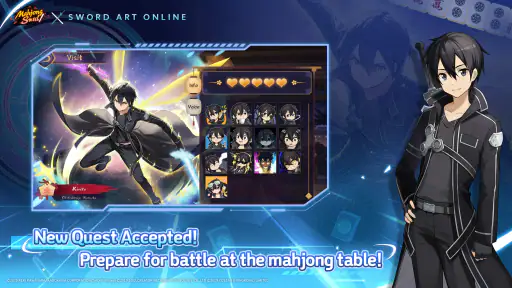
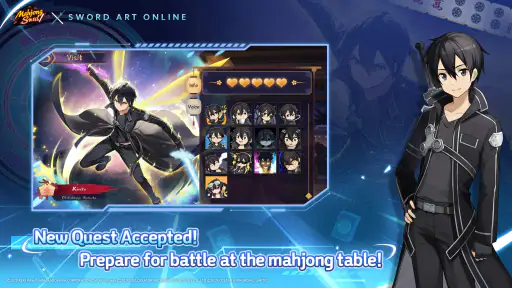
The character presentation makes this first contact less intimidating. The cast gives the game a distinct personality, and the visual style is much warmer than the plain interface of a traditional Mahjong client. Still, the decorations do not remove the need to learn the rules. The anime layer may attract someone who would normally ignore a board game, but success comes from understanding tile efficiency, hand completion, and defensive play.
Why every discard produces useful feedback
The strongest part of the game loop is the feedback after each decision. I draw a tile, compare it with the shape of my hand, discard something, and immediately see how the table changes. Sometimes the feedback is positive because the new tile completes a useful connection. Sometimes it is negative because another player calls a tile or wins before my plan develops. Either way, the result teaches me something about timing.
More From Our News Desk

Clash of Clans Is Won Between the Battles

Android Auto Makes the Case for Quieter Car Software

MobiOffice: Transforming Mobile Productivity with Seamless Integration

EA SPORTS FC™ Mobile Soccer: Redefining Mobile Sports Gaming

How Microsoft OneDrive Became a Mobile Productivity Giant

How Google Translate Breaks Language Barriers Effortlessly
That rhythm keeps a match from feeling like a long wait for a final score. A discard can reveal that I was holding too many disconnected tiles. A dangerous discard can show that I ignored what opponents were collecting. A hand that falls apart can still be valuable if I understand why it failed. I find this more satisfying than games where feedback arrives only after a lengthy campaign or a large upgrade screen.
One practical habit helped me improve: I stopped judging a move only by whether it increased my chance of winning immediately. I also asked whether it reduced the number of useful draws I could accept. A tile that looks attractive on its own may leave the hand rigid, while a less exciting discard can preserve several possible improvements. This is a small distinction, but it changes the way I read the table.
Another useful habit is to watch discarded tiles as carefully as the tiles in my hand. If an opponent repeatedly discards a certain suit, that may influence how I assess the risk of discarding related tiles. It is not a perfect prediction, and I should not treat every visible pattern as proof, but it gives me a more informed choice than playing in isolation. This is where the game becomes a genuine strategy title rather than a themed puzzle.
The feedback is also why the game can be mentally tiring. I cannot always play while half-watching a video or answering messages. Missing one discard, forgetting what an opponent called, or rushing a decision can affect the rest of the hand. For short breaks, I prefer to begin only when I can give the table my attention. The match may look calm, but the information flow is constant.
The reward is improvement as much as winning
Winning is obviously the clearest reward, but Mahjong Soul works best when I treat improvement as a second reward. Completing a hand feels good because it confirms that the plan came together. Winning a round after folding carefully feels different from winning through an aggressive hand, and both outcomes can teach me something. The game gives me reasons to examine decisions rather than simply celebrate the final result.
The presentation helps make those moments feel more memorable. Characters and anime styling give the match a stronger identity than a purely functional Mahjong table. That can make a successful hand feel like part of a larger game world instead of an isolated calculation. I appreciate the personality, although players who prefer a completely traditional, quiet Mahjong interface may find the visual emphasis distracting.
There is also a useful emotional balance in the way the game handles success and failure. A strong hand can disappear because another player reaches the finish first, and a cautious strategy can leave me behind even when it avoids obvious danger. The game does not promise that careful play guarantees victory. Instead, it rewards making better decisions over many sessions. That is a healthier way to approach it than expecting every match to validate my skill.
The free entry point makes it easy to test that relationship with the game. I can learn the table without paying an upfront purchase price, but optional in-app purchases range from $0.99 to $79.99 per item. I would treat those purchases as a personal choice rather than part of the basic reason to play. Anyone sensitive to collectible presentation or spending prompts should decide on a budget before getting attached to the character side of the experience.
For me, the best reward is the moment a previously confusing situation becomes readable. At first, I may see a collection of unrelated tiles. After practice, I start noticing which shapes are flexible, which discards are risky, and when a hand is no longer worth forcing. That learning curve is not instant, but it is concrete. I can feel the difference between guessing and making a reasoned decision.
How a normal session resets itself
A realistic use case is a quiet evening when I have enough time for a focused match but do not want to commit to a large story-driven game. I can sit down, play through the table, and use the result as a natural stopping point. If the match goes badly, the reset is immediate in a psychological sense: the next hand gives me a clean situation, but it does not erase what I learned from the previous one.
That reset is a major reason another session begins. I may lose because I pushed a weak hand too far, then want one more attempt to make a safer choice. I may win with a hand that developed efficiently, then wonder whether I can repeat that discipline. The loop is action, feedback, reward, and reset, but the reset carries memory. It is not just pressing replay; it is returning with a slightly different understanding.
There is a trade-off here. A single hand can feel manageable, yet the strategic questions accumulate across a full match. If I only have a few minutes, I may not have enough mental space to enjoy the experience properly. This is less convenient than a quick puzzle with a guaranteed end after one attempt. I would choose Mahjong Soul for deliberate breaks, not for moments when I need instant entertainment between two tasks.
The reset also exposes the game’s dependence on uncertainty. I can make the correct defensive decision and still lose. I can take a questionable risk and be rewarded. That randomness is part of Mahjong, but it can frustrate players who want every outcome to be a direct measurement of skill. The right mindset is to evaluate the quality of the decision, not just the result. If that sounds unsatisfying, a deterministic strategy puzzle may suit you better.
One workflow I found useful was to identify a single mistake after each session instead of trying to review everything. Maybe I discarded a tile without considering the visible information, or kept a slow hand alive because I liked its potential. Focusing on one correction makes the next match purposeful. It also prevents the game from becoming an endless sequence of emotional wins and losses with no improvement attached.
Who will enjoy this version of Mahjong
This is a strong choice for players who like competitive board games, card games with hidden information, or strategy systems where risk management matters. It is especially appealing if the idea of Japanese Mahjong sounds interesting but a traditional-looking client feels too dry. The anime characters give newcomers a friendlier entry point, while the underlying rules provide enough depth to support repeated play.
It can also work for someone who enjoys studying a system gradually. You do not need to understand every advanced possibility before beginning, but you do need patience. I recommend learning the basic structure first, then concentrating on efficient tile selection and defensive awareness. Trying to memorize scoring details before understanding how hands develop can make the early experience feel more complicated than it needs to be.
The game is less suitable for people who want a purely solo experience, a story campaign as the main attraction, or a game that can be played without reading opponents. It is also not ideal if anime presentation is a turnoff. The character layer is central to the identity, even though the table itself remains the real test. Players looking for a conventional Mahjong app with minimal decoration may prefer a simpler alternative.
Its Teen content rating is worth keeping in mind for families choosing games for younger players. I would also be cautious about handing it to someone who is easily drawn into optional purchases, since the free starting point sits alongside a broad range of item prices. The best way to approach it is to enjoy the strategy first and keep the collection-oriented side within a clear personal limit.
What makes it different from ordinary alternatives
Compared with a basic Mahjong solitaire app, this game is far more interactive. Solitaire usually asks me to clear a layout, while this experience asks me to interpret opponents and manage risk. Compared with a standard digital Mahjong table, it offers a more expressive anime identity and a stronger sense of character-driven presentation. Compared with many competitive strategy games, its turns are compact, but the consequences of a careless decision can last through the rest of the hand.
That combination is both its strength and its limitation. The character style makes the game approachable, but it cannot replace instruction or practice. The competitive structure creates tension, but it also means losing is unavoidable. The rules offer depth without requiring a large map or a long campaign, yet that depth can make casual players feel as though they are studying rather than relaxing.
I also like that the game does not reduce strategy to building the strongest possible attack. Defensive decisions matter because another player’s progress is always part of the puzzle. Sometimes the best move is to abandon a promising hand and protect the position. That trade-off is not obvious from the cute presentation, and it is one of the more rewarding discoveries after spending time with the game.
Performance, longevity, and practical expectations
The current version is 4.0.21_GP, and the game has been available since November 26, 2019. Its continued presence is reflected in a community large enough to show over 500 thousand installs, with an average rating of 4.6 from around 28 thousand ratings and roughly 2 thousand written reviews. Those figures suggest that the game has found a stable audience, but they should not be mistaken for a guarantee that every new player will enjoy the learning curve.
For me, longevity comes from the decision space rather than from simply collecting more visual content. The same basic table can feel different when I change from aggressive play to cautious play, or when I focus on reading opponents instead of chasing a particular hand. That gives the game more staying power than a one-time puzzle. Still, players who need constant mechanical novelty may eventually feel that the core loop remains deliberately narrow.
I would begin with a short, controlled routine: learn the basic hand structure, play without worrying about perfect scores, and review one decision after each match. Keep the purchase side separate from the learning process. If the table itself is not enjoyable before any optional extras become interesting, spending more will not solve that problem. The core strategy has to earn your time on its own.
On mobile, the format is convenient when I can concentrate, but it is not automatically ideal for every situation. A noisy commute, a rushed lunch, or a conversation with friends can make it easy to miss important information. I would rather play fewer attentive sessions than many distracted ones. That choice improves both my results and my enjoyment because the game rewards observation more than frantic input.
My verdict on the complete loop
Mahjong Soul succeeds because its loop has a clear shape. I take an action by drawing and discarding, receive immediate feedback from the changing hand and table, earn the satisfaction of a completed plan or a useful lesson, then reset with a new set of possibilities. The reason to begin another session is not only the hope of winning. It is the desire to make the next decision with better judgment.
I recommend it to anyone curious about Japanese Mahjong who wants a more inviting presentation than a bare traditional client. The cute anime cast is memorable, but the real value is the balance between attack, defense, uncertainty, and observation. I especially recommend approaching it as a game of long-term improvement rather than a machine that should reward every good intention immediately.
I would skip it if you want a simple tile game, a fully deterministic puzzle, or a quick distraction that requires no concentration. I would also choose a plainer alternative if the character-focused style and optional purchases are likely to distract from the table. For everyone else, this is a thoughtful strategy game with a distinctive personality and a satisfying reason to return after each reset.
My final recommendation: start free, learn the table slowly, and judge your progress by the quality of your decisions rather than by one unlucky result. When that mindset clicks, the game’s bright presentation becomes a gateway to a surprisingly deep form of mobile strategy.
Mahjong Soul Frequently Asked Questions
Can I play Mahjong Soul with friends?
Mahjong Soul is an online multiplayer game, so playing with other people is central to the experience. Its matches let you compete against human opponents, which can make each round feel less predictable than playing against a fixed computer routine. If you are hoping to play specifically with friends, check the available room and invitation options in the game after installing it, since the main appeal is its connected multiplayer play.
What kind of strategy does Mahjong Soul involve?
Mahjong Soul is a strategy game built around Japanese riichi mahjong. Players need to form a winning hand while weighing choices such as which tiles to keep, whether to call, and how much risk to take as opponents build their hands. The anime-inspired characters add personality, but the core challenge is still understanding tile combinations, timing, and scoring rather than relying on quick reactions.
Is Mahjong Soul available in English?
Mahjong Soul is presented as a mobile game for an international audience, but language availability and the exact options can depend on the platform or current game version. Before settling in, take a look at the language settings and tutorial text in the app. This is especially useful for beginners, since understanding riichi terms and scoring explanations makes it easier to follow matches and learn why a hand wins.
What devices can run Mahjong Soul?
Mahjong Soul is available for Android, and it requires Android 7.0 or later. Before downloading, check your device’s operating system version and make sure you have enough free storage for the game and its updates. The game is also listed for iOS, so players can choose a supported mobile platform; availability and compatibility can vary by device.
What is Mahjong Soul, and how does the game work?
Mahjong Soul is an online multiplayer game based on Japanese riichi mahjong. Players compete in real-time matches, usually against three other opponents, while trying to build winning hands and manage risks. The game combines traditional tile strategy with anime-style characters, voice acting, and collectible cosmetics. It is free to start, although some optional features and items may require in-game purchases.
Pros
- Free-to-play with plenty of Mahjong matches and events
- Anime-style characters make the game visually distinctive
- Cross-platform account support keeps progress available on multiple devices
- Ranked matches offer meaningful goals for competitive players
- Tutorials and practice options help newcomers learn Riichi Mahjong
Cons
- Gacha mechanics can make collecting characters and cosmetics expensive
- Some features and rewards are locked behind in-app purchases
- Online matches may feel stressful for players unfamiliar with Riichi rules
- Rounds can take considerable time
- especially in competitive modes
- Requires a stable internet connection for most gameplay

- Category
- Strategy
- Version
- 4.0.21_GP