Magic Flip Card
- 5.00
- 4.4
- Installs
- 10.00K
- Price
- Free
Screenshots
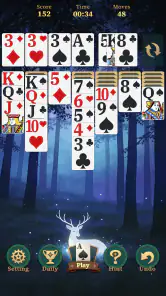
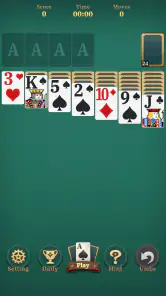
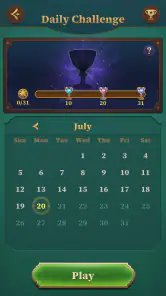
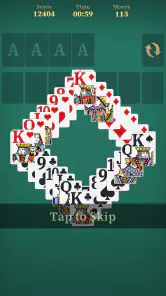
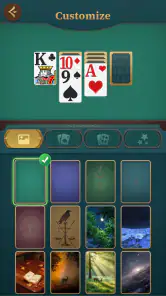
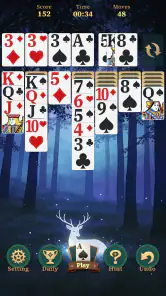
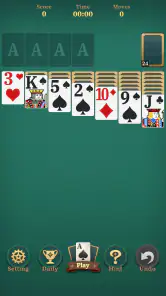
Analysis by Reviewed
I approached Magic Flip Card as a small, focused card puzzle rather than a game that tries to compete with enormous collections of modes. Its identity comes from the mystic tarot presentation, while the basic appeal is easy to understand: flip cards, pay attention, and solve the arrangement in front of you. That simplicity makes it approachable, but it also means the quality of the moment-to-moment puzzle matters more than a long list of features.
JoyDot has released it as a free game for everyone, and it belongs firmly in the casual card-puzzle space. After spending time with it, I think its strongest use is as a short mental break: something I can open when I want a little concentration without committing to a long match, a story campaign, or a complicated ruleset. The tarot theme gives the familiar memory-card idea a more distinctive mood, although players looking for deep strategy or a highly developed progression system may find the experience too restrained.
How the first goals shape the opening minutes
The early goal is refreshingly direct. I am not asked to learn a large rulebook or manage a deck before I can enjoy the game. The immediate task is to observe the cards, remember what I have seen, and make better flips as the puzzle develops. That low entry barrier is important because it lets the visual theme do some of the welcoming work without making the game feel like a tutorial disguised as a story.
For a new player, the first few rounds are less about chasing a distant reward and more about building a reliable habit. I found myself slowing down before touching a card, mentally grouping positions, and using the artwork as a visual anchor. That is a useful distinction: the game’s early motivation comes from improving my own attention, not from a complicated objective that needs several menus to explain.
The tarot styling also changes how I read the board. In a plain matching game, cards can quickly become interchangeable squares. Here, the mystical artwork gives each reveal a little more personality. I still need to remember locations, but the symbols and illustrations can help me form associations. A practical tip is to remember cards in pairs or in small areas of the board instead of trying to memorize the whole layout at once. That approach reduces mental clutter and makes the opening feel more controlled.
There is a second useful habit for casual play: do not flip rapidly just because the next move is available. The game rewards attention more than speed, at least in the way I experienced its basic puzzle rhythm. Taking a moment to identify a previously seen card can turn a guess into a deliberate move. This is especially helpful when playing in a noisy environment, during a short break, or when I am tired and likely to rely on impulse.
That makes the game suitable for several everyday situations. I can imagine playing a few rounds while waiting for an appointment, winding down before sleep, or giving a child a simple concentration activity that does not require reading a large amount of text. The Everyone age rating supports that broad accessibility, though younger players will still benefit from occasional guidance about remembering positions rather than simply tapping through the board.
The tarot theme adds mood, but not a substitute for depth
The visual concept is the clearest way Magic Flip Card separates itself from ordinary memory-card alternatives. The mystic tarot atmosphere makes the board feel more deliberate and gives the game a recognizable character. I would choose it over a completely plain matching app when I want the activity to feel a little more atmospheric.
At the same time, the theme does not automatically create a deeper tarot experience. I would not install this expecting card readings, a narrative journey, or a collectible deck-building system. Its tarot identity is primarily a presentation choice around the puzzle. That is not a criticism by itself; in fact, the restraint helps keep the game easy to understand. It simply sets the right expectation before downloading.
The artwork can also create a small trade-off. Distinctive images help memory, but ornate designs may take slightly longer to recognize than simple colors or numbered symbols. I found that the best approach was to remember the overall silhouette or dominant visual mark rather than every decorative detail. Players who prefer minimalist boards may value clarity more than atmosphere and could be happier with a stripped-down memory game.
Progress signals: what keeps each session moving
The most satisfying progress signal is personal improvement. A board that initially feels scattered becomes easier once I start building a mental map. I notice that I am making fewer random choices, recovering from mistakes more calmly, and finishing a puzzle with a clearer sense of where the important cards are located. That kind of progress is subtle, but it suits a game designed around observation.
What I would not do is treat every successful round as evidence that the game has a large progression ladder behind it. The experience works best when I judge progress by my own accuracy and consistency. If someone needs frequent unlocks, a visible collection, or a campaign with strong milestones, the motivation may feel lighter here. The game’s appeal depends on whether the act of solving is enough reward for you.
A helpful personal challenge is to change the way you play without inventing artificial pressure. I might first focus on completing the board, then replay while trying to reduce guesses, and later concentrate on remembering a section before moving to another. These variations make the familiar mechanic more interesting and give me a reason to return even when I am not pursuing a formal reward.
This is also where the game can work well for families or casual groups. One person can play slowly and explain how they are organizing the cards, while another can try to solve the same kind of layout using a different memory method. The activity encourages observation without requiring competitive reflexes. It is a better fit for shared concentration than for players who want a fast, action-heavy card battle.
For users wondering whether progress carries between sessions, I would approach the game as a self-contained puzzle experience rather than assuming that every round contributes to a large account-based journey. That expectation keeps the experience satisfying instead of making a simple session feel incomplete. Open it when you want a focused activity, not because you feel obligated to maintain a long streak.
Why small routines matter more than grinding
One of the less obvious strengths is that the game can support a short attention routine. I can play for a few minutes, put it away, and return later without needing to remember a story plot or a complex set of temporary resources. That makes it less demanding than many card games that expect regular participation, deck maintenance, or long matches.
I recommend setting a simple stopping point. For example, I might play until I complete a small handful of rounds or until I notice that I am guessing more than remembering. This is not because the game forces a limit, but because the quality of the puzzle depends on attention. When concentration fades, additional play can feel repetitive rather than rewarding.
That routine is particularly useful for people who want a gentle alternative to scrolling. The game gives the mind one clear task and a visible finish to work toward. It is not a replacement for a full brain-training program, and I would avoid treating it as one, but it can still be a pleasant way to exercise short-term recall during otherwise empty minutes.
Difficulty and pacing: a calm curve with a clear ceiling
The difficulty curve is best understood through the amount of information I need to hold in mind. Early puzzles let me learn the rhythm of flipping and matching. As the board becomes harder to track, mistakes become more costly because I have more locations competing for attention. The challenge therefore grows from memory load rather than from complicated new rules.
I like that this kind of difficulty is easy to understand. When I fail, I usually know why: I rushed, forgot a location, or allowed too many unmatched cards to blur together. That makes improvement feel fair. The game does not need a dramatic explanation for every setback because the cause is visible in my own decisions.
There is a trade-off, though. If the game’s challenge remains centered on the same flip-and-remember action, experienced puzzle players may eventually want more variety. A gradual increase in board complexity can sustain attention for a while, but it cannot replace new mechanics indefinitely. Magic Flip Card is more convincing as a polished casual diversion than as a deep long-term puzzle platform.
My preferred way to play is to treat each round as a concentration test rather than a race. I scan the layout, identify a few anchors, and make moves only when I have a reason. If I lose track, I reset my mental map instead of trying to compensate with frantic tapping. This method makes the pacing feel calmer and also exposes whether the game is right for me: players who enjoy measured recall will settle in, while players who need constant novelty may tire sooner.
The tarot presentation supports this slower pace. Mystical card imagery naturally feels more reflective than a bright arcade interface, and that makes the game comfortable for quiet sessions. It is not the best choice when I want an energetic burst of competition. For that, a multiplayer card game, a timed puzzle, or a traditional solitaire variant with stronger scoring pressure would probably provide more urgency.
Where the challenge may stop being enough
The main limitation is not that the core idea is weak; it is that the core idea is very focused. Once I understand the memory loop, the question becomes whether I enjoy repeating it with increasing attention demands. Some players will find that pleasantly meditative. Others will ask for more varied objectives, stronger strategic choices, or a more substantial sense of unlocking.
I would skip this game if my priority is competitive matchmaking, elaborate card collection, or a narrative built around tarot lore. I would also look elsewhere if I need a game that constantly introduces new systems to prevent repetition. Those expectations belong to different parts of the card genre. Here, the value is in the accessibility of the puzzle and the atmosphere around it.
On the other hand, I would recommend giving it a chance if you want a free, low-pressure card game that can be understood immediately. Its current version is 1.0.0, so I judge it as an early, focused release rather than a mature platform with years of accumulated layers. That makes the compact design easier to accept, provided you are choosing it for short sessions instead of demanding a huge amount of content.
Retention pressure without turning the game into a chore
The game’s return appeal comes from convenience and repeatability, not from aggressive pressure. I can come back because I want another attempt at a cleaner solve or because the tarot mood suits the moment. That is healthier for this style of game than a design that makes me feel I must check in constantly.
Still, repeat play needs a reason. My own solution is to give each session a different focus: careful matching, fewer guesses, better spatial memory, or simply a relaxed round before bed. These goals are small, but they make the same mechanic feel less automatic. They also reveal an important truth about the game: much of its longevity depends on the player creating a personal challenge.
That may be a strength for some people and a weakness for others. Self-directed goals are flexible and do not make a casual game feel demanding. But if you rely on explicit missions, unlockable rewards, or a visible long-term ladder to stay interested, the retention loop may not feel strong enough. I would not recommend downloading it solely because the store rating is a 4.4 average from around thirty ratings; those figures suggest a modest early audience, but they cannot predict whether its simple rhythm will suit your habits.
The install figure is also best read in context: it has passed ten thousand installs, which indicates that the game has found some initial reach without making it a mainstream card destination. For me, that reinforces the idea that this is a small, specialized choice. I would select it for the tarot mood and straightforward memory play, not because I expect the social ecosystem or content volume of a major card franchise.
Because it is free, the barrier to trying it is low. That matters when the decision is mainly about taste. You can quickly discover whether the artwork and focused puzzle loop are appealing without committing to a paid purchase. The more important cost is your attention: if you need variety, the game may stop earning that attention sooner than a broader card title would.
Who gets the most from a short session
I see three especially good audiences. First are casual players who want a quiet puzzle that can be learned without preparation. Second are people who enjoy memory exercises but prefer a themed presentation to a clinical-looking brain-training interface. Third are tarot enthusiasts who like the atmosphere of mystical card artwork, even though the gameplay itself is a matching puzzle rather than a reading tool.
It can also suit parents looking for an uncomplicated activity with an Everyone rating, provided the child is comfortable with the visual style and the adult sets reasonable expectations about repetition. The game’s simple premise makes it easy to explain, and the absence of complicated card-game rules lowers the learning curve.
I would be more cautious recommending it to someone who wants a deep strategic card game. There is a major difference between remembering positions and planning a multi-turn hand with probabilities, resource management, or opponent psychology. Magic Flip Card offers the first kind of thinking, not the second. Choosing it over solitaire or a competitive card title makes sense only when you specifically want a memory-centered experience with a mystical look.
My progression verdict after weighing goals, challenge, and return value
Magic Flip Card succeeds when it stays close to its central idea. The early goal is immediately clear, the challenge grows through memory load, and the tarot presentation gives the familiar activity a distinct personality. I appreciate that I can play without studying a rulebook or committing to a long session. For a free card puzzle, that directness is a real advantage.
Its progression is also its limitation. I do not come away expecting a substantial unlock journey or a constantly expanding set of systems. The satisfying progress is mainly in becoming more observant and more deliberate. That can support repeated short sessions, but it will not satisfy everyone, especially players who measure advancement through collections, ranks, stories, or increasingly complex mechanics.
My practical recommendation is to treat it as a compact concentration game. Use the artwork to create memory associations, slow down instead of guessing, and set your own session goal when the basic loop starts feeling familiar. Those small adjustments bring out more value than rushing through round after round.
JoyDot’s game is worth trying if you want an approachable card puzzle with a mystic tarot mood, a free entry point, and an Everyone-friendly design. It is less suitable if you need competitive depth or a powerful long-term progression system. For my taste, it works best as a calm, repeatable diversion: not an all-purpose card game, but a focused little experience that knows exactly what kind of attention it wants.
Pros
- Simple flip-card gameplay that is easy to learn and play casually.
- Short rounds make it suitable for quick breaks or commutes.
- Bright card designs make the board easy to recognize.
- Can help improve concentration and visual memory skills.
- Lightweight gameplay should run well on many mobile devices.
Cons
- Repeated levels may feel predictable after extended play.
- Difficulty balance may not satisfy experienced puzzle players.
- Progress can become less rewarding without deeper game modes.
- Some features may depend on ads or optional in-app purchases.
- Small cards can be harder to tap accurately on compact screens.
- Category
- Card
- Version
- 1.0.0