Lazy Jump
- 982.00
- 4.4
- Installs
- 10.00M
- Price
- Free

Screenshots







Analysis by Reviewed
I like Lazy Jump most when I treat it as a small physics puzzle rather than a game I have to master quickly. Its floppy character makes even a simple attempt unpredictable, and that uncertainty is the point: a stumble can be as entertaining as a clean finish. The game is an arcade pick from SayGames Ltd, and its appeal is easy to understand if you enjoy playful movement more than precision.
Small goals make the first levels easy to approach
What works for me at the start is having one clear aim: get the floppy character through the level. I can focus on a single movement, see what happens, and try again without needing to learn a complicated set of rules first. That makes it a natural choice when I have a few spare minutes and want something more hands-on than a simple tapping game.
That easy entry has a limit, though. The fun comes from judging how to move a body that does not behave like a precise platform-game hero. If you want exact jumps, tight timing, and consistent control from the first attempt, the loose physics may feel more frustrating than funny. I’d choose a traditional platformer for that kind of challenge; this is better when a clumsy landing is part of the appeal.
The Whimsical World of Lazy Jump
Imagine a game where physics meets fun in the most unusual way. Lazy Jump is all about controlling a delightfully lazy character who jumps, flops, and rolls its way through various challenges. It’s like watching a sloth trying to do gymnastics—oddly satisfying and ridiculously entertaining.
Game Mechanics that Hook You In
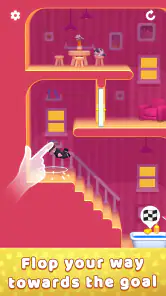
The premise is simple but oh-so-addictive. You control a ragdoll-like character whose goal is to reach the end of each level. The catch? You’ve got to use physics to your advantage. From dragging limbs to launching your character across obstacles, every move counts. It’s a game that doesn’t take itself too seriously, which is part of its charm.
The controls are intuitive, making it easy for anyone to pick up and play. But don’t be fooled by its simplicity—mastering the art of the lazy jump takes practice. Each level presents new challenges that require a mix of strategy and skill. Just when you think you’ve got it all figured out, the game throws a curveball, keeping you on your toes (or in this case, on your flops).
Progress feels playful, but the physics can test your patience
The useful progress signal here is practical rather than elaborate: you either work out a way through the current obstacle or you need another attempt. I find it helps to make one small adjustment at a time—change the pull or launch, watch how the ragdoll reacts, then try again. Repeating the same broad motion when it fails is less informative than treating each flop as a clue about the angle or force that might work better.
More From Our News Desk

Clash of Clans Is Won Between the Battles

Android Auto Makes the Case for Quieter Car Software

MobiOffice: Transforming Mobile Productivity with Seamless Integration

EA SPORTS FC™ Mobile Soccer: Redefining Mobile Sports Gaming

How Microsoft OneDrive Became a Mobile Productivity Giant

How Google Translate Breaks Language Barriers Effortlessly
That approach also makes the difficulty feel less like a clean climb and more like a series of little surprises. A move that seems obvious can send the character in an awkward direction, so success depends on adapting instead of expecting perfect control. This is a charming source of comedy when I’m relaxed, but a real drawback if I’m already impatient or want every retry to feel fully predictable.
Graphics and Sound That Add to the Fun
Visually, the game is a treat. The graphics are colorful and playful, perfectly matching its light-hearted nature. It’s the kind of game that doesn’t need hyper-realistic visuals to make an impact. The design is vibrant and fun, drawing you into its whimsical world.
And let’s not forget about the sound. The soundtrack is upbeat, complementing the game’s energetic vibe. Each jump and flop is accompanied by amusing sound effects that bring a smile to your face. It’s these little details that enhance the gaming experience, making it all the more enjoyable.
Who will enjoy it, and when it fits into a day
I’d recommend this arcade game to people who enjoy slapstick physics and quick, low-pressure attempts more than a tightly scripted action challenge. It suits a short wait in a queue or a quiet break between tasks: I can play a level, put my phone away, and return when I feel like another burst of silly problem-solving. For a commute, it is most comfortable when I’m seated and can give the screen my attention; it is not the sort of game I’d play while walking or when I need to keep one hand free.
It is also worth setting expectations about what keeps you coming back. The appeal is the changing physical puzzle and the spectacle of the ragdoll’s movement, not a deep narrative or a competitive arcade routine. If you need a strong story, a precise score-chasing loop, or a clearly explained long-term progression system, I’d look elsewhere rather than expecting this game to provide those motivations.
Retention without turning every spare moment into a task
Because the levels invite experimentation, I don’t feel that I need to schedule a long session to make sense of the game. A helpful habit is to pause after a failed attempt and decide what I want to change before trying again. That keeps the physics from becoming random button-mashing and gives each retry a small purpose. The trade-off is that a run of awkward attempts can make a quick break feel longer than planned, so I’d stop when the joke wears thin instead of forcing progress.
Lazy Jump is free to play, with in-app purchases listed at $2.99 per item. It has a 4.4 average from around 27,000 ratings, and has passed 10 million installs. It was released on July 27, 2022; version 1.10.1 is the current version, and the minimum operating system is 9. Its Everyone 10+ age rating is worth checking for younger players. Those details make it easy to judge whether it fits your device and household, but they don’t change the central question: do you enjoy wrestling with deliberately floppy movement?
How its progression compares with other arcade games
Many mobile arcade games keep attention through a score to beat, a timer, or a routine that rewards repeating the same action with more speed. This one feels different because the immediate objective is to get the ragdoll past the obstacle, and the entertainment comes from discovering how its body responds. That gives each attempt a little more physical personality than a conventional reflex test, but it also means improvement can feel less measurable. If you like watching a technique become reliable, a score-driven runner may offer clearer evidence of progress.
Unlocks and longer-term goals are not the reason I would choose this game. I’d come back for the next odd movement problem, not to chase a collection or build a character over time. That distinction matters if you’re deciding what to install: players who need a visible ladder of rewards may find the loop too modest, while players who enjoy solving one funny, self-contained obstacle at a time can find that modesty refreshing.
A useful way to make retries count
When a move goes wrong, I try not to change everything at once. I watch whether the character failed to get enough distance, turned the wrong way, or reached the obstacle but landed awkwardly, then alter just one part of the next attempt. It’s a small discipline, but it makes the physics feel more readable and stops a short session from dissolving into identical flails. I also take a break after several attempts that feel indistinguishable; the game is funniest when I’m still curious about what the next adjustment might do.
This approach is especially useful in a noisy or interrupted day. If I’m waiting for a coffee or have a brief pause between chores, I can treat one obstacle as a contained experiment rather than expecting a long campaign. If I’m in a hurry, though, a puzzle that takes several tries is not automatically a good fit just because the game is easy to pick up. A quick restart can still demand attention, and I wouldn’t open it when I need to respond immediately to something else.
Who should pass, and what to expect from the price
The game is free to start, with in-app purchases priced at $2.99 per item. I would treat those purchases as optional rather than assuming they are necessary to enjoy the core appeal; the reason to try it is the ragdoll movement and the level-by-level problem-solving. If you are careful about spending inside games, it is sensible to check purchase prompts before handing the phone to a child. The Everyone 10+ rating also gives families a useful age guide, though I’d still decide based on the player and household.
I’d skip it if unpredictable movement quickly irritates you, if you want a polished platformer built around exact inputs, or if your main motivation is a deep story and substantial character progression. I’d also choose something more score-focused for competitive sessions with friends. On the other hand, it makes sense for someone who wants a free arcade game with a silly physical premise and doesn’t mind learning through imperfect attempts.
Progression verdict: amusing in bursts, not a long-term project
For me, the strongest reason to keep playing is the small question each obstacle poses: what will happen if I change the movement a little? The game’s loose physics makes that question entertaining, but it can also blur the sense of mastery when results seem erratic. Its progression works best as a series of brief, playful challenges rather than a promise of a grand journey or a carefully plotted reward track.
So I’d recommend it to friends who want a casual game that makes failure funny and gives them room to experiment. I’d suggest a more precise arcade title to anyone who wants every input to produce a dependable result. The rating of 4.4, drawn from around 27,000 ratings, and its 10 million-plus installs show that many players have tried it, but the deciding factor for me is simpler: enjoy the floppy physics, and the awkward attempts are part of the fun; dislike them, and the same mechanic is likely to wear thin.
Why You Should Download It
In a world where games often demand too much of our time and attention, it is a breath of fresh air. It’s perfect for those moments when you want to unwind without committing to a long gaming session. Whether you’re on a break, commuting, or just lounging at home, this game is a delightful escape.
So, if you’re looking for a game that’s easy to dive into and guarantees a good laugh, Lazy Jump is your go-to. It’s a charming mix of fun, challenge, and sheer laziness—making it the ideal companion for your mobile gaming adventures. Give it a try, and you might just find yourself hooked on its quirky antics.
Lazy Jump Frequently Asked Questions
Does Lazy Jump have many levels, and is there variety as you progress?
Lazy Jump is built around moving through levels, with a rag doll to flip and flail toward the goal while obstacles make timing and reactions important. The challenges are intended to keep play moving rather than feel like a single, unchanging task. If you enjoy short arcade-style attempts and adapting to what appears next, its level-based format may suit you.
Is Lazy Jump easy to learn for someone new to mobile games?
The game is presented as accessible, with simple touch controls that let newcomers get into the action without a complicated setup. The main challenge is judging when to move and how to guide the character around obstacles. As the difficulty increases, players who are new to arcade games may need a little practice, but the basic idea is straightforward to pick up.
What is Lazy Jump and how does it work?
Lazy Jump is a fun and engaging mobile game that challenges players to guide a character through various obstacles using simple touch controls. The game is designed to test your reflexes and timing as you navigate through different levels. Players can enjoy a range of challenges, each requiring strategic thinking and quick response to progress. The intuitive controls make it easy for newcomers to jump right into the action, while the increasing difficulty levels keep seasoned players engaged.
What kind of game is Lazy Jump, and what should I expect from its style?
Lazy Jump is an arcade game built around flipping and flailing a rag doll through levels, with the aim of plunging into outlandish fun. Its playful premise makes it a good fit for players looking for an accessible, lighthearted game rather than a serious simulation. The focus is on guiding the character through obstacles and reacting to the action as each challenge unfolds.
Is Lazy Jump suitable for children and families?
Lazy Jump has an Everyone 10+ content rating, so families can use that age guidance when deciding whether it is appropriate. The game’s rag-doll arcade premise is presented as playful and lighthearted, but parents should still consider their child’s preferences and comfort with the gameplay before downloading. Checking the rating on the relevant app store is a helpful step before installing it on a child’s device.
Pros
- Engaging and addictive gameplay.
- Simple controls are easy to learn.
- Visually appealing graphics.
- Frequent updates with new content.
- Suitable for all age groups.
Cons
- In-app purchases can be expensive.
- Occasional crashes on older devices.
- Requires internet for full features.
- Ads can be intrusive at times.
- Limited customization options.
- Category
- Arcade
- Version
- 1.10.1













