Jigsaw Puzzle - Countryside
- 238.00
- 4.6
- Installs
- 100.00K
- Price
- Free

Screenshots
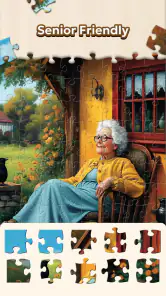
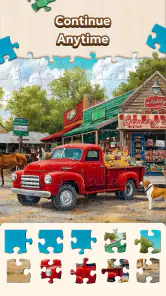
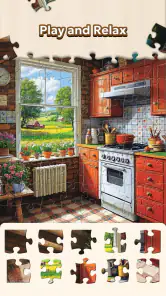
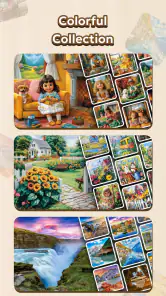
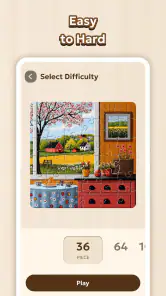
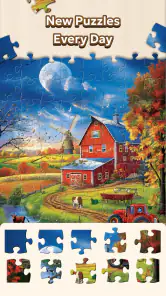
Analysis by Reviewed
I spent time with Jigsaw Puzzle - Countryside as a quiet, low-pressure board game, and its appeal became clear very quickly: it gives me something focused to do without demanding the speed, competition, or constant attention of many mobile games. The theme is simple, the format is familiar, and the experience is built around arranging pieces until an image gradually makes sense.
That simplicity is also the reason I would recommend it selectively. If you enjoy traditional jigsaw puzzles and want a convenient version for short breaks, this is an easy game to understand. If you need deep strategy, social play, or a strong sense of progression, the experience may feel too gentle. My overall impression is that it works best as a relaxing digital puzzle shelf rather than as a game I would open for excitement.
How the current version feels to play
Jigsaw Puzzle - Countryside is a free board game from Mint XX Games, designed for anyone who likes fitting illustrated pieces together. It is rated for Everyone, which matches the approachable nature of the activity. I never felt that the game was trying to overwhelm me with complicated rules. The main challenge comes from observation: matching colors, edges, textures, and the small visual clues that make one piece belong beside another.
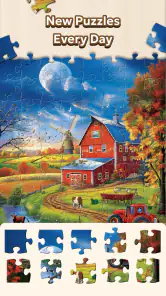
The current version is 1.2.0, and the game presents itself as a large collection of high-definition jigsaw images. The catalog is described as containing over ten thousand puzzles, while daily games add a reason to return instead of simply completing one picture and moving on. I found that combination useful because it supports two different habits: browsing for a scene that suits my mood and using a daily puzzle as a small routine.
My favorite way to use it was not during a long uninterrupted session. I would open a puzzle when I had a few spare minutes, place obvious edge pieces first, and leave the unfinished image for later. That makes the game a good companion for a quiet morning, a commute with reliable connectivity, or the last part of the evening when I want something more engaging than scrolling but less demanding than a competitive game.
The visual subject matters here. A countryside image gives the puzzles a calm character, especially when the picture contains fields, paths, trees, cottages, or open skies. Those scenes can be pleasant to assemble, but they also create a specific difficulty: large areas of similar green, blue, or brown can become repetitive. I learned to stop relying on color alone and instead compare shapes and tiny changes in texture. That is a practical habit that makes difficult sections less frustrating.
A useful routine for short sessions
For a quick session, I recommend choosing a picture with strong visual variety rather than beginning with a landscape dominated by one color. I start with the border, separate pieces by broad color, and then look for distinctive objects. When I return later, I avoid scattering every remaining piece across the screen. Keeping a small working area for one section of the image makes it easier to remember what I was doing.
More From Our News Desk
Weather by Xiaomi Review: Clear at a Glance, Less Clear Up Close

X Under Pressure: Can It Recover When Posting Goes Wrong?

Clash of Clans Is Won Between the Battles

Android Auto Makes the Case for Quieter Car Software

MobiOffice: Transforming Mobile Productivity with Seamless Integration

EA SPORTS FC™ Mobile Soccer: Redefining Mobile Sports Gaming
This approach is especially helpful on a phone, where the playing area is naturally more limited than a physical table. I found that zooming in to inspect a small group and then zooming out to understand the whole image is more effective than trying to work at one scale. It also reduces the temptation to make random guesses. A piece that almost fits can waste more time than it saves, particularly in a sky or grass section where several pieces look alike.
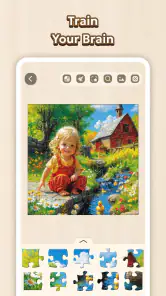
The daily format can support a simple personal challenge: complete the picture in two or three short visits rather than forcing myself to finish it at once. That turns the game into a manageable habit. I would not treat it as serious brain training in a clinical sense, but it does exercise visual attention, patience, and pattern recognition in an enjoyable way. The relaxation comes partly from the predictable loop and partly from having one clear task in front of me.
What the release information tells me about its direction
The game was released on December 1, 2025, and the move to version 1.2.0 suggests that the product is still in an early stage of development rather than being a long-established puzzle platform. I see that as both encouraging and worth remembering. A relatively early version can improve as the developer learns what players want, but it can also feel less polished than a mature alternative with years of refinement.
What stands out in the current offering is breadth rather than complexity. The large puzzle library and daily structure are more important than elaborate systems. That is a sensible direction for this type of game: people come for the pictures and the act of solving them. Still, I would prefer the game’s future evolution to focus on making the collection easier to navigate, helping players resume unfinished work, and giving more control over how challenging each puzzle feels.
The current version is compatible with Android 6.0 or later, which makes it accessible to people using older Android devices. That is useful if you want to install it on a spare phone or tablet rather than your newest handset. Device age can still affect how comfortable a puzzle feels, though. A smaller display or less responsive touch screen may make precise piece placement tiring, so compatibility does not automatically mean the same experience on every device.
Its reception is already fairly positive, with a 4.6 average from around 9.6 thousand ratings and more than 100 thousand installs. Those figures suggest that the basic idea is connecting with a meaningful audience, but they should not replace personal testing. Puzzle preferences are unusually individual: one player may enjoy nearly identical landscape pieces, while another may find them tedious. I would use the favorable response as a reason to try it, not as proof that every image or session will suit me.
How existing users may experience the current version
For someone already using the game, version 1.2.0 is best understood as part of an ongoing product rather than a final statement of what the app will become. The core appeal remains stable: choose a picture, work through the pieces, and return for another puzzle when you want a calm activity. Players who already enjoy that loop have a clear reason to continue, especially if the daily selection keeps the library from feeling like an unstructured wall of images.
New users may need a little time to develop a comfortable workflow. The first few puzzles can feel easy if the image has obvious edges and distinctive objects. Later, the difficulty often comes from visual sameness rather than complex rules. I found that this is where patience matters most. Instead of treating a slow section as a failure, I would leave it, complete another part of the image, and come back with fresh eyes.
One non-obvious advantage of digital puzzles is that I do not need to reserve a table or worry about physical pieces being moved. That makes this version practical in homes where a traditional puzzle cannot remain set up overnight. It is also convenient for people who like switching between several images without storing unfinished cardboard puzzles. The trade-off is that the tactile pleasure of picking up and sorting real pieces is missing, and some players will consider that a major part of the hobby.
Another useful distinction is between relaxation and distraction. The game can help me settle into one activity, but it is still a screen-based product. If I am trying to reduce screen time completely, a paper puzzle, sketchbook, or quiet book may be a better choice. On the other hand, if I want a structured break while carrying only my phone, this app is much more practical than a physical alternative.
Where the game still has room to improve
The broad puzzle count sounds impressive, but a large library is only valuable when browsing it feels manageable. I would pay attention to how quickly I can find a scene that matches my mood and how clearly the game distinguishes completed, active, and untouched puzzles. A huge selection can become less useful if I spend more time searching than solving. This is one of the main areas where a growing puzzle app needs thoughtful organization, not merely more images.
The daily games are a good return mechanism, but they may not satisfy every kind of player. Daily content works for people who enjoy a gentle routine; it is less appealing to someone who wants complete freedom or prefers to solve only a particular subject. I would like the daily experience to complement the wider collection rather than make it feel secondary. The best balance is one where I can follow the daily option or ignore it without losing access to the main pleasure of choosing my own puzzle.
There is also a natural limit to how much variety a countryside theme can provide. Rural scenes can be beautiful, but repeated skies, foliage, roads, and fields may blur together. Players who want animals, architecture, abstract art, travel scenes, or highly unusual compositions should consider whether the available selection matches their taste. The game’s identity is clear, and that clarity is a strength, but it also means it will not be equally attractive to everyone.
The free entry point is welcome, although in-app purchases range from $4.99 to $29.99 per item. I would approach the catalog with a simple rule: enjoy the free experience first, then decide whether additional purchases genuinely improve my use of the game. The higher-priced option is not automatically good value for a casual player who opens the app only occasionally. Someone who completes puzzles regularly may see more benefit, but I would still check the purchase screen carefully before committing.
Because the game is free to install, I would also expect the usual possibility that the free experience may be shaped around optional spending. I am not treating that as a reason to reject it, but it is a reason to set a personal limit. For a relaxing puzzle game, unexpected interruptions or pressure to buy can undermine the very calm atmosphere that attracts me. If that balance bothers you, a paid puzzle app with a simpler purchase model may be a better fit.
Who should choose it over familiar alternatives?
Compared with physical jigsaw puzzles, this game wins on portability, storage, and the ability to start immediately. Compared with a generic puzzle app, its countryside focus gives the collection a recognizable mood instead of feeling completely random. Compared with competitive board games, it removes time pressure and opponents, which makes it suitable for quiet solo play. Those are meaningful advantages, but none of them will matter to someone who wants social interaction or strategic decision-making.
I would recommend it to a person who likes scenic imagery, wants a low-stress activity, and prefers sessions that can be paused naturally. It is also a reasonable option for families looking for an Everyone-rated game that does not revolve around combat or competition. Adults who use puzzles to wind down may appreciate the straightforward structure, while older Android users may benefit from the relatively broad operating-system support.
I would skip it if your priority is a strong narrative, multiplayer competition, advanced puzzle mechanics, or a carefully curated art experience. I would also choose another option if you dislike repetitive landscape textures or if the feel of real cardboard pieces is essential to your enjoyment. A dedicated physical puzzle remains better for shared table time, and a more feature-heavy digital board game is better when you want rules, tactics, and changing outcomes.
What I would watch as the app develops
The next stage of the game should be judged by how well it improves the experience around the puzzles, not simply by whether it adds an even larger number of images. I would watch for clearer organization, smoother continuation of unfinished work, and better ways to match puzzle choice with available time. Those changes would help both newcomers and returning players without changing the relaxed identity that makes the game approachable.
I would also watch how the developer handles the relationship between the free catalog, daily play, and optional purchases. A good puzzle app should let casual users enjoy a satisfying session while giving committed players understandable reasons to spend. Transparency and restraint matter especially here because the game is marketed as a way to relax. If the commercial layer becomes too prominent, it could weaken the experience even if the puzzle collection continues to grow.
My final view is positive but measured. Jigsaw Puzzle - Countryside is not trying to reinvent board games, and that is fine. Its value comes from making a familiar activity easy to carry, easy to pause, and pleasant to revisit. The current release has a strong foundation in its countryside identity, large puzzle selection, and daily format, while its early development stage leaves room for better organization and refinement.
I would install it if I wanted a free, calm puzzle game for short solo sessions, especially on an Android device that supports version 1.2.0. I would begin with the no-cost experience, test whether the image style keeps me interested, and only then consider an optional purchase. The best reason to keep it is not the size of the library, but whether its quiet pace fits the way you actually relax.
For me, it works as a dependable digital escape: focused enough to occupy my hands and mind, gentle enough to stop whenever I need, and familiar enough that I never have to learn a complicated system before enjoying it. That makes it worth trying, provided you want a scenic solo jigsaw rather than a more ambitious board-game experience.
Jigsaw Puzzle - Countryside Frequently Asked Questions
How many puzzles does Jigsaw Puzzle - Countryside offer?
The game features more than 10,000 HD jigsaw puzzles, with countryside imagery at its heart. That gives players a broad collection of pictures to work through, from rural scenery to other puzzle themes available in the game. Daily games add another way to enjoy a puzzle session, whether you are looking for a short break or a more sustained challenge.
What is Jigsaw Puzzle - Countryside?
Jigsaw Puzzle - Countryside is a relaxing puzzle game centered on scenic rural landscapes, including fields, villages, farms, forests, and countryside views. Players assemble individual pieces to complete colorful images while enjoying a calm, casual experience. It is designed for people who enjoy traditional jigsaw puzzles but want the convenience of playing them on a mobile phone or tablet.
Is Jigsaw Puzzle - Countryside suitable for beginners and children?
Yes, the game is generally suitable for beginners because players can start with simpler puzzles and gradually choose more challenging layouts. The countryside artwork is family-friendly, and the gameplay does not usually require fast reflexes or complicated controls. However, parents should still review the app’s Everyone age rating, advertisements, and any available in-app purchase options before allowing children to play.
Does Jigsaw Puzzle - Countryside work without an internet connection?
Many puzzle games allow at least some previously available content to be played offline, but the exact offline features can depend on the version installed and the device being used. Internet access may still be required to download new puzzles, display advertisements, synchronize progress, or access online features. It is best to test the game once after installation before relying on it during travel or without mobile data.
Are there advertisements or in-app purchases in Jigsaw Puzzle - Countryside?
The game is free to download and offers in-app purchases priced from $4.99 to $29.99 per item. It may also include advertising, as is common with free-to-download mobile puzzle apps. Advertisements can sometimes appear between puzzles or while unlocking additional content, while purchases may provide access to extra images or features. Before downloading, check the current store page for payment details and parental-control information.
Pros
- Large variety of relaxing countryside scenes to complete
- Simple controls make placing pieces easy for all ages
- Adjustable difficulty suits both casual and experienced players
- Offline play is convenient when traveling or without internet
- Gentle gameplay offers a calming break from busy routines
Cons
- Some puzzles may feel repetitive after extended play
- Limited challenge for players seeking competitive gameplay
- Hints or extra puzzle content may depend on in-app purchases
- Small pieces can be difficult to see on compact phone screens
- Progress may feel slow when completing larger puzzles
- Category
- Board
- Version
- 1.2.0