Go Escape! - Casual Ball Games
- 8.80K
- 4.1
- Installs
- 10.00M
- Price
- Free

Screenshots
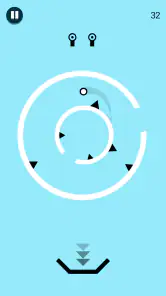
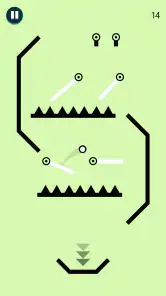
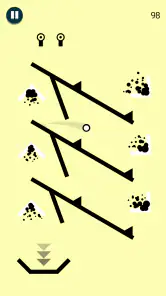
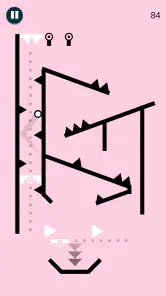
Analysis by Reviewed
I like Go Escape! best as a small, focused arcade challenge: it asks for attention and timing without demanding a long session or a complicated setup. The idea is easy to grasp, but keeping a bouncing ball clear of hazards gives each attempt a sharper edge than the simple premise suggests. If you enjoy retrying a tricky section until your timing clicks, this is an appealing pick; if you want a story or a broad set of systems to explore, it may feel too slight.
A quick challenge with a clear purpose
The appeal is not that every moment feels new; it is that the goal stays understandable while the obstacles ask you to pay attention. I find that useful when I want a game I can start without a tutorial-heavy warm-up. The simple premise gives the challenge room to speak for itself, though it also means the game has to earn variety through the situations it presents rather than through a large set of mechanics.
That distinction matters when choosing what to play. If I have ten minutes and want to learn a character build, manage an inventory, or follow a story, this is not the right fit. If I want to focus on one immediate task and see whether I can execute it, it makes more sense. It is a compact arcade diversion, not a substitute for a game designed around long-term progression.
What's the Buzz About?
Go Escape! is an arcade game from CASUAL AZUR GAMES, built around guiding a ball through hazards and toward a finish. The controls are intuitive, requiring just a tap on your screen to guide your ball past barriers. The central appeal is how quickly the challenge becomes readable: you can focus on the obstacle in front of you rather than learning a large collection of controls.
Gameplay and Features
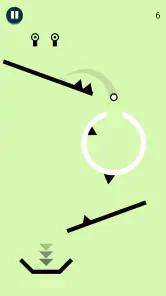
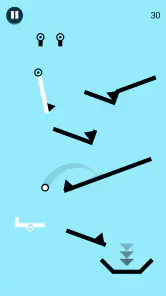
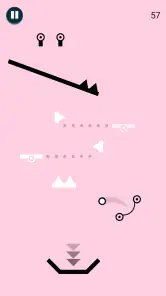
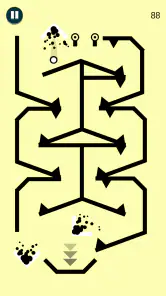
As you dive into the game, you're greeted with a minimalist design that's both visually appealing and easy on the eyes. The controls are intuitive, requiring just a tap on your screen to guide your ball past barriers. It sounds simple, right? But each level brings new challenges and obstacles that will test your patience and precision.
The game offers a variety of levels, each more challenging than the last. As you progress, you'll encounter moving obstacles, rotating barriers, and narrow passages that demand quick thinking and precise timing. Trust me, the feeling of finally clearing a challenging level is immensely rewarding.
The tap-based approach is a real strength when I have only a few minutes free: I can concentrate on a single obstacle, make an attempt, and put the phone away without needing to remember a complicated sequence of commands. A useful habit is to watch a hazard for a moment before tapping rather than reacting to its first movement. With rotating or moving barriers, noticing the rhythm can turn a seemingly frantic passage into a timing problem you can solve calmly.
More From Our News Desk

Clash of Clans Is Won Between the Battles

Android Auto Makes the Case for Quieter Car Software

MobiOffice: Transforming Mobile Productivity with Seamless Integration

EA SPORTS FC™ Mobile Soccer: Redefining Mobile Sports Gaming

How Microsoft OneDrive Became a Mobile Productivity Giant

How Google Translate Breaks Language Barriers Effortlessly
That same design also creates the main source of friction. A mistake can feel like it comes down to a tiny difference in timing, and repeating a passage may test patience more than strategic thinking. I would not choose it when I want a forgiving game to play while distracted; the moment-to-moment focus is modest, but it is still focus. If a level starts to feel irritating, taking a short break is more useful than tapping faster and hoping for a lucky bounce.
It also helps to treat each attempt as a small observation exercise, not just a pass-or-fail test. When a ball misses a gap, I try to identify whether I acted too early, too late, or without letting a moving obstacle complete its cycle. That gives the next try a specific purpose. If I change nothing but tap more urgently, I am usually repeating the same mistake rather than learning the timing.
For a practical workflow, I would play with the phone held comfortably and give the screen my full attention through a difficult passage. The control scheme is simple, but a tap still needs to be deliberate; playing while walking, juggling another task, or glancing away can make a narrow opening feel less fair than it is. In a safe, settled moment, the compact focus becomes part of the appeal rather than a nuisance.
One trade-off of retry-based play is that progress can feel uneven. A section you have just mastered may be satisfying, while the next obstacle can make you slow down again. I see that as a reasonable fit for a game about timing, but it will not suit someone who measures enjoyment mainly by steady, visible rewards. If you prefer frequent unlocks or a sense of building toward a larger goal, the core challenge may not provide the payoff you are looking for.
Why You Should Give It a Shot
One of the things I love about this game is its ability to keep me on my toes. It's perfect for those little pockets of time throughout the day when you need a quick pick-me-up or a mental break. Plus, it's a great way to improve your hand-eye coordination and reflexes.
A realistic use for me is a short wait—standing in line or sitting down before an appointment—when opening a large game would feel like too much commitment. Go Escape! fits that gap because the basic objective is clear immediately. It is also a better match for someone who enjoys skill-based retries than for a player who expects every session to deliver a new narrative beat or a long-term collection goal.
There is a small but useful judgment call in that scenario: I would open it when I can give the screen a few focused moments, not when I need to keep checking my surroundings or a conversation. The short-session format does not mean it is effortless background entertainment. In a waiting room, for example, it can fill a pause nicely; during a meeting or while crossing a busy place, it is plainly the wrong kind of distraction.
Compared with many arcade games built around constant action, this one gets its tension from judging when to act around obstacles. That can make it feel more deliberate than a reflex game that simply keeps throwing events at you. The trade-off is variety: players who prefer changing modes, elaborate customization, or a wider set of activities may find this narrower loop repetitive. I’d pick it for a quick timing challenge, not as my only game for a long commute.
Against an endless runner, the difference is the kind of attention being asked for. A runner often rewards reacting to a stream of incoming hazards, while this game’s obstacle-focused passages encourage me to pause mentally, read the opening, and choose a moment. Someone who loves speed and constant forward motion may prefer that alternative. Someone who enjoys testing a precise action against a visible barrier may get more satisfaction here.
It is also unlike a puzzle game that lets me consider a board for as long as I want. The hazards and timing make the decision feel immediate, so it occupies a middle ground between reflex play and deliberate problem-solving. That balance is its most distinctive strength, but it is subjective: players who want purely calm planning or nonstop action may find this in-between pace less compelling.
The game is free to download, with in-app purchases available if you want to enhance your experience. However, I've found that you can still enjoy it thoroughly without spending a dime. The ads are minimal and not intrusive, which is always a blessing in today's ad-heavy app world.
If you are deciding whether to spend anything, I would first try the basic game and see whether the timing loop holds your attention. Optional purchases are priced from $0.99 to $2.99 per item, so they are small individual amounts, but paying is not a prerequisite for finding out whether the central challenge works for you. I would avoid buying on impulse if you are still unsure that repeated obstacle attempts are your kind of play.
It has a 4.1 average from around 129,000 ratings and over 10 million installs, which suggests that its straightforward challenge has found a broad audience. It is rated for Everyone, and its current version is 1.97.1; the game first appeared on December 2, 2018. It runs on Android 5.1 or later, and in-app purchases range from $0.99 to $2.99 per item. Those details make it easy to judge whether it suits your device and spending preferences before you start.
For families, the Everyone age rating makes it easier to consider as a game for a broad audience, though I would still think about whether the player enjoys retries and timing challenges. A child who likes trying again after a near miss may find the clear objective appealing; someone who gets frustrated quickly may prefer a gentler game. The rating is a useful starting point for suitability, not a promise that every player will enjoy the same difficulty.
Another highlight of the game is its community. The developers are active and always listening to feedback, which means there are regular updates and improvements. It's always exciting to see what new levels or features they'll roll out next.
As a practical device check, the Android requirement is version 5.1 or later, so I would compare that with the software version on an older phone before trying to install it. The game is free to start, which lowers the commitment, but compatibility still comes first. If the device is shared, I would also keep the optional purchase range in mind when setting expectations about spending.
Who will get the most from it
I would recommend it first to players who like a clear skill test and do not mind repeating a short section to improve their timing. It can also suit someone who wants a lightweight game to pick up during a quiet break, especially if they prefer direct controls over a complicated interface. The best sign that it will click is enjoying the process of noticing a pattern and adjusting your next attempt.
I would steer away from it if you want a game that can safely occupy only half your attention, a deep campaign, or a broad catalogue of modes. It is not the choice I would make to unwind through low-pressure collecting, nor would I rely on it for a long journey if I need the game to keep introducing new kinds of activity. A different arcade title with more variety, or a story-led game, will be a better match for those priorities.
One question people may have is whether the controls take long to learn. In my experience, the basic tap interaction is easy to understand, but that should not be confused with every level being easy to clear. The challenge lies less in memorizing commands and more in choosing the right moment, so a newcomer can begin quickly while still needing patience to improve.
Another likely question is whether it works for very brief play. Its simple objective and focused attempts make it suitable for a short pause, but I would not assume every session will end with a clean win. If I have only a moment and would be annoyed by stopping midway through a demanding section, I choose something more forgiving; when I have a little room to concentrate, the same short format feels convenient.
Final Thoughts
In a world full of complex and time-consuming mobile games, Go Escape! stands out with its simplicity and charm. It's a delightful mix of challenge and fun, making it a must-try for anyone looking to add a new game to their collection.
For me, the deciding question is whether you enjoy learning a route through timing rather than unlocking a deep set of systems. If you do, the straightforward tap control and obstacle-focused play make it easy to dip in. If you mainly want a relaxed game that tolerates divided attention, or a richer arcade package with more kinds of activities, I’d look elsewhere. The free entry makes it reasonable to try, but its focused loop is the reason to keep it installed—or to move on.
My final recommendation is conditional rather than universal: try it if you want an immediate arcade test, have patience for retries, and enjoy seeing a timing problem become manageable through observation. Skip it if repeating a difficult passage quickly drains your enthusiasm or if you need substantial variety to stay engaged. That is the honest measure of its value for me: it does a narrow thing clearly, and whether that is enough depends on the kind of break you want.
So go ahead, give it a whirl, and see if you can master all the levels. Who knows, it might just become your new favorite pastime!
Go Escape! - Casual Ball Games Frequently Asked Questions
Does Go Escape! - Casual Ball Games have a simple objective for new players?
Yes. The central idea is easy to grasp: bounce a ball across platforms, avoid obstacles, and reach the finish. That makes Go Escape! - Casual Ball Games approachable for someone who wants to start playing without first learning a complicated set of rules. The challenge comes from navigating the route safely, rather than understanding a long list of mechanics.
What kind of game is Go Escape! - Casual Ball Games?
Go Escape! - Casual Ball Games is an arcade game focused on guiding a bouncing ball through platforms and past obstacles. Its short, clear objective makes it a natural fit for casual play, whether you want a quick diversion or a game to return to for another attempt. The emphasis is on reaching the finish safely, so timing and careful movement are central to the experience.
Is Go Escape! - Casual Ball Games suitable for children?
Go Escape! - Casual Ball Games is an arcade game rated for Everyone, so its age rating makes it suitable for a broad audience. Its straightforward goal—bouncing through platforms, avoiding obstacles, and reaching the finish—also makes the basic idea easy to understand. Parents can still check the game’s store page and device settings before downloading, especially if they want to manage in-app purchases.
What is Go Escape! - Casual Ball Games about?
Go Escape! - Casual Ball Games is a thrilling and addictive mobile game where players are challenged to navigate a ball through a series of increasingly complex obstacles and mazes. The primary objective is to guide the ball safely to the end of each level, avoiding traps and pitfalls along the way. The game is known for its simple yet engaging mechanics, making it ideal for casual gamers looking for a quick and fun experience.
Is Go Escape! - Casual Ball Games free to play?
Yes, Go Escape! - Casual Ball Games is free to download and play on both Android and iOS platforms. However, like many free-to-play games, it offers in-app purchases that can enhance the playing experience. Purchases range from $0.99 to $2.99 per item, and they are optional, so you can try the game without buying anything. Check the purchase settings on your device if you want to prevent accidental spending.
Pros
- Engaging and simple gameplay mechanics.
- Smooth and responsive controls.
- Variety of challenging levels.
- Visually appealing graphics and design.
- Suitable for short play sessions.
Cons
- Contains in-app purchases.
- Ads may disrupt gameplay experience.
- Limited level themes.
- Can become repetitive over time.
- Requires internet for certain features.
- Category
- Arcade
- Version
- 1.97.1













